
Melting Ice May Raise Greenland’s Value
Trump’s Fight May Be Just the Start
Greenland is no longer just a frozen landmass on the edge of the world. Once seen as remote, icy, and economically limited, the island is quickly becoming one of the most strategically important places on Earth. As climate change melts Arctic ice at record speed, Greenland’s hidden value is being revealed—and global powers are paying attention.
Former U.S. President Donald Trump’s controversial push to acquire Greenland may have sounded outrageous at first. But in today’s rapidly warming world, his interest reflects a much bigger story. Greenland’s melting ice is reshaping geopolitics, economics, and global power dynamics—and Trump’s fight may only be the beginning.
Why Melting Ice Is Changing Everything
Climate change is warming the Arctic nearly four times faster than the rest of the planet. Greenland’s massive ice sheet, which covers about 80 percent of the island, is melting at an alarming rate. While this raises serious concerns about sea-level rise and environmental damage, it also makes Greenland far more accessible than ever before.
For centuries, thick ice acted as a natural barrier, limiting human activity. Now, retreating glaciers are exposing land, coastlines, and waterways that were once unreachable. This shift is transforming Greenland from an isolated territory into a gateway to the Arctic.
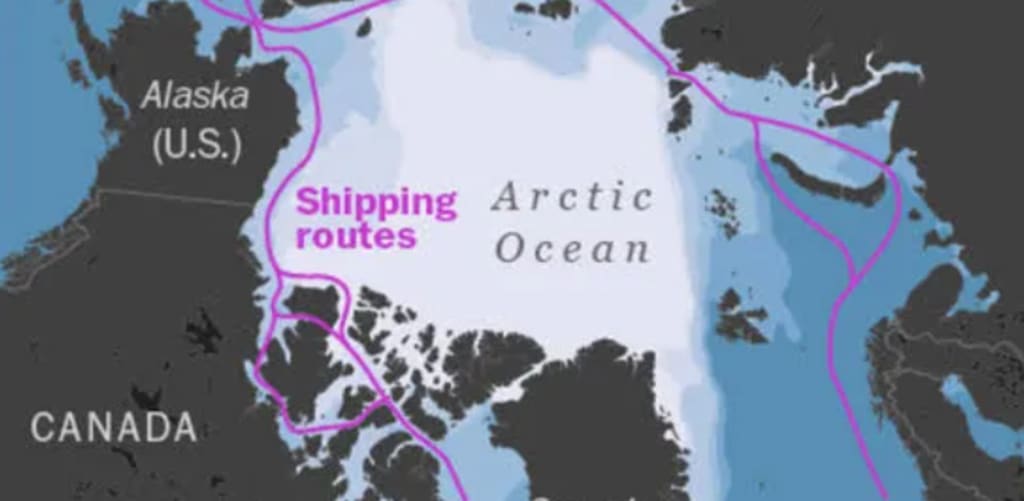
As the ice melts, shipping routes that were once impossible are becoming viable. Arctic sea lanes could dramatically shorten travel times between Asia, Europe, and North America. For global trade, this means faster routes, lower fuel costs, and new economic opportunities.
The Hidden Wealth Beneath Greenland
Beyond shipping routes, Greenland’s real value lies beneath its surface. Scientists believe the island holds vast reserves of rare earth minerals, iron ore, uranium, and potentially oil and natural gas. These resources are critical to modern technology, renewable energy systems, and military equipment.
Rare earth elements are especially important. Today, global supply chains for these materials are heavily concentrated in a few countries. Greenland could offer an alternative source, reducing dependency and reshaping global markets.
As ice retreats, mining and exploration become more feasible. What was once buried under kilometers of ice may soon be accessible—making Greenland a potential economic powerhouse in the future.
However, these opportunities come with serious risks. Greenland’s environment is fragile, and large-scale extraction could cause irreversible damage. There is also a moral contradiction: exploiting fossil fuels that become accessible due to climate change could accelerate the very warming that made them reachable.
Trump’s Interest: More Than a Headline
When Donald Trump first suggested buying Greenland in 2019, the idea was widely mocked. Denmark, which governs Greenland, dismissed the proposal outright. Greenlandic leaders made it clear that the island was not for sale.
Yet years later, Trump’s renewed focus on Greenland looks less like a joke and more like a signal. His rhetoric highlights growing U.S. concerns about Arctic dominance, resource security, and military positioning.
Greenland’s location is strategically critical. It sits between North America and Europe, near vital North Atlantic routes. Control or influence over Greenland means greater oversight of Arctic airspace and shipping lanes—an advantage in both economic and military terms.
Trump’s confrontational approach, including threats of tariffs against European allies, has strained diplomatic relationships. Still, it has forced the world to confront a reality: Greenland matters more now than ever before.
A Growing Global Power Struggle
The United States is not alone in its interest. Russia has expanded its military presence across the Arctic, reopening old bases and building new infrastructure. China, despite not being an Arctic nation, has declared itself a “near-Arctic state” and invested heavily in Arctic research and development.
NATO has responded by increasing its focus on Arctic security, especially after new member states strengthened the alliance’s northern presence. In this evolving landscape, Greenland has become a key piece in a much larger geopolitical puzzle.
Denmark has reinforced its commitment to Greenland’s sovereignty while increasing defense investments. At the same time, Greenland itself continues to push for greater self-determination, balancing economic development with environmental and cultural preservation.
Greenland’s Voice Matters
One of the most important aspects of this debate is often overlooked: the people of Greenland. With a population of just over 56,000, Greenlanders have a distinct culture, language, and identity. They are not simply spectators in a global power struggle.
Greenland has gradually gained more self-rule from Denmark and continues to debate its future path, including potential independence. While economic development is appealing, many Greenlanders are cautious about becoming a pawn in geopolitical competition.
Any future involving Greenland must consider local voices, environmental protection, and long-term sustainability—not just short-term strategic gains.
What Comes Next for Greenland?
Greenland now stands at a historic crossroads. Melting ice has increased its value, but also its vulnerability. The island represents the promise and peril of a warming world—new opportunities paired with serious global consequences.
Trump’s fight for Greenland may have sparked headlines, but it reflects deeper forces that won’t disappear when political leaders change. Climate change, resource competition, and Arctic security will continue to shape Greenland’s future for decades to come.
Whether Greenland becomes a symbol of cooperation or conflict depends on how the world responds. Will nations choose collaboration, sustainability, and respect for sovereignty? Or will competition and exploitation define the Arctic’s next chapter?
One thing is certain: as the ice melts, Greenland’s importance will only continue to rise—and the fight for influence there is just getting started.
About the Creator
Keep reading
More stories from Aqib Hussain and writers in The Swamp and other communities.
New level of brutality’: Iran doctors put death toll in suppressed uprising at over 16,500
A growing network of Iranian doctors is sounding the alarm over what they describe as an unprecedented scale of violence used to crush a nationwide uprising, estimating that more than 16,500 people may have been killed during months of unrest. Speaking anonymously from inside Iran and in exile, physicians say the official death toll bears little resemblance to what they have witnessed in hospitals, morgues, and makeshift clinics across the country.
By Aqib Hussainabout 6 hours ago in The Swamp
Indonesian Plane Goes Missing
On January 17, 2026, an ATR 42‑500 aircraft operated by Indonesia Air Transport (IAT) went missing while flying from Yogyakarta to Makassar. The small plane, which was on a mission for Indonesia’s Ministry of Marine Affairs and Fisheries, lost contact with air traffic controllers about 13:17–13:30 local time, over Maros Regency, South Sulawesi. The disappearance immediately prompted a large-scale search operation, drawing attention from local authorities, national rescue teams, and international media. It also raised concerns about air travel safety in a country with thousands of flights connecting its many islands each day. The Flight and Its Passengers The plane carried 10 to 11 people, according to official reports. Among them were three employees from the Ministry of Marine Affairs and Fisheries, along with the flight crew. Their mission was routine: aerial surveillance to monitor fisheries activity. Indonesia’s geography, with its mix of mountains and dense forests, makes flights over certain areas particularly challenging. The plane’s route took it over hilly, limestone terrain, which posed difficulties for both navigation and potential search efforts. The Search Effort Once the plane went missing, the National Search and Rescue Agency (Basarnas) immediately launched an operation. Teams of rescuers, including military personnel, police, and local volunteers, scoured the area by land, air, and drone, combing through the remote and rugged terrain of Bantimurung–Bulusaraung National Park. Weather reports indicated partly cloudy skies at the time of the incident, suggesting that the disappearance was unlikely to be caused solely by poor visibility. However, the combination of mountainous terrain and limited radar coverage complicated the search. Initial Discoveries About 24 hours after the disappearance, rescuers reported finding wreckage on a hilltop in the Bulusaraung area, including fragments of the fuselage and other aircraft parts. One body was recovered from the site, while teams continued to search for additional remains or survivors. Authorities emphasized that while some debris had been located, the investigation into the exact cause of the crash was just beginning. Pieces of the aircraft were being carefully documented and collected to assist with the investigation. Investigating the Cause The exact reason for the plane going missing is still under investigation. Officials are focusing on several key factors: The plane’s flight path and any possible deviations during its final moments. Communication gaps between the aircraft and air traffic control, particularly over the hilly region. Analysis of flight data recorders and emergency locator transmitters. Potential impacts of local weather patterns, including winds and cloud formations in the mountainous areas. The aircraft manufacturer, ATR (a French-Italian company), has expressed full support for the investigation and is working closely with Indonesian authorities to determine what went wrong. The Human Impact Beyond the technical and logistical details, the incident has a very real human dimension. Families of passengers and crew members have been waiting anxiously for news. Local and national officials have expressed condolences and support, emphasizing transparency and regular updates. Public reaction has been marked by both concern and solidarity. Communities across Indonesia are following developments closely, while media outlets continue to report verified information as it becomes available. Looking Ahead The discovery of wreckage and the recovery of one body is only the beginning. Rescue teams continue to navigate difficult terrain, hoping to recover any other victims and gather evidence to fully understand the incident. For Indonesia, a nation reliant on air travel across its thousands of islands, this tragedy underscores the ongoing challenges of aviation safety in remote areas. It also highlights the dedication of rescue personnel who risk their own safety to search for missing planes and their passengers. Authorities have stressed that the investigation will take time, and that the priority is both the recovery of victims and understanding the factors that contributed to this incident. Conclusion The disappearance of the Indonesian plane is a stark reminder of the risks inherent in aviation, particularly over complex and remote terrain. While one body has been recovered and debris located, questions remain. Families, officials, and the wider public are hoping for answers, as rescue teams continue their careful and difficult work. In situations like this, patience, transparency, and dedication to safety are essential. The story of this missing plane is still unfolding, and authorities have pledged to provide updates as the investigation progresses.
By Saboor Brohi a day ago in The Swamp
Miss Persephone's Manual to a Seemingly Ordinary Life
Miss Persephone was found at the dining table, her blue eyes swollen, her tears arriving and retreating like the tides of the ocean. Earlier that day, her family had visited her in the retirement home where she had lived for eight years. It was her eightieth birthday.
By Imola Tóth4 days ago in Fiction



Comments
There are no comments for this story
Be the first to respond and start the conversation.