
Medical Gas Market Trends & Summary: How Healthcare Infrastructure and Home Care Are Fueling Global Growth
From hospital pipelines to home oxygen therapy, medical gases are becoming indispensable to modern healthcare worldwide


Introduction
The global healthcare ecosystem relies on several unseen yet critical components—and medical gases rank among the most essential. From oxygen therapy in intensive care units to nitrous oxide used during surgical anesthesia, medical gases play a pivotal role across diagnostics, therapeutics, and long-term patient care.
According to Renub Research, the Global Medical Gas Market is projected to grow from US$ 14.41 billion in 2024 to US$ 28.61 billion by 2033, registering a strong CAGR of 7.92% from 2025 to 2033. This expansion is driven by the rising burden of chronic respiratory and cardiovascular diseases, increased adoption of home healthcare, and continuous technological advancements in medical gas delivery systems.
As healthcare systems worldwide shift toward decentralized care models and patient-centric treatment, medical gases are evolving from hospital-bound utilities into portable, intelligent, and home-ready solutions.
Global Medical Gas Industry Overview
The global medical gas industry is experiencing sustained momentum, supported by demographic, clinical, and infrastructural trends. Aging populations, rising prevalence of chronic respiratory disorders, and expanding healthcare infrastructure—particularly in emerging economies—are fueling demand.
Medical gases such as oxygen, carbon dioxide, nitrous oxide, nitrogen, and medical air are indispensable across hospitals, ambulatory surgical centers, diagnostic laboratories, pharmaceutical manufacturing, and home healthcare settings.
One of the most notable shifts shaping the industry is the growing demand for portable and home-based medical gas solutions, including oxygen concentrators and portable cylinders. This trend aligns with the rapid expansion of home healthcare services, enabling patients with chronic conditions to receive long-term therapy outside hospital environments.
Regionally, North America continues to hold a dominant market share, driven by advanced healthcare infrastructure and high surgical volumes. Meanwhile, the Asia-Pacific region is expected to witness the fastest growth, supported by government healthcare investments, expanding hospital networks, and a rising middle-class population.
Despite this positive outlook, the industry faces challenges such as strict regulatory compliance, supply chain vulnerabilities, and high production and storage costs, which can impact distribution efficiency and profitability.
Rising Burden of Respiratory Diseases Boosting Demand
The increasing incidence of respiratory disorders is a major growth catalyst for the medical gas market. Asthma, COPD, and other chronic respiratory conditions are driving long-term demand for oxygen therapy and respiratory support gases.
For instance, data from the Australian Institute of Health and Welfare (AIHW) indicates that asthma accounted for 35% of the total burden of respiratory diseases in 2023 and 2.5% of the overall disease burden. Globally, asthma and COPD remain among the leading causes of morbidity and mortality.
Medical gases such as oxygen, heliox, and lung gas mixtures are extensively used in both diagnosis and treatment of respiratory conditions. Leading providers like Air Liquide Healthcare supply medical gases to over 20,000 hospitals and support more than 2 million chronic patients worldwide, underscoring the scale and importance of this sector.
Growth Drivers for the Medical Gas Market
1. Technological Advancements in Medical Procedures
Technological innovation has significantly expanded the use of medical gases. Minimally invasive (MI) procedures such as laparoscopy and endoscopy rely on carbon dioxide to create controlled surgical environments, enabling quicker recovery and reduced patient trauma.
Advancements in respiratory therapy devices, including smart oxygen concentrators and portable delivery systems, have enhanced treatment precision and patient mobility. Additionally, cryosurgery and dermatological procedures increasingly utilize liquid nitrogen to remove abnormal tissues with minimal damage to surrounding areas.
These innovations not only improve patient outcomes but also expand the clinical applications of medical gases across specialties.
2. Growing Preference for Home Healthcare and Telemedicine
The shift toward home healthcare and telemedicine has transformed how medical gases are delivered and consumed. Patients with chronic conditions such as COPD, sleep apnea, and cardiovascular diseases increasingly receive oxygen therapy at home, reducing hospital stays and overall healthcare costs.
Reimbursement support has further accelerated this trend. For example, in November 2023, Iowa Medicaid formally covered the Firesafe Cannula Valve, assigning it HCPCS code E0700. This device acts as a thermal fuse, instantly stopping oxygen flow if tubing ignites—highlighting growing emphasis on home oxygen safety.
Interestingly, countries like the UK have mandated thermal fuses in home oxygen systems since 2006, significantly reducing oxygen-related fire fatalities—an area where other regions are now catching up.
3. Rising Prevalence of Chronic Cardiovascular and Respiratory Conditions
Chronic diseases remain a global healthcare challenge. According to the World Health Organization (WHO), cardiovascular diseases account for 17.9 million deaths annually, while COPD alone caused approximately 3.2 million deaths in 2019.
Medical gases such as oxygen and nitrous oxide are critical in managing these conditions, supporting emergency care, surgical interventions, anesthesia, and palliative treatment. As disease prevalence continues to rise, so does long-term reliance on medical gas therapies.
Challenges Facing the Medical Gas Market
Stringent Regulatory Compliance
Medical gases are subject to strict regulatory oversight due to their direct impact on patient safety. Regulations govern gas purity, labeling, storage, transportation, and delivery systems. Compliance requires continuous monitoring, certifications, and extensive documentation.
While these regulations ensure quality and reliability, they increase operational complexity and costs—particularly for smaller manufacturers and new market entrants operating across multiple regulatory jurisdictions.
High Production and Storage Costs
Producing and storing medical gases requires energy-intensive processes, specialized infrastructure, and advanced safety systems. Compression, liquefaction, temperature-controlled storage, and regulated transportation all contribute to higher costs compared to many other medical supplies.
Ongoing system maintenance and safety monitoring further add to long-term expenses, impacting pricing strategies and profit margins across the value chain.
Regional Market Insights
United States Medical Gas Market
The U.S. medical gas market is driven by an aging population, increasing surgical procedures, and rising prevalence of chronic diseases such as COPD and sleep apnea. Hospitals remain the primary consumers, followed closely by ambulatory surgical centers and home healthcare providers.
Strict regulatory standards ensure gas purity and safety, while technological advancements in gas delivery systems continue to improve efficiency. According to the American Lung Association, COPD affects over 11.7 million Americans and contributes to billions in annual healthcare costs—sustaining long-term demand for medical gases.
Germany Medical Gas Market
Germany’s medical gas market benefits from a strong healthcare system, aging demographics, and high demand for respiratory treatments. Hospitals dominate consumption, supported by ambulatory centers and home healthcare services.
Technological innovations such as smart gas distribution systems and portable oxygen concentrators are enhancing operational efficiency. Leading players including Linde Plc, Air Liquide, and Messer Group GmbH continue to drive growth through innovation and strategic collaborations.
India Medical Gas Market
India represents one of the fastest-growing medical gas markets globally. Government initiatives like Ayushman Bharat, expanding hospital infrastructure, and rising awareness of respiratory care are significantly boosting demand.
The growing burden of chronic diseases, combined with an aging population and increased adoption of home healthcare, has created strong demand for portable medical gas equipment. These factors collectively position India as a high-growth market over the forecast period.
United Arab Emirates Medical Gas Market
The UAE medical gas market is expanding alongside rapid healthcare infrastructure development and strong government support. Rising prevalence of respiratory disorders and increased use of advanced diagnostic and therapeutic procedures are driving demand.
Strict regulatory standards ensure system safety and quality, while technological advancements in gas distribution are improving healthcare delivery. Major companies are actively expanding their portfolios to meet evolving patient needs across the region.
Recent Developments in the Medical Gas Industry
January 2025: Atlas Copco Group acquired Medi-teknique Ltd., a UK-based medical gas maintenance and services company, strengthening its presence in the UK healthcare market.
January 2025: Air Liquide partnered with 20 hospitals across six European countries to help reduce healthcare-related carbon footprints, reinforcing sustainability initiatives within the medical gas sector.
Medical Gas Market Segmentation
By Product
Pure Gases
Gas Mixtures
By Application
Therapeutics
Diagnostics
Others
By End Use
Hospitals
Pharmaceutical & Biotechnology Companies
Ambulatory Surgical Centers
Diagnostic & Research Laboratories
Academic & Research Institutes
Home Healthcare
By Region
North America
Europe
Asia Pacific
Latin America
Middle East & Africa
Key Companies Profiled
Air Liquide
Linde PLC
Atlas Copco Group
INOX-Air Products Inc.
Taiyo Nippon Sanso Corporation
Matheson Tri-Gas, Inc.
HORIBA Group
SOL India Private Limited
(Each company analyzed from four viewpoints: overview, key personnel, recent developments & strategies, and revenue analysis.)
Final Thoughts
The global medical gas market is transitioning from a behind-the-scenes utility into a strategic pillar of modern healthcare delivery. As hospitals decentralize, home healthcare expands, and chronic disease prevalence rises, medical gases will remain indispensable across therapeutic, diagnostic, and emergency care settings.
With strong growth projected through 2033, driven by innovation, infrastructure investment, and patient-centric care models, the medical gas industry stands at the intersection of healthcare resilience and technological progress. Companies that prioritize safety, sustainability, and smart delivery systems will be best positioned to lead this evolving global market.
About the Creator
Marthan Sir
Educator with 30+ years of teaching experience | Passionate about sharing knowledge, life lessons & insights | Writing to inspire, inform, and empower readers.
Keep reading
More stories from Marthan Sir and writers in The Swamp and other communities.
Asia-Pacific Electric Kick Scooter Market Size and Forecast 2025–2033
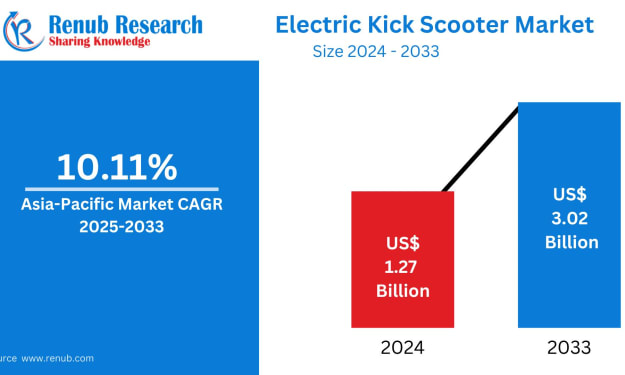
Asia-Pacific Electric Kick Scooter Market Outlook The Asia-Pacific Electric Kick Scooter Market is undergoing a rapid transformation, fueled by urban congestion, environmental urgency, and a generational shift toward smart, shared mobility. According to Renub Research, the market is projected to grow from US$ 1.27 billion in 2024 to US$ 3.02 billion by 2033, registering a strong CAGR of 10.11% between 2025 and 2033.
By Marthan Sir25 days ago in The Swamp
Three Views on What 2026 Might Bring
As the world edges closer to 2026, uncertainty and anticipation go hand in hand. From rapid technological breakthroughs to shifting geopolitical alliances and changing social priorities, the coming year is shaping up to be a defining moment. While no one can predict the future with certainty, examining different perspectives helps us prepare for what lies ahead. Here are three distinct views on what 2026 might bring—each grounded in current trends, but shaped by different expectations about how the world will evolve. View One: A Tech-Driven Acceleration of Everyday Life One widely held view is that 2026 will be defined by accelerated technological integration into daily life. Artificial intelligence, automation, and digital platforms are already reshaping how people work, communicate, and make decisions. By 2026, these changes are expected to move from novelty to normality. AI tools are likely to become deeply embedded in workplaces, assisting with everything from data analysis to creative tasks. Rather than replacing human workers outright, the focus may shift toward collaboration between humans and machines. Jobs will evolve, demanding new skills such as digital literacy, adaptability, and ethical decision-making. Education systems, under pressure to keep up, may increasingly emphasize lifelong learning rather than traditional, linear career paths. At the consumer level, smart technology could become more intuitive and personalized. From healthcare apps that monitor health in real time to smart homes that optimize energy use automatically, convenience will be a central theme. However, this view also raises concerns about privacy and data security. As technology becomes more pervasive, debates over who controls data—and how it is used—are likely to intensify. In this optimistic-tech scenario, 2026 represents progress, efficiency, and innovation. The challenge will be ensuring that technological benefits are shared broadly rather than concentrated among a few. View Two: A World Focused on Climate Reality and Resilience Another powerful perspective suggests that 2026 will be shaped primarily by the climate crisis. Extreme weather events, resource shortages, and environmental stress are already affecting economies and communities. By 2026, many believe the consequences will be impossible to ignore. Governments and businesses may shift from long-term climate promises to urgent adaptation strategies. Instead of focusing solely on innovation, such as new green technologies, there could be a stronger emphasis on resilience—protecting infrastructure, securing food systems, and preparing communities for climate shocks. Cities may redesign transport and housing to cope with heatwaves and floods, while rural areas adapt to changing agricultural conditions. Public attitudes are also expected to evolve. Climate anxiety, especially among younger generations, may translate into stronger political pressure for meaningful action. Lifestyle changes—such as reduced consumption, sustainable travel, and local production—could become more mainstream, not just ethical choices but practical necessities. This view of 2026 is sobering rather than futuristic. It suggests a year of reckoning, where societies must confront the limits of growth and accept that adapting to a changing planet is no longer optional. View Three: Social and Political Realignment in an Uncertain World A third view focuses less on technology or climate and more on people—specifically, how societies and political systems might realign in response to years of disruption. Economic inequality, migration pressures, and geopolitical tensions continue to reshape global relationships. By 2026, these forces could push the world toward significant social and political shifts. In some regions, citizens may demand stronger social safety nets and fairer economic systems, leading to reforms in healthcare, housing, and labor rights. Elsewhere, political polarization could deepen, as governments struggle to balance national interests with global cooperation. International alliances may be tested, particularly as competition over resources and influence intensifies. This perspective also highlights cultural change. Remote work, demographic shifts, and evolving values may redefine what people expect from work, family, and community. Traditional measures of success—such as economic growth alone—could be challenged by broader definitions that include well-being, mental health, and social cohesion. In this scenario, 2026 is less about dramatic breakthroughs and more about adjustment. It is a year when societies reassess priorities and experiment with new ways of organizing life in a complex, interconnected world. What These Views Have in Common While these three perspectives differ, they share a common theme: transition. Whether driven by technology, climate realities, or social change, 2026 appears likely to be a year where old assumptions no longer hold. The future may not align perfectly with any single view, but elements of all three are likely to intersect. Technology will continue to advance, but its impact will be shaped by environmental limits and social choices. Climate pressures will intensify, but responses will depend on political will and public engagement. Social change will unfold unevenly, influenced by both innovation and crisis. Conclusion “Three Views on What 2026 Might Bring” reveals not a single future, but a range of possibilities shaped by choices being made today. Whether 2026 becomes a year of smart progress, climate adaptation, or social realignment—or a combination of all three—will depend on how governments, businesses, and individuals respond to the challenges ahead. One thing is certain: 2026 will not be a passive continuation of the past. It will be a moment that tests resilience, creativity, and cooperation. For those willing to adapt and engage thoughtfully, it may also be a year of meaningful transformation.
By Fiazahmedbrohi 5 days ago in The Swamp


Comments
There are no comments for this story
Be the first to respond and start the conversation.