
Markets Fall and Gold and Silver Hit New Highs After Trump’s Latest Tariff Threat
Investors scramble as markets react to renewed trade tensions and safe-haven assets surge

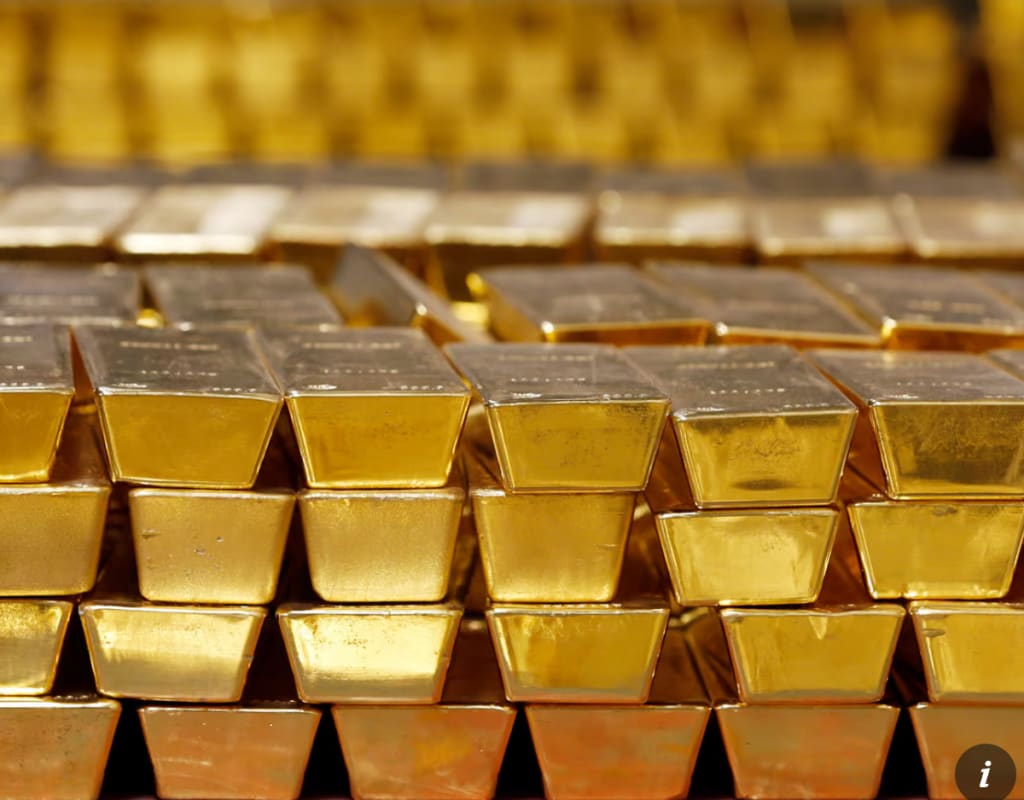
The financial world experienced another turbulent day as markets around the globe reacted sharply to former President Donald Trump’s latest tariff threat. Stock indices fell, with tech and industrial sectors taking the brunt of the decline, while gold and silver surged to new highs as investors sought safe-haven assets. The move underscores how geopolitical tensions and policy announcements can ripple through markets, affecting everything from investor sentiment to commodity prices.
Trump’s announcement, made via a public statement on his social media platforms, suggested that tariffs could soon be imposed on a wide range of goods from several key trading partners. Though specific countries and products were not immediately clarified, investors interpreted the comments as a signal that trade tensions could escalate, reminiscent of the trade wars seen during his presidency.
Financial markets reacted almost immediately. The S&P 500 dropped nearly 1.5%, while the Nasdaq Composite fell over 2%. European markets also mirrored the decline, with Germany’s DAX and the UK’s FTSE 100 losing value by close to 1% each. Analysts noted that the uncertainty surrounding trade policy often leads to heightened market volatility, as investors reassess corporate earnings forecasts, supply chain risks, and overall economic growth projections.
Meanwhile, safe-haven assets experienced a significant rally. Gold prices surged above $2,100 per ounce, marking a new high for the year, while silver climbed past $27 per ounce. Traditionally, gold and silver are viewed as hedges against economic and political uncertainty. When traders anticipate instability or potential disruptions to trade and growth, they often flock to these precious metals, pushing prices upward.
Economists warn that the market response reflects broader concerns about the global economy. “Trade tensions can have a tangible impact on business investment and consumer confidence,” said Julia Hansen, a senior analyst at Global Markets Advisory. “Even the suggestion of tariffs can create ripple effects, especially in industries that rely heavily on international supply chains. Investors respond by reducing exposure to riskier assets and moving toward commodities like gold and silver.”
The tariff threat also reignites questions about inflation and central bank policy. Trade barriers often increase the cost of imported goods, which can lead to higher prices for consumers. In turn, central banks may need to adjust monetary policies to counteract inflationary pressures, affecting interest rates and bond yields. This complex interplay adds another layer of uncertainty for investors, as financial markets try to anticipate policy responses and their implications for different asset classes.
Notably, technology companies are often among the most affected by tariff news. Firms that rely on global supply chains for components—like semiconductors, electronics, and machinery—face potential cost increases, which can reduce profit margins and affect stock valuations. Industrial companies, too, may be impacted, particularly those that export goods to countries that could be subject to new tariffs.
While the initial market reaction was negative, some investors are adopting a longer-term perspective. Historically, markets have rebounded after initial tariff scares, especially if negotiations between trading partners resume or if specific exemptions are granted. “Volatility is part of the landscape when it comes to trade policy,” said Michael Lee, a portfolio manager at Horizon Investments. “The key is to assess which companies and sectors are truly at risk and which can weather short-term shocks.”
The surge in gold and silver is also attracting attention from retail investors and traders. Precious metals have historically served as a hedge against not only economic uncertainty but also currency fluctuations. With the U.S. dollar experiencing mild weakness against other major currencies, the combination of dollar trends and geopolitical risk is contributing to elevated metal prices.
For everyday investors, the situation underscores the importance of diversification. While equities may react sharply to policy announcements, having exposure to commodities, bonds, or alternative investments can help cushion portfolios against sudden market swings. Financial advisors often recommend maintaining a balanced approach, especially in periods of heightened volatility.
Looking ahead, much will depend on the trajectory of trade talks and policy announcements. Analysts caution that while the headlines are attention-grabbing, the underlying impact on the economy may take time to materialize. Corporate earnings reports, consumer spending trends, and government trade negotiations will provide clearer indicators of how lasting the effects may be.
In summary, the latest tariff threat from Trump has triggered a classic market response: falling stock prices and rising safe-haven assets. Gold and silver are hitting new highs as investors seek protection against uncertainty, while equities struggle under the weight of potential economic disruptions. For market watchers and investors, the situation serves as a reminder that geopolitical developments remain a key driver of financial markets, capable of influencing asset prices in both the short and long term.
The current environment reinforces the value of strategic planning, careful risk assessment, and the recognition that volatility, while challenging, also presents opportunities for those who remain informed and adaptable. Whether the tariffs materialize or not, the market’s reaction illustrates the interconnectedness of policy, investor sentiment, and global economic trends—a dynamic that is unlikely to change anytime soon.
About the Creator
Muhammad Hassan
Muhammad Hassan | Content writer with 2 years of experience crafting engaging articles on world news, current affairs, and trending topics. I simplify complex stories to keep readers informed and connected.
Keep reading
More stories from Muhammad Hassan and writers in The Swamp and other communities.
Real Estate Crash Weighs on China’s Economic Growth
China’s economic growth, long driven by industrial expansion and a booming real estate sector, is now facing a critical test. The country’s real estate market, which has historically fueled investment, employment, and consumer wealth, is showing signs of a sharp downturn. With property developers struggling under heavy debt, homebuyers delaying purchases, and prices declining in key cities, economists warn that the housing slump could weigh heavily on China’s broader economic growth in the coming months.
By Muhammad Hassan2 months ago in The Swamp
The Forsyth House Fire
Since 1851, Forsyth House has stood on the corner of Union Street and Gordon Street in the heart of Glasgow. Its iconic, or was... because on Sunday 8th of March, 2026, a fire broke out in a small, seemingly un-named shop in the building and tore all that history down. As I write, the rubble is still unsettled and the street is still blocked off. Central Station is quiet on the upper level, and around 30 small businesses have quite literally gone up in smoke.
By S. A. Crawford3 days ago in The Swamp
A Transparent Look at Vocal Challenges and Top Stories
Almost three years ago, we shared a resource article that served as a place for people to suggest new challenge prompts. We thought it would be a good idea to refresh that thread, and take the opportunity to answer a few common questions about top stories, how challenges are judged and how submissions are reviewed.
By Vocal Curation Team4 days ago in Resources




Comments
There are no comments for this story
Be the first to respond and start the conversation.