
Manila’s Feast of the Black Nazarene Draws 9.6 Million Devotees
Faith, devotion, and tradition converge in one of the world’s largest religious gatherings
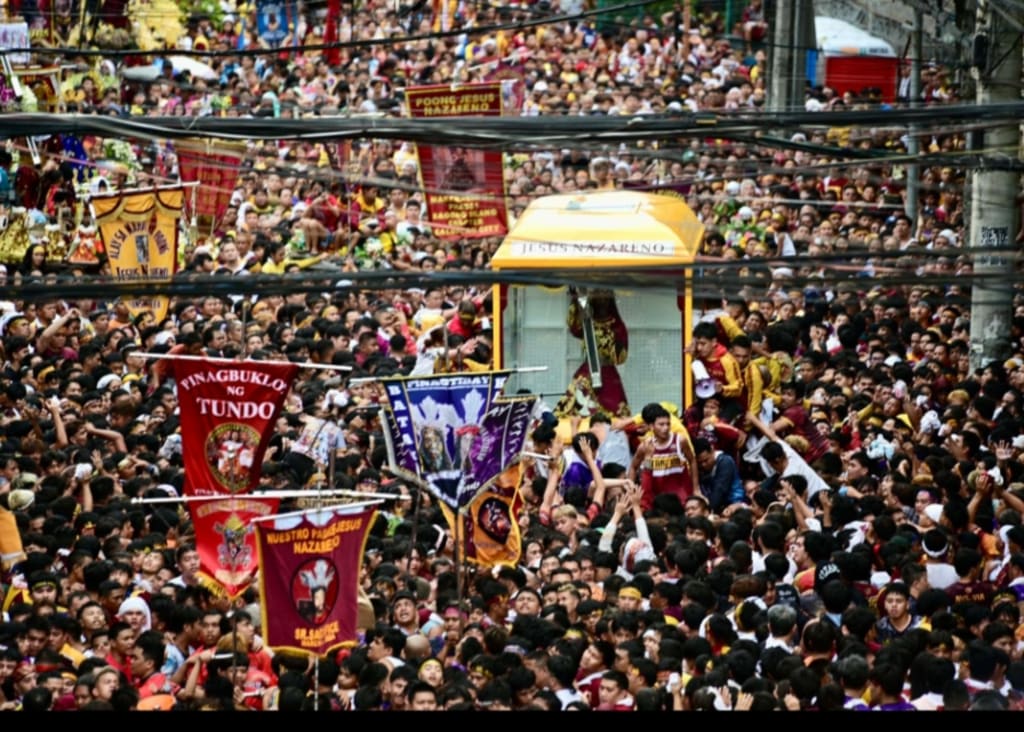
A Sea of Devotion in the Heart of Manila
Millions of barefoot devotees flooded the streets of Manila as the annual Feast of the Black Nazarene once again transformed the Philippine capital into a vast procession of faith. According to authorities, an estimated 9.6 million people took part in the event, reaffirming its status as one of the largest religious gatherings anywhere in the world.
For hours, and in some cases days, worshippers endured heat, fatigue, and tightly packed crowds to touch or glimpse the centuries-old image believed by many Catholics to possess miraculous powers. The scale of devotion was overwhelming, stretching across major roads and neighborhoods in a powerful display of collective belief.
The History Behind the Black Nazarene
The Black Nazarene is a life-sized statue of Jesus Christ carrying the cross, believed to have been brought to the Philippines from Mexico in the early 17th century. Darkened over time, the image has become a deeply revered symbol of suffering, sacrifice, and redemption.
For Filipino Catholics, devotion to the Black Nazarene goes beyond ritual—it is deeply personal. Many believe the image has healed illnesses, saved lives, and answered prayers, fueling a level of devotion rarely seen elsewhere.
The annual feast, held every January, commemorates the image’s transfer to Quiapo Church in Manila, where it is permanently housed.
The Procession: Faith in Motion
At the heart of the celebration is the Traslación, a day-long procession in which the image is pulled through the streets on a massive wooden carriage. Devotees struggle to get close, reaching out to touch the ropes or the carriage itself, believing that contact brings blessings.
Participants often walk barefoot as an act of penance or gratitude. Many carry towels to wipe the statue or the ropes, keeping them as sacred relics.
Despite its spiritual significance, the procession is physically demanding. Movement is slow, crowd density is extreme, and the risk of injury is ever-present.
Massive Security and Medical Effort
With nearly 10 million participants, the event required extraordinary coordination. Thousands of police officers, soldiers, medical workers, and volunteers were deployed to manage crowd control, provide emergency care, and ensure public safety.
Health officials reported hundreds of cases of dehydration, minor injuries, and fainting, all treated on-site. Emergency medical teams were stationed throughout the route, while hospitals were placed on high alert.
Authorities emphasized that careful planning and improved crowd management helped prevent major incidents, despite the enormous turnout.
Devotion Beyond Danger
The Feast of the Black Nazarene has long drawn criticism from safety experts who warn of the risks associated with such dense crowds. Past processions have resulted in injuries and, in rare cases, fatalities.
Yet for devotees, these dangers do little to diminish their faith. “This is my promise,” said one worshipper who traveled from a distant province. “I come every year to thank the Nazarene for saving my life.”
For many participants, the procession is not optional—it is a sacred obligation, deeply intertwined with personal stories of suffering and hope.
A Reflection of Filipino Catholic Identity
The Philippines is the largest Catholic nation in Asia, and the Feast of the Black Nazarene reflects the unique character of Filipino faith—intensely emotional, communal, and enduring.
Religious scholars note that the devotion blends Catholic teachings with local cultural expressions, creating a form of spirituality that resonates deeply with the population.
“This feast shows how faith becomes a shared experience,” said one theologian. “It’s not just belief—it’s action, sacrifice, and community.”
Economic and Social Impact on Manila
Beyond its religious significance, the feast has a major impact on Manila’s economy and daily life. Businesses along the procession route benefit from increased foot traffic, while public transportation and government services adjust schedules to accommodate the event.
Road closures and crowd congestion can disrupt normal activity, but many residents view the inconvenience as a small price to pay for a tradition that defines the city’s spiritual identity.
Local vendors sell food, candles, and religious items, turning the feast into both a sacred and social occasion.
The Role of Technology and Media
In recent years, technology has played a growing role in the celebration. Live broadcasts and social media streams allow those unable to attend in person to participate virtually.
Authorities also use digital tools to monitor crowd movement and communicate safety updates. Despite these modern additions, the heart of the feast remains rooted in centuries-old tradition.
The combination of ancient devotion and modern coordination highlights how religious practices continue to evolve without losing their core meaning.
Faith That Endures Across Generations
Families often attend the feast together, passing the devotion from one generation to the next. Parents bring children, grandparents share stories of miracles, and newcomers are welcomed into the collective experience.
For many Filipinos, devotion to the Black Nazarene is woven into the fabric of life—a source of strength during hardship and a reminder of shared identity.
Conclusion: A Testament to Living Faith
The sight of 9.6 million devotees filling Manila’s streets for the Feast of the Black Nazarene is a powerful testament to the enduring role of faith in Filipino society. In an age of rapid change and uncertainty, the devotion remains unwavering, rooted in history and sustained by personal belief.
As the procession winds its way through the city year after year, it continues to unite millions in a shared act of hope, sacrifice, and spiritual resilience—proving that faith, for many, is not just believed, but lived.
About the Creator
Keep reading
More stories from Aarif Lashari and writers in The Swamp and other communities.
France Latest to Confirm NATO Troop Deployment After Trump Says Greenland ‘Very Important’ for US National Security
France Joins Growing NATO Deployment Push France has become the latest NATO member to confirm the deployment of troops as tensions rise over security in the Arctic and North Atlantic, following remarks by former US President Donald Trump that Greenland is “very important” for US national security. The announcement places Paris alongside several European allies that are strengthening their military presence amid renewed geopolitical competition in the region.
By Aarif Lashari4 days ago in The Swamp
Coercion Without Ownership: The Real Trump Playbook on Iran
From grandiose promises of crushing the Iranian regime to last‑minute deals with Tehran over prisoner exchanges, the policy of former President Donald Trump toward Iran often appeared contradictory, transactional, and ultimately unconsolidated. What consistent logic underlay this approach? The answer lies in a framework that scholars and strategists might call “coercion without ownership” — an effort to force desired outcomes from Tehran without building or sustaining the political, diplomatic, and strategic consensus necessary to make those outcomes durable.
By Aqib Hussain2 days ago in The Swamp


Comments
There are no comments for this story
Be the first to respond and start the conversation.