
Managing the Cycle: United States Premenstrual Syndrome Treatment Market Size and Forecast 2025–2033
Growing awareness, expanding women’s healthcare, and demand for non-hormonal therapies are reshaping how PMS is treated across America

United States Premenstrual Syndrome Treatment Market: A Growing Focus on Women’s Health
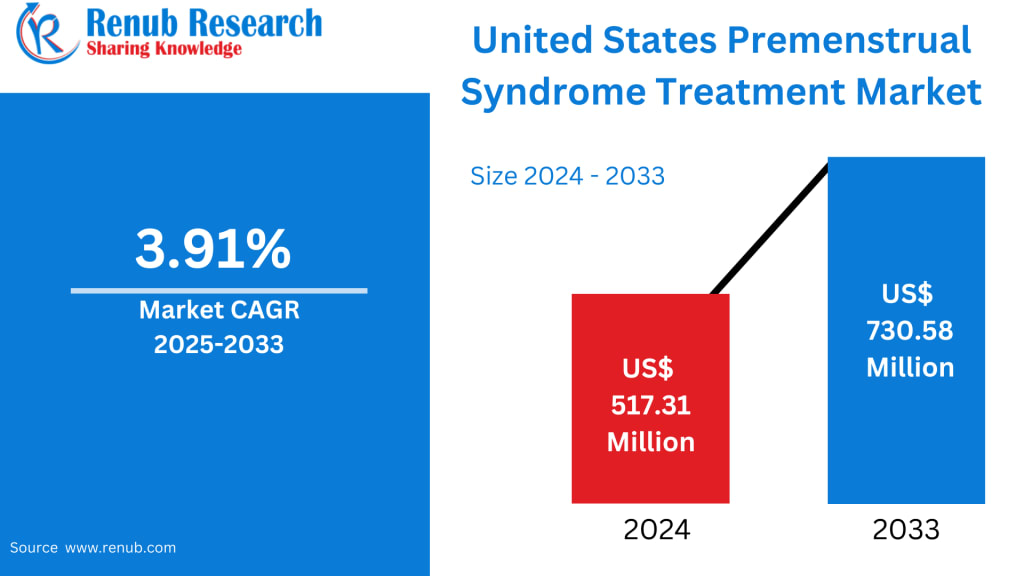
The United States Premenstrual Syndrome (PMS) Treatment Market is steadily gaining attention as women’s health moves closer to the center of public discourse, clinical practice, and consumer wellness trends. According to Renub Research, the market is expected to grow from US$ 517.31 million in 2024 to US$ 730.58 million by 2033, registering a compound annual growth rate (CAGR) of 3.91% from 2025 to 2033. This growth is being driven by increased awareness of PMS, advancements in treatment options, and a growing demand for effective, personalized healthcare solutions among symptomatic women.
PMS affects a significant portion of menstruating individuals and encompasses a broad range of physical and emotional symptoms, including bloating, headaches, fatigue, irritability, and mood swings. While these symptoms typically occur during the luteal phase of the menstrual cycle, their severity can vary widely from person to person. For many women, PMS is not merely an inconvenience—it can disrupt productivity, relationships, and overall quality of life. As a result, the market for treatments designed to manage or alleviate these symptoms is expanding in both clinical and consumer health settings.
United States Premenstrual Syndrome Treatment Market Outlook
Treatment approaches for PMS span lifestyle modifications, over-the-counter (OTC) remedies, prescription medications, and increasingly, integrative and digital health solutions. Historically, women relied on home remedies, pain relievers, or simply endured symptoms without medical support. Today, PMS is widely recognized as a legitimate health condition that can and should be managed effectively.
Pharmacological interventions include nonsteroidal anti-inflammatory drugs (NSAIDs) for pain relief, antidepressants such as selective serotonin reuptake inhibitors (SSRIs) for mood-related symptoms, and hormonal therapies that regulate or suppress ovulation. At the same time, non-pharmacological strategies—dietary changes, exercise, stress management, and supplementation with vitamins and minerals—are gaining traction.
In the United States, growing awareness of women’s reproductive health has reduced stigma around menstruation and PMS. Online platforms, social media communities, and telehealth services now play a pivotal role in educating women about symptom tracking, treatment options, and when to seek professional help. This evolving healthcare ecosystem is transforming PMS treatment from a fragmented, reactive approach into a proactive, personalized, and increasingly accessible segment of women’s healthcare.
Growth Drivers in the United States Premenstrual Syndrome Treatment Market
Rising Awareness and Diagnosis of PMS
One of the most significant drivers of market growth is the increasing recognition of PMS as a medical condition that warrants professional attention. Public health campaigns, women’s wellness initiatives, and healthcare providers are encouraging early identification and symptom management. More women are seeking medical advice for mood changes, cramps, headaches, and fatigue—symptoms that were once normalized or dismissed.
Social media, telemedicine, and digital health resources have amplified awareness by making information and peer experiences widely accessible. Workplace wellness programs and corporate health initiatives increasingly address menstrual health, further legitimizing PMS as a workplace and public health concern. According to the U.S. Office on Women’s Health, over 90% of women experience at least one premenstrual symptom during their reproductive years, underscoring the vast potential patient base for PMS treatments.
Expansion of Women’s Healthcare and Wellness Infrastructure
The continuous expansion of women-focused healthcare services across the United States is another critical growth factor. Investments in gynecology clinics, wellness centers, and hospital departments dedicated to hormonal health are improving access to diagnosis and treatment. Healthcare providers are increasingly adopting comprehensive treatment plans that integrate medication, mental health support, and nutritional counseling.
Telemedicine has further expanded access, allowing women to consult healthcare professionals remotely, receive prescriptions, and maintain follow-up care without geographic or time constraints. Insurance coverage for women’s health services has also improved, reducing out-of-pocket expenses and encouraging consistent treatment. Initiatives aimed at improving reproductive health education and access—particularly among underserved communities—are helping to broaden the market.
Growing Demand for Non-Hormonal and Natural Therapies
Consumer preferences are shifting toward non-hormonal and natural treatment options due to concerns about side effects associated with long-term hormonal use. Nutraceuticals such as calcium, magnesium, and vitamin B6 are widely used, while herbal remedies like chasteberry and evening primrose oil are gaining popularity. Complementary approaches—yoga, mindfulness, diet modification, and stress-reduction programs—are increasingly incorporated into PMS management strategies.
This trend is prompting pharmaceutical and wellness companies to expand their portfolios with plant-based, clean-label, and opioid-free products. Innovations in pain management and symptom control that minimize side effects are likely to play a central role in shaping the future of PMS treatment.
Challenges in the United States Premenstrual Syndrome Treatment Market
Lack of Standardized Diagnostic Criteria and Awareness Gaps
Despite progress, inconsistent diagnostic practices remain a major challenge. PMS symptoms often overlap with anxiety disorders, thyroid dysfunction, or other hormonal conditions, leading to misdiagnosis or underdiagnosis. Many women self-treat using OTC products without consulting healthcare providers, limiting the adoption of prescription therapies.
Variability in diagnostic methods across healthcare settings results in uneven treatment outcomes and complicates the development of targeted medications. Awareness gaps persist in under-resourced communities where access to gynecological care is limited. Addressing these challenges will require standardized diagnostic guidelines, improved screening tools, and sustained public health education.
Side Effects and Limited Efficacy of Certain Drug Classes
Concerns about side effects continue to influence patient adherence and treatment choices. SSRIs, commonly prescribed for severe PMS and premenstrual dysphoric disorder (PMDD), may cause nausea, sleep disturbances, and sexual dysfunction. Hormonal therapies can lead to weight gain, mood changes, and irregular bleeding, discouraging long-term use.
Moreover, individual responses to medications vary widely, making it difficult to identify universally effective therapies. Pharmaceutical companies face pressure to develop safer, more targeted formulations, including combination therapies and extended-release options that improve tolerability and outcomes.
Segment Analysis
United States Analgesics PMS Treatment Market
Analgesics represent a cornerstone of PMS treatment, addressing physical symptoms such as cramps, headaches, and muscle pain. NSAIDs like ibuprofen and naproxen are widely used due to their effectiveness and availability. The growing culture of self-care and preference for non-prescription solutions continue to support this segment. Innovations focused on improved gastrointestinal tolerability and longer-lasting relief are expected to further strengthen demand.
United States Antidepressants PMS Treatment Market
The antidepressants segment is expanding as awareness grows around the emotional and psychological dimensions of PMS and PMDD. SSRIs such as fluoxetine and sertraline are frequently prescribed for mood stabilization and emotional symptoms. Telepsychiatry, online prescriptions, and low-dose formulations have improved accessibility and patient acceptance. While managing side effects remains a challenge, the integration of mental health into women’s healthcare is likely to sustain growth in this segment.
United States Prescription PMS Treatment Market
Prescription treatments—including hormonal contraceptives, antidepressants, and diuretics—are increasingly favored for long-term symptom management. Enhanced diagnostic practices and telehealth services have reduced barriers to accessing professional care. Pharmaceutical manufacturers are focusing on combination therapies that address multiple symptoms simultaneously, improving convenience and adherence. With broader insurance coverage and a growing emphasis on comprehensive women’s health, the prescription segment is poised for steady expansion.
United States PMS Treatment: Hospital Pharmacies
Hospital pharmacies play a critical role in distributing prescription-grade PMS medications, particularly for severe cases requiring specialist intervention. Integrated care models—where gynecologists collaborate with psychiatrists and nutritionists—are improving treatment outcomes. As hospital networks and women’s health departments expand, institutional pharmacies will continue to be an important channel for advanced PMS therapies.
United States PMS Treatment: Online Stores
E-commerce and telehealth platforms are rapidly transforming how women access PMS treatments. Online pharmacies offer convenience, privacy, competitive pricing, and a wide range of products, from OTC pain relievers to prescription medications and supplements. Subscription services, home delivery, and symptom-tracking apps enhance adherence and engagement. While regulatory oversight and counterfeit risks remain concerns, rising trust in licensed digital platforms is driving robust growth in this channel.
Regional Insights
California
California leads the U.S. PMS treatment market with high healthcare awareness, a strong network of medical facilities, and a vibrant wellness culture. Major cities host numerous gynecology clinics and holistic health centers offering both conventional and alternative therapies. The state’s advanced digital health infrastructure and openness to natural remedies further support market expansion.
New Jersey
New Jersey benefits from proximity to pharmaceutical and biotechnology hubs, fostering innovation in PMS treatment. Strong healthcare infrastructure, insurance coverage, and growing awareness of women’s mental and reproductive health are driving demand for both prescription and OTC therapies.
Washington
Washington’s emphasis on preventive healthcare and personalized medicine is creating opportunities for integrated PMS treatment approaches. Telehealth adoption and interest in holistic wellness are expanding access, particularly in suburban and rural areas. Partnerships between healthcare providers and digital health companies are enhancing patient engagement and adherence.
Market Segmentation
By Drug Type:
Analgesics
Antidepressants
Oral Contraceptives and Ovarian Suppression Agents
Others
By Type:
Prescription
Over-the-Counter
By Distribution Channel:
Hospital Pharmacies
Drug Stores and Retail Pharmacies
Online Stores
Top States:
California, Texas, New York, Florida, Illinois, Pennsylvania, Ohio, Georgia, New Jersey, Washington, North Carolina, Massachusetts, Virginia, Michigan, Maryland, Colorado, Tennessee, Indiana, Arizona, Minnesota, Wisconsin, Missouri, Connecticut, South Carolina, Oregon, Louisiana, Alabama, Kentucky, Rest of the United States
Company Analysis (5 Viewpoints):
Overviews | Key Person | Recent Developments | SWOT Analysis | Revenue Analysis
Key Companies Covered:
AbbVie Inc., BASF SE, Bayer AG, Dr. Reddy’s Laboratories Ltd., Eli Lilly and Company, GlaxoSmithKline Plc., H. Lundbeck A/S, Pfizer Inc., SHIONOGI & Co. Ltd.
Competitive Landscape
The U.S. PMS treatment market features a mix of global pharmaceutical leaders and specialized healthcare companies. Major players focus on expanding product portfolios, improving drug tolerability, and investing in women’s health research. Strategic partnerships with telehealth platforms, acquisitions of wellness brands, and increased spending on patient education are shaping competitive dynamics.
At the same time, smaller companies and nutraceutical brands are carving out niches in non-hormonal and natural therapies, reflecting changing consumer preferences. The market is becoming increasingly diversified, with innovation occurring across pharmaceuticals, digital health, and lifestyle-based interventions.
Future Outlook
Looking ahead, the United States PMS treatment market is set to evolve alongside broader trends in personalized medicine, digital healthcare, and women’s wellness. Advances in diagnostic tools, symptom-tracking technologies, and targeted drug development will enhance treatment precision and patient outcomes. The growing emphasis on holistic care—combining medication, mental health support, and lifestyle interventions—will further redefine PMS management.
As stigma continues to decline and healthcare access expands, more women are likely to seek timely and effective treatment. With a projected market value of US$ 730.58 million by 2033, PMS treatment is no longer a niche segment but a vital component of the U.S. women’s healthcare ecosystem.
Final Thoughts
The United States Premenstrual Syndrome Treatment Market reflects a broader cultural and clinical shift toward recognizing and addressing women’s health needs with seriousness, empathy, and innovation. Driven by rising awareness, expanding healthcare infrastructure, and growing demand for safer and more natural therapies, the market is poised for steady growth through 2033.
While challenges such as diagnostic inconsistencies and medication side effects remain, ongoing research, digital transformation, and patient-centered care models offer promising solutions. Ultimately, the future of PMS treatment in the United States lies in empowering women with knowledge, access, and choices—ensuring that managing the menstrual cycle becomes not just possible, but personalized, effective, and stigma-free.
About the Creator
Diya Dey
Market Analyst


Comments
There are no comments for this story
Be the first to respond and start the conversation.