
Man Admits Dressing as Fake Navy Admiral at Remembrance Event
How impersonation at a solemn national ceremony sparked outrage and raised questions about respect for military service


Remembrance events are solemn occasions meant to honor the sacrifice, service, and memory of those who served in the armed forces. They are rooted in respect, dignity, and collective remembrance. That is why a recent incident involving a man who admitted to dressing as a fake navy admiral at a Remembrance event has sparked widespread criticism, debate, and reflection on the misuse of military symbols.
The Incident That Shocked Attendees
According to court proceedings, the man appeared at a public Remembrance event wearing a naval admiral’s uniform adorned with medals and insignia to which he was not entitled. At first glance, he blended in among genuine veterans and serving personnel. However, inconsistencies in his attire and background soon raised suspicions, prompting inquiries that ultimately revealed the truth: he had never served in the navy, nor held any military rank.
The man later admitted that the uniform and decorations were entirely fabricated. His actions were not the result of an administrative error or misunderstanding, but a deliberate choice to impersonate a senior military officer during one of the most emotionally significant commemorations of the year.
Why Impersonation at Remembrance Events Is So Serious
Impersonating a military officer at any time is widely viewed as unethical, but doing so at a Remembrance event carries deeper consequences. These ceremonies are not social gatherings or displays of pageantry; they are moments of national reflection on loss, bravery, and sacrifice. Veterans, families of the fallen, and serving members attend these events with deep emotional investment.
By presenting himself as a decorated admiral, the individual exploited the trust and reverence that society extends to military service members. Many critics argue that such actions amount to a betrayal of public respect and an insult to those who genuinely earned their uniforms under life-threatening conditions.
Legal and Moral Implications
In several countries, including the UK, wearing military uniforms or medals without entitlement can constitute an offense, particularly if it is done to deceive or gain recognition. While the legal consequences vary depending on intent and circumstances, courts often consider whether the impersonation caused public harm, emotional distress, or undermined institutional integrity.
Beyond the legal framework, the moral implications are even more severe. False claims of military service—sometimes referred to as “stolen valor”—erode public confidence and diminish the meaning of real service. Veterans’ groups have repeatedly warned that such behavior trivializes sacrifice and risks turning solemn remembrance into spectacle.
Motivation Behind the Deception
During questioning, the man reportedly offered explanations ranging from personal admiration for the military to a desire to feel respected. While such motivations may reflect deeper psychological or social issues, experts emphasize that admiration does not justify impersonation.
Psychologists note that individuals who falsely present themselves as decorated officers may be seeking validation, identity, or attention. However, these underlying struggles do not excuse actions that disrespect others’ lived experiences, especially those shaped by conflict, injury, and loss.
Reaction from Veterans and the Public
Veterans’ organizations were quick to condemn the incident. Many expressed anger that someone would use a Remembrance event—a space sacred to military families—as a stage for deception. Others voiced sadness, arguing that such incidents distract from the true purpose of remembrance and risk undermining public understanding of military service.
Members of the public echoed these sentiments, with many calling for stricter enforcement of laws protecting military symbols. Some also emphasized the importance of education, noting that greater awareness about military ranks and decorations could help prevent similar incidents in the future.
Protecting the Integrity of Remembrance
The case has reignited discussions about safeguarding commemorative events. Organizers are now being urged to implement clearer verification processes for participants wearing uniforms, especially those claiming senior ranks. While Remembrance ceremonies are built on trust rather than suspicion, this incident highlights the need for balance between openness and protection.
Importantly, veterans’ groups stress that this case should not create barriers for genuine veterans to attend or participate. Instead, the focus should remain on preserving the dignity and authenticity of remembrance.
A Reminder of What Remembrance Represents
At its core, Remembrance is about honoring real people—those who served, those who suffered, and those who never returned home. It is not about status, medals, or recognition, but about collective memory and gratitude.
The admission by a man who dressed as a fake navy admiral serves as a stark reminder that respect for military service must be genuine. Symbols of service carry weight because of the sacrifices behind them. When misused, they lose meaning—and risk causing harm to those they are meant to honor.
Conclusion
This incident, while involving a single individual, has broader implications for how society protects the integrity of military remembrance. It underscores the importance of honesty, accountability, and respect when engaging with symbols of national sacrifice. As Remembrance events continue to bring communities together, ensuring their authenticity remains essential—not just for veterans, but for the values those events represent.
About the Creator
Fiaz Ahmed Brohi
I am a passionate writer with a love for exploring and creating content on trending topics. Always curious, always sharing stories that engage and inspire.
Keep reading
More stories from Fiaz Ahmed Brohi and writers in The Swamp and other communities.
Russian Army Loses 990 Soldiers and Multiple Rocket Systems in One Day as Ukraine Intensifies Battlefield Pressure
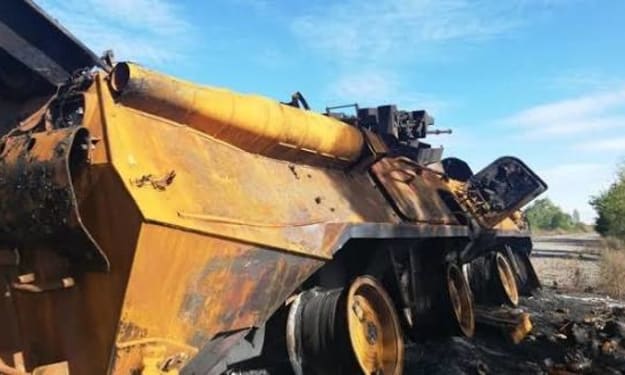
The war between Russia and Ukraine continues to exact a heavy toll, with Ukrainian military officials reporting that nearly 1,000 Russian soldiers were lost in a single day, alongside the destruction of two multiple launch rocket systems (MLRS). The figures, released as part of Ukraine’s daily battlefield assessment, highlight the intensifying pace of combat and the growing strain on Russian forces as the conflict grinds on. While casualty numbers in wartime are often contested and difficult to independently verify, the scale of losses reported underscores a broader trend: the war has entered a phase defined by attrition, technology-driven strikes, and relentless pressure on manpower and equipment. A Snapshot of One Day in a Prolonged War According to Ukraine’s military command, the reported losses occurred across several active fronts, where Russian troops have continued offensive operations despite mounting resistance. The claimed figure of 990 soldiers lost in just 24 hours reflects one of the higher daily casualty counts reported in recent weeks. In addition to personnel losses, Ukrainian forces announced the destruction of two multiple launch rocket systems, a critical component of Russia’s long-range firepower. These systems are used to bombard Ukrainian positions, cities, and supply lines, making them high-priority targets for Ukrainian artillery, drones, and precision strikes. The loss of such equipment is significant, not only because of its battlefield value but also because replacing advanced rocket systems is far more difficult and time-consuming than replenishing basic military hardware. Why Multiple Launch Rocket Systems Matter Multiple launch rocket systems play a central role in modern warfare. Capable of firing salvos of rockets over wide areas, MLRS platforms are designed to overwhelm defenses, suppress enemy positions, and inflict damage far beyond the front line. For Russia, these systems have been a key tool in applying pressure on Ukrainian defenses. Their destruction signals Ukraine’s growing ability to identify, track, and eliminate high-value targets, often using a combination of intelligence-sharing, satellite imagery, and domestically produced drones. Military analysts note that each destroyed launcher represents not just lost hardware, but lost operational flexibility. With fewer systems available, Russian forces may struggle to maintain the same level of artillery dominance they relied on earlier in the war. Attrition as a Strategy The reported losses point to a broader reality of the conflict: this war is increasingly about wearing the opponent down. Ukraine has focused on degrading Russia’s manpower and equipment gradually, forcing Moscow to commit more resources to maintain its positions. Daily casualty figures—whether fully accurate or not—serve an important strategic purpose. They communicate to both domestic and international audiences that Russian forces are paying a steep price for continued aggression. At the same time, they boost morale within Ukraine by demonstrating tangible battlefield results. For Russia, sustained losses at this scale raise difficult questions about recruitment, training, and morale. Replacing nearly a thousand soldiers in a single day is not just a logistical challenge—it has long-term consequences for combat effectiveness. Human Cost Behind the Numbers Beyond strategy and statistics lies the human cost of war. Each reported casualty represents a life disrupted or lost, families affected, and communities changed forever. While battlefield updates often focus on numbers and equipment, the reality on the ground is one of exhaustion, trauma, and grief on both sides. Prolonged fighting has also increased pressure on medical systems, evacuation routes, and frontline support units. As casualties rise, the ability to provide timely care becomes increasingly strained, compounding the impact of losses. What This Means for the War’s Trajectory The destruction of personnel and key weapons systems in a single day does not, on its own, determine the outcome of the war. However, consistent losses of this magnitude can shift momentum over time. Reduced manpower limits offensive capabilities, while the loss of heavy weapons weakens the ability to hold territory or launch large-scale assaults. Ukraine’s continued success in targeting advanced systems suggests that its military has adapted effectively, learning how to counter Russia’s strengths while exploiting its vulnerabilities. The use of drones, precision strikes, and coordinated intelligence has transformed the battlefield into one where large formations and static positions are increasingly risky. Conclusion The report that the Russian army lost 990 soldiers and two multiple launch rocket systems in a single day offers a stark illustration of the war’s intensity and the high cost of prolonged conflict. Whether viewed as a tactical setback or part of a broader pattern, such losses reinforce the reality that the war in Ukraine is far from slowing down. As fighting continues, each day adds another layer to a conflict defined by endurance, adaptation, and sacrifice. For now, the battlefield remains unforgiving, and the numbers—however debated—tell a story of a war that continues to demand an extraordinary price from all involved.
By Fiaz Ahmed Brohi2 months ago in The Swamp
The Forsyth House Fire
Since 1851, Forsyth House has stood on the corner of Union Street and Gordon Street in the heart of Glasgow. Its iconic, or was... because on Sunday 8th of March, 2026, a fire broke out in a small, seemingly un-named shop in the building and tore all that history down. As I write, the rubble is still unsettled and the street is still blocked off. Central Station is quiet on the upper level, and around 30 small businesses have quite literally gone up in smoke.
By S. A. Crawford2 days ago in The Swamp
Author’s Advice
If you would’ve asked me 20 years ago did I know I’d become a writer and an author, I would’ve said “nope, ain’t happening”. As fate would have it I did become an author and I can honestly say I’m loving it so far. It really does feel good to be a writer. I’ve learned a lot on this journey and I feel like with even me being as new to this world as I am, there’s some wisdom I need to share with every other aspiring author.
By Joe Patterson4 days ago in Journal



Comments
There are no comments for this story
Be the first to respond and start the conversation.