
Macron Urges EU to Deploy Trade ‘Bazooka’ Against US as Trump Ramps Up Tensions
French president calls for a tougher European response amid escalating transatlantic trade and political friction

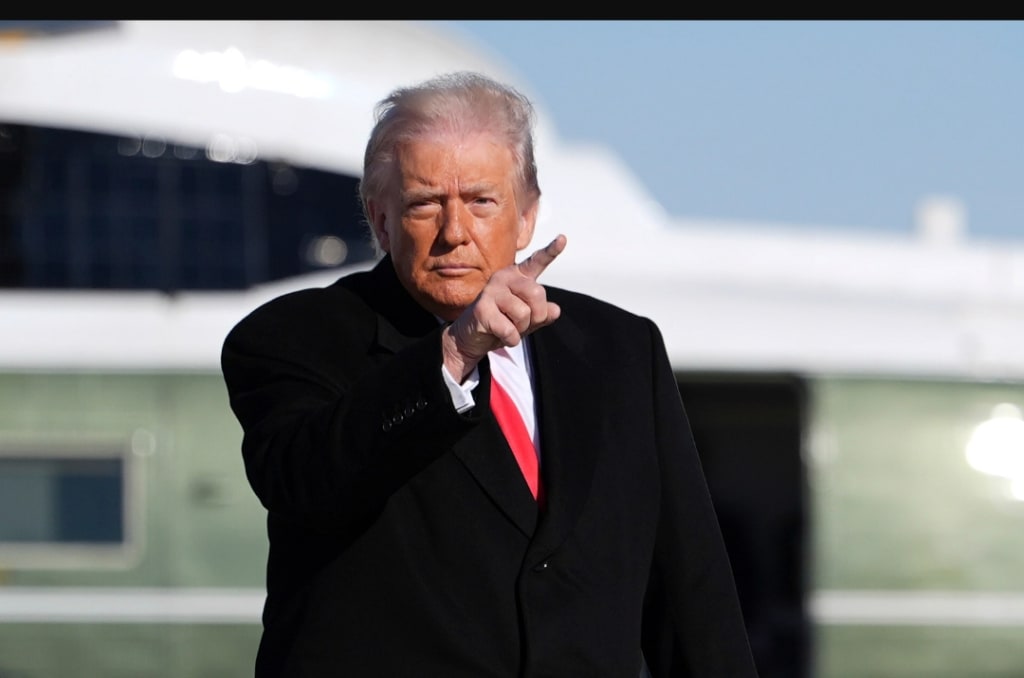
French President Emmanuel Macron has called on the European Union to prepare its most powerful trade countermeasures—often described as a trade “bazooka”—as tensions with the United States rise once again. His remarks come amid renewed uncertainty in transatlantic relations, fueled by former U.S. President Donald Trump’s increasingly confrontational rhetoric and policy signals toward Europe.
Macron’s comments reflect growing frustration within the EU over what many leaders see as unpredictable U.S. trade behavior and a willingness to use tariffs and economic pressure as political tools. As Trump ramps up tensions, European policymakers are debating whether the bloc should respond defensively or assertively to protect its economic and strategic interests.
---
Rising Trade Tensions Across the Atlantic
Transatlantic trade relations have long been a cornerstone of the global economy, linking two of the world’s largest markets. However, these ties have been repeatedly tested during periods of political turbulence. Trump’s previous presidency was marked by tariffs on European steel and aluminum, threats against the auto industry, and frequent criticism of the EU’s trade practices.
With Trump once again dominating political headlines, concerns are resurfacing in European capitals. His renewed emphasis on “America First” policies and warnings of tougher trade measures have raised fears of another round of tariffs, disputes at the World Trade Organization, and economic uncertainty for European exporters.
Macron’s call for action suggests that Europe may be less willing this time to absorb pressure without responding forcefully.
What Macron Means by a Trade “Bazooka”
When Macron refers to a trade “bazooka,” he is pointing to the EU’s most powerful economic defense tools. These include anti-coercion instruments, retaliatory tariffs, restrictions on market access, and legal action against countries that use trade as a weapon.
The EU has spent recent years strengthening its trade defense mechanisms, partly in response to previous disputes with the United States and ongoing economic rivalry with China. These tools are designed to deter unfair practices and send a clear signal that the bloc can act decisively when its interests are threatened.
Macron argues that simply having these tools is not enough; Europe must be ready to use them if necessary.
A Shift Toward Strategic Assertiveness
Macron’s stance reflects a broader shift in European thinking toward what is often described as “strategic autonomy.” This concept emphasizes Europe’s ability to act independently in economic, defense, and foreign policy matters without excessive reliance on external powers.
For years, critics have accused the EU of being slow and reactive in the face of aggressive trade policies. Macron’s message challenges this perception, urging the bloc to move beyond cautious diplomacy and demonstrate real leverage.
According to supporters of this approach, a strong response could discourage future trade threats and establish clearer boundaries in the transatlantic relationship.
Divisions Within the European Union
Despite Macron’s push, not all EU member states share the same appetite for confrontation. Some countries, particularly those with strong export ties to the United States, worry that an aggressive trade response could trigger retaliation and harm their economies.
Others argue that maintaining close ties with Washington is essential for security and geopolitical stability, especially given ongoing global challenges. For these countries, diplomacy and negotiation remain preferable to escalation.
These internal divisions highlight one of the EU’s greatest challenges: forging a unified response among 27 member states with diverse economic interests and political priorities.
Trump’s Role in Escalating Tensions
Trump’s rhetoric has played a significant role in shaping the current climate. His criticism of the EU as a trade rival rather than a partner, combined with threats of new tariffs, has revived memories of previous trade wars.
Even without formal policy action, such statements can create uncertainty in global markets and strain diplomatic ties. For European leaders, the unpredictability of Trump’s approach makes preparation essential.
Macron’s warning can be seen as both a response to Trump’s words and a signal to Washington that Europe is no longer willing to be caught off guard
Economic Stakes for Both Sides
The economic stakes of a transatlantic trade conflict are enormous. The EU and the United States are among each other’s largest trading partners, with billions of dollars in goods and services exchanged every year. Any disruption could affect industries ranging from automotive manufacturing to agriculture and technology.
Businesses on both sides of the Atlantic are watching closely, wary of supply chain disruptions, rising costs, and regulatory uncertainty. For them, political tensions translate directly into economic risk.
This reality adds pressure on policymakers to balance firmness with pragmatism.
Implications for Global Trade
Beyond Europe and the United States, Macron’s remarks carry global implications. A more assertive EU could reshape international trade dynamics, signaling that major economic blocs are prepared to defend themselves more aggressively.
Such a shift could encourage other regions to adopt similar strategies, potentially leading to a more fragmented and confrontational global trade environment. At the same time, it could also push countries toward clearer rules and renewed negotiations to avoid costly conflicts.
Conclusion
Macron’s call for the EU to deploy its trade “bazooka” underscores a changing mood in Europe. As Trump ramps up tensions, patience in Brussels and other European capitals appears to be wearing thin. The message is clear: while the EU prefers cooperation and dialogue, it is increasingly prepared to respond with strength if provoked.
Whether this approach leads to deterrence or escalation remains to be seen. What is certain is that transatlantic trade relations are entering another period of uncertainty, one in which Europe is determined to be more assertive, more united, and less reactive than in the past.
About the Creator
Asad Ali
I'm Asad Ali, a passionate blogger with 3 years of experience creating engaging and informative content across various niches. I specialize in crafting SEO-friendly articles that drive traffic and deliver value to readers.
The Forsyth House Fire
Since 1851, Forsyth House has stood on the corner of Union Street and Gordon Street in the heart of Glasgow. Its iconic, or was... because on Sunday 8th of March, 2026, a fire broke out in a small, seemingly un-named shop in the building and tore all that history down. As I write, the rubble is still unsettled and the street is still blocked off. Central Station is quiet on the upper level, and around 30 small businesses have quite literally gone up in smoke.
By S. A. Crawford3 days ago in The Swamp
Trump and Rubio’s Vision of War: The Art of Destroy and Deal
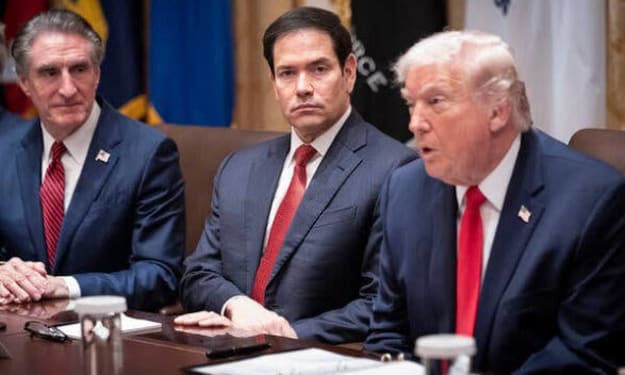
In the evolving landscape of American foreign policy debates, few ideas have generated as much discussion as the strategic vision sometimes described by critics and supporters alike as the “destroy and deal” approach. The concept is often associated with the rhetoric and policy preferences of prominent U.S. political figures such as Donald Trump and Marco Rubio, who have both argued that strong military leverage can be a powerful tool in forcing adversaries to negotiate. Although the two leaders differ in tone and political background, their views on national security often intersect around the idea that diplomacy is most effective when backed by overwhelming power. Supporters describe the approach as pragmatic realism, while critics warn that it risks escalating conflicts before negotiations even begin. The Core Idea Behind “Destroy and Deal” At its core, the strategy emphasizes the use of decisive force or economic pressure to weaken an adversary’s position before engaging in negotiations. Advocates argue that demonstrating strength first forces opponents to recognize the costs of continued confrontation. The approach draws inspiration from historical examples where military pressure preceded diplomatic agreements. In such cases, leaders have believed that demonstrating battlefield or economic dominance creates the conditions for favorable negotiations. For Donald Trump, the concept aligns with his broader “America First” philosophy, which prioritizes national interests and direct negotiation with rivals. During his presidency, Trump frequently emphasized that strong sanctions, military readiness, and aggressive rhetoric could push adversaries toward diplomatic settlements. Rubio’s Strategic Perspective Marco Rubio, a long-time member of the United States Senate, has framed the strategy in terms of strategic deterrence and global power competition. Rubio has consistently argued that authoritarian rivals must believe the United States is willing to act decisively in order for diplomatic solutions to succeed. His approach reflects concerns about geopolitical competition with countries such as China, Russia, and Iran, where policymakers in Washington believe strong deterrence is necessary to prevent regional aggression. Rubio and like-minded lawmakers contend that negotiations without leverage often fail, especially when dealing with governments that see compromise as weakness. From this perspective, economic sanctions, military deployments, and strategic alliances are tools that create the leverage required for successful diplomacy. Military Pressure and Negotiation Critics describe the “destroy and deal” philosophy as a risky strategy that could escalate conflicts unnecessarily. They argue that relying on military pressure may provoke retaliation and increase instability in already fragile regions. Foreign policy analysts often note that while coercive diplomacy has occasionally succeeded, it has also led to prolonged conflicts when adversaries refuse to back down. The balance between deterrence and escalation remains one of the central challenges of modern international relations. Supporters counter that deterrence itself depends on credibility. If adversaries believe the United States lacks the will to use force, they argue, diplomatic negotiations lose much of their influence. Influence on Global Strategy The broader debate surrounding this strategy reflects a deeper shift in American foreign policy thinking. In recent years, policymakers across the political spectrum have become increasingly concerned about the return of great-power competition. Conflicts and tensions involving the North Atlantic Treaty Organization, rising competition in the Indo-Pacific region, and ongoing confrontations in the Middle East have all contributed to a more assertive strategic environment. Within this context, the idea of combining pressure with negotiation has gained traction among some policymakers who believe traditional diplomacy alone is insufficient to manage modern geopolitical rivalries. The Critics’ View Opponents argue that such strategies risk oversimplifying complex conflicts. They contend that international crises often require long-term diplomatic engagement, coalition-building, and economic cooperation rather than purely coercive tactics. Some analysts warn that a doctrine centered too heavily on force could undermine international institutions and alliances that have historically played key roles in maintaining stability. Human rights groups have also expressed concern that aggressive strategies may increase civilian suffering in conflict zones if military operations become the primary tool of foreign policy. The Future of the Debate The ongoing discussion surrounding the “destroy and deal” concept reflects broader disagreements about how the United States should navigate an increasingly competitive world. While some policymakers believe stronger military leverage is essential, others advocate for diplomacy and multilateral cooperation as the primary tools for resolving disputes. Ultimately, the effectiveness of any strategy will depend on how it is applied in specific situations. Military strength, economic influence, and diplomatic engagement are all components of modern statecraft, and balancing them remains one of the most difficult tasks for policymakers. As debates continue in Washington and beyond, the ideas associated with Donald Trump and Marco Rubio will likely remain part of the conversation about how the United States approaches war, negotiation, and the pursuit of national interests in an uncertain global landscape.
By Fiaz Ahmed 2 days ago in The Swamp



Comments
There are no comments for this story
Be the first to respond and start the conversation.