
Macron to Seek Use of EU Anti-Coercion Instrument Against the US
French president pushes Brussels toward a tougher stance as transatlantic trade tensions intensify

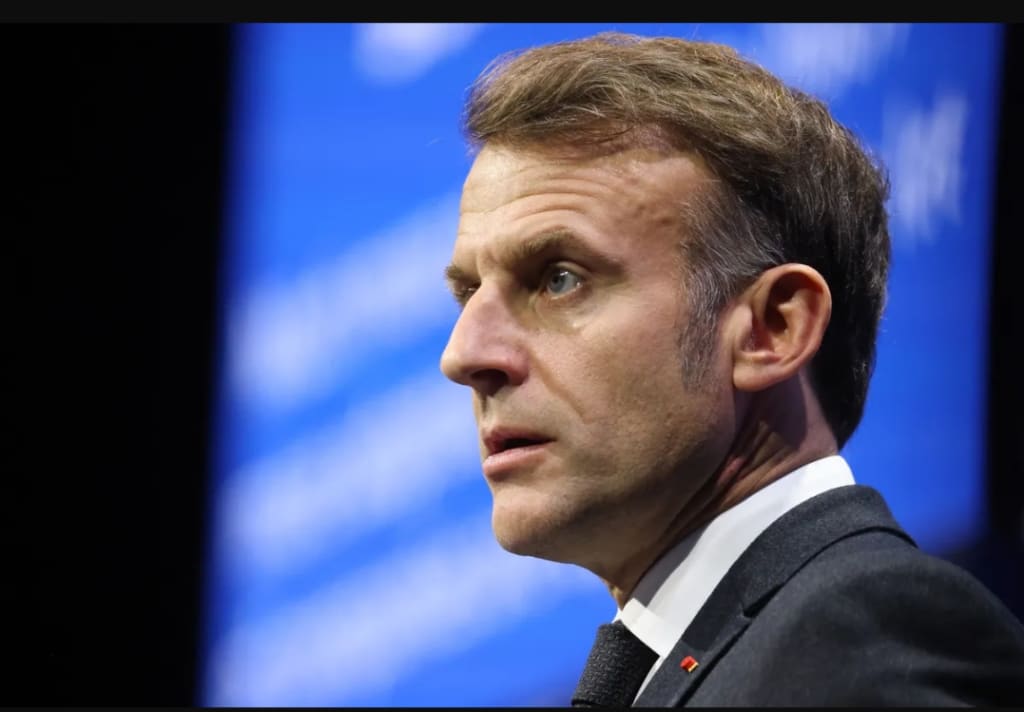
French President Emmanuel Macron has signaled that he will seek the use of the European Union’s Anti-Coercion Instrument (ACI) against the United States, marking a sharp escalation in Europe’s response to rising trade and political pressure from Washington. The move reflects a growing belief in Paris and other European capitals that the EU must be prepared to defend its economic sovereignty with real enforcement tools rather than diplomatic warnings alone.
Macron’s stance comes at a moment when relations between the EU and the United States are again under strain, driven by renewed protectionist rhetoric and the prospect of unilateral trade measures associated with former U.S. President Donald Trump. As uncertainty grows, the French leader is urging Brussels to demonstrate that Europe has both the will and the means to respond.
What Is the EU Anti-Coercion Instrument?
The EU Anti-Coercion Instrument is one of the bloc’s strongest economic defense tools. It was designed to protect EU member states from economic pressure exerted by foreign governments seeking to influence policy decisions through trade restrictions, tariffs, or other punitive measures.
Under the ACI, the EU can investigate alleged coercive actions and, if necessary, impose countermeasures. These may include retaliatory tariffs, limits on access to EU markets, restrictions on public procurement, or controls on investment and services. The instrument is intended to deter economic bullying by raising the cost of coercion.
While the tool has existed for some time, it has rarely been invoked. Macron’s push suggests that Europe may now be ready to move from theory to practice.
Why Macron Is Taking a Harder Line
Macron has long advocated for what he calls European “strategic autonomy” — the idea that the EU must be able to act independently in economic, political, and security matters. In his view, reliance on goodwill from global partners is no longer sufficient in an era of intensifying geopolitical competition.
The renewed risk of U.S. tariffs, trade threats, or unilateral measures has strengthened Macron’s argument. He believes that if Washington perceives Europe as hesitant or divided, it may be more willing to use economic pressure to extract concessions. Deploying the ACI, or at least preparing to do so, is meant to send a clear signal that the EU will not accept coercion quietly.
Transatlantic Tensions Re-Emerge
Trade relations between the EU and the United States have historically been strong but periodically volatile. Previous disputes over steel, aluminum, aircraft subsidies, and digital taxes left lasting scars. Although relations improved for a time, the political climate has once again become uncertain.
Trump’s confrontational approach toward allies, combined with his emphasis on “America First” policies, has revived fears of another transatlantic trade clash. Even the possibility of such measures has unsettled European policymakers and businesses.
Macron’s call to use the Anti-Coercion Instrument reflects a desire to be proactive rather than reactive.
Divisions Within the European Union
Despite Macron’s strong position, consensus within the EU is far from guaranteed. Some member states are cautious about escalating tensions with Washington, emphasizing the importance of the U.S. as a security partner and economic ally.
Countries with export-dependent economies worry that retaliation could trigger counter-retaliation, harming industries such as automotive manufacturing, aerospace, and agriculture. Others argue that invoking the ACI against the U.S. — a close ally — could set a precedent that undermines diplomatic trust.
These internal divisions highlight the complexity of EU decision-making, where unity is essential but often difficult to achieve.
A Test of Europe’s Strategic Autonomy
Macron’s proposal is also a test of whether the EU is serious about defending its autonomy. For years, European leaders have spoken about reducing dependence on external powers, yet critics argue that Europe has often hesitated when decisive action was required.
Using the Anti-Coercion Instrument against the U.S. would represent a bold statement that Europe is willing to apply its rules consistently, regardless of the partner involved. Supporters say this would strengthen the EU’s credibility on the global stage.
Opponents, however, warn that such a move could deepen rifts at a time when cooperation is needed to address global challenges.
Economic Stakes for Both Sides
The EU and the United States are among each other’s largest trading partners, with deeply integrated supply chains and billions in daily economic exchanges. Any escalation could have significant consequences for businesses, workers, and consumers on both sides of the Atlantic.
Uncertainty alone can delay investment decisions, disrupt markets, and weaken confidence. For this reason, many business leaders are urging restraint and dialogue, even as governments prepare contingency plans.
Macron’s approach seeks to balance deterrence with diplomacy — signaling strength while leaving the door open for negotiation.
Global Implications of Using the ACI
If the EU were to activate the Anti-Coercion Instrument against the U.S., it would send a powerful message globally. Other countries would see that Europe is willing to confront even its closest partners when it believes economic pressure is being misused.
This could reshape global trade dynamics, encouraging other regions to develop similar tools or adopt more assertive trade policies. At the same time, it risks contributing to a more fragmented and confrontational global economic system.
Conclusion
Macron’s call to seek the use of the EU Anti-Coercion Instrument against the United States marks a significant moment in transatlantic relations. It reflects growing frustration in Europe over economic pressure tactics and a determination to defend the bloc’s interests more forcefully.
Whether the EU ultimately agrees to invoke the instrument remains uncertain, given internal divisions and the high stakes involved. What is clear, however, is that Europe’s approach to global trade is evolving. As tensions rise and trust is tested, the EU appears increasingly willing to back its rhetoric of strategic autonomy with action — even when dealing with its closest allies.
About the Creator
Asad Ali
I'm Asad Ali, a passionate blogger with 3 years of experience creating engaging and informative content across various niches. I specialize in crafting SEO-friendly articles that drive traffic and deliver value to readers.
British Business Bank Makes Its Biggest Direct Bet Yet on Energy Tech
When you think about government-backed banks, “taking big risks” isn’t usually the first thing that comes to mind. But the British Business Bank (BBB) is changing that perception. Recently, it announced its largest direct equity investment ever — a whopping £25 million in Kraken Technologies, the AI-driven energy software company spun out of Octopus Energy.
By Muhammad Hassanabout 10 hours ago in The Swamp


Comments
There are no comments for this story
Be the first to respond and start the conversation.