
Local Elections in the UK: Why They Matter More Than You Think
Exploring the reforms, challenges, and real-world impact of local voting across the United Kingdom

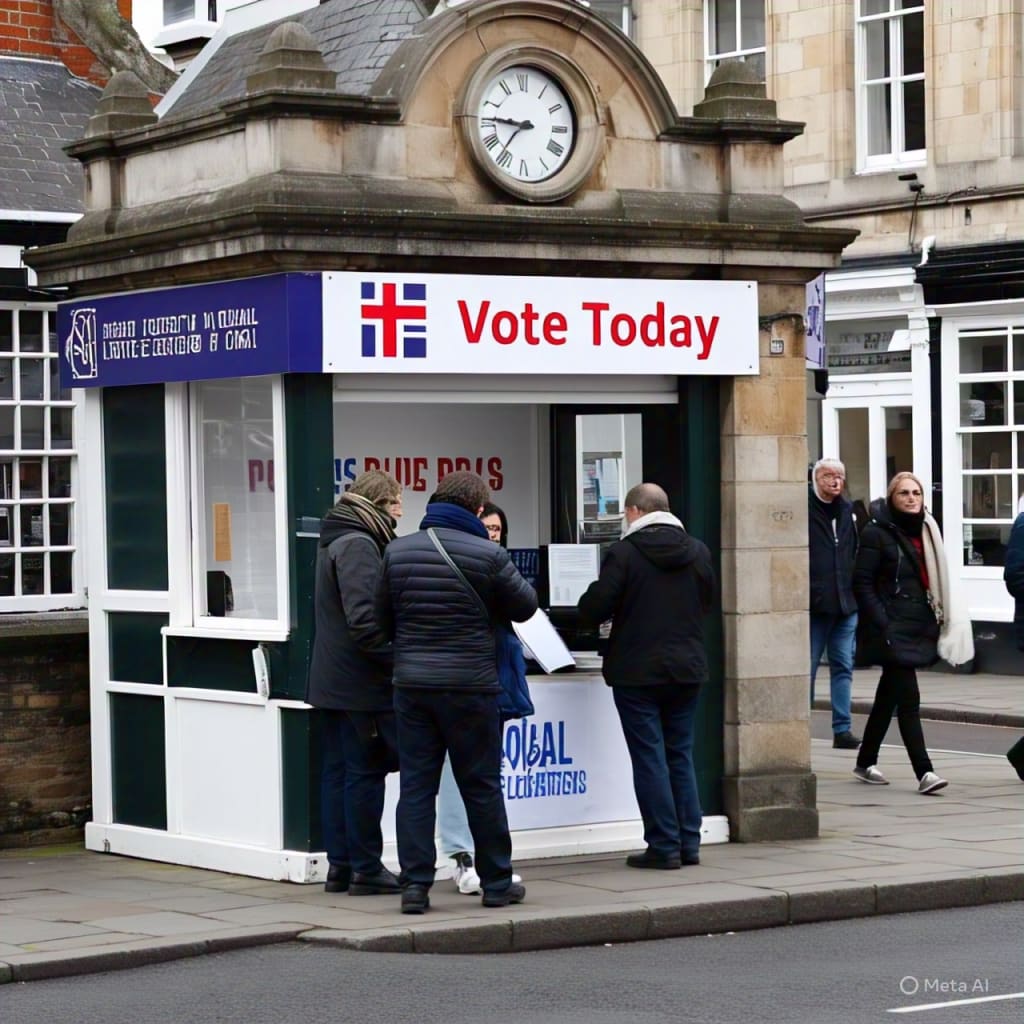
Local Elections in the United Kingdom: Reforms, Challenges, and Impact
Local elections are an important part of the democratic process in the United Kingdom. These elections let people choose who will run their local councils. Councils are responsible for many everyday services, such as waste collection, education, housing, and roads. While local elections do not choose Members of Parliament (MPs) or the Prime Minister, they still have a big impact on people’s lives.
Local elections in the UK are usually held every year in May, but not all councils vote at the same time. Some councils hold elections every four years. Others elect one-third of their council each year for three years, with no election in the fourth year.
Voters in local elections must be at least 18 years old and registered to vote. In recent years, changes have been made to voting rules, including the introduction of voter ID. This means voters now need to show a valid form of identification, like a passport or driver’s license, at the polling station. The goal is to prevent fraud, but some people argue that it makes voting harder for certain groups, like the elderly or low-income individuals.
Reforms in Local Elections
One of the most talked-about reforms in recent years has been the voter ID requirement. This change was part of the Elections Act 2022. Supporters of the law say it protects the integrity of elections. Critics believe it might stop some people from voting, especially those who do not have easy access to ID
Another reform has been the digital registration system, which makes it easier for people to register to vote online. This has helped younger voters and first-time voters take part in the democratic process. There have also been discussions about using more technology in voting, such as electronic voting machines or online voting, but these are still in early stages.
In Scotland and Wales, 16- and 17-year-olds are now allowed to vote in local elections. This change is seen as a way to involve younger people in politics from an earlier age.
Challenges Facing Local Elections
One major challenge is low voter turnout. Many people do not vote in local elections because they feel their vote does not make a difference, or they are not aware of the election date. Turnout is often lower than in national elections.
Another issue is the lack of diversity among local candidates. Many councils still lack representation from women, ethnic minorities, and people with disabilities. This means that not all voices are heard in decision-making.
Funding and resources are also problems. Local councils have seen budget cuts in recent years. When councils do not have enough money, it becomes harder for them to provide services and hold well-organized elections.
In some areas, political confusion can also be a challenge. Some voters do not understand the differences between local and national governments. They may blame local councils for problems that are actually controlled by Parliament, or vice versa.
The Impact of Local Elections
Even though they do not decide who becomes Prime Minister, local elections have a strong effect on communities. They shape how schools are run, how roads are maintained, and how housing is managed. A local council with good leadership can make a town or city cleaner, safer, and more efficient.
Local elections also send signals to national leaders. If a party does well or badly in local elections, it can affect what happens in the next general election. For example, if people are unhappy with the ruling party’s national policies, they may vote against that party in local elections to send a message.
Local elections also give smaller parties, like the Green Party or Liberal Democrats, a chance to gain power in certain areas. These smaller parties often focus on local issues, such as public transportation or the environment.
Finally, local elections are a great way for citizens to get involved in politics. They can run for office, support a candidate, or simply make their voices heard by voting.
Conclusion
Local elections in the United Kingdom play an important role in shaping communities. While there have been some helpful reforms, like online registration and lowering the voting age in parts of the UK, challenges like low turnout and lack of diversity remain. These elections may not always get much attention, but they are a key part of a healthy democracy.
By understanding how local elections work, what reforms are being made, and what challenges still exist, citizens can make better choices and take part in building stronger local communities.
About the Creator
Saad
I’m Saad. I’m a passionate writer who loves exploring trending news topics, sharing insights, and keeping readers updated on what’s happening around the world.
Germany’s Nationalist AfD Party Hopes to Take Power in 2026
Germany’s political landscape is facing a potential shift as the nationalist Alternative für Deutschland (AfD) party sets its sights on the 2026 elections. Known for its right-wing populist agenda, anti-immigration rhetoric, and Euroscepticism, the AfD has steadily gained traction over the past decade. While mainstream parties continue to dominate national politics, analysts warn that the AfD’s growing influence could reshape Germany’s policy direction and challenge the country’s longstanding commitment to liberal democracy. The Origins of the AfD Founded in 2013, the AfD initially positioned itself as a Eurosceptic party, opposing the European Union’s handling of the eurozone crisis. Over time, the party shifted its focus toward nationalist and anti-immigration policies, tapping into public frustration over migration, globalization, and perceived threats to German cultural identity. The party has also adopted a strong stance against climate regulations and progressive social policies, appealing to conservative voters who feel alienated by Germany’s traditional political parties. These positions have allowed the AfD to carve out a niche in Germany’s fragmented political landscape. Recent Electoral Gains The AfD has seen steady growth in regional and national elections. In the 2021 federal elections, the party captured around 10% of the vote, becoming the third-largest party in the Bundestag. Its support is particularly strong in eastern Germany, where economic disparities, historical resentment, and dissatisfaction with mainstream politics have contributed to its rise. Political analysts note that the AfD’s success is not only electoral but also cultural. By dominating media narratives on immigration and national identity, the party has shifted public debate and forced mainstream parties to respond to issues they might otherwise have avoided. The 2026 Ambitions Looking ahead to the 2026 elections, the AfD aims to increase its share of seats and, potentially, enter government coalitions at both state and federal levels. Party leaders have emphasized a platform focused on reducing immigration, reforming the European Union, and rolling back environmental regulations. Some strategists within the party believe that growing concerns over energy costs, economic inequality, and social change could bolster voter support. By framing itself as a defender of “traditional German values,” the AfD hopes to attract both its core base and disillusioned voters from the center-right spectrum. Controversies and Criticism The AfD’s rise has not been without controversy. Critics accuse the party of promoting xenophobia, undermining democratic norms, and fostering extremist tendencies. Multiple AfD members have faced scrutiny for inflammatory remarks, associations with far-right groups, and attempts to normalize nationalist rhetoric. Germany’s domestic intelligence agency has labeled parts of the AfD as “suspected extremist,” monitoring its activities closely. Opposition parties argue that allowing the AfD into power could threaten Germany’s democratic institutions and international reputation. Public Perception and Support Despite criticism, the AfD retains a loyal voter base. Many supporters argue that the party addresses real concerns about immigration, economic stagnation, and EU bureaucracy that they feel are ignored by mainstream parties. Polls suggest that younger voters and urban populations are less supportive of the AfD, while older, rural, and economically disadvantaged communities continue to provide the party with significant backing. Analysts believe that the 2026 elections could hinge on turnout in these demographic groups. Implications for Germany and Europe The AfD’s potential rise has implications beyond Germany’s borders. As Europe faces migration pressures, energy crises, and political polarization, the success of a nationalist party in one of the continent’s largest economies could inspire similar movements in other countries. European Union leaders have expressed concern that an AfD-led government might adopt policies that clash with EU regulations, potentially straining relations with neighboring countries and weakening cohesion in European decision-making. Challenges Ahead While the AfD hopes to gain power, it faces significant obstacles. Mainstream parties, including the Christian Democrats (CDU) and Social Democrats (SPD), are actively campaigning to prevent the AfD from entering government. Additionally, voter concerns about extremism, international relations, and social stability may limit the party’s growth. Coalition-building will also be a challenge. Many parties have ruled out working with the AfD, meaning that even a strong electoral showing may not translate into executive power. Analysts predict that the AfD’s influence may grow through parliamentary presence rather than direct governance. The Role of Media and Messaging The AfD has been adept at using social media and alternative media platforms to bypass traditional journalistic filters. By framing itself as a voice for the “ignored majority,” the party appeals to voters who distrust mainstream institutions. At the same time, investigative journalism and public awareness campaigns have sought to highlight the party’s extremist tendencies and controversial rhetoric. This ongoing battle over narrative and perception will be crucial in shaping the 2026 elections. Conclusion: A Defining Moment for Germany As Germany approaches 2026, the rise of the AfD represents both an opportunity and a challenge for the nation. For supporters, the party embodies a chance to restore national pride and prioritize domestic concerns. For critics, it threatens to destabilize democratic norms and exacerbate social divisions. The upcoming elections will test Germany’s resilience, political maturity, and commitment to pluralism. Whether the AfD succeeds in taking power or remains a powerful opposition force, its impact on Germany’s political discourse—and the broader European context—will be felt for years to come.
By Aarif Lashari4 days ago in The Swamp



Comments
There are no comments for this story
Be the first to respond and start the conversation.