
Live: Trump ‘Talked Out of Iran Strike at Last Minute’
A Narrowly Avoided Military Action
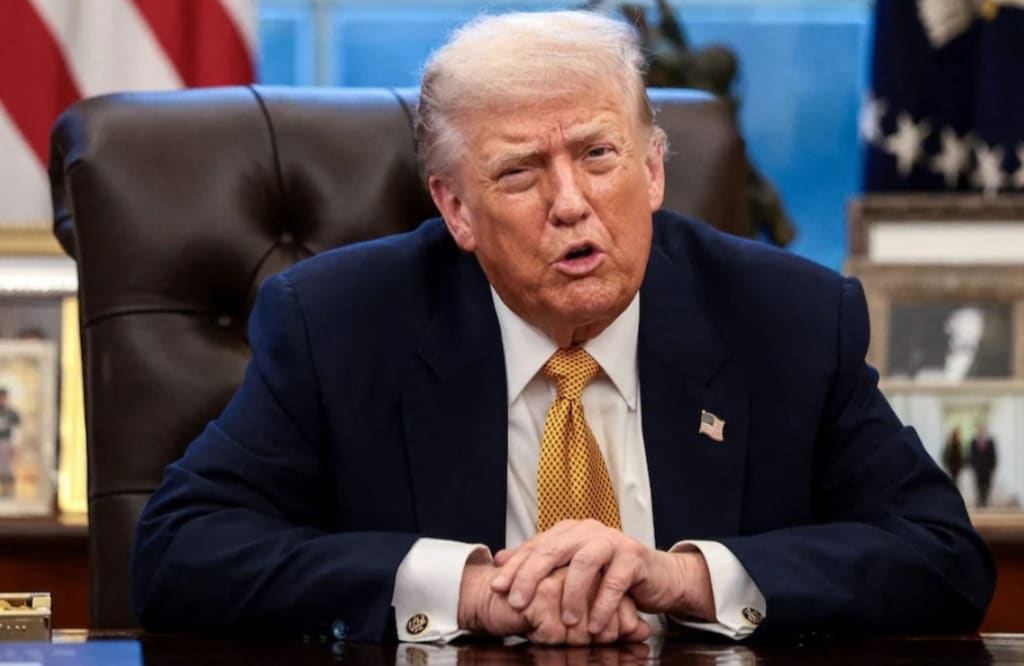
In a dramatic turn of events, reports indicate that former US President Donald Trump was reportedly “talked out” of a potential strike against Iran at the last minute. The situation, which unfolded amid rising tensions in the Middle East, underscores the delicate nature of US-Iran relations and the influence of advisers in high-stakes decision-making.
While details remain limited, officials and media reports suggest that Trump had been considering a military response to perceived Iranian provocations but was persuaded by senior aides and military advisors to hold off, citing potential escalation and regional instability.
Context: Rising Tensions in the Middle East
Tensions between the United States and Iran have been high for years, fueled by disputes over nuclear programs, regional influence, and attacks on US assets in the region. In recent months, there have been reports of increased drone attacks, oil tanker incidents, and cyber operations that many analysts interpreted as provocative maneuvers by Iran.
The US has repeatedly signaled its readiness to respond to threats, prompting international attention and concern over the possibility of a full-scale military confrontation.
The Role of Advisers
Sources indicate that Trump’s decision was influenced by input from senior military officials and national security advisers. These advisers reportedly highlighted the risks of escalation, potential civilian casualties, and the uncertain outcomes of a strike.
One official reportedly told the president that a strike could trigger a retaliatory cycle, not just against US military assets but potentially against allies in the region, including Israel, Saudi Arabia, and other Gulf states.
The intervention highlights the importance of advisory roles in presidential decision-making, especially when national security and international stability are at stake.
The Decision-Making Process
Reports suggest the discussions were tense, with Trump weighing the political and strategic implications of striking Iran. While he reportedly expressed frustration over Iranian actions, the advisers emphasized diplomatic alternatives, intelligence-gathering, and multilateral pressure as safer options.
Ultimately, the decision to refrain from immediate military action appears to have been a calculated choice to avoid a direct confrontation, while still maintaining a posture of deterrence.
Reactions from Washington
The news of a narrowly avoided strike has sparked a mix of reactions in Washington:
Supporters of Trump argue that the president showed strength by considering decisive action against Iran, maintaining a firm stance on US interests.
Critics and international relations experts stress that restraint was the wisest option, avoiding unnecessary conflict that could have escalated into war.
Congressional leaders have emphasized the need for oversight and careful evaluation of any military decision, particularly those that could lead to prolonged engagement in the Middle East.
Regional Implications
A strike against Iran, even limited in scope, could have had serious regional consequences. Analysts warn that such action might have triggered retaliatory attacks on US bases, civilian targets, or shipping lanes, particularly in the Strait of Hormuz—a critical chokepoint for global oil trade.
The decision to hold off has been seen as a moment that avoided immediate escalation, giving diplomatic channels and intelligence operations more time to address threats.
Global Perspective
Internationally, the news has drawn attention from European allies, the UN, and neighboring Middle Eastern countries, many of whom have urged restraint. Global leaders have repeatedly stressed the importance of avoiding unilateral military action that could destabilize the region and impact the global economy.
Analysts note that Trump’s decision aligns with broader patterns in US foreign policy, where military options are often weighed against economic, diplomatic, and humanitarian considerations.
The Political Angle
Domestically, the episode could influence public perception of Trump’s foreign policy judgment. Supporters may see the president as decisive and willing to protect US interests, while critics may view the decision-making as reactive or risky.
Media coverage of “talked out” moments highlights the tension between presidential authority and advisory counsel, a recurring theme in the history of US executive decision-making.
Lessons for Leadership and Diplomacy
Experts suggest that the incident provides several lessons:
The value of advisers: Trusted advisors can prevent impulsive decisions with potentially catastrophic consequences.
Measured responses: Military action, particularly against complex states like Iran, requires careful consideration of long-term impacts.
Diplomacy as a tool: Even in high-pressure scenarios, diplomatic alternatives can prevent escalation while maintaining strategic pressure.
The episode underscores that decisions about military strikes are never solely tactical; they involve political, economic, and humanitarian dimensions that must be carefully balanced.
Looking Ahead
While the immediate strike was avoided, tensions between the United States and Iran remain high. Analysts expect continued monitoring of Iranian activities, increased intelligence operations, and potential diplomatic initiatives to de-escalate the situation.
The event serves as a reminder of how close high-stakes military decisions can come to action, and the importance of both leadership judgment and counsel in shaping the course of international affairs.
About the Creator
Keep reading
More stories from Aarif Lashari and writers in The Swamp and other communities.
Votes Being Counted in Uganda Election as Opposition Alleges Rigging
Uganda is at a critical political crossroads as votes are being counted in a highly contested election. The country has watched closely as citizens cast their ballots, and now the nation waits to see the outcome amid allegations of electoral malpractice.
By Aarif Lashari4 days ago in The Swamp
Time to Dump Trump? Europeans Whisper Last-Resort Options to Save Greenland
In diplomatic circles across Europe, a phrase once unthinkable is now being whispered behind closed doors: What if the alliance can’t hold? As renewed pressure from former U.S. President Donald Trump resurfaces over Greenland, European officials are reportedly discussing last-resort options to safeguard the strategically vital Arctic territory — even if it means distancing themselves from Washington. While public statements remain carefully measured, private conversations suggest a growing anxiety: Greenland has become a geopolitical fault line, testing NATO solidarity, transatlantic trust, and Europe’s ability to defend its own interests. Why Greenland Is Suddenly at the Center of Global Power Politics Greenland is not just the world’s largest island. It is a strategic prize. Located between North America and Europe, Greenland sits at the crossroads of Arctic shipping lanes, missile defense routes, and untapped reserves of rare earth minerals. As climate change melts Arctic ice, access to these routes and resources is expanding — turning the region into a global competition zone. The United States already maintains a military presence in Greenland through Thule Air Base, vital to missile warning and space surveillance. But Trump’s earlier proposal to buy Greenland outright shocked European capitals and Denmark alike, reframing the island not as a partner but as a commodity. Now, with Trump once again influencing U.S. foreign policy discourse, European leaders fear that economic pressure, security leverage, or political coercion could return. Denmark’s Dilemma and Europe’s Unease Greenland is an autonomous territory within the Kingdom of Denmark, and Copenhagen has repeatedly stated that it is not for sale. Yet Denmark alone lacks the political and military weight to counter sustained pressure from Washington. That’s where Europe enters the picture. Behind the scenes, diplomats from Germany, France, and Nordic countries are reportedly discussing how to shield Denmark and Greenland from unilateral U.S. moves. These discussions are not about confrontation — at least not yet — but about contingency planning. The uncomfortable truth is this: Europe has long relied on the U.S. for Arctic security, and challenging Washington risks exposing Europe’s own strategic weaknesses. What Are the “Last-Resort Options”? European officials are careful not to spell out these ideas publicly, but analysts point to several possibilities under quiet consideration. 1. Deepening EU Involvement in Greenland One option is stronger European Union engagement with Greenland — economically, politically, and diplomatically. This could include increased investment in infrastructure, climate research, and sustainable mining projects to reduce Greenland’s reliance on external powers. By anchoring Greenland more firmly within Europe’s economic orbit, the EU could make any U.S. attempt at leverage far more complicated. 2. Expanded European Security Presence Another option involves enhancing European defense cooperation in the Arctic, potentially through joint patrols, surveillance missions, or NATO-aligned European initiatives that do not rely solely on U.S. leadership. This would be a delicate move, as NATO cohesion depends heavily on U.S. participation. Still, some European officials believe greater autonomy is overdue. 3. Legal and Diplomatic Shields Europe could also pursue stronger legal frameworks affirming Greenland’s right to self-determination and Denmark’s sovereignty. While largely symbolic, such measures would raise the diplomatic cost of any aggressive maneuver. In extreme scenarios, coordinated diplomatic resistance — even sanctions or formal rebukes — could be considered, though most officials view this as a true last resort. Why Trump Changes the Equation European leaders are accustomed to managing disagreements with Washington. What makes Trump different is unpredictability. During his presidency, Trump repeatedly questioned NATO commitments, framed alliances as transactional, and blurred the line between negotiation and coercion. His interest in Greenland was not just strategic — it was personal, public, and disruptive. The fear in Europe is not necessarily that Trump would “take” Greenland, but that he might use U.S. security guarantees as leverage, forcing concessions through pressure rather than partnership. For European capitals already dealing with Ukraine, energy insecurity, and domestic political shifts, another transatlantic crisis is the last thing they want. Greenland’s Own Voice Amid the power politics, Greenlanders themselves are increasingly vocal. Many in Greenland support greater autonomy or eventual independence — but not annexation. Local leaders have emphasized that Greenland’s future must be decided by its people, not foreign governments. European officials privately acknowledge that ignoring Greenlandic voices would undermine their moral position. Any European strategy, they argue, must prioritize economic development, environmental protection, and self-governance, not just strategic defense. A Test for Transatlantic Relations At its core, the Greenland issue is about more than territory. It raises uncomfortable questions: Can Europe protect its interests without U.S. backing? Is NATO flexible enough to survive internal disagreements? What happens when allies no longer trust each other’s intentions? For now, European leaders are trying to avoid open confrontation, hoping that diplomacy and quiet deterrence will keep tensions from escalating. But the whispers themselves are revealing. They suggest that Europe is, for the first time in decades, seriously contemplating a future where American leadership is not guaranteed. Why This Moment Matters The Arctic is warming faster than any other region on Earth — physically and politically. What happens in Greenland could set a precedent for how global powers compete in newly accessible regions. If Europe fails to act, it risks appearing passive and divided. If it acts too forcefully, it risks fracturing the transatlantic alliance that has underpinned its security since World War II. It is a narrow path — and one that demands strategic clarity Europe has often postponed. Final Thoughts “Time to dump Trump?” may sound dramatic, but it captures a deeper unease spreading across European capitals. Greenland has become a symbol of a shifting world — one where alliances are tested, assumptions are challenged, and old guarantees no longer feel automatic. Europe is not eager for a break with Washington. But the quiet conversations suggest a realization that preparation is not betrayal. Whether these whispered last-resort options remain theoretical — or become policy — will depend on how the next phase of U.S. politics unfolds. For Greenland, Europe, and the Arctic, the stakes could not be higher.
By Muhammad Hassan3 days ago in The Swamp



Comments
There are no comments for this story
Be the first to respond and start the conversation.