
Left-Wing Group Claims Responsibility for Sabotage Causing Berlin Blackout
A deliberate attack on power infrastructure exposes growing extremist threats and the vulnerability of modern cities
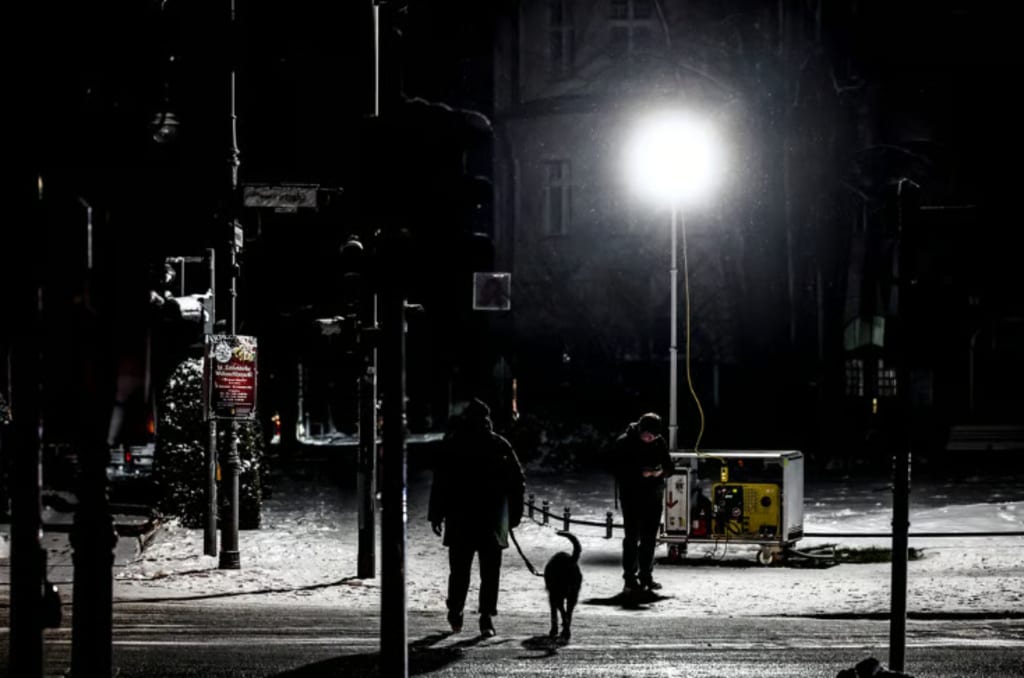
Berlin, one of Europe’s most advanced and resilient capitals, was recently thrust into darkness after a calculated act of sabotage disrupted its power supply. What initially appeared to be a technical failure soon revealed a more troubling reality: a left-wing extremist group publicly claimed responsibility for the attack, igniting a national debate about political radicalism, public safety, and the security of critical infrastructure.
The blackout, which affected tens of thousands of residents and businesses, serves as a stark reminder that even highly developed urban systems are not immune to ideological violence. As investigations continue, the incident has raised serious questions about the motivations behind such attacks and their far-reaching consequences.
What happened during the Berlin blackout
The power outage occurred after an act of arson damaged key electricity transmission cables supplying parts of southwest Berlin. The sabotage targeted infrastructure essential for delivering electricity to residential neighborhoods, commercial districts, and public services. As a result, large areas were left without power for hours, and in some cases days, particularly during cold winter conditions.
Homes lost heating and hot water, businesses were forced to shut down, traffic systems were disrupted, and emergency services had to adapt quickly to the situation. Authorities described the damage as extensive, requiring complex repairs and round-the-clock efforts from utility workers to restore electricity safely.
While power outages are not uncommon in major cities, the deliberate nature of this incident elevated it from an inconvenience to a serious security threat.
The group behind the attack
Shortly after the blackout, a left-wing extremist group released a statement claiming responsibility for the sabotage. In their message, the group framed the attack as a form of political protest, criticizing Germany’s energy policies, industrial expansion, and what they described as the “exploitation” of natural resources and technology for profit.
The group attempted to justify the sabotage as an act against powerful institutions rather than ordinary citizens. However, this reasoning was met with widespread condemnation, as the blackout directly impacted families, elderly residents, and vulnerable individuals who rely on electricity for heating, medical devices, and communication.
German security agencies have identified the group as part of a broader network of radical left-wing activists known for using arson and sabotage as tools of political expression. Officials emphasized that such actions cross a clear line from protest into criminal extremism.
Government and public reaction
Berlin’s political leaders responded swiftly and decisively. Officials labeled the attack a serious criminal offense, with some describing it as a form of domestic terrorism due to its potential to endanger lives. Increased police presence and security measures were implemented around energy facilities and other critical infrastructure across the city.
Public reaction has been largely one of outrage and concern. Many residents expressed anger that ideological goals were pursued at the expense of public safety. Social media and opinion forums were filled with criticism of the group’s actions, with citizens pointing out that disrupting essential services undermines any moral argument the attackers attempted to make.
At the same time, the incident sparked a broader discussion about extremism on all ends of the political spectrum and the need for consistent responses regardless of ideology.
The human cost of ideological sabotage
Beyond the political implications, the blackout highlighted the human cost of such attacks. Families were forced to endure freezing temperatures without heat. Small businesses lost revenue. Hospitals and care facilities had to rely on backup generators. For many residents, the experience was stressful, frightening, and disruptive to daily life.
These impacts underline a crucial point: infrastructure sabotage does not target abstract systems—it affects real people. Electricity is not a luxury; it is a fundamental necessity in modern society. Any action that compromises it carries serious ethical and legal consequences.
A warning about infrastructure vulnerability
Experts have long warned that critical infrastructure, including power grids, transportation systems, and communication networks, can be attractive targets for extremist groups seeking visibility and disruption. The Berlin blackout has reinforced these concerns, demonstrating how relatively small acts of sabotage can have outsized effects in densely populated cities.
Authorities are now reviewing security protocols and considering additional protective measures, such as improved surveillance, faster response mechanisms, and enhanced intelligence monitoring of extremist networks. The goal is not only to prevent future attacks but also to ensure rapid recovery if disruptions occur.
Balancing security and democracy
One of the challenges following such incidents is balancing stronger security measures with the protection of civil liberties. Germany, like many democratic nations, must address extremist violence without undermining legitimate political expression or peaceful protest.
Government officials have stressed that dissent and activism are fundamental rights, but violence and sabotage are not acceptable forms of political engagement. Drawing this distinction clearly is essential to maintaining both public safety and democratic values.
Conclusion
The Berlin blackout caused by left-wing sabotage is more than an isolated criminal act—it is a warning. It reveals how ideological extremism can translate into real-world harm and how vulnerable modern societies can be when essential systems are targeted.
As Berlin restores power and investigates those responsible, the broader lesson remains clear: political change cannot be pursued through actions that endanger lives and destabilize communities. Protecting infrastructure, addressing extremism, and fostering responsible civic engagement will be critical in preventing similar incidents in the future.
In a world increasingly dependent on interconnected systems, the cost of sabotage is simply too high for any ideology to justify.
About the Creator
Keep reading
More stories from Aqib Hussain and writers in The Swamp and other communities.
France Tightens Food Import Checks as Farmers Protest Mercosur Deal
France has stepped up food import inspections as farmers across the country intensify protests against the proposed European Union–Mercosur trade deal. The move highlights rising tensions between globalization and domestic agriculture, as producers warn that the agreement could threaten livelihoods, weaken environmental standards, and undermine Europe’s strict food safety rules. By tightening checks on imported food, the French government is sending a clear message: protecting farmers and consumers is now a political priority.
By Aqib Hussain2 months ago in The Swamp
A Gathering of Evil Bosses
“I’m the queen of chin jutting while I smooth my hair, attacking, insulting, and deflecting to protect my appointer.” “Oh, please, Blondi, my hair is curled, highlighted, and longer than yours. I feature television commercials telling immigrants that we will give them a free plane ride home, and if they voluntarily turn themselves in, they will be allowed to legally apply for re-entry. It runs everywhere, and I look good in it! You can’t compete because of your blond hair. Mine is nicer, and my lips are prettier than yours.”
By Andrea Corwin 17 days ago in The Swamp
Becca
"Everything is so... flat." Denille said stupidly as she looked around her new neighborhood. She looked around at the muted desert where even the smallest sign of life seemed to have given up. The plant life was shrubs that were half cooked by the heat and where there should have been a lawn, a mess of white rocks laid glistening in the sun. Even the sky looked stretched thin, like the sun had ironed it smooth. She’d moved from Riverside, where at least there were hills, but here in Barstow, everything felt baked and brittle.
By Sara Wilsona day ago in Fiction



Comments
There are no comments for this story
Be the first to respond and start the conversation.