
Le boycott: French customers shun McDonald’s, Coca Cola and Tesla to protest against Trump.
"French Consumers Take a Stand: The Rising Wave of #BoycottUSA Against American Brands"

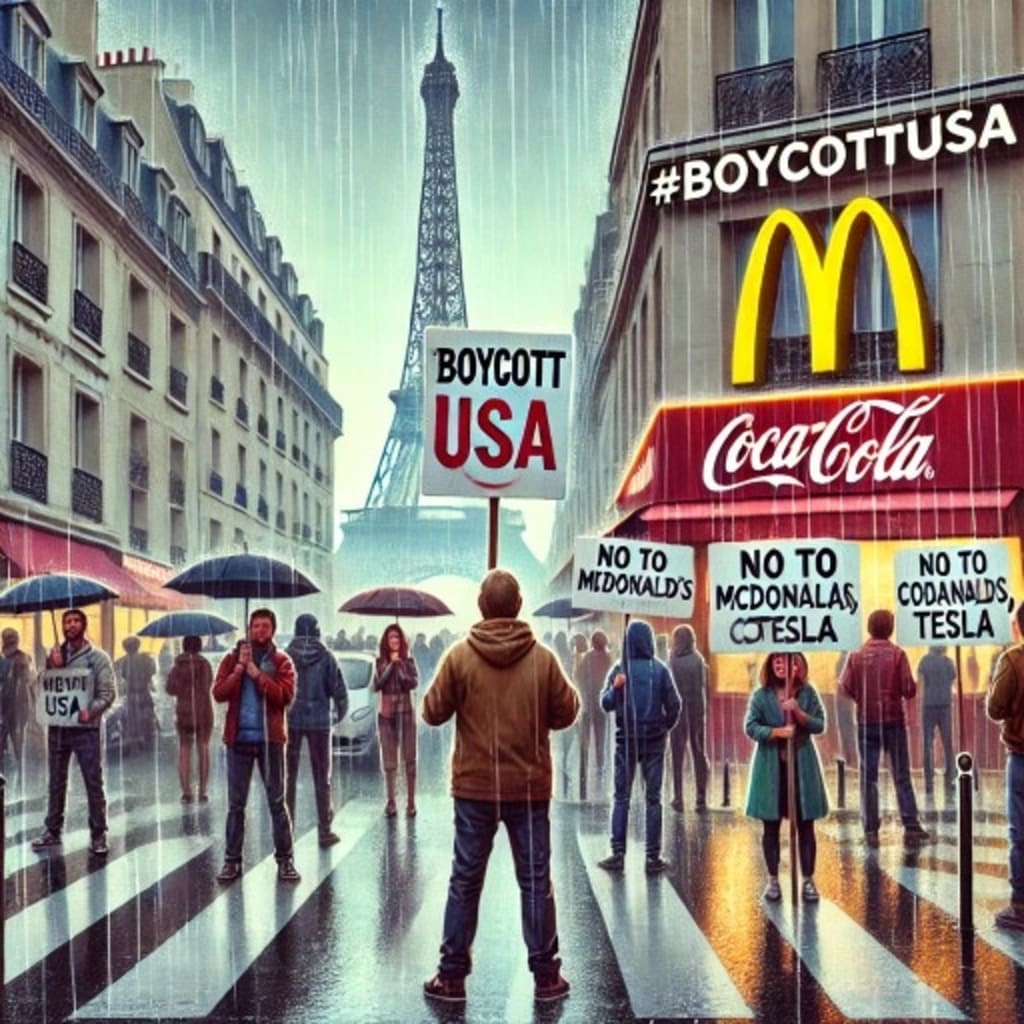
Le Boycott French Customers Reject American Brands Amid Rising Tensions
In the bustling streets of Paris American fast food chains like McDonald’s and KFC continue to serve long queues of customers despite a growing call for a boycott of U.S. brands. The movement dubbed "le boycott" has gained traction in response to former U.S President Donald Trump's trade tariffs and his perceived anti-Europe rhetoric. The #BoycottUSA hashtag has gone viral sparking debates about consumer choices and political resistance. The push to shun American products stems from a broader frustration with Trump's aggressive trade policies and his stance on European relations. According to a recent poll featured on the front page of Libération over 60% of French citizens support the boycott with nearly one third actively avoiding American brands. The movement is particularly fueled by concerns over economic sovereignty European unity and resistance to what many view as an increasingly hostile U.S administration. Despite the growing sentiment the boycott faces challenges in practice. Major American franchises such as McDonald’s Coca Cola and Tesla still enjoy significant consumer demand. On Paris’s Grands Boulevards where high end boutiques meet popular fast food chains little evidence of the movement could be seen. French customers particularly teenagers and young adults express frustration at being unable to participate due to economic constraints.
Economic Realities and Consumer Habits
For many the decision to boycott U.S brands is complicated by affordability and accessibility. Fast food from McDonald’s and KFC remains a cheap and convenient option particularly for students and low income families. Likewise Coca Cola products are deeply ingrained in French consumer culture making them difficult to avoid. Tesla despite being a premium brand continues to attract European customers due to its innovation in electric vehicles and environmental appeal. A 19 year old university student Léa Fournier shared her perspective: “I understand the political message behind the boycott but I can’t afford to stop eating at McDonald’s. It’s one of the few places where I can get a meal for under €10.” Similar sentiments were echoed by others who view American brands as too embedded in daily life to be easily abandoned.
The Digital Push #BoycottUSA Gains Momentum
On social media activists and influencers are calling for greater commitment to the boycott urging consumers to support local and European brands instead. The #BoycottUSA movement has sparked debates about globalization corporate responsibility and ethical consumerism. Some users share lists of French and European alternatives to U.S brands emphasizing the importance of self reliance and local industry support. The movement has also extended beyond consumer goods to cultural products. Calls to reduce consumption of Hollywood films American TV shows and even tech products like Apple and Microsoft have gained some traction. However critics argue that such measures are impractical in an interconnected world where American innovation remains dominant in many sectors.
The boycott has drawn mixed reactions from businesses and political leaders. French retailers that carry American brands are monitoring the situation but so far the impact has been minimal. Some European manufacturers and local businesses see an opportunity to promote their products as viable alternatives. Politically the movement has put additional strain on France U.S relations. French President Emmanuel Macron has remained diplomatic emphasizing the importance of economic cooperation while also advocating for fair trade practices. Meanwhile U.S companies operating in France have largely refrained from commenting on the boycott focusing instead on maintaining their market presence.
Will "Le Boycott" Have a Lasting Impact?
While the #BoycottUSA movement highlights deep seated frustrations with U.S policies its long-term effectiveness remains uncertain. Consumer habits are difficult to change overnight especially when American brands dominate key sectors of daily life. Unless supported by government action or economic shifts the boycott may remain more of a symbolic gesture than a transformative force.
Nevertheless the movement signifies a broader shift in European attitudes toward American influence. If tensions between the U.S and Europe continue to escalate "le boycott" could evolve from a social media trend into a sustained economic pushback. For now French consumers find themselves at a crossroads torn between political convictions and practical choices in their daily consumption.
SEO KEYWORD:
Boycott USA, Le boycott France, French boycott American brands, Trump trade tariffs France, Boycott McDonald's France, Tesla boycott Europe, Coca-Cola boycott France, Anti-American sentiment France, US brands boycott Europe, Boycott USA movement, France vs USA trade war, Why French people boycott USA, Trump policies impact on Europe, France-US economic relations, Boycott American products in France,
About the Creator
Adnan Rasheed
Author & Creator | Writing News , Science Fiction, and Worldwide Update| Digital Product Designer | Sharing life-changing strategies for success.
Keep reading
More stories from Adnan Rasheed and writers in The Swamp and other communities.
Why Does Donald Trump Lean Forward? A Closer Look at the Mystery Behind His Posture.
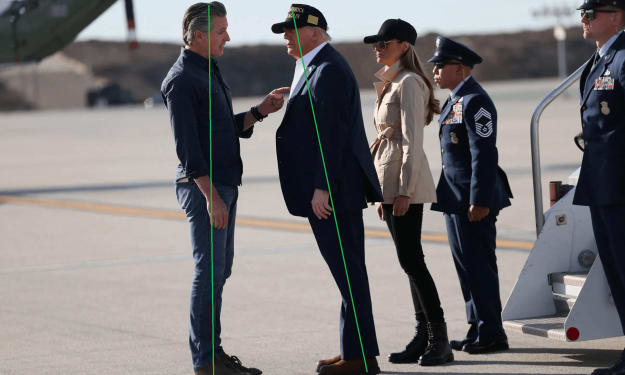
Why Does Donald Trump Lean Forward? A Closer Look at the Mystery Behind His Posture. For years observers have noted Donald Trump’s peculiar forward leaning posture. While many people speculate about the cause the conversation surrounding this odd stance has largely been ignored by mainstream media. So what exactly is going on with Trump’s posture and why is it seemingly more pronounced now than during his 2016 campaign? Let’s break it down. If you’ve watched Trump closely at public appearances rallies or debates you’ve likely noticed that he often leans forward at the waist almost as if his upper body is being pulled downward. This unnatural stance has raised eyebrows with theories ranging from simple shoe lifts to more concerning medical conditions. Some have suggested that Trump’s lean could be due to lifts in his shoes which would artificially increase his height but potentially throw off his balance. However this explanation doesn’t hold up under scrutiny. Plenty of men wear shoe lifts yet they do not exhibit the pronounced forward tilt that Trump does. If shoe lifts were the primary cause we’d see similar postural issues in countless other high profile individuals but we don’t. Medical professionals have pointed out that a persistent forward lean can be symptomatic of underlying health issues. One potential explanation is camptocormia a condition associated with neurological disorders such as Parkinson’s disease. Camptocormia causes individuals to lean forward when standing or walking often as a result of muscle weakness or spinal degeneration. Another possibility is some form of frontotemporal dementia (FTD). Trump’s father, Fred Trump, suffered from Alzheimer’s and there is a hereditary component to dementia. Over 200 medical professionals have issued warnings about Trump’s cognitive health and a persistent forward lean is sometimes seen in patients with neurodegenerative conditions. The connection between posture and neurological decline is well documented in medical literature making this theory a serious one to consider. What’s even more baffling than Trump’s posture itself is the way so many people pretend it isn’t happening. There’s an almost Orwellian insistence from his supporters and many in the media that there’s nothing unusual about his stance. Yet, to any objective observer his posture is not normal. The reluctance to discuss it could be a result of America’s uncomfortable relationship with aging and illness especially in political figures. Discussing a leader’s health is often seen as taboo despite the immense power they wield. However, in Trump's case his extreme forward lean is not just a minor quirk it could be an indicator of something far more serious.
By Adnan Rasheed10 months ago in The Swamp
Buc-ee’s Announces Plans to Build the World’s Largest Convenience Store
For millions of American road-trippers, Buc-ee’s is not just a convenience store — it’s a destination. Known for its massive locations, spotless bathrooms, cult-favorite snacks, and unmistakable beaver mascot, the Texas-based chain has turned a simple pit stop into an experience. Now, Buc-ee’s is taking that reputation to an entirely new level. The company has officially announced plans to build what it says will be the world’s largest convenience store, once again pushing the boundaries of size, spectacle, and ambition in an industry that most people associate with quick stops and small footprints. The announcement has sparked excitement, disbelief, and curiosity, raising a bigger question: how did a gas station chain become one of America’s boldest retail success stories? What Buc-ee’s Is Planning According to company statements, the new Buc-ee’s location will surpass all existing stores in sheer size, potentially covering more than 75,000 square feet — larger than many supermarkets and even some shopping malls. Like other Buc-ee’s locations, the store is expected to include: Dozens (or even hundreds) of fueling stations An enormous retail floor packed with food, merchandise, and regional products Freshly prepared meals made on-site Buc-ee’s famous ultra-clean restrooms Branded apparel, home goods, and souvenirs While Buc-ee’s has not yet revealed every design detail, the company has made it clear: this store is meant to be a landmark, not just a convenience stop. How Buc-ee’s Became a Cultural Phenomenon Founded in Texas in 1982, Buc-ee’s quietly built a loyal following by doing something radical in the convenience store world: raising standards. Instead of cramped aisles and questionable restrooms, Buc-ee’s focused on: Cleanliness that rivals hotels Friendly, well-paid staff Massive selections of food and merchandise A fun, family-friendly atmosphere The chain became especially famous for items like Beaver Nuggets, brisket sandwiches, fresh fudge, and jerky bars stretching longer than entire gas stations elsewhere. Over time, Buc-ee’s locations turned into roadside attractions. People plan trips around them. Families stop not because they have to, but because they want to. Why Size Is Part of the Strategy Building the world’s largest convenience store is not just a publicity stunt — it’s a calculated business move. Large stores allow Buc-ee’s to: Serve huge volumes of travelers efficiently Offer unmatched product variety Keep customers inside longer Create a memorable brand experience In an era where many retailers are shrinking footprints or moving online, Buc-ee’s is doubling down on physical presence. The company understands that convenience stores don’t have to be forgettable. They can be immersive, entertaining, and profitable at scale. Bigger also means busier — and Buc-ee’s thrives on traffic. The Economic Impact on Local Communities Every new Buc-ee’s location brings significant economic ripple effects. The company is known for: Creating hundreds of local jobs Paying wages above typical convenience store standards Attracting tourism traffic to surrounding areas Local businesses often benefit from increased foot traffic, while municipalities gain tax revenue. However, critics argue that such massive stores can also put pressure on smaller, independent gas stations and diners nearby. Still, many towns actively compete to attract Buc-ee’s, viewing it as a long-term economic anchor. A Changing Definition of Convenience Retail Buc-ee’s expansion reflects a broader shift in how Americans travel and shop. Today’s drivers want more than fuel. They want: Clean restrooms Quality food Safe, welcoming environments A reason to stop rather than rush through Buc-ee’s meets those expectations — and then exceeds them. By building the world’s largest convenience store, the company is effectively saying that convenience retail can be experiential, not transactional. This approach stands in sharp contrast to traditional gas station models focused solely on speed and turnover. Not Without Criticism Despite its popularity, Buc-ee’s growth has not been free from controversy. Some critics raise concerns about: Environmental impact from massive developments Traffic congestion around new locations Pressure on small, local competitors Others question whether such enormous stores are sustainable in the long term, especially as electric vehicles reduce the need for frequent fuel stops. Buc-ee’s leadership, however, appears confident that its model is adaptable — emphasizing food, retail, and hospitality rather than relying solely on gasoline sales. What This Means for the Future of Road Travel As road trips evolve, so do the places that support them. The planned mega-store signals that Buc-ee’s sees itself not just as a convenience brand, but as a roadside lifestyle destination. It’s betting that people will continue to crave physical experiences — especially ones that feel familiar, fun, and uniquely American. If successful, the world’s largest convenience store could further cement Buc-ee’s status as a category-defining brand, forcing competitors to rethink what a gas stop should look like in the modern age. More Than a Store — A Statement Buc-ee’s announcement isn’t just about square footage. It’s about confidence. At a time when many retailers are cautious, Buc-ee’s is expanding boldly. At a time when digital dominates, it’s investing in real-world experience. And at a time when convenience stores are expected to blend into the background, Buc-ee’s is building something impossible to ignore. Whether you see it as excessive or ingenious, one thing is certain: the world’s largest convenience store won’t just sell snacks and fuel — it will sell the idea that even the most ordinary stops can be extraordinary.
By Muhammad Hassan2 days ago in The Swamp


Comments
There are no comments for this story
Be the first to respond and start the conversation.