
Last 16 Victims of Crans-Montana Fire Identified, Police Say
A Tragic Chapter Nears Its End
Swiss authorities have confirmed that the last 16 victims of the Crans-Montana fire have been formally identified, bringing painful clarity to one of the deadliest fire tragedies in recent Swiss history. The announcement, made by police officials, marks the conclusion of an exhaustive identification process that spanned weeks and involved forensic specialists, international coordination, and close cooperation with grieving families.
While the confirmation provides answers long awaited by relatives, it also deepens the national sense of loss. What began as a devastating fire has now become a collective moment of mourning and reflection across Switzerland.
The Fire That Shook Crans-Montana
The blaze broke out in Crans-Montana, a well-known Alpine resort town, in a building frequented by locals and visitors alike. According to investigators, the fire spread rapidly, fueled by interior materials and structural conditions that allowed flames and smoke to engulf the space within minutes.
Emergency services responded swiftly, but rescue efforts were hampered by intense heat, limited visibility, and the rapid collapse of parts of the structure. Survivors later described scenes of panic as people struggled to find exits amid thick smoke.
By the time the fire was brought under control, it was clear that the loss of life was severe.
A Complex Identification Process
Police stated that identifying the final 16 victims required meticulous forensic work. Many of the victims suffered injuries that made visual identification impossible, necessitating DNA analysis, dental records, and personal effects.
Authorities emphasized that the process was conducted with dignity and precision, prioritizing accuracy over speed. Families were kept informed throughout, though officials acknowledged the emotional toll of prolonged uncertainty.
With the final identifications complete, police confirmed that all victims have now been accounted for, allowing families to begin formal mourning rituals and legal processes.
Remembering the Victims
While officials have been cautious about releasing personal details publicly, local leaders stressed that each victim represented a unique life and story. The fire claimed individuals of varying ages and backgrounds, including residents, workers, and visitors.
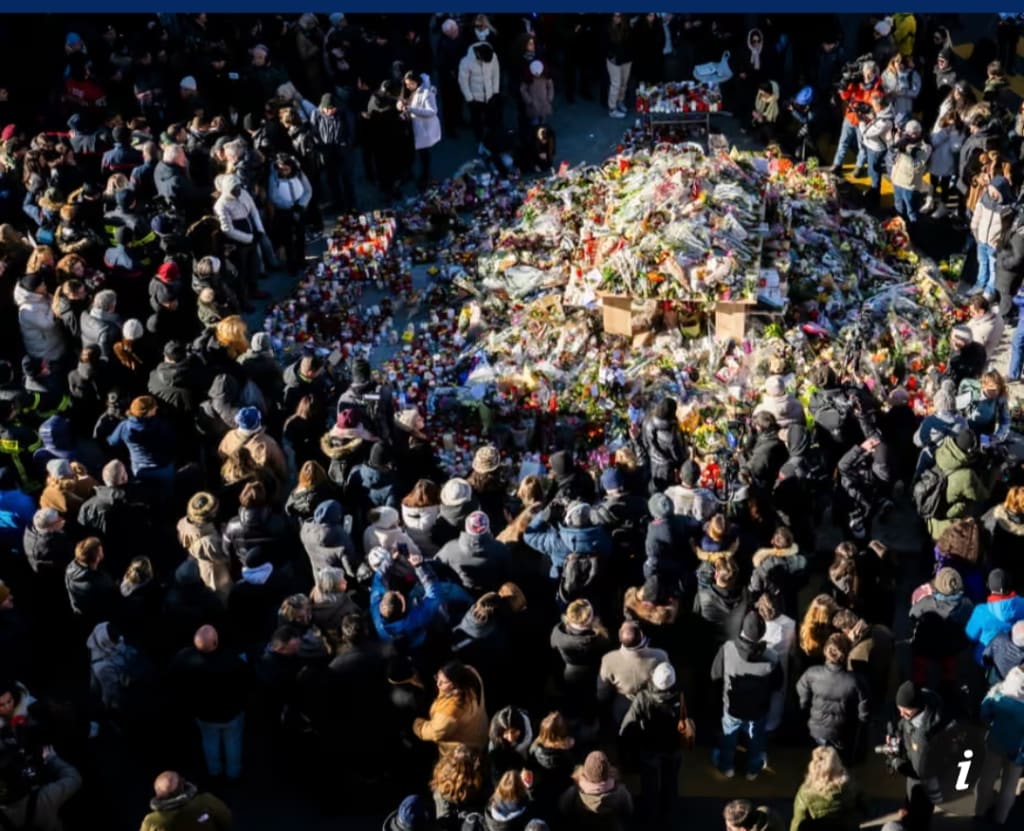
Memorials have appeared throughout Crans-Montana and neighboring towns, with candles, flowers, and handwritten messages lining public squares. Vigils have drawn hundreds, as communities come together in shared grief.
Church bells rang across the region following the police announcement, symbolizing solidarity with the bereaved.
Community Support and National Response
In the wake of the tragedy, Swiss authorities activated crisis support services for families, survivors, and first responders. Psychological counseling has been made available, recognizing that trauma extends beyond physical injury.
National leaders expressed condolences, calling the fire a “deep national wound.” Flags were lowered to half-staff in several cantons, and moments of silence were observed at public events.
The response has highlighted Switzerland’s strong community networks, but also underscored the profound emotional impact of the disaster.
Questions About Safety and Accountability
As identification concludes, attention is increasingly turning to how the fire occurred and whether it could have been prevented. Investigators are examining building safety compliance, fire detection systems, evacuation routes, and occupancy regulations.
Witness accounts suggesting blocked exits or delayed alarms are being carefully reviewed. Police have stated that determining responsibility will take time and that no conclusions should be drawn prematurely.
If safety violations are confirmed, legal consequences may follow for property owners or operators.
The Survivors’ Long Road to Recovery
Several survivors remain hospitalized, some with severe burns and smoke inhalation injuries. Medical professionals warn that recovery will be lengthy, involving both physical rehabilitation and psychological healing.
Experts note that fire-related trauma often leaves lasting emotional scars, including anxiety, survivor’s guilt, and post-traumatic stress. Long-term mental health support will be essential for those affected.
First responders, many of whom witnessed harrowing scenes, are also receiving specialized counseling.
A Broader Conversation on Fire Safety
The Crans-Montana fire has sparked a national conversation about fire safety standards, particularly in public venues and older buildings. While Switzerland is known for strict regulations, tragedies like this expose gaps between remembrance and enforcement.
Fire safety experts are calling for renewed inspections, improved emergency training, and greater public awareness. Some officials have suggested reviewing building codes to ensure they reflect modern risks and materials.
For many, the hope is that lessons learned from this loss will help prevent future disasters.
Closure Without Forgetting
Police officials acknowledged that identifying the last victims does not bring true closure. For families, grief will continue long after investigations end and headlines fade.
However, knowing the fate of loved ones allows for funerals, remembrance, and the beginning of healing. Authorities reiterated their commitment to transparency as the investigation moves forward.
Conclusion: Honoring Lives Through Accountability
The identification of the last 16 victims of the Crans-Montana fire marks the end of one painful process and the beginning of another—seeking answers, accountability, and meaningful change.
As Switzerland mourns, the focus shifts from uncertainty to remembrance and responsibility. Honoring those lost means more than naming them; it means ensuring that lessons are learned and that safety remains a shared priority.
In a town known for beauty and tranquility, the scars of this tragedy will endure. But so too will the resolve to remember every life lost—and to protect those still living.
About the Creator
Keep reading
More stories from Aarif Lashari and writers in The Swamp and other communities.
Trump Warns New Venezuelan Leader as Maduro Set to Appear in Court
Global attention has once again turned toward Venezuela as former U.S. President Donald Trump issued a stark warning to the country’s new leadership, just as longtime strongman Nicolás Maduro is set to appear in court. The convergence of these events marks a dramatic turning point in Venezuela’s political crisis and signals a potentially volatile new chapter in U.S.–Latin American relations.
By Aarif Lashari7 days ago in The Swamp
Three Views on What 2026 Might Bring
As the world edges closer to 2026, uncertainty and anticipation go hand in hand. From rapid technological breakthroughs to shifting geopolitical alliances and changing social priorities, the coming year is shaping up to be a defining moment. While no one can predict the future with certainty, examining different perspectives helps us prepare for what lies ahead. Here are three distinct views on what 2026 might bring—each grounded in current trends, but shaped by different expectations about how the world will evolve. View One: A Tech-Driven Acceleration of Everyday Life One widely held view is that 2026 will be defined by accelerated technological integration into daily life. Artificial intelligence, automation, and digital platforms are already reshaping how people work, communicate, and make decisions. By 2026, these changes are expected to move from novelty to normality. AI tools are likely to become deeply embedded in workplaces, assisting with everything from data analysis to creative tasks. Rather than replacing human workers outright, the focus may shift toward collaboration between humans and machines. Jobs will evolve, demanding new skills such as digital literacy, adaptability, and ethical decision-making. Education systems, under pressure to keep up, may increasingly emphasize lifelong learning rather than traditional, linear career paths. At the consumer level, smart technology could become more intuitive and personalized. From healthcare apps that monitor health in real time to smart homes that optimize energy use automatically, convenience will be a central theme. However, this view also raises concerns about privacy and data security. As technology becomes more pervasive, debates over who controls data—and how it is used—are likely to intensify. In this optimistic-tech scenario, 2026 represents progress, efficiency, and innovation. The challenge will be ensuring that technological benefits are shared broadly rather than concentrated among a few. View Two: A World Focused on Climate Reality and Resilience Another powerful perspective suggests that 2026 will be shaped primarily by the climate crisis. Extreme weather events, resource shortages, and environmental stress are already affecting economies and communities. By 2026, many believe the consequences will be impossible to ignore. Governments and businesses may shift from long-term climate promises to urgent adaptation strategies. Instead of focusing solely on innovation, such as new green technologies, there could be a stronger emphasis on resilience—protecting infrastructure, securing food systems, and preparing communities for climate shocks. Cities may redesign transport and housing to cope with heatwaves and floods, while rural areas adapt to changing agricultural conditions. Public attitudes are also expected to evolve. Climate anxiety, especially among younger generations, may translate into stronger political pressure for meaningful action. Lifestyle changes—such as reduced consumption, sustainable travel, and local production—could become more mainstream, not just ethical choices but practical necessities. This view of 2026 is sobering rather than futuristic. It suggests a year of reckoning, where societies must confront the limits of growth and accept that adapting to a changing planet is no longer optional. View Three: Social and Political Realignment in an Uncertain World A third view focuses less on technology or climate and more on people—specifically, how societies and political systems might realign in response to years of disruption. Economic inequality, migration pressures, and geopolitical tensions continue to reshape global relationships. By 2026, these forces could push the world toward significant social and political shifts. In some regions, citizens may demand stronger social safety nets and fairer economic systems, leading to reforms in healthcare, housing, and labor rights. Elsewhere, political polarization could deepen, as governments struggle to balance national interests with global cooperation. International alliances may be tested, particularly as competition over resources and influence intensifies. This perspective also highlights cultural change. Remote work, demographic shifts, and evolving values may redefine what people expect from work, family, and community. Traditional measures of success—such as economic growth alone—could be challenged by broader definitions that include well-being, mental health, and social cohesion. In this scenario, 2026 is less about dramatic breakthroughs and more about adjustment. It is a year when societies reassess priorities and experiment with new ways of organizing life in a complex, interconnected world. What These Views Have in Common While these three perspectives differ, they share a common theme: transition. Whether driven by technology, climate realities, or social change, 2026 appears likely to be a year where old assumptions no longer hold. The future may not align perfectly with any single view, but elements of all three are likely to intersect. Technology will continue to advance, but its impact will be shaped by environmental limits and social choices. Climate pressures will intensify, but responses will depend on political will and public engagement. Social change will unfold unevenly, influenced by both innovation and crisis. Conclusion “Three Views on What 2026 Might Bring” reveals not a single future, but a range of possibilities shaped by choices being made today. Whether 2026 becomes a year of smart progress, climate adaptation, or social realignment—or a combination of all three—will depend on how governments, businesses, and individuals respond to the challenges ahead. One thing is certain: 2026 will not be a passive continuation of the past. It will be a moment that tests resilience, creativity, and cooperation. For those willing to adapt and engage thoughtfully, it may also be a year of meaningful transformation.
By Fiazahmedbrohi 4 days ago in The Swamp


Comments
There are no comments for this story
Be the first to respond and start the conversation.