
Kim Jong Un Re-Appointed Leader of North Korea’s Ruling Party
Kim Jong Un’s leadership renewed by party congress as North Korea doubles down on unity, self-reliance, and defence amid economic strain.

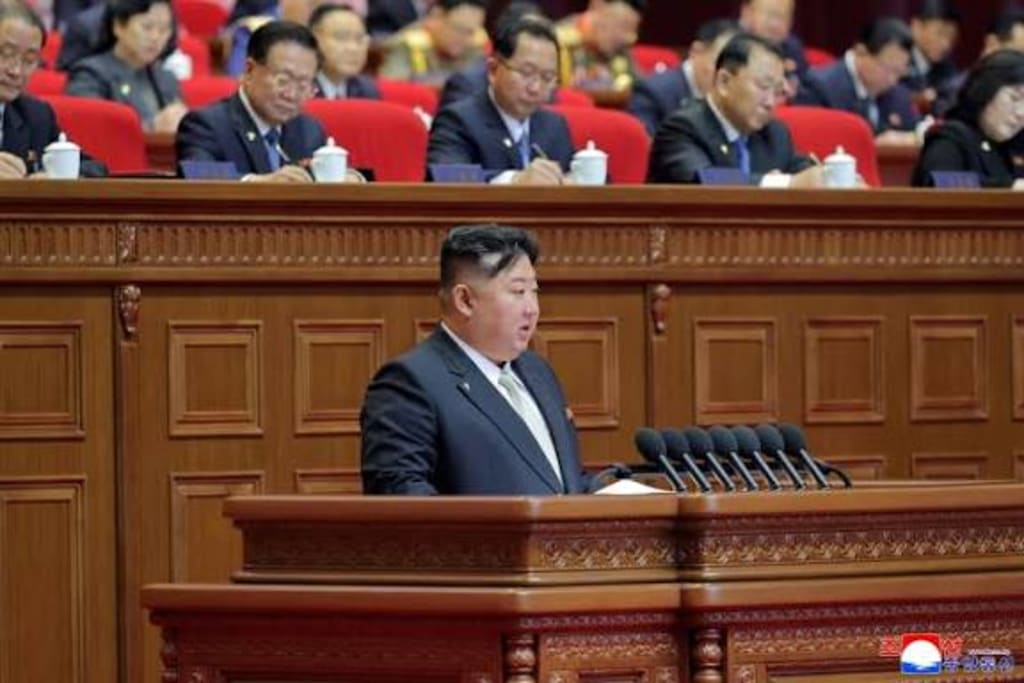
Kim Jong Un has been re-appointed as the head of Workers’ Party of Korea, solidifying his hold on power and reinforcing the political continuity of North Korea’s government. The decision was confirmed during a high-level session of the party’s leadership in Pyongyang, where senior officials unanimously endorsed Kim’s continued leadership amid intensifying economic challenges and persistent international pressure over the country’s weapons programs.
State media reported that the Workers’ Party congress, the nation’s foremost political gathering, reaffirmed Kim’s role as party chairman after he delivered an address highlighting unity, self-reliance, and national defence. The congress, tightly controlled by the regime, offered no indication of dissent, with coverage emphasizing the unanimous support of the party’s elite and military leaders.
Consolidating Power Through Continuity
Kim’s re-appointment was portrayed by official media as a reaffirmation of his unwavering leadership and strategic vision. In his remarks to the assembly, Kim stressed the need for “unbreakable unity” in the face of what he described as external threats and internal hardships. He reiterated his commitment to the party’s guiding principles of juche (self-reliance) and byungjin (simultaneous economic and military development), which have underpinned North Korean policy for decades.
“The strength of our revolution lies in the unity between the party and the people,” Kim was quoted as saying in a state television broadcast. “We will overcome all obstacles with steadfast resolve.”
Analysts say the reaffirmation of Kim’s leadership is as much about projecting internal stability as it is about consolidating his authority. In a polity where power is tightly centralized, formal re-appointment at a party congress provides a symbolic endorsement of the leader’s control over the military, government apparatus, and ideological direction.
Economic Struggles and Domestic Priorities
North Korea continues to face significant economic challenges, including food shortages, limited international trade, and lingering effects from pandemic-era border closures. While state media tends to highlight infrastructure achievements and self-sufficiency, outside analysts note that much of the country remains economically fragile.
In his speech, Kim acknowledged these difficulties indirectly, urging improved agricultural output and industrial productivity. “We must strengthen our economic foundations without distraction,” state broadcasters quoted him as saying. “No one should be left behind in our work for prosperity.”
Experts suggest that framing economic development alongside unwavering political unity helps the regime manage public expectations while maintaining control over domestic narratives.
Military Policy and Regional Tensions
While economic themes were present, the congress also underscored the centrality of military strength in North Korea’s strategic posture. Kim reiterated the party’s commitment to advancing defense capabilities, including ballistic missiles and nuclear deterrence systems, which Pyongyang views as essential to national security.
Over the past year, North Korea has conducted multiple missile tests, drawing international condemnation and raising concerns about escalating tensions on the Korean Peninsula. The leadership’s continued focus on weapons development — even amidst economic hardship — underscores its view that deterrence is inseparable from regime survival.
International Reaction
Reactions from foreign governments to Kim’s re-appointment were measured. The United States reiterated its call for denuclearization and peaceful dialogue, with a State Department spokesperson urging North Korea to return to diplomatic negotiations. Statements from South Korea echoed concerns about regional stability while reaffirming readiness for cooperation and peaceful resolution.
Key diplomatic partners like China and Russia offered more restrained comments, emphasizing dialogue and stability but avoiding direct criticism of the leadership change. Beijing, in particular, reiterated longstanding support for maintaining peace and communication channels in Northeast Asia.
The Significance of the Re-Appointment
Kim Jong Un’s re-appointment as party leader reflects the entrenched nature of his rule and the continuity of North Korea’s political structure. In a system where political transitions are rare and tightly managed, the ceremony serves as formal validation of his unchallenged authority. It also sends a message to both domestic audiences and international observers that the regime remains united and committed to its long-term strategic vision.
As North Korea continues to balance economic hardship with military ambition and diplomatic isolation, Kim’s leadership is unlikely to face meaningful internal challenge in the foreseeable future. For now, the particle of uncertainty — when combined with unwavering control — appears to be a central feature of Pyongyang’s political landscape.
About the Creator
Fiaz Ahmed
I am Fiaz Ahmed. I am a passionate writer. I love covering trending topics and breaking news. With a sharp eye for what’s happening around the world, and crafts timely and engaging stories that keep readers informed and updated.
Keep reading
More stories from Fiaz Ahmed and writers in The Swamp and other communities.
Winter Storm Covers Parts of North-East US in Snow
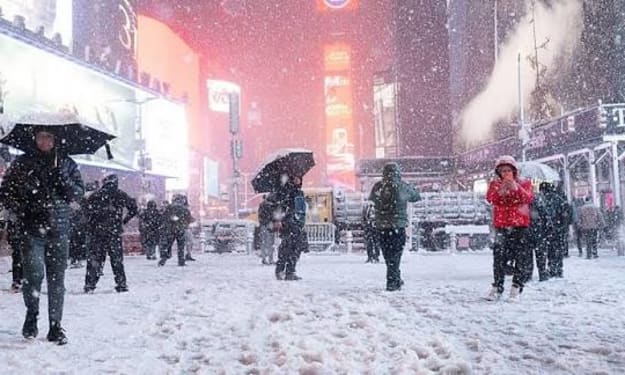
A powerful winter storm swept across the north-eastern United States this week, dumping heavy snow, disrupting transportation networks, and prompting states of emergency in multiple regions. The weather system, driven by an arctic cold front and moist Atlantic air, brought significant snowfall totals to areas from Pennsylvania up through New England, impacting travel, schools, utilities and day-to-day life for millions of residents. Forecasters from the National Weather Service (NWS) reported snowfall totals exceeding 30 inches in some locations, with high winds producing dangerous blizzard conditions and drifting snow that reduced visibility to near zero. The storm—nicknamed “Blizzard Titan” by some local meteorologists—was among the most significant to hit the region in recent years. Snowfall and Conditions Heavy snow began accumulating late Tuesday night and continued through much of Thursday, with the most intense bands affecting parts of Upstate New York, Vermont, New Hampshire, and Maine. In several towns and rural counties, snowplows struggled to keep roads clear as drifts piled up, sometimes reaching several feet in height. Temperatures plunged well below freezing, with wind chills making outdoor exposure dangerous even for short periods. In major cities such as Boston, New York City, and Philadelphia, officials warned that travel could become treacherous, urging residents to stay off the roads unless absolutely necessary. Travel Disruptions Airlines reported hundreds of flight cancellations at key airports including Boston Logan International Airport, Newark Liberty International Airport, and Philadelphia International Airport. Some travelers were left stranded overnight as storms made runway operations unsafe and delayed de-icing procedures. Amtrak and regional rail services such as MBTA Commuter Rail and NJ Transit suspended portions of their schedules, citing unsafe track conditions and blocked routes. Interstate highways, particularly I-87 in New York and I-95 in Connecticut and Massachusetts, saw closures as state police advised motorists against attempting travel during peak snowfall. “The combination of heavy, wet snow and high winds created severe blizzard conditions,” an NWS meteorologist said. “This isn’t just ordinary snowfall—visibility drops quickly, and even major routes can become impassable without significant plowing.” Power Outages and Utility Strain The storm’s fury did not spare power infrastructure. Thousands of residents experienced outages as heavy snow and ice brought down trees and power lines. Public utility crews worked around the clock to restore service, but officials warned that some rural areas might remain without electricity for days. Utility companies issued safety advisories, urging residents to report downed lines and avoid contact with fallen wires. Emergency shelters opened in affected towns to provide warmth, food, and medical support for families impacted by outages. Emergency Declarations and Local Responses Governors of several states, including Massachusetts, New York, and Vermont, declared states of emergency ahead of the storm’s peak, activating the National Guard and deploying additional snow removal equipment. Schools in many districts switched to remote learning or closed entirely to keep students and staff safe. Municipal officials also issued curfews or travel bans on local streets to allow plows unimpeded access and prevent accidents. Residents were advised to stock up on essentials and avoid leaving home if possible. “Public safety is our top priority,” said one city emergency manager. “We are asking residents to help by staying off the roads, conserving power where possible, and checking on elderly neighbors.” Economic and Community Impacts Beyond immediate safety concerns, the storm poses economic challenges. Businesses faced layoffs due to closures, and supply chains were disrupted as freight movement slowed. Grocery stores saw rapid depletion of essential items such as bread, milk and bottled water as residents prepared for days indoors. Communities also prepared for indirect effects, including possible flooding as snow begins to melt in the coming days, particularly where rain mixes with snow in warmer lower-elevation areas. Looking Ahead Meteorologists predict temperatures will remain well below average for at least a week following the storm, slowing snowmelt and prolonging hazardous conditions. While additional snowfall is not expected immediately, gusty winds and cold air will keep travel and outdoor work risky. Officials emphasize patience and caution as cleanup continues, reminding residents that the storm’s full impact—including infrastructure restoration and road clearance—will require time, manpower, and community cooperation.
By Fiaz Ahmed about 11 hours ago in The Swamp
A Gathering of Evil Bosses
“I’m the queen of chin jutting while I smooth my hair, attacking, insulting, and deflecting to protect my appointer.” “Oh, please, Blondi, my hair is curled, highlighted, and longer than yours. I feature television commercials telling immigrants that we will give them a free plane ride home, and if they voluntarily turn themselves in, they will be allowed to legally apply for re-entry. It runs everywhere, and I look good in it! You can’t compete because of your blond hair. Mine is nicer, and my lips are prettier than yours.”
By Andrea Corwin 5 days ago in The Swamp



Comments
There are no comments for this story
Be the first to respond and start the conversation.