
Japan’s New Leader Takaichi Says She Wants to Meet North Korea’s Kim Jong Un
Prime Minister Sanae Takaichi signals a bold new approach to diplomacy, seeking direct talks with Pyongyang to resolve decades of tension.

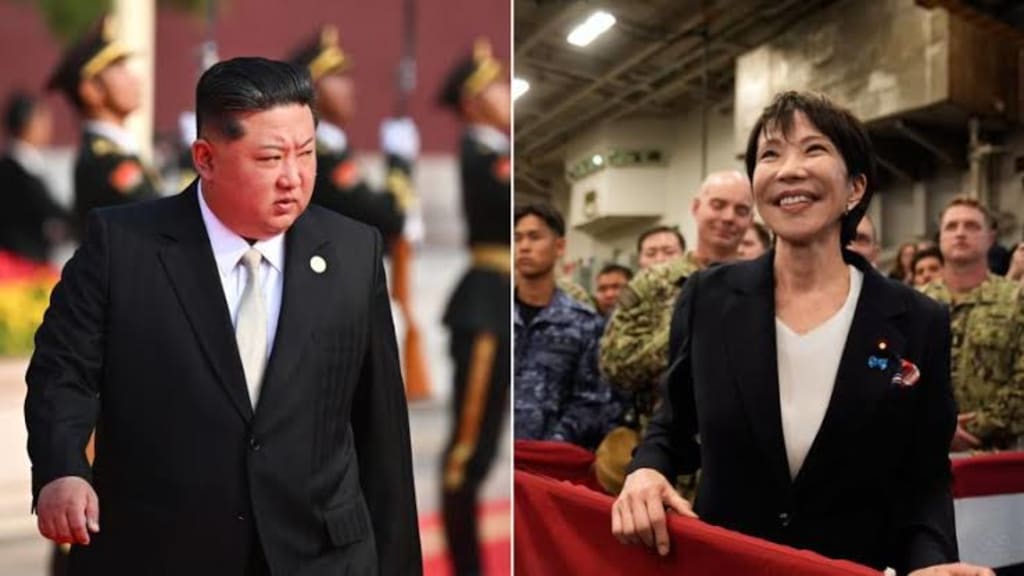
A New Chapter in Japan’s Leadership
Japan’s new Prime Minister, Sanae Takaichi, has made global headlines by expressing her desire to meet North Korea’s leader Kim Jong Un face-to-face. The announcement marks a potentially historic shift in Japan’s foreign policy, especially given the long-standing hostility between the two nations.
Speaking at a press conference in Tokyo, Takaichi said, “If there’s a chance to directly discuss the abduction issue, denuclearization, and peace in the region, I am willing to meet Chairman Kim without preconditions.”
Her statement was met with both optimism and skepticism — optimism from those who see diplomacy as the best path forward, and skepticism from analysts who doubt Pyongyang’s willingness to cooperate.
---
A Complicated History
Japan and North Korea have had no formal diplomatic relations since World War II. Their relationship has been defined by deep mistrust, primarily over North Korea’s past abductions of Japanese citizens during the 1970s and 1980s, as well as ongoing missile tests that threaten regional stability.
North Korea admitted in 2002 that it had kidnapped Japanese citizens to train its spies in Japanese language and culture. While some abductees were returned, Japan maintains that many others remain unaccounted for. The issue remains deeply emotional in Japan and is one of the key obstacles to normalization of relations.
Takaichi’s bold statement reflects both her nationalist convictions and her pragmatic understanding that Japan’s security challenges cannot be solved without direct dialogue.
---
Takaichi’s Rise to Power
Sanae Takaichi, known for her strong conservative stance and close ties to former Prime Minister Shinzo Abe, became Japan’s first female leader after winning the ruling Liberal Democratic Party (LDP) leadership race. Her victory represented a significant moment for Japan’s political landscape — not just because of her gender, but because of her vision for a more assertive Japan on the global stage.
Throughout her political career, Takaichi has championed defense reform, national sovereignty, and a tougher stance on China and North Korea. However, her recent diplomatic overture suggests she may also be capable of balancing firmness with flexibility.
“She’s not afraid to take risks,” said political analyst Hiroshi Tanaka. “This move shows she wants to carve her own legacy, separate from her predecessors.”
---
A Diplomatic Gamble
Takaichi’s willingness to meet Kim Jong Un is not without risk. Japan’s allies — particularly the United States and South Korea — have had fluctuating relationships with Pyongyang. While Washington and Seoul have both attempted direct talks in the past, progress has often been slow or short-lived.
Some analysts warn that a direct meeting between Takaichi and Kim could backfire if not carefully coordinated with allies. Others argue it could give Japan an independent voice in regional diplomacy, reducing its reliance on Washington’s lead.
“If Japan can open a new channel of communication, it could help break the stalemate,” said Dr. Minji Park, a security expert based in Seoul. “But if North Korea uses the meeting for propaganda, it could undermine Japan’s credibility.”
---
The Abduction Issue: A Central Focus
For Takaichi, the abduction issue remains deeply personal and politically symbolic. During her years as a lawmaker, she worked closely with families of abducted Japanese citizens and has promised to prioritize their safe return.
In her speech, she stated: “The pain of the abductees’ families has lasted for decades. I believe that only through direct dialogue can we begin to heal those wounds.”
Japan’s public has long supported efforts to bring the abductees home, but many are skeptical that North Korea will ever provide full transparency. Still, the fact that Japan’s new leader is willing to personally engage Kim Jong Un offers a glimmer of hope to many families who have waited for answers for nearly half a century.
---
Reactions at Home and Abroad
Takaichi’s announcement has drawn mixed reactions from world leaders. The United States welcomed her willingness to explore diplomacy but cautioned that talks must align with international sanctions and nuclear non-proliferation efforts.
South Korea’s government reacted more cautiously, stating that any dialogue should be coordinated through trilateral frameworks involving Washington, Seoul, and Tokyo. Meanwhile, China — North Korea’s main ally — praised the idea of dialogue, saying that “peace and communication are always preferable to confrontation.”
At home, Japanese media outlets described the proposal as a “daring yet delicate” move. The conservative Yomiuri Shimbun called it a potential turning point, while the Asahi Shimbun warned that Takaichi must “balance diplomacy with accountability.”
---
Challenges Ahead
While the idea of a Takaichi–Kim summit sounds groundbreaking, there are still major hurdles to overcome. First, Pyongyang must agree to such a meeting — and North Korea has a long record of rejecting Japan’s diplomatic overtures.
Second, there’s the question of timing and agenda. North Korea may demand economic concessions or relief from sanctions in exchange for talks, which could put Japan in a politically difficult position.
Lastly, the issue of nuclear weapons remains the biggest obstacle. North Korea has continued to expand its missile program, launching several tests over the Sea of Japan this year alone. Any discussion that fails to address this issue will likely face criticism from Japan’s allies.
---
A Step Toward Hope
Despite these challenges, Takaichi’s move represents a fresh sense of purpose in Japan’s foreign policy. For years, relations with North Korea have been defined by mutual silence and occasional threats. By extending an open hand — even cautiously — Japan’s leader signals a desire to rewrite that narrative.
“She’s walking a fine line between strength and diplomacy,” said Dr. Park. “But sometimes, it takes courage to start a conversation when others have given up.”
If a meeting between Prime Minister Takaichi and Kim Jong Un does take place, it could become one of the most significant diplomatic events in East Asia in years — one that may finally bring progress on some of the region’s most painful and unresolved issues.
---
About the Creator
Fiaz Ahmed
I am Fiaz Ahmed. I am a passionate writer. I love covering trending topics and breaking news. With a sharp eye for what’s happening around the world, and crafts timely and engaging stories that keep readers informed and updated.
Keep reading
More stories from Fiaz Ahmed and writers in The Swamp and other communities.
Drones Seen Over Belgian Military Base for Third Night, Minister Says
A Mysterious Presence in the Night Belgium’s defense ministry is on high alert after drones were spotted flying over a sensitive military base for the third consecutive night. Defense Minister Ludivine Dedonder confirmed that investigations are underway to determine the source and purpose of the unidentified drones, which have stirred growing security concerns across the nation.
By Fiaz Ahmed 3 months ago in The Swamp
From Behind Bars, Aung San Suu Kyi Casts a Long Shadow Over Myanmar
Aung San Suu Kyi, Myanmar’s former civilian leader and Nobel Peace Prize laureate, continues to influence the nation’s political landscape despite being imprisoned since the February 2021 military coup. Her detention has not only intensified global attention on Myanmar’s political crisis but also shaped the country’s ongoing struggle for democracy, human rights, and international recognition.
By Fiaz Ahmed Brohi5 days ago in The Swamp



Comments
There are no comments for this story
Be the first to respond and start the conversation.