
It’s Not Just About Surviving”: The Ukrainian Frontline City Where Life Goes On Under Cover
How civilians preserve hope and normalcy beneath constant shelling

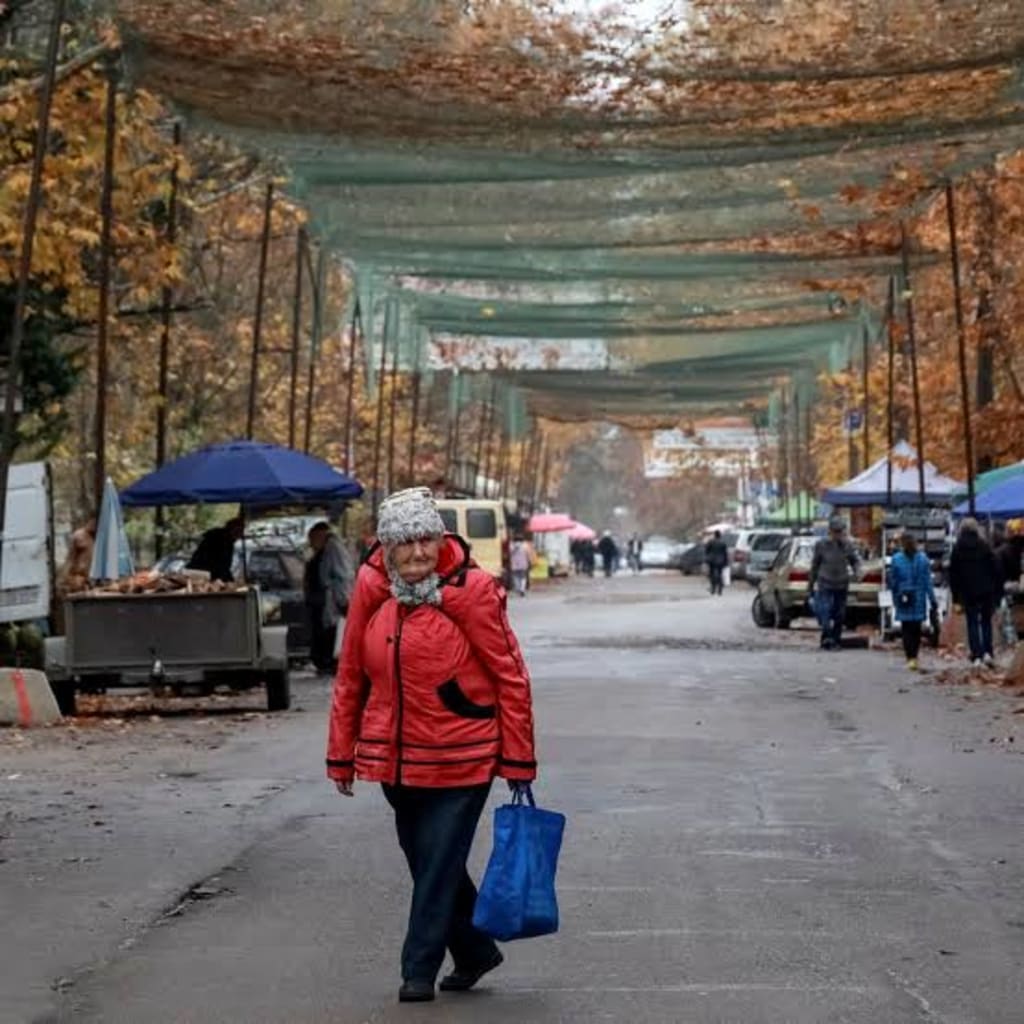
In a city scarred by constant shelling and the distant echo of artillery, life continues in quiet and determined ways. Along Ukraine’s eastern frontline, residents of a battered urban center have learned how to adapt to war — not only to survive, but to preserve a sense of normalcy beneath the shadow of destruction.
The city, located just kilometers from active fighting, has become a symbol of civilian resilience. Buildings stand pockmarked by shrapnel, streets are half-empty, and windows are covered with plywood instead of glass. Yet beneath the ground, in basements and makeshift shelters, everyday routines persist: children study, shopkeepers open small stalls, and families gather for meals.
A City Forced Underground
With air raid sirens sounding almost daily, much of life has shifted below street level. Schools operate in underground classrooms, grocery stores function from reinforced cellars, and even fitness centers and cafés have been relocated into basements.
“We learned that survival alone is not enough,” said Olena, a former teacher who now runs a small learning center in a shelter. “Children need education. People need work. We need to feel human.”
Electricity cuts and water shortages are common, but local volunteers and municipal workers repair what they can between attacks. Sandbags protect entrances to public buildings, and metal plates shield fragile infrastructure.
Daily Life in the Shadow of War
Residents describe a strange balance between fear and routine. In the mornings, some commute to essential jobs — hospitals, aid centers, and public utilities. In the afternoons, families queue for bread and supplies delivered by humanitarian groups.
At night, curfews and darkness return. Candlelight replaces streetlamps, and radio updates become the city’s connection to the outside world.
Despite the danger, many refuse to leave. Elderly citizens remain because their entire lives are rooted there. Others stay to protect homes or care for relatives who cannot travel.
“My parents are buried here. This is my city,” said Viktor, a former factory worker. “If I leave, who will keep it alive?”
Cultural Resistance
Even culture has found a way to survive. Underground concerts, poetry readings, and small exhibitions take place in reinforced spaces. Musicians perform quietly, knowing the sound of music contrasts with the sound of war.
One volunteer-run theater group stages short plays about daily life during conflict. Their goal is not entertainment but emotional survival.
“Art helps us breathe,” said one performer. “It reminds us that we are more than targets.”
Libraries distribute books and provide charging stations. Psychologists hold group sessions for children traumatized by explosions and displacement.
Economic Struggles
The local economy has nearly collapsed. Factories stand idle, and most businesses closed months ago. What remains are tiny enterprises: bakeries, repair shops, and street vendors selling vegetables and canned food.
International aid and government subsidies keep many families afloat, but resources are stretched thin. Fuel shortages and rising prices force residents to ration everything from food to heating.
Some young people earn money online or work remotely for companies in safer parts of Ukraine or abroad, using unstable internet connections powered by generators.
Psychological Toll
While resilience is visible, exhaustion runs deep. Mental health workers report rising anxiety, depression, and trauma symptoms among civilians. Children flinch at loud noises; adults struggle with sleep.
“Living like this is not natural,” said a local doctor. “The human mind was not built for constant danger.”
Yet the same professionals note that community support has become stronger. Neighbors share food, offer shelter, and check on one another after attacks.
This social bond has become the city’s strongest defense.
The Role of Volunteers
Volunteers play a critical role in keeping the city alive. They deliver medicine, evacuate the wounded, and help rebuild damaged homes. Many are locals who refused to flee.
Aid trucks arrive regularly with blankets, generators, and food. But reaching the city is risky, as roads are often targeted.
Still, convoys continue.
“If we stop, the city dies,” said one volunteer coordinator. “We cannot allow that.”
A Message to the World
Residents want the world to understand that war is not just about soldiers and battlefields. It is about ordinary people trying to live under extraordinary conditions.
“This is not only survival,” Olena said. “This is resistance. We choose life every day.”
Despite uncertainty about the future, citizens believe their endurance sends a powerful message: even under cover of war, humanity persists.
The frontline city stands as proof that while bombs may destroy buildings, they cannot easily erase identity, culture, or hope. Beneath concrete and steel, life continues — fragile, determined, and deeply human.
About the Creator
Fiaz Ahmed
I am Fiaz Ahmed. I am a passionate writer. I love covering trending topics and breaking news. With a sharp eye for what’s happening around the world, and crafts timely and engaging stories that keep readers informed and updated.
Keep reading
More stories from Fiaz Ahmed and writers in The Swamp and other communities.
US, UK, EU, Australia and More to Meet to Discuss Critical Minerals Alliance
Senior officials from the United States, United Kingdom, European Union, Australia, and several allied nations are preparing to meet this week to discuss the creation of a new Critical Minerals Alliance, aimed at securing global supply chains for materials essential to modern technology and national security. The talks come amid growing concerns over dependence on a limited number of countries for minerals such as lithium, cobalt, nickel, rare earth elements, and graphite — resources that are vital for electric vehicles, renewable energy systems, semiconductors, and military equipment. Diplomats familiar with the meeting said the goal is to develop a coordinated strategy that ensures stable access to these materials while reducing exposure to geopolitical risks. Why Critical Minerals Matter Critical minerals form the backbone of the clean energy transition and advanced manufacturing. Lithium is used in batteries for electric cars and mobile devices, while rare earth elements are necessary for wind turbines, defense radar systems, and smartphones. Cobalt and nickel are key components in high-performance batteries and aerospace equipment. Over the past decade, global demand for these minerals has surged as governments push for greener energy and digital transformation. However, supply remains highly concentrated. China currently dominates processing and refining of many rare earth elements, while several African and South American nations control large portions of mining output. Western governments worry that political tensions or export restrictions could disrupt access to these materials, creating economic and security vulnerabilities. “Critical minerals are no longer just an economic issue,” one European official said. “They are a strategic priority.” Goals of the Alliance According to draft proposals, the alliance would focus on three main objectives: Diversifying supply chains by encouraging mining and processing projects in allied countries. Sharing technology and investment to reduce costs and speed up development of new facilities. Establishing environmental and labor standards for mineral extraction and processing. Officials also plan to discuss joint financing mechanisms for projects in developing countries that are rich in mineral resources but lack infrastructure. The initiative would build on existing frameworks such as the Minerals Security Partnership launched earlier by the United States and its partners, but aims to deepen cooperation and formalize long-term commitments. Australia’s Strategic Role Australia is expected to play a central role in the discussions due to its vast reserves of lithium, rare earths, and other key minerals. The country has already signed bilateral agreements with both the US and EU to support mineral supply chains. Australian officials say cooperation with allies will help ensure that mining projects are not only profitable but also sustainable and transparent. “We have the resources, but we need coordinated investment and processing capacity,” an Australian trade representative said. Economic and Industrial Impact The alliance could reshape global trade in critical minerals by encouraging more domestic and allied production rather than reliance on a single dominant supplier. Analysts say this may lead to higher short-term costs but greater long-term stability. Industries such as electric vehicle manufacturing, renewable energy, and electronics are closely watching the talks. Companies fear that supply disruptions could slow production and raise prices for consumers. At the same time, governments hope that the alliance will stimulate job creation through new mining, refining, and recycling projects in member countries. Environmental and Social Concerns While the push for new mining operations is seen as necessary, environmental groups have raised concerns about ecological damage and community displacement. Mining can pollute water supplies and damage fragile ecosystems if not properly regulated. Alliance members are expected to emphasize responsible sourcing and transparency. Proposals include strict environmental guidelines and requirements for local community consultation before projects are approved. Human rights organizations have also urged participating countries to avoid exploitative labor practices, particularly in regions where mining has historically involved unsafe working conditions. Global Competition and China’s Response China is not expected to take part in the meeting, but its dominance in mineral processing makes it a central factor in the alliance’s strategy. Officials say the effort is not designed to exclude any one country but to reduce overdependence. Chinese analysts have criticized similar initiatives in the past as attempts to weaken China’s position in global supply chains. Beijing has previously signaled it could respond to restrictions by adjusting export policies for certain minerals. This has raised concerns about potential retaliation and further fragmentation of global trade networks. A Turning Point in Resource Diplomacy Experts say the meeting marks a turning point in how nations view raw materials. Instead of leaving mineral supply entirely to markets, governments are increasingly treating it as a matter of national security and diplomacy. “This is resource diplomacy for the 21st century,” said an international energy analyst. “Who controls critical minerals will shape the future of clean energy and technology.” The discussions will also address recycling and reuse of minerals from old batteries and electronics, which could reduce the need for new mining over time. What Comes Next The meeting is expected to result in a joint statement outlining shared principles and next steps, including the creation of working groups and investment funds. While no binding treaty is likely at this stage, officials describe the talks as laying the foundation for long-term cooperation. If successful, the Critical Minerals Alliance could become a cornerstone of global efforts to secure the materials needed for a low-carbon and technologically advanced future. As competition for resources intensifies, the outcome of these talks may determine how resilient and sustainable global supply chains will be in the years ahead.
By Fiaz Ahmed about 8 hours ago in The Swamp
Explosive Epstein Files Photos Appear to Show Prince Andrew in Shocking Position
The Epstein scandal refuses to die — and now, it has erupted once again with the release of disturbing new photographs that appear to show Prince Andrew on all fours over a woman. The images, revealed as part of the latest batch of the so-called Epstein Files, have sent shockwaves across social media, newsrooms, and political circles worldwide.
By Ayesha Lasharia day ago in The Swamp
Soviet Urban Planning: How Soviet-Era Infrastructure is Helping Russia Freeze Ukraine's Cities
Introduction: Soviet Architecture in a Modern Conflict The war between Russia and Ukraine, particularly since the Russian invasion in 2022, has been marked by brutal strategies, one of which involves the use of urban infrastructure as a weapon of war. As the world watches, one interesting aspect of this ongoing conflict has been the role of Soviet-era urban planning in facilitating Russia’s strategy of freezing Ukraine's cities. The very infrastructure built during the Soviet period, known for its large-scale, utilitarian designs, is now playing a significant role in the conflict. Russia's ability to target these systems—and, by extension, civilians—demonstrates how deeply embedded Soviet urban designs are in the daily lives of both Russians and Ukrainians. This article explores how the architecture of a bygone era has been weaponized in the modern-day conflict.
By Ayesha Lashari7 days ago in The Swamp




Comments
There are no comments for this story
Be the first to respond and start the conversation.