
It’s All About the Land”: Zelensky Says Ukraine to Talk to US and Russia
Ukraine’s president signals a pragmatic shift as territorial control takes center stage in talks with Washington and Moscow


As the war in Ukraine stretches into another exhausting phase, President Volodymyr Zelensky has made a blunt and revealing statement: “It’s all about the land.” With these words, Zelensky signaled a shift toward pragmatic diplomacy as Ukraine prepares to engage in talks involving both the United States and Russia. His remark underscores the core issue driving the conflict—territory—and highlights the difficult choices that may shape Ukraine’s future.
The announcement comes amid mounting battlefield pressure, growing international fatigue, and increasing calls for a negotiated path forward.
Territory at the Heart of the Conflict
Since Russia launched its full-scale invasion in 2022, control of Ukrainian territory has remained the central dispute. Regions such as Donetsk, Luhansk, Zaporizhzhia, Kherson, and Crimea are not only strategically important but deeply symbolic for both sides.
For Ukraine, land represents sovereignty, identity, and survival as an independent nation. For Russia, territorial control is framed as a matter of security, influence, and historical claims. Zelensky’s comment reflects a reality long understood by analysts: despite ideology, alliances, and rhetoric, the war’s outcome will ultimately hinge on who controls which pieces of land.
By openly stating this, Zelensky may be preparing Ukrainians—and the international community—for difficult conversations ahead.
Why Talks Are Back on the Table
Ukraine’s willingness to engage in talks does not signal surrender, but rather strategic necessity. After years of intense fighting, both sides have suffered enormous losses. Ukraine remains resilient, but the war has taken a heavy toll on infrastructure, the economy, and civilian life.
Meanwhile, Western allies, particularly the United States, are facing domestic political pressures and debates over long-term military funding. Although support for Ukraine remains strong, there is increasing emphasis on finding a sustainable solution rather than an endless war.
Zelensky’s statement suggests Ukraine is seeking to shape negotiations on its own terms—before external pressures dictate the outcome.
The Role of the United States
The United States remains Ukraine’s most powerful ally, providing military aid, intelligence support, and diplomatic backing. Any talks involving Russia are unlikely to proceed without Washington’s involvement or approval.
For Ukraine, US participation offers leverage and security guarantees. It also ensures that any territorial discussions do not happen behind closed doors or without international oversight.
However, Washington faces its own balancing act: supporting Ukraine’s territorial integrity while exploring whether limited compromises could prevent further escalation and long-term instability in Europe.
Russia’s Position: Control Without Concessions
Russia has consistently stated that territories it occupies are “non-negotiable,” particularly Crimea. Moscow frames its claims as irreversible, even as Ukraine and much of the international community reject them outright.
Zelensky’s remark does not indicate acceptance of Russian claims, but it does acknowledge that territorial questions cannot be avoided if talks are to move forward.
This creates a diplomatic minefield: any perceived concession could spark backlash within Ukraine, while rigid positions risk prolonging a destructive stalemate.
Domestic Pressure Inside Ukraine
Zelensky faces growing internal challenges. Ukrainians have endured years of war, air raids, blackouts, and economic hardship. While national unity remains strong, fatigue is real.
Many citizens support talks if they lead to lasting peace—but not at the cost of losing core territory. Zelensky must navigate public expectations carefully, maintaining morale while acknowledging the limits of military solutions.
By framing negotiations as land-focused rather than ideological, Zelensky may be aiming to keep discussions practical rather than emotional.
A Shift in Tone, Not in Principles
Importantly, Zelensky has not abandoned Ukraine’s core demands: sovereignty, security, and independence. His statement reflects a change in tone, not a change in values.
Talking does not mean yielding. Instead, it signals Ukraine’s intent to test diplomatic options while continuing to defend itself militarily.
History shows that most wars end at the negotiating table—but rarely without painful compromises.
What Comes Next
The coming months could define the future of the conflict. Whether talks lead to ceasefires, frozen conflicts, or comprehensive peace remains uncertain.
What is clear is this: land will dominate every conversation. Borders drawn by force, defended by blood, and debated by diplomats will shape not only Ukraine’s future, but Europe’s security for decades to come.
Zelensky’s candid words strip away illusion and remind the world of a harsh truth—behind every speech, sanction, and weapon shipment lies a map, and the fight over what belongs where.
About the Creator
Fiaz Ahmed
I am Fiaz Ahmed. I am a passionate writer. I love covering trending topics and breaking news. With a sharp eye for what’s happening around the world, and crafts timely and engaging stories that keep readers informed and updated.
Keep reading
More stories from Fiaz Ahmed and writers in The Swamp and other communities.
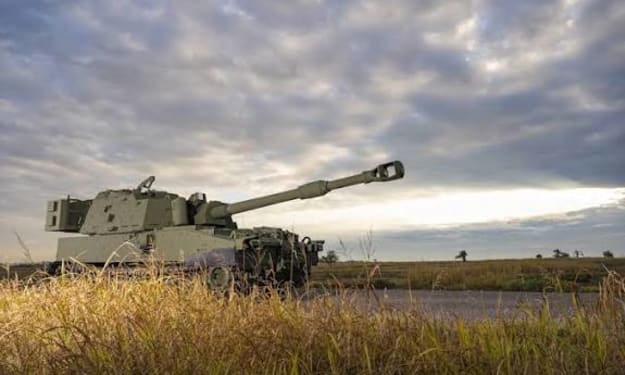
BAE Systems Wins $473 Million U.S. Army Contract to Produce 40 More M109A7 Paladin Self-Propelled Howitzers
BAE Systems, a leading defense contractor, has been awarded a $473 million contract by the U.S. Army to manufacture 40 additional M109A7 Paladin self-propelled howitzers. The contract highlights the ongoing efforts by the U.S. military to modernize its artillery capabilities and maintain battlefield readiness. The M109A7 is a key component of the U.S. Army’s artillery forces, offering mobility, firepower, and advanced targeting systems designed for modern warfare. About the M109A7 Paladin The M109A7 Paladin is the latest version of the M109 family of self-propelled howitzers, which have been in service for decades. Key features include: Enhanced mobility: Upgraded suspension and chassis for operation across rough terrain Advanced firepower: 155mm howitzer capable of rapid, accurate artillery fire Improved survivability: Armored protection for crew and critical systems Digital fire-control systems: Modern targeting and communication systems integrated for coordinated operations These upgrades allow the M109A7 to support combat units effectively, providing long-range artillery support while keeping crews safe. Significance of the Contract The $473 million contract awarded to BAE Systems is part of a broader U.S. Army modernization plan aimed at replacing older artillery systems and expanding the army’s operational capabilities. Army officials highlighted several reasons for the contract: Maintain readiness: Ensures that artillery units remain equipped for rapid deployment Modernize the fleet: Incorporates the latest technological upgrades for efficiency and accuracy Support defense industry: Contracts like this sustain American defense manufacturing jobs The delivery of the 40 new howitzers is expected over the next several years, with production taking place at BAE Systems’ facilities in the United States. Impact on Military Operations The M109A7 plays a critical role in artillery operations, which are essential for modern combined arms warfare. The howitzers provide: Long-range fire support for infantry and armored units Rapid response during combat scenarios Precision strikes against enemy positions while reducing collateral damage Military analysts note that upgraded artillery systems like the Paladin enhance the army’s ability to respond to diverse threats and operate in complex environments. BAE Systems: A Key Defense Contractor BAE Systems has been a major supplier of artillery systems to the U.S. military for decades. The company’s expertise includes design, production, and maintenance of armored vehicles and artillery. BAE Systems has previously delivered hundreds of M109A7 units under earlier contracts. The company also provides training, spare parts, and logistical support to ensure that artillery units remain operational. This new contract strengthens BAE Systems’ position as a leading supplier of advanced military hardware in the U.S. defense sector. Modernization and Strategic Importance The addition of 40 new M109A7 Paladins is part of a larger strategy to modernize U.S. ground forces, which includes: Upgrading armored vehicles and artillery systems Enhancing battlefield communications and digital targeting Ensuring compatibility with allied forces in joint operations Experts emphasize that modernized artillery is critical in maintaining a credible deterrent, especially as global conflicts evolve and require rapid and precise responses. Economic and Industrial Implications Defense contracts like this have a broader impact beyond military readiness: Job creation: Supports thousands of jobs in manufacturing, engineering, and logistics Technological innovation: Encourages research and development in advanced weapon systems Industrial competitiveness: Strengthens the U.S. defense industry in the global market BAE Systems’ production facilities are expected to employ hundreds of workers, boosting local economies and sustaining skilled labor in defense manufacturing. Global Context The U.S. Army’s continued investment in artillery systems like the M109A7 is part of a larger trend among major military powers to upgrade artillery and armored capabilities. Comparable programs are underway in Europe and Asia, highlighting the importance of modern firepower in national defense strategies. Defense analysts note that having mobile, accurate, and protected artillery units gives the U.S. military a strategic edge in both conventional conflicts and hybrid warfare scenarios. Conclusion The awarding of the $473 million contract to BAE Systems for 40 additional M109A7 Paladin self-propelled howitzers marks a significant step in modernizing U.S. artillery forces. The new units will enhance battlefield capabilities, strengthen national defense, and support the U.S. defense industry. As global military technology evolves, investments like these ensure that the U.S. Army remains prepared, mobile, and capable of responding to emerging threats. With the M109A7 Paladins in service, the Army’s artillery units are equipped to meet the demands of 21st-century warfare.
By Fiaz Ahmed about 12 hours ago in The Swamp
US Set to Quit World Health Organization: What It Means for Global Health
The United States has officially announced its intention to withdraw from the World Health Organization (WHO), a decision that has sent shockwaves through the global health community. The move, announced by government officials, is framed as a response to concerns over organizational efficiency, governance, and accountability. However, experts warn that the decision could have far-reaching consequences for global health initiatives, pandemic preparedness, and international cooperation.
By Aarif Lashariabout 15 hours ago in The Swamp
Center Stage with Paul Stewart
One of the standout features of “Center Stage with Paul Stewart” is its dedication to showcasing emerging talent. Many performers and creators find it challenging to gain recognition early in their careers, and the show provides a valuable platform for them to share their craft.
By Aarif Lashari4 days ago in The Swamp


Comments
There are no comments for this story
Be the first to respond and start the conversation.