
Israel and the Arab World in 2025: An Unstable Peace & A Shadow War
The Allies Who Can't Be Friends and the Enemies Who Aren't States

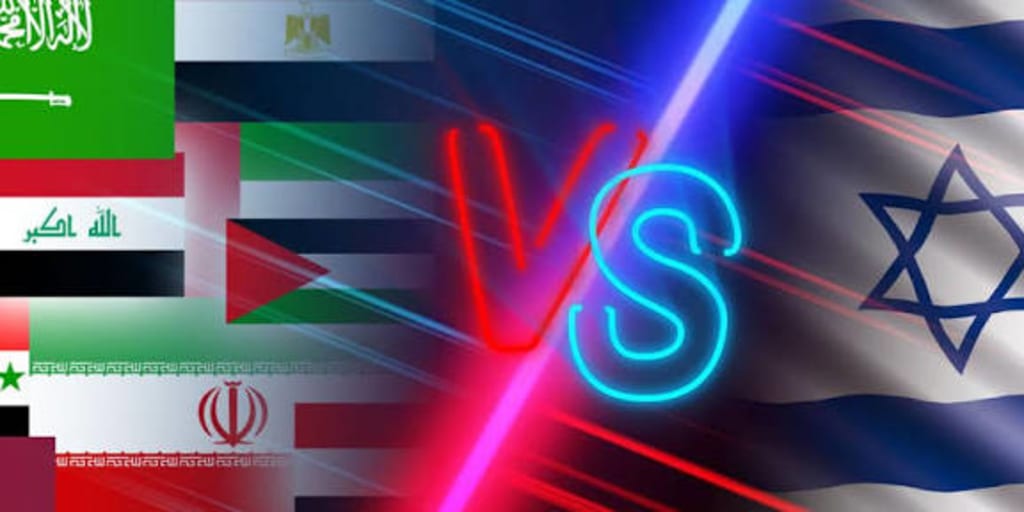
Title: Israel and the Arab World in 2025: An Unstable Peace & A Shadow War
Written By: Legancy Words
Imagine the Middle East as a giant chessboard. For most of the 20th century, the game was simple: it was Israel versus all the Arab countries. The lines were clear, the enemies were known, and the battles were fought with massive armies on open fields.
But in 2025, the game has completely changed. The old, simple board is gone. Now, it's a complex web of secret alliances, public rivalries, and hidden conflicts. The most surprising part? Israel is no longer openly at war with most of its Arab neighbors. Instead, the region is split by a cold, quiet, and incredibly fragile reality.
This new reality is built on two powerful, and opposing, forces:
1. The Thrill of New Friends (The Abraham Accords)
2. The Agony of an Old Wound (The Palestinian Issue)
Let's break down what this means for 2025.
Part 1: The Unexpected Friendships
This is the biggest plot twist of the last decade. Starting in 2020, countries like the United Arab Emirates (UAE), Bahrain, Morocco, and Sudan signed historic peace deals with Israel called the Abraham Accords.
Why would they do this? It mostly boils down to three things:
· The "Bad Guy" Buddy-Up:
These Arab nations see a bigger, scarier threat than Israel: Iran. They fear Iran's nuclear ambitions and its powerful network of proxy militias (like Hezbollah in Lebanon and the Houthis in Yemen). Israel has the most powerful military and intelligence service in the region. It's a classic case of "the enemy of my enemy is my friend." They are quietly teaming up to counter Iran.
· Money, Money, Money:
This is a huge driver. The UAE and others want to be global business hubs, not just oil giants. Israel is a world leader in technology, cybersecurity, agriculture, and medicine. This peace is backed by billions of dollars in trade, investment deals, and tech partnerships. It’s good for business.
· A New Generation of Leaders:
Many of these governments are led by young, pragmatic rulers who are less tied to the emotional conflicts of the past. Their priority is their country's economic future and regional power, not the old ideological struggle.
So, in 2025, you can see Israeli tourists visiting Dubai, businesspeople making deals in Bahrain, and security officials quietly sharing intelligence. This "cold peace" is becoming warmer and more normal every day.
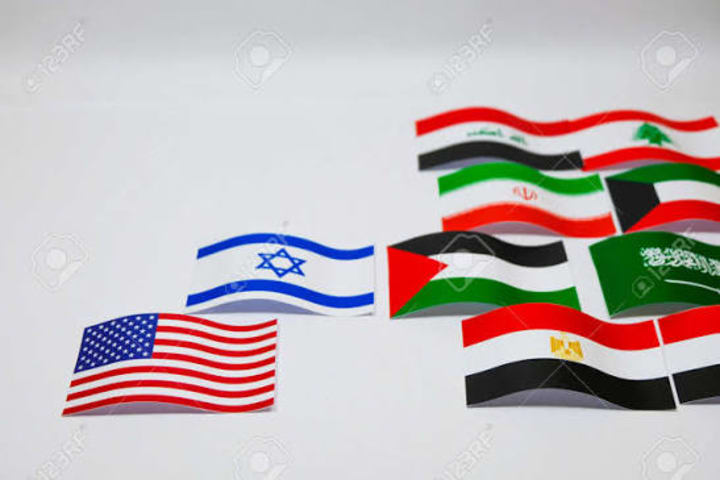
Part 2: The Unhealed Wound
But this new friendship has a giant, glaring problem: the Palestinian issue.
The old Arab rule was: "No peace with Israel until a fair peace is made with the Palestinians." The Abraham Accords broke that rule. For the governments that signed the deals, the Palestinian cause became a lower priority than their own national security and economic interests.
However, this doesn't mean the issue is gone. Far from it.
· The Public's Heart:
While Arab governments may be pragmatic, the people on the Arab street still feel a deep sense of solidarity with the Palestinians. The ongoing conflict in Gaza and the West Bank is a constant source of anger and frustration. This creates a massive gap between the rulers and the ruled.
· A Tool for Rivals:
Countries that are rivals of this new Israel-Arab alliance—namely Iran and Qatar—use the Palestinian cause as a powerful weapon. They fund militant groups and blast out media propaganda, highlighting Palestinian suffering to embarrass the UAE, Bahrain, and Israel. They ask: "How can you break bread with Israel while Palestinians are suffering?"
· The Constant Flashpoint:
The situation in Jerusalem, and especially at a holy site called the Al-Aqsa Mosque, is a tinderbox. A spark there can ignite violence across the region, forcing the new Arab allies of Israel to publicly condemn them to appease their angry citizens.
So, in 2025, Arab governments are walking a tightrope. They want the benefits of peace with Israel but must constantly manage the public anger over Palestine.
Part 3: The "Not-a-Country" Enemies
This is the second huge shift. Israel's most immediate and dangerous threats in 2025 are no longer the armies of Egypt or Jordan (they’ve been at peace for decades). The real threats are non-state actors: powerful militias that are funded and armed by Iran.
· Hezbollah (in Lebanon):
This is Israel's most feared enemy. Hezbollah is not just a militia; it's a state within a state, with an army more powerful than many countries. It has over 150,000 rockets and missiles pointed at Israel. The fear of a full-scale war with Hezbollah is the single biggest security nightmare for Israel.
· The Houthis (in Yemen):
You’ve probably heard of them. Despite being thousands of kilometers away, they fire drones and missiles at Israel, disrupting global shipping in the Red Sea to show solidarity with Gaza and prove their loyalty to Iran.
· Hamas (in Gaza) & Palestinian Islamic Jihad:
These groups operate right on Israel's doorstep, in the Gaza Strip. The devastating war that began in October 2023 is a brutal example of this direct conflict.
The Bottom Line for 2025
So, what does "Israel vs Arab countries" look like in 2025?
It looks like this: Israel is simultaneously more accepted by Arab governments than at any point in history, while also being more threatened by Iranian-backed militias.
The region is divided not between Arabs and Israelis, but between a bloc of allies (Israel, the UAE, Bahrain, and unofficially, Saudi Arabia who is considering a deal) facing off against a bloc of Iranian-backed forces (Hezbollah, the Houthis, Hamas, and Syria).
The peace is real, but it is fragile, transactional, and haunted by the unresolved pain of the past. The war is also real, but it is fought through proxies, drones, and cyberattacks, rather than tanks and fighter jets. The year 2025 will be a tense balancing act between these two competing realities.
About the Creator
LegacyWords
"Words have a Legancy all their own—I'm here to capture that flow. As a writer, I explore the melody of language, weaving stories, poetry, and insights that resonate. Join me as we discover the beats of life, one word at a time.
Keep reading
More stories from LegacyWords and writers in The Swamp and other communities.
Iran vs Israel: A Dangerous Dance in the Middle East
Introduction The relationship between Iran and Israel has long been one of the most fraught and potentially explosive rivalries in international politics. Rooted in ideology, power politics, religious tensions, and shifting regional alliances, this bitter animosity has shaped Middle Eastern geopolitics for over four decades. The “Iran vs Israel” conflict isn’t a traditional war, but a complex confrontation that plays out across cyber warfare, proxy battles, intelligence operations, rhetoric, and regional power struggles. Understanding the dynamics of this rivalry is critical not only for regional peace but also for global security, as any escalation has the potential to draw in multiple international actors and destabilize an already fragile region.
By LegacyWords7 months ago in The Swamp
Kianna Underwood
In an entertainment industry that often defines young talent by a single platform or breakout moment, Kianna Underwood represents a refreshing shift. Rather than being boxed into one label, she is steadily shaping a multifaceted identity built on creativity, adaptability, and authenticity. While many audiences first associate Kianna Underwood with Nickelodeon, her journey reflects far more than a network credit—it highlights the evolving path of modern entertainers who balance visibility with personal growth. From early exposure to mainstream media to her expanding presence beyond traditional television, Kianna Underwood’s story mirrors the changing landscape of youth entertainment. Early Ambitions and Creative Foundations Like many performers drawn to acting and media at a young age, Kianna Underwood’s passion didn’t emerge overnight. Her early interest in storytelling, performance, and self-expression laid the groundwork for future opportunities. Rather than chasing fame, she focused on learning how to communicate emotion, connect with audiences, and adapt to different creative environments. These formative years helped her develop discipline—an often overlooked quality in young performers. Whether through acting, creative collaboration, or on-camera experience, Kianna learned that consistency and preparation matter just as much as natural talent. Kianna Underwood and Nickelodeon: A Defining Chapter For many viewers, Kianna Underwood Nickelodeon is the phrase that first brings recognition. Nickelodeon has long served as a launchpad for young performers, offering not only visibility but also structured environments where emerging talent can learn the mechanics of television production. Being associated with Nickelodeon places Kianna Underwood within a legacy network known for shaping cultural moments for younger audiences. The experience exposed her to fast-paced production schedules, collaborative storytelling, and the responsibility of creating content that resonates with families and children alike. However, what sets Kianna apart is her understanding that Nickelodeon is a chapter—not the entire book. Rather than relying solely on network recognition, she has used the experience as a stepping stone toward broader creative goals. Navigating Life After the Spotlight One of the biggest challenges young actors face is transitioning beyond early exposure. The entertainment industry moves quickly, and staying relevant requires adaptability. Kianna Underwood’s approach reflects maturity beyond her years—she recognizes the importance of growth, reinvention, and long-term vision. Instead of chasing immediate validation, she has shown interest in expanding her skills. This includes exploring creative avenues that allow more personal expression, whether through digital platforms, collaborative projects, or behind-the-scenes learning. In today’s media ecosystem, versatility is power, and Kianna seems aware of that reality. Her journey highlights an important truth: success is not always loud. Sometimes it unfolds quietly through deliberate choices and steady progress. Representation and Relatability Audiences today connect most strongly with individuals who feel genuine. Kianna Underwood’s appeal lies in her relatability—she doesn’t present herself as untouchable or overly curated. This authenticity is especially important for younger viewers who look to public figures as examples rather than idols. By staying grounded, Kianna contributes to a healthier representation of young talent in media. She demonstrates that it’s possible to participate in major platforms like Nickelodeon while still maintaining individuality and balance. This grounded presence helps her stand out in an industry that often prioritizes image over substance. The Influence of Nickelodeon on Career Development Working with Nickelodeon provides more than screen time—it offers mentorship, structure, and exposure to industry standards. For Kianna Underwood, this experience likely played a key role in shaping her professionalism and creative confidence. Nickelodeon alumni often speak about the importance of teamwork and discipline learned during their time with the network. These lessons tend to carry forward, influencing how performers approach future opportunities. Kianna Underwood’s association with Nickelodeon places her within that tradition of growth-focused development rather than short-term stardom. Looking Toward the Future As Kianna Underwood continues to evolve, her career path remains open-ended—and that’s a strength. In a world where entertainers are no longer limited to television alone, she has the opportunity to explore acting, digital media, advocacy, or creative entrepreneurship. What matters most is intention. Rather than being defined solely by “Kianna Underwood Nickelodeon,” she has the chance to redefine what success looks like on her own terms. Whether she chooses to remain in front of the camera or expand into other creative roles, her foundation positions her well for sustainable growth. A New Model for Young Talent Kianna Underwood represents a new generation of entertainers—one that values balance, authenticity, and purpose. Her journey reminds audiences that early recognition doesn’t have to dictate an entire career. With thoughtful choices and continued self-discovery, she exemplifies how young creatives can navigate fame without losing themselves in it. As the entertainment industry continues to change, stories like Kianna Underwood’s offer a hopeful perspective. They show that talent, when paired with self-awareness and patience, can lead to meaningful and lasting impact. In the end, Kianna Underwood is more than a name associated with Nickelodeon. She is a developing creative voice—one that reflects where youth entertainment is headed, and why authenticity matters more than ever
By Saboor Brohi 2 days ago in The Swamp


Comments
There are no comments for this story
Be the first to respond and start the conversation.