
Is the 9–5 Dying? Exploring the Future of Work in 2025
From remote revolutions to AI-driven roles — the traditional job model is cracking wide open.

Once considered the gold standard of employment, the traditional 9–5 job now feels like a relic of the past. As we navigate 2025, one thing is becoming increasingly clear:
The way we work is changing — fast.
From hybrid flexibility to digital nomadism, the rigid Monday-to-Friday grind is giving way to a more fluid, personalized, and tech-powered work culture.
So the big question is:
Is the 9–5 truly dying? Or is it just evolving into something more human?
Let’s unpack the trends, truths, and tensions reshaping the future of work.
💻 1. The Rise of Remote, Hybrid, and Freelance Work
The global pandemic may have jumpstarted the remote work revolution, but the aftershocks are still being felt today — and they've permanently altered our expectations.
According to recent surveys:
Over 64% of knowledge workers prefer hybrid or fully remote work.
The gig economy has grown by more than 30% since 2020.
Platforms like Upwork, Fiverr, and Toptal are seeing record-breaking freelance signups.
Why?
People crave flexibility, autonomy, and the freedom to design their own schedules. A rigid 9–5 feels increasingly out of sync with modern life.
🧠 2. AI Is Replacing Tasks — Not Just Jobs
We’ve entered an era where AI tools like ChatGPT, Midjourney, and Copilot can write code, generate visuals, summarize meetings, and even draft emails.
While this has sparked fear around job loss, the truth is more nuanced:
Routine tasks are being automated.
Creative, strategic, and human-centered roles are gaining more value.
Employees are upskilling to stay ahead — often outside of traditional work hours.
The 9–5 is being replaced by the “results-based” model — where output matters more than hours.
🌎 3. Gen Z Is Redefining Career Priorities
This new generation isn’t just looking for a job — they want purpose, mental health, flexibility, and fulfillment.
Gen Z workers:
Prioritize work-life balance over salary.
Are more likely to side hustle or build passion projects.
Demand remote options as non-negotiables.
The era of staying loyal to a single company for 40 years?
Dead.
Instead, career fluidity — jumping between roles, starting micro-businesses, and building online income — is the new normal.
🏙️ 4. The Office Isn’t Dead — But It’s Different
Companies are reimagining office spaces into collaboration hubs, not daily destinations.
We’re seeing:
3-day hybrid workweeks.
Hot-desking instead of assigned cubicles.
Offices designed for community, not control.
It’s not about clocking in anymore — it’s about showing up when it makes sense.
This approach increases employee satisfaction while reducing costs for employers. A win-win.
💡 5. Skills > Degrees
In this new economy, what you can do matters more than what paper you hold.
Companies are prioritizing:
Certifications
Online portfolios
Real-world experience
Platforms like Coursera, Google Career Certificates, and LinkedIn Learning are enabling workers to reskill rapidly, often while employed.
So instead of climbing a corporate ladder from 9 to 5, people are building career lattices — horizontally and creatively.
⏳ 6. Burnout Culture Sparked a Wake-Up Call
For decades, the 9–5 was glorified — even when it bled into nights and weekends.
But the mass burnout crisis of the early 2020s pushed people to ask:
What am I really working for?
Workplaces began to:
Shorten meetings
Offer 4-day workweeks
Prioritize mental health initiatives
The rise of digital wellness, intentional living, and quiet quitting was a rebellion against overwork — and it’s forcing businesses to rethink productivity.
📱 7. Technology Is Powering New Possibilities
From Zoom meetings across continents to AI tools that cut hours of work down to minutes, technology is the engine behind this revolution.
In 2025, we’re seeing:
Virtual workspaces in the metaverse
AI personal assistants scheduling meetings and sending follow-ups
Time-tracking tools focused on outcomes, not surveillance
Work is becoming more asynchronous, allowing people to collaborate across time zones without sacrificing lifestyle.
🧭 What Does This Mean for You?
If you’re feeling disconnected from the 9–5 model, you’re not alone.
The future of work isn’t a one-size-fits-all anymore.
Now you can:
Build a portfolio career (multiple income streams)
Work remotely from anywhere
Learn new skills on your own schedule
Prioritize your health and personal life without sacrificing growth
Success today looks less like a corner office and more like freedom on your terms.
🔮 Final Thought
The 9–5 isn’t exactly dead — but it’s no longer king.
We’re moving toward a flexible, dynamic, and human-centered approach to work.
One where your value is measured by impact, not hours.
And where freedom, fulfillment, and adaptability are the new currency of career success.
Whether you're an employee, entrepreneur, or somewhere in between — the future of work is here.
And it’s yours to shape.
💬 What’s Your Take?
Do you still work a traditional 9–5?
Would you prefer a hybrid, freelance, or passion-based lifestyle?
Drop your thoughts in the comments 👇
About the Creator
Irfan Ali
Dreamer, learner, and believer in growth. Sharing real stories, struggles, and inspirations to spark hope and strength. Let’s grow stronger, one word at a time.
Every story matters. Every voice matters.
A Gathering of Evil Bosses
“I’m the queen of chin jutting while I smooth my hair, attacking, insulting, and deflecting to protect my appointer.” “Oh, please, Blondi, my hair is curled, highlighted, and longer than yours. I feature television commercials telling immigrants that we will give them a free plane ride home, and if they voluntarily turn themselves in, they will be allowed to legally apply for re-entry. It runs everywhere, and I look good in it! You can’t compete because of your blond hair. Mine is nicer, and my lips are prettier than yours.”
By Andrea Corwin 23 days ago in The Swamp
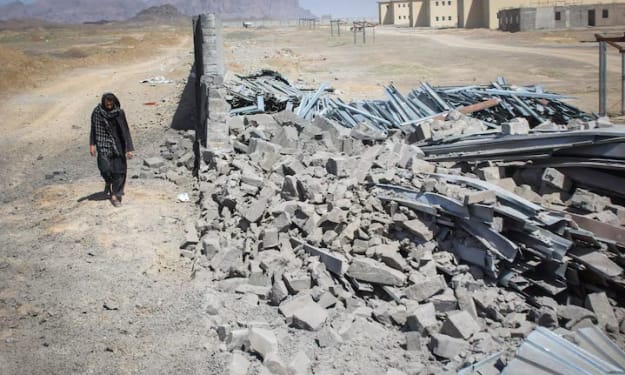
Subtitle: Diplomatic intervention from Beijing helps calm rising tensions along the Pakistan–Afghanistan border
Tensions between Pakistan and Afghanistan have often flared along their long and historically complicated border. In recent weeks, clashes between security forces from both sides raised fears of a broader conflict that could destabilize the region. However, diplomatic efforts led by China have reportedly helped ease the fighting, offering a temporary pause in hostilities and opening the door for dialogue between the two neighboring countries.
By Jameel Jamaliabout 16 hours ago in The Swamp



Comments
There are no comments for this story
Be the first to respond and start the conversation.