
Is China Losing Its Status as the Pentagon’s Top Security Priority?
How the U.S. National Defense Strategy Is Rebalancing Military Focus Toward the Homeland and Western Hemisphere
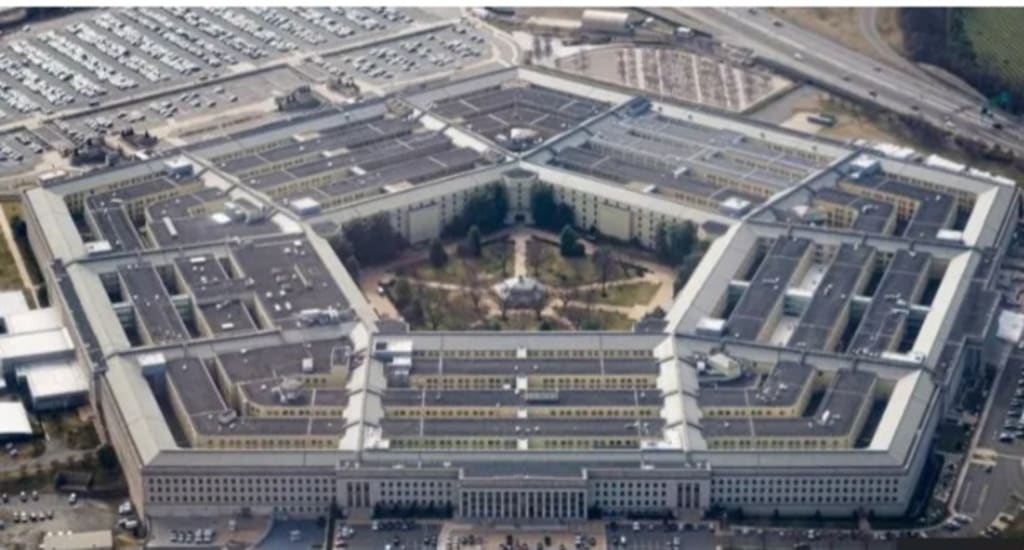
For more than a decade, U.S. defense policy was defined by “great power competition,” with the People’s Republic of China at the forefront of strategic planning. China’s rapid military modernization, technological breakthroughs, and expanding regional influence made it the Pentagon’s primary focus in war‑planning, force posture, and budget priorities. Yet a new direction is emerging under the latest U.S. National Defense Strategy: China is no longer the Pentagon’s top security priority in the same way it once was. �
Defense News
In January 2026, the Pentagon released its National Defense Strategy (NDS), a blueprint that outlines the U.S. military’s core missions over the next several years. Unlike the 2018 and 2022 strategies that centered China as the “pacing threat” demanding the bulk of the United States’ planning focus, the 2026 strategy reorients priorities inward — toward homeland defense, the Western Hemisphere, and regional security challenges. �
Breaking Defense +1
This pivot has sparked intense debate among policymakers, defense analysts, military leaders, and international observers. To understand the significance of this shift — and whether China really is no longer a top priority — we need to unpack what the Pentagon’s new strategy says, why it matters, and what it might mean for global security.
The Shift in Strategic Priorities
At the core of the 2026 National Defense Strategy is a rebalancing of perceived threats. Whereas China once occupied the central position in Pentagon assessments of the global security landscape, the new strategy places greater strategic weight on defending the U.S. homeland and the Western Hemisphere. This reflects a broader nationalist approach to defense: protecting the United States’ borders, economic infrastructure, and regional interests before expanding military engagements across distant theaters. �
Defense News
According to senior U.S. officials, the renewed emphasis on homeland defense and the Western Hemisphere aligns with the broader “America First” policy philosophy of the current administration. The strategy underscores that the department will prioritize “protecting the homeland” and preventing threats from reaching U.S. territory — whether through military action, transnational crime, migration crises, or narcotics trafficking. �
Defense News
In practical terms, this means military resources and planning are increasingly directed at things like:
Strengthening border and airspace defense systems.
Maintaining influence in the Caribbean, Latin America, and the Gulf of Mexico.
Countering drug smuggling, gangs, and criminal networks that affect domestic security.
Ensuring secure military access points in nearby strategic regions. �
Defense News
This reshuffling of priorities may seem surprising given China’s continued rise as a global power. However, within the U.S. defense establishment, priority does not equal dismissal; rather, it means relative emphasis. China remains a significant concern — but it no longer dominates U.S. defense planning like it once did.
China’s Role in U.S. Defense Thinking
Despite the shift, Pentagon officials say they will still include China in the NDS as a key security concern, albeit in a different context. Rather than being the singular threat dominating the strategy, China will be balanced among several strategic interests, including homeland defense and countering regional destabilizers such as Iran or non‑state actors. �
Defense News
This reorientation has a few important implications:
Strategic Stability Over Confrontation:
The new strategy’s tone toward China is less confrontational than past iterations. While maintaining a deterrence posture in the Indo‑Pacific, the Pentagon appears to favor diplomatic engagement and stable competition — focusing on building partnerships and strengthening alliances rather than preparing primarily for military conflict. �
The Wall Street Journal
Re‑Anchoring Regional Security Responsibilities:
U.S. allies in Europe and Asia are encouraged to take more responsibility for their own defense. This includes European NATO members boosting their conventional military capabilities and Asian allies investing more in regional defense, reducing the burden on U.S. forces. �
AP News
Emphasis on Multi‑Domain Threats:
While the strategy de‑emphasizes China as the top priority, it still recognizes the need to keep a capable deterrence posture in the Indo‑Pacific — including support for allies like Japan and South Korea, and continued presence along strategic maritime routes. This suggests a multi‑tiered approach, not an abandonment of China as a security concern. �
The Wall Street Journal
Reactions and Critiques
The shift has provoked varied reactions:
Supporters argue that refocusing U.S. defense on the homeland and neighboring regions responds to evolving threats like cyberattacks, migration, and regional instability. They contend that by strengthening core domestic defenses and encouraging allies to share burdens, the U.S. can maintain global influence without overextending its military.
Critics warn that subordinating China to a lower priority could embolden Beijing by signaling a reduced U.S. willingness to counter assertive actions in the Indo‑Pacific. Some defense analysts fear that if the U.S. steps back too far, China might reinterpret this as a strategic opening to expand its influence.
Military professionals, including some senior officers, have expressed concern that this strategy distracts from maintaining deterrence against near‑peer rivals and undermines long‑term readiness for major power conflict. �
Defense News
What This Means Going Forward
Is China truly no longer the Pentagon’s top security priority? The answer depends on how one defines “priority.” In terms of focus and resource allocation, China may not be at the top as it once was under previous defense strategies. But in strategic calculus, Beijing’s rise — economically, technologically, and militarily — continues to shape U.S. policy. The new strategy may be less about sidelining China and more about broadening the lens of national security.
As global geopolitics evolve, so too will the priorities of the Pentagon. What remains constant is the need for a balanced approach — one that protects U.S. interests at home while managing strategic competition abroad.
References used:
Analysis is based on recent reporting from the Pentagon’s 2026 National Defense Strategy coverage by Defense News, AP News, Wall Street Journal, and other outlets. �
Defense News +3
About the Creator
Keep reading
More stories from Ayesha Lashari and writers in The Swamp and other communities.
High Stakes but Low Expectations for Ukraine Talks with Russia and the United States
As the war in Ukraine drags into another grueling phase, renewed diplomatic efforts involving Ukraine, Russia, and the United States carry enormous geopolitical stakes—but very modest expectations. After years of intense fighting, economic disruption, and human suffering, any dialogue is seen as valuable. Yet few observers believe that current talks will lead to a meaningful breakthrough or an end to the conflict in the near future.
By Ayesha Lasharia day ago in The Swamp
Global Leaders Gather in Switzerland to Ponder the Future of a Messy World
In a world marked by conflict, climate crises, and economic instability, the small alpine country of Switzerland has once again become the focal point for global diplomacy. Leaders from around the world have gathered in Geneva this week to engage in what many are calling one of the most consequential international meetings of the decade. The purpose? To ponder the future of a world that seems increasingly messy, unpredictable, and interconnected in ways that defy easy solutions.
By Aqib Hussain6 days ago in The Swamp
Search Operation Underway After Devastating Gul Plaza Fire in Karachi
Karachi woke up to tragedy as a massive fire ripped through Gul Plaza, one of the city’s busiest shopping complexes. Families are anxiously awaiting news, rescue teams are working around the clock, and the city is grappling with the scale of the disaster. More than 24 hours after the fire began, emergency crews are still searching for over 50 people reported missing.
By Aarif Lashari5 days ago in The Swamp
Rage
Content Warning: Domestic Violence, Assault Rage D. A. Ratliff “Who did this?” My voice echoed through the house. All I wanted was a cup of tea, but one of the twins, running through the house like maniacs, knocked it over. My nerves tingled, and every muscle in my body felt coiled like a spring. Survival seemed out of reach.
By D. A. Ratliff6 days ago in Fiction




Comments
There are no comments for this story
Be the first to respond and start the conversation.