
Iran Wants to Make Deal Rather Than Face Military Action, Trump Says
Former US president claims Tehran is seeking negotiation amid rising regional tensions
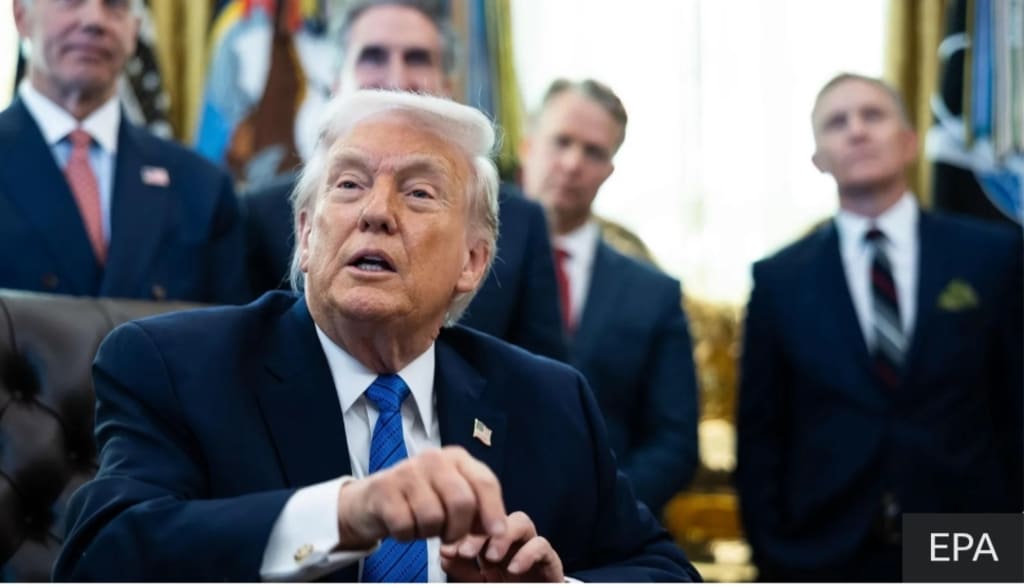
Former US President Donald Trump has claimed that Iran is more interested in striking a deal than risking military confrontation, reigniting debate over diplomacy, deterrence, and the future of Middle East stability. Speaking at a political event, Trump suggested that Iran’s leadership understands the consequences of escalation and prefers negotiation over armed conflict.
The remarks come at a time of heightened global anxiety over Iran’s nuclear program, ongoing conflicts in the Middle East, and strained relations between Tehran and Western powers. While Trump is no longer in office, his comments carry weight as he remains a central figure in US politics and foreign policy discourse.
Trump’s Claim: Deal Over Destruction
According to Trump, Iran’s leadership is aware that military action would be devastating for the country and its economy. He argued that during his presidency, Iran was “very close” to agreeing to a new deal but ultimately failed to do so due to political changes in Washington.
“Iran wants to make a deal. They don’t want to be blown up,” Trump said, emphasizing his belief that firm pressure and credible military deterrence force adversaries toward negotiation rather than conflict.
Trump framed his approach as one of “peace through strength,” a doctrine he frequently cited during his time in office. He suggested that strong sanctions and military readiness were key factors pushing Iran toward talks.
Context: A Long History of Tension
Relations between the United States and Iran have been tense for decades, marked by sanctions, proxy conflicts, and diplomatic standoffs. The situation intensified in 2018 when the Trump administration withdrew from the Joint Comprehensive Plan of Action (JCPOA)—commonly known as the Iran nuclear deal.
The withdrawal led to:
Reimposed and expanded US economic sanctions
Reduced Iranian compliance with nuclear restrictions
Rising tensions in the Gulf region
Increased hostility between Iran and US allies
Since then, efforts to revive the nuclear agreement have stalled, with mutual accusations of bad faith and strategic mistrust.
Iran’s Position: Resistance and Negotiation
Iranian officials have repeatedly stated that they are open to diplomacy but will not negotiate under what they describe as “maximum pressure.” Tehran insists that any deal must include full sanctions relief and guarantees that future US administrations will not abandon agreements.
Iran also denies seeking nuclear weapons, maintaining that its nuclear program is for civilian and energy purposes. However, international inspectors have raised concerns about uranium enrichment levels that exceed previous limits.
Trump’s comments suggest he believes Iran’s public defiance masks a private desire to avoid military conflict—an interpretation not officially confirmed by Tehran.
Military Action: A Risky Alternative
The possibility of military action against Iran remains a sensitive and controversial issue. Analysts warn that direct confrontation could:
Trigger regional war involving Israel, Hezbollah, and Gulf states
Disrupt global oil supplies and energy markets
Cause significant civilian casualties
Escalate tensions between global powers
Even limited strikes could provoke retaliation through Iran-backed militias across the Middle East, making conflict unpredictable and costly.
Trump’s assertion implies that Iran understands these risks and prefers diplomacy as the safer option.
Reactions from Experts and Analysts
Foreign policy experts are divided over Trump’s claim. Some argue that Iran often uses brinkmanship to gain leverage but ultimately favors negotiation. Others caution that Tehran’s decision-making is complex and influenced by internal politics, regional ambitions, and ideological commitments.
One Middle East analyst noted:
“Iran historically negotiates when pressure is high, but it also resists appearing weak. Any deal would require face-saving concessions on both sides.”
Critics of Trump’s approach argue that withdrawing from the nuclear deal reduced trust and made negotiations more difficult, while supporters claim that tougher pressure exposed Iran’s vulnerabilities.
Impact on US Politics and 2026 Outlook
Trump’s comments are also widely viewed through the lens of US domestic politics. As debates over foreign policy intensify ahead of future elections, Iran remains a powerful talking point for voters concerned about national security and global stability.
By presenting himself as a leader who avoided war while forcing adversaries to negotiate, Trump reinforces a central theme of his political messaging: strength without endless conflict.
Whether current or future US administrations adopt a similar stance remains uncertain, but Iran policy is likely to remain a defining issue.
The Global Stakes
Beyond the US and Iran, the outcome of any potential deal would affect:
European allies seeking diplomatic solutions
Gulf nations worried about regional security
Israel, which views Iran’s nuclear ambitions as an existential threat
Global markets sensitive to oil price shocks
Diplomacy, if successful, could ease tensions and stabilize the region. Failure, however, could push all sides closer to confrontation.
Conclusion
Donald Trump’s claim that Iran wants to make a deal rather than face military action reflects a broader debate about how nations respond to pressure, deterrence, and diplomacy. While Iran’s true intentions remain subject to interpretation, the risks of escalation are clear.
As tensions persist and negotiations remain uncertain, the international community faces a familiar but urgent challenge: balancing firmness with diplomacy to prevent conflict while addressing legitimate security concerns.
Whether through renewed talks or continued standoffs, the path forward will shape not only US-Iran relations but the future stability of the Middle East.
About the Creator
Keep reading
More stories from Aarif Lashari and writers in The Swamp and other communities.
Google Unveils Project Genie: AI Tool for Creating “Playable Worlds” with Licensed IP
Google has officially released Project Genie, an AI-powered tool designed to help creators generate “playable worlds” that can incorporate copyrighted intellectual property (IP). The platform combines artificial intelligence, immersive 3D modeling, and interactive design, offering developers, game designers, and hobbyists a powerful new way to build digital environments quickly and creatively.
By Aarif Lashariabout 15 hours ago in The Swamp
Did Everyone Forget About DeepSeek? What Wall Street Is Getting Wrong About Chinese AI
For a brief moment, it seemed like everyone was talking about DeepSeek. The Chinese artificial intelligence company made waves with claims that rivaled Western AI models, sparked debates about global tech competition, and triggered concern in boardrooms from Silicon Valley to Wall Street. Then, almost as suddenly as it appeared, the conversation faded.
By Muhammad Hassan7 days ago in The Swamp
Russian ‘Shadow Fleet’ Tanker Diverted to French Port by Naval Forces
A Russian oil tanker believed to be part of the so-called “shadow fleet” was recently diverted to a French port after being intercepted by naval forces. The incident has drawn international attention and renewed debate over sanctions enforcement, maritime security, and the hidden networks used to transport oil amid global restrictions. The diversion highlights growing efforts by European nations to tighten oversight of shipping routes used to bypass sanctions imposed on Russia following its invasion of Ukraine. As pressure increases, the seas have become a key battleground in the enforcement of international law. What Is the Russian ‘Shadow Fleet’? The term “shadow fleet” refers to a group of aging oil tankers operating outside standard international shipping practices. These vessels are often owned by shell companies, sail under flags of convenience, and frequently turn off tracking systems to avoid detection. Such tankers are used to transport Russian oil to buyers willing to ignore or work around Western sanctions. Many operate with limited insurance coverage and unclear ownership, raising safety and environmental concerns for coastal nations. Details of the Tanker Diversion According to officials, the tanker was navigating European waters when naval forces intervened and directed it to a French port for inspection. Authorities suspect the vessel was attempting to conceal its cargo origin or violate sanctions related to Russian energy exports. The operation was conducted under maritime law, which allows states to inspect ships when there is reasonable suspicion of illegal activity. Once docked, the tanker was expected to undergo checks related to its documentation, cargo, safety standards, and ownership structure. Why France Took Action France, like many European Union members, has strengthened its monitoring of shipping activity linked to sanctioned entities. The diversion reflects a broader strategy to prevent illegal oil trade and ensure compliance with international sanctions. Officials emphasized that the action was not an act of aggression but a lawful enforcement measure. By intercepting the tanker, French authorities aimed to send a clear signal that European waters will not be used to evade sanctions without consequence. Sanctions and Maritime Enforcement Since the introduction of price caps and trade restrictions on Russian oil, enforcement has proven challenging. Oil is easily transported, and global demand creates incentives for creative evasion methods. Shadow fleet vessels often: Change names and flags frequently Use complex ownership chains Disable location tracking systems Transfer oil at sea to other ships These practices make monitoring difficult, but recent interceptions show that naval and port authorities are improving coordination and intelligence sharing. Environmental and Safety Risks Beyond sanctions, shadow fleet tankers pose serious environmental risks. Many of these ships are old and poorly maintained. Without proper insurance, any oil spill could leave coastal nations with massive cleanup costs. Maritime safety experts warn that an accident involving such a tanker in busy European waters could have severe consequences for marine life, fisheries, and tourism. This adds urgency to efforts aimed at inspecting and, when necessary, detaining suspect vessels. Russia’s Response and Global Reactions Moscow has repeatedly criticized Western sanctions, arguing they disrupt global energy markets. Russian officials have denied wrongdoing and claim that such enforcement actions are politically motivated. Meanwhile, Western governments argue that sanctions are a legitimate response to Russia’s actions in Ukraine and that enforcement is essential to maintaining credibility. Analysts say incidents like this could become more frequent as authorities close loopholes. Countries outside Europe are also watching closely. Many rely on maritime trade and are concerned about how enforcement actions may affect global shipping norms. Impact on Global Energy Markets While a single tanker diversion may not disrupt oil supplies, it adds uncertainty to an already fragile market. Traders and shipping companies are paying closer attention to routes, compliance risks, and insurance coverage. Some experts believe stricter enforcement could raise transportation costs for sanctioned oil, reducing profits and limiting Russia’s ability to fund its war effort. Others warn that increased enforcement could push more activity underground. What This Means Going Forward The diversion of the shadow fleet tanker signals a shift from monitoring to action. European navies and port authorities appear more willing to intervene directly when they suspect sanctions violations. This approach may: Increase pressure on shadow fleet operations Encourage greater transparency in shipping Reduce environmental and safety risks Strengthen international sanctions enforcement However, it also raises questions about jurisdiction, escalation, and the balance between security and free navigation. Conclusion The diversion of a Russian shadow fleet tanker to a French port marks a significant moment in maritime sanctions enforcement. It reflects growing determination among European nations to close loopholes and hold violators accountable. As the conflict in Ukraine continues, the seas remain a crucial front in the global response. Whether through inspections, diversions, or tighter regulations, naval forces are playing an increasingly important role in shaping the future of international trade and security.
By Fiaz Ahmed 7 days ago in The Swamp



Comments
There are no comments for this story
Be the first to respond and start the conversation.