
Iran’s President Orders Team to Open Fresh Talks With U.S.
Tehran signals cautious willingness to reengage with Washington Regional mediators step in as both sides test diplomacy Fresh negotiations could reshape the future of sanctions and security

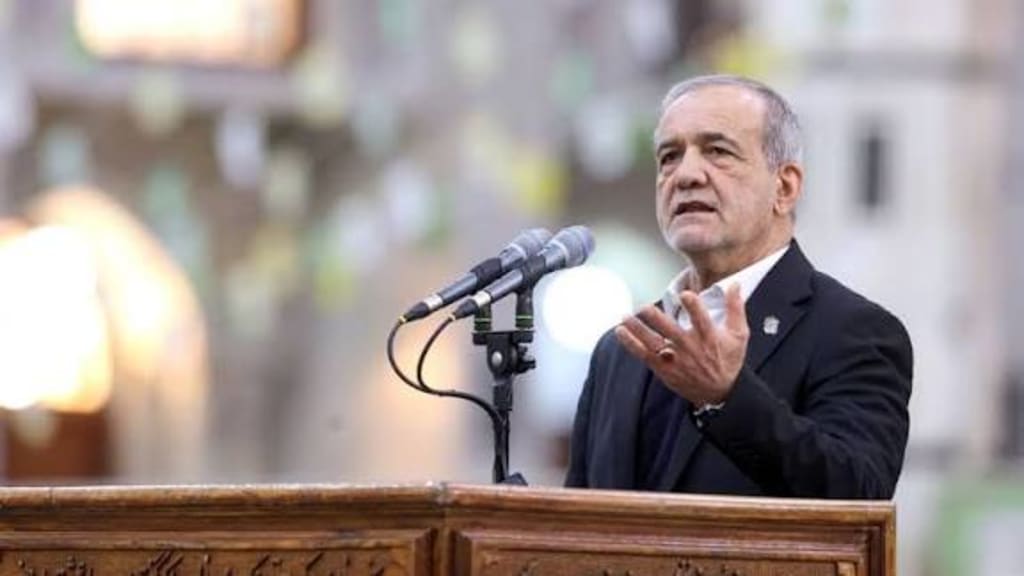
In a notable shift in Iran’s diplomatic posture, President Masoud Pezeshkian has ordered his government to prepare for fresh negotiations with the United States — a move that could mark a tentative step toward easing one of the world’s most prolonged geopolitical confrontations. The announcement, made on social media and confirmed by multiple news agencies, comes amid escalating regional tensions, ongoing nuclear concerns, and sustained pressure from both regional partners and Washington to find a peaceful path forward after years of stalemate.Pezeshkian’s directive instructs Iran’s Foreign Minister Abbas Araghchi to explore conditions for “fair and equitable” negotiations with the United States — a phrase he emphasized must occur “within the framework of our national interests” and in an environment free of threats or “unreasonable expectations.” A Diplomatic Opening After High Tensions
The call for fresh talks comes against the backdrop of months of severe tensions between Tehran and Washington. Earlier, U.S. President Donald Trump had warned that “bad things could happen” if a diplomatic agreement was not reached, even as Washington maintained a significant military presence in the region with warships and aircraft carriers on alert.
president framed the development as responsive to “requests from friendly governments in the region” — underscoring the role of third parties, such as Turkey, Qatar, Oman, and Egypt, that are facilitating diplomatic efforts to bring Tehran and Washington back to the negotiating table.
While the announcement signals a potential diplomatic breakthrough, Iranian officials were careful to condition any talks on respect for Iran’s sovereignty and strategic interests, insisting that negotiations must be conducted in a way that upholds the nation’s dignity and national priorities. Anadolu Ajansı
What Are the Talks About?
Though details of the agenda are still evolving, the initial focus of the proposed talks would be Iran’s nuclear program, which has long been at the heart of tensions with the U.S. and its allies. Previous attempts to resolve these issues — including the 2015 Joint Comprehensive Plan of Action (JCPOA) — collapsed after the Trump administration withdrew from the deal and reimposed sanctions, setting back years of gradual diplomatic engagement. Wikipedia
Iran’s leadership has insisted that any resumption of negotiations should center on nuclear issues and be “free from threats” — a clear reference to recent U.S. rhetoric and military posturing. Iranian Foreign Minister Abbas Araghchi echoed this while emphasizing that achieving an agreement is possible if both sides pursue fairness. mal Mediation and International Pressure
Regional players have pushed for renewed dialogue as tensions threaten to engulf broader Middle Eastern stability. Turkish officials, for instance, have suggested resolving disputes one issue at a time, starting with the nuclear program, to avoid Iranian humiliation and encourage progress.
diplomatic environment has been shaped not just by bilateral pressure but also by shared concerns over war escalation, disruptions to global energy markets, and the potential for wider conflict involving Israel — adding urgency to any diplomatic opening.
U.S. Response and Strategic Calculus
From Washington’s perspective, Trump and his advisers have indicated a dual approach of deterrence and diplomacy: reinforcing military strength in the region while signaling openness to negotiations. Trump himself stated that talks with Iran were ongoing and that the outcome was uncertain.
ategy appears to aim at balancing pressure with incentives — keeping Iran engaged while signaling the severe consequences of non-cooperation. The exact blend of sanctions relief, security guarantees, or other concessions that might form the basis of any agreement remains unclear, and Trump’s comments have been cautious, emphasizing hope for a deal while maintaining leverage.
Domestic and Global Reactions
Within Iran, reaction to the president’s announcement reflects a mix of cautious optimism and skepticism. Reformist factions and business leaders see the move as a potential opening to ease sanctions and revive economic prospects. Hardliners, however, remain wary of engaging with a U.S. administration they see as unreliable and hostile. Senior religious figures and advisers have stressed that any agreement must respect Iran’s autonomy and regional posture.
Globally, international observers have broadly welcomed the prospect of renewed diplomacy. European allies, in particular, advocate for a negotiated settlement as a way to reduce regional tensions and curb the risk of conflict. Major economic powers are keen to stabilize the Middle East, where trade and energy flows are vulnerable to instability.
What Happens Next
As groundwork is laid for the potential talks, anticipated in Istanbul or another regional venue later this week, diplomats from both sides — including Iran’s Foreign Minister Araghchi and U.S. envoy Steve Witkoff — may play central roles in shaping negotiations.
Axios
Yet despite the promising signals, deep challenges remain: mistrust built up over years of sanctions, military posturing, and divergent demands on issues such as ballistic missiles, regional proxy networks, and human rights. Both sides will need to build confidence gradually, maintain steady channels of communication, and manage domestic political pressures that could affect negotiations.
Conclusion
Iran President Masoud Pezeshkian’s order to open fresh talks with the United States marks a notable, potentially historic moment in one of the most fraught diplomatic relationships of the 21st century. While the path to agreement is complex and laden with conditions, the move reflects a rare alignment between global pressure, regional mediation, and strategic necessity.
Whether these talks result in meaningful progress or remain a diplomatic overture will depend on how both Tehran and Washington navigate trust deficits, define mutual expectations, and prioritize stability over confrontation. For now, the world watches as ancient adversaries tentatively step back toward the negotiating table — a development with implications far beyond their borders.
About the Creator
Fiaz Ahmed
I am Fiaz Ahmed. I am a passionate writer. I love covering trending topics and breaking news. With a sharp eye for what’s happening around the world, and crafts timely and engaging stories that keep readers informed and updated.
Keep reading
More stories from Fiaz Ahmed and writers in The Swamp and other communities.
Destroyer USS Truxtun to Deploy as Navy Maintains Warship Build-Up in Southern and Central Commands
The U.S. Navy has confirmed that the guided-missile destroyer USS Truxtun (DDG-103) will deploy to operational waters under U.S. Southern Command and Central Command as part of a continued buildup of naval forces in strategically sensitive regions. The deployment reflects Washington’s determination to maintain a strong maritime presence amid rising geopolitical tensions, threats to commercial shipping, and growing concerns over regional instability in both the Middle East and the Western Hemisphere. USS Truxtun, an Arleigh Burke–class destroyer, departed following weeks of training and readiness exercises designed to prepare its crew for complex missions ranging from missile defense to maritime security operations. Navy officials say the ship’s assignment will involve patrols, joint exercises with allied navies, and rapid-response readiness in case of emerging threats. Strengthening Maritime Security A central mission of the deployment is the protection of vital sea lanes. Over the past year, shipping routes in the Red Sea, Persian Gulf, and Caribbean have faced increased risks from missile attacks, drone threats, piracy, and illegal trafficking. These routes remain essential for global trade and energy supply, making naval security a top priority for U.S. defense planners. The Truxtun is equipped with the Aegis Combat System, advanced radar arrays, and a wide range of defensive and offensive weapons. This capability allows it to detect and intercept airborne threats, track surface vessels, and coordinate operations with allied forces. Its presence is expected to strengthen deterrence while reassuring commercial shipping companies and regional partners. Pentagon officials have emphasized that the mission is defensive in nature and intended to prevent escalation rather than provoke conflict. However, the deployment also sends a message that the United States is prepared to defend freedom of navigation and respond to threats against international commerce. Dual Focus: Southern and Central Commands The Truxtun’s mission spans two major areas of responsibility. In the Southern Command region, which includes the Caribbean, Central America, and parts of South America, U.S. naval forces focus on counter-narcotics operations, illegal fishing, and transnational crime. The destroyer is expected to participate in cooperative exercises with partner nations aimed at improving maritime surveillance and regional stability. These operations have gained importance as rival powers seek to expand their influence in Latin America through military and economic engagement. Maintaining a visible naval presence allows the U.S. to reinforce longstanding partnerships and demonstrate its commitment to regional security. In the Central Command area, the Truxtun will operate in a far more volatile environment. Tensions involving Iran, regional militias, and ongoing conflicts have raised the risk of attacks on U.S. bases and commercial vessels. Recent missile launches and drone strikes in the region have increased the demand for ships capable of air and missile defense. The Truxtun’s advanced sensors and intercept systems make it a key asset in protecting allied infrastructure and supporting coalition operations. Deterrence and Strategic Messaging Beyond its operational role, the deployment carries significant strategic symbolism. By increasing the number of warships in sensitive regions, the Navy signals its readiness to respond to crises without committing large ground forces. Naval power provides flexibility, allowing the U.S. to project strength while retaining the ability to de-escalate when conditions improve. Military analysts say such deployments also help deter hostile actors who may calculate that U.S. attention is focused elsewhere. With competing priorities in Europe and the Indo-Pacific, maintaining a consistent presence in the Middle East and Caribbean shows that these regions remain central to U.S. security planning. The Human Dimension For the sailors aboard USS Truxtun, the deployment represents months of demanding service far from home. Crew members will conduct daily patrols, training drills, and joint exercises under challenging conditions. Navy leadership has acknowledged that sustained deployments can strain morale and equipment but insists that readiness remains essential. The destroyer’s crew includes specialists in navigation, engineering, missile systems, and cybersecurity, reflecting the complexity of modern naval warfare. Maintaining peak performance requires constant training and coordination, especially in high-risk environments. Broader Naval Strategy The Truxtun deployment fits into a larger Navy strategy of rotating ships through critical regions rather than maintaining permanent forward basing. This approach allows for flexibility and prevents adversaries from predicting U.S. movements too easily. At the same time, the Navy faces challenges of aging ships, budget constraints, and growing global commitments. Balancing operations across Europe, Asia, and the Middle East has placed pressure on fleet resources. Officials argue that deployments like Truxtun’s are necessary to uphold stability even as modernization efforts continue. Global Implications International observers see the buildup as a response to a more uncertain world order. Disruptions to shipping lanes, energy markets, and regional security can have far-reaching economic consequences. By reinforcing its naval presence, the U.S. aims to limit these disruptions and maintain confidence among allies. However, critics warn that increased militarization also carries risks of miscalculation. Close encounters between rival naval forces could escalate quickly if not carefully managed. Diplomacy and military restraint remain crucial alongside deterrence. Conclusion The deployment of USS Truxtun highlights the U.S. Navy’s commitment to maintaining stability across key maritime regions under Southern and Central Commands. With threats ranging from piracy and trafficking to missile and drone attacks, the destroyer’s mission underscores the continuing importance of naval power in global security. As geopolitical tensions persist, the Truxtun’s presence will serve both as a shield for international commerce and as a symbol of U.S. resolve. Whether acting in defense, deterrence, or cooperation with allies, the destroyer’s deployment reflects a broader strategy aimed at preventing conflict while preserving freedom of the seas.
By Fiaz Ahmed about 11 hours ago in The Swamp
Cabin Fever Because of Snow, Sleet, and Freezing Rain That Turned to Icy Roads
What Is Cabin Fever? The short answer is that cabin fever is restlessness from being in a confined area. Cabin fever is the distressing irritability or restlessness experienced when a person or group is stuck at an isolated location or in confined quarters for an extended time. Research shows that prolonged cold, gray skies, and being stuck indoors can trigger mood shifts similar to “winter blues.”
By Margaret Minnicks3 days ago in Humans



Comments
There are no comments for this story
Be the first to respond and start the conversation.