
Iran’s Dual Challenge: Unrest at Home, Threat of Strikes From Abroad
How economic strain and geopolitical pressure are pushing Tehran toward a critical turning point

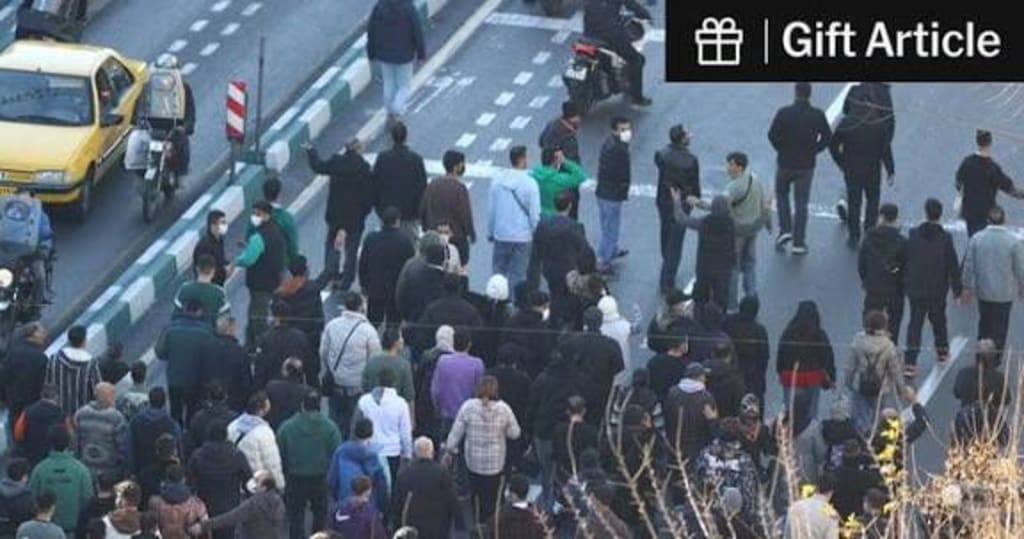
Iran is facing one of the most complex and dangerous moments in its modern history. On one front, the country is grappling with growing unrest at home—driven by economic hardship, political dissatisfaction, and social tensions. On the other, it confronts the looming possibility of military strikes from abroad, fueled by regional rivalries, nuclear concerns, and escalating geopolitical pressure. Together, these internal and external challenges are testing the resilience of Iran’s leadership and reshaping the country’s future.
Rising Discontent Within Iran
Domestic unrest in Iran has been steadily building over recent years. High inflation, unemployment, currency devaluation, and sanctions-induced shortages have placed immense pressure on ordinary citizens. Many Iranians, especially younger generations, feel disconnected from political decision-making and frustrated by limited economic opportunities.
Public protests—sometimes sparked by fuel prices, sometimes by social restrictions—have become more frequent. While many demonstrations begin with economic grievances, they often evolve into broader expressions of political dissatisfaction. Social media, despite heavy regulation, continues to amplify dissent and connect voices across cities and regions.
The Iranian government has responded with a mix of economic promises, security measures, and controlled reforms. However, critics argue that these responses treat symptoms rather than underlying causes. As living conditions remain strained, the risk of further unrest persists, making internal stability a growing concern for Tehran.
Economic Pressure as a Catalyst
Sanctions remain a central factor in Iran’s internal struggles. Restrictions on oil exports, banking systems, and international trade have severely limited state revenue. While Iran has sought alternative trade routes and partnerships—particularly with China and regional allies—these efforts have not fully offset the damage.
The economic squeeze has weakened public trust and increased inequality. Middle-class households have shrunk, while lower-income families struggle to afford basic necessities. For many Iranians, economic frustration has become inseparable from political dissatisfaction, deepening the sense of crisis at home.
External Threats and Regional Tensions
At the same time, Iran faces growing pressure from abroad. Tensions with the United States, Israel, and some Gulf nations remain high, largely centered on Iran’s nuclear program and regional influence. Western and regional powers fear that Iran’s nuclear capabilities could cross a critical threshold, triggering instability across the Middle East.
Israel, in particular, has repeatedly stated that it will not allow Iran to develop nuclear weapons, raising the possibility of targeted military strikes. Meanwhile, U.S. military presence in the region serves as both a deterrent and a source of tension. Iran’s support for allied groups across Lebanon, Syria, Iraq, and Yemen further complicates the geopolitical landscape.
These external threats force Iran to remain on high alert, diverting resources toward defense and security at a time when economic relief is desperately needed.
A Dangerous Intersection of Pressures
What makes Iran’s situation especially volatile is the intersection of domestic unrest and external threat. Historically, governments under foreign pressure sometimes rely on nationalism to strengthen internal unity. However, prolonged economic hardship limits the effectiveness of this strategy.
If military strikes were to occur, they could temporarily rally public support—but they could also worsen economic conditions and inflame existing frustrations. Conversely, internal instability may encourage foreign adversaries to perceive Iran as vulnerable, increasing the risk of confrontation.
This delicate balance creates a strategic dilemma for Iranian leaders: how to project strength abroad while preventing further fractures at home.
Diplomatic Paths and Strategic Calculations
Despite tensions, diplomacy remains a potential pressure valve. Negotiations over Iran’s nuclear program, though stalled, have not fully collapsed. Some regional powers are also exploring cautious engagement with Tehran to reduce the risk of conflict.
Iran, for its part, seeks to position itself as resilient and indispensable to regional stability. However, meaningful diplomatic breakthroughs require compromises that could be politically risky for the leadership, particularly amid domestic dissatisfaction.
What Lies Ahead
Iran’s dual challenge is far from resolved. Domestic unrest shows no sign of disappearing, and external threats remain unpredictable. The country stands at a crossroads where policy choices made today could shape its stability for decades.
Whether Iran can ease internal tensions through economic reform and social openness—while avoiding military confrontation abroad—will determine not only its future but also the balance of power across the Middle East. For now, Iran navigates a narrow path, under pressure from within and beyond its borders, with little room for error.
About the Creator
Fiaz Ahmed Brohi
I am a passionate writer with a love for exploring and creating content on trending topics. Always curious, always sharing stories that engage and inspire.
Keep reading
More stories from Fiaz Ahmed Brohi and writers in The Swamp and other communities.
Man-Portable Air Defense System Found on Russian Shahed-Type Drone for the First Time: A Major Shift in Drone Warfare
In a groundbreaking development that could shift the dynamics of modern warfare, reports indicate that Russian forces have deployed a Shahed-type drone integrated with a man-portable air defense system (MANPADS) for the first time. This revelation has sent shockwaves across military analysts and defense experts, marking a new chapter in drone warfare. This innovative combination of drone technology and advanced missile systems could have profound implications on both offensive and defensive military strategies in the ongoing Russia-Ukraine conflict. The Evolution of Drone Warfare Drones have already revolutionized modern warfare, offering countries a more efficient, cost-effective, and covert means of executing military operations. Originally, unmanned aerial vehicles (UAVs) were primarily used for reconnaissance, surveillance, and intelligence gathering. However, over the years, their role has expanded dramatically. Today, drones are employed for airstrikes, surveillance, electronic warfare, and logistical support. The advent of combining drones with advanced weapons systems, such as the man-portable air defense system (MANPADS), marks the beginning of a new frontier in drone warfare. What Is a MANPADS? A man-portable air defense system (MANPADS) is a lightweight, portable missile system designed to be carried and operated by a single soldier. These systems are typically used to target low-flying aircraft, including helicopters and fighter jets. The shoulder-launched weaponry is highly effective in combating enemy aircraft and has been widely used in various global conflicts. The portable nature of MANPADS makes them a versatile tool for both regular army forces and insurgent groups, offering substantial anti-aircraft capabilities. Russia’s Use of Shahed-Type Drones The Shahed-type drones, originally Iranian in origin, have played a pivotal role in Russia's military strategy in Ukraine. These drones are low-cost, long-range, and capable of carrying explosive payloads, making them ideal for conducting both reconnaissance and offensive operations. Their stealth and ability to evade detection have made them a significant asset for Russian forces, often used for targeting infrastructure, communication hubs, and military installations. For months, these drones have been causing considerable damage to Ukrainian targets, providing Russia with a cost-effective method of launching precision strikes. However, the recent discovery that Russian forces have added MANPADS to these drones is a significant escalation, as it represents an unprecedented level of sophistication in drone-based weaponry. The Integration of MANPADS with Shahed-Type Drones This integration of the man-portable air defense system (MANPADS) with the Shahed-type drones raises many questions about the future of aerial warfare. Traditionally, MANPADS are operated by ground troops to defend against incoming aircraft. However, with the incorporation of these systems into drones, the dynamics of air-to-air combat could change dramatically. One of the key advantages of using drones equipped with MANPADS is that they could potentially target enemy aircraft from the sky. Unlike traditional missile systems that rely on ground launchers, these drones could operate in more clandestine ways, evading radar systems while simultaneously being able to launch an anti-aircraft missile with precision. This could drastically improve the offensive capabilities of Russia’s air-defense strategy. Moreover, such drone systems may be difficult to detect and intercept by traditional anti-aircraft defense systems. Drones can fly at lower altitudes, and the addition of MANPADS could allow for effective counterattacks against enemy aircraft without giving away their location. The Impact on the Ongoing Conflict For Ukraine, the news of this new drone configuration represents a heightened threat on the battlefield. The Ukrainian military already faces the difficult task of countering a wide range of Russian weaponry, including long-range artillery, missiles, and drones. Adding a missile-equipped drone into the mix would further complicate Ukraine’s ability to defend itself. With the integration of MANPADS into the Shahed-type drones, Russia is effectively launching a dual-threat against Ukrainian airspace, forcing the Ukrainian military to adjust its strategies to contend with both unmanned aerial attacks and manned missile launches. Ukraine’s air defenses are already under considerable strain due to Russia's persistent attacks on critical infrastructure. The addition of these advanced drones could force Ukraine to shift its focus from air-defense systems designed to counter traditional missile threats to those designed specifically for drones, which may require new technologies and tactics. Furthermore, the international implications of this development are significant. The use of such advanced drone technology could spark a new arms race in drone warfare, prompting other nations to explore similar capabilities. With drones becoming an increasingly dominant force in modern warfare, nations worldwide will likely seek to counteract this evolving threat by integrating new defense mechanisms into their military arsenals. A New Era of Warfare The integration of MANPADS with Shahed-type drones could serve as a game-changer in the way military forces conduct aerial operations. By leveraging drone capabilities with advanced weapons systems, such as the MANPADS, Russia has made a bold statement about the future of warfare. This development signals that drones are no longer just a tool for surveillance and reconnaissance—they are becoming formidable weapons capable of influencing the outcome of conflicts. While this advancement may be a temporary advantage for Russia in the short term, the shift toward integrating more sophisticated weapons systems with drones marks a turning point in modern warfare. As technology continues to evolve, the boundaries of drone warfare will continue to expand, bringing with it new challenges, both for military forces and the civilian populations caught in the crossfire. Conclusion The recent discovery that Russian forces are using Shahed-type drones integrated with man-portable air defense systems marks a significant escalation in drone warfare. As the conflict between Russia and Ukraine continues, this new strategy could reshape the nature of air-to-air combat and raise the stakes in an already volatile situation. It remains to be seen how Ukraine and the global community will respond to this evolving threat, but one thing is clear: the future of warfare will be defined by the increasing integration of drones and advanced missile systems.
By Fiaz Ahmed Brohi2 months ago in The Swamp
The Forsyth House Fire
Since 1851, Forsyth House has stood on the corner of Union Street and Gordon Street in the heart of Glasgow. Its iconic, or was... because on Sunday 8th of March, 2026, a fire broke out in a small, seemingly un-named shop in the building and tore all that history down. As I write, the rubble is still unsettled and the street is still blocked off. Central Station is quiet on the upper level, and around 30 small businesses have quite literally gone up in smoke.
By S. A. Crawford3 days ago in The Swamp
Spain’s New Amnesty Offers Legal Status, Work Rights, and Hope to Hundreds of Thousands of Undocumented Migrants
Madrid — When Spain’s government unveiled a sweeping amnesty plan in late January designed to offer legal status to hundreds of thousands of undocumented migrants, reactions ranged from political controversy to deep relief among the very people the policy aims to help. For many undocumented residents struggling on the margins of Spanish society, the initiative has been described in deeply personal terms as a “gift” and a “lifeline.” The extraordinary regularisation scheme, approved as a Royal Decree by the coalition government of Prime Minister Pedro Sánchez, will open a temporary path to legal residency and work authorisation for foreign nationals who can show they were living in Spain before Dec 31 2025 and have maintained at least five months’ continuous residence. Applicants also must have a clean criminal record to qualify. Once the programme begins in April 2026, beneficiaries will receive a one‑year renewable residence permit that immediately allows them to work legally, access Spain’s public health system, and register for social security. Estimates of the number who could benefit vary: the government cites around 500,000, while some internal police estimates suggest the figure could be as high as 750,000 – 1.1 million. “It’s Going to Help Us in Every Way” For migrants who have lived for years in legal limbo, the news has sparked genuine optimism. Diana, a 40‑year‑old from Peru who spoke with reporters in Madrid, said that life without formal status has been extremely difficult — limited job options, exploitation by employers, and exclusion from basic services have left many struggling. “It will help us in every possible way,” she said, adding that being able to earn a regular wage, pay taxes, and even start a business were among the most meaningful aspects of the amnesty. Before the programme was announced, many undocumented workers laboured in Spain’s informal economy: cleaning, construction, hospitality, agricultural fields and other low‑wage sectors where a lack of legal status left them vulnerable to exploitation and under‑payment. For these workers, the amnesty offers not just legal protection but economic inclusion — an ability to negotiate fair wages and integrate into the formal job market for the first time. Manuel, a Peruvian caregiver, explained that after losing his job when his asylum claim was rejected, he struggled to find regular employment. “Companies don’t want to hire you without residency — and if they do, they pay you less than the minimum wage,” he said. The regularisation, he added, would “allow me to work and contribute to the social security system.” A Policy Rooted in Humanitarian and Economic Logic The Spanish government has defended the measure on both humanitarian and pragmatic grounds. Officials say it acknowledges the reality that hundreds of thousands of people have made lives in Spain, contributing informally to the economy, and deserve a chance to settle with dignity. Elma Saiz, Minister for Inclusion, Social Security and Migration, underlined that foreign workers make up a significant portion of the workforce and have been essential to economic growth — particularly at a time when Spain boasts one of Europe’s lowest unemployment rates. Supporters argue the policy will generate positive economic effects: bringing informal workers into the formal economy expands the tax base, makes labor markets more transparent, and helps reduce labour exploitation. Agricultural groups and major employers have echoed this view, noting that a legalised workforce could stabilise sectors that have faced labor shortages. Political Pushback and Polarisation As expected with a major immigration reform, the amnesty has triggered fierce political debate. Conservative parties such as the People’s Party (PP) have criticised the initiative, suggesting that it rewards “illegality” and could incentivise more irregular migration. The far‑right Vox party has characterised the policy as harmful to public services and national security. Meanwhile, European partners have expressed caution, stressing that while member states can manage immigration autonomously, they must also coordinate within Schengen and the broader European Union framework to avoid policy “pull” effects that could increase migratory pressures elsewhere. A Turning Point for Migrants and Society For beneficiaries, the significance of the legalisation goes beyond economic opportunity. It represents a chance at long‑term stability: eligibility for formal housing markets, access to social services, legal protection against exploitation, and the possibility of eventually pursuing permanent residency or family reunification. “Today’s decision,” said one legal advisor working with migrants, “transforms lives. It’s not just about paperwork — it’s about dignity, safety, and being recognised as part of this society.” In a Europe where migration debates have become increasingly restrictive, Spain’s amnesty stands out as a bold attempt at inclusion — and for those who have lived in uncertainty, it could indeed help in every way.
By Fiaz Ahmed 8 days ago in The Swamp


Comments
There are no comments for this story
Be the first to respond and start the conversation.