
Man-Portable Air Defense System Found on Russian Shahed-Type Drone for the First Time: A Major Shift in Drone Warfare
"The Rise of Drone Warfare: How Russia’s Integration of MANPADS with Shahed-Type Drones Changes the Battle Dynamics"


In a groundbreaking development that could shift the dynamics of modern warfare, reports indicate that Russian forces have deployed a Shahed-type drone integrated with a man-portable air defense system (MANPADS) for the first time. This revelation has sent shockwaves across military analysts and defense experts, marking a new chapter in drone warfare. This innovative combination of drone technology and advanced missile systems could have profound implications on both offensive and defensive military strategies in the ongoing Russia-Ukraine conflict.
The Evolution of Drone Warfare
Drones have already revolutionized modern warfare, offering countries a more efficient, cost-effective, and covert means of executing military operations. Originally, unmanned aerial vehicles (UAVs) were primarily used for reconnaissance, surveillance, and intelligence gathering. However, over the years, their role has expanded dramatically. Today, drones are employed for airstrikes, surveillance, electronic warfare, and logistical support. The advent of combining drones with advanced weapons systems, such as the man-portable air defense system (MANPADS), marks the beginning of a new frontier in drone warfare.
What Is a MANPADS?
A man-portable air defense system (MANPADS) is a lightweight, portable missile system designed to be carried and operated by a single soldier. These systems are typically used to target low-flying aircraft, including helicopters and fighter jets. The shoulder-launched weaponry is highly effective in combating enemy aircraft and has been widely used in various global conflicts. The portable nature of MANPADS makes them a versatile tool for both regular army forces and insurgent groups, offering substantial anti-aircraft capabilities.
Russia’s Use of Shahed-Type Drones
The Shahed-type drones, originally Iranian in origin, have played a pivotal role in Russia's military strategy in Ukraine. These drones are low-cost, long-range, and capable of carrying explosive payloads, making them ideal for conducting both reconnaissance and offensive operations. Their stealth and ability to evade detection have made them a significant asset for Russian forces, often used for targeting infrastructure, communication hubs, and military installations.
For months, these drones have been causing considerable damage to Ukrainian targets, providing Russia with a cost-effective method of launching precision strikes. However, the recent discovery that Russian forces have added MANPADS to these drones is a significant escalation, as it represents an unprecedented level of sophistication in drone-based weaponry.
The Integration of MANPADS with Shahed-Type Drones
This integration of the man-portable air defense system (MANPADS) with the Shahed-type drones raises many questions about the future of aerial warfare. Traditionally, MANPADS are operated by ground troops to defend against incoming aircraft. However, with the incorporation of these systems into drones, the dynamics of air-to-air combat could change dramatically.
One of the key advantages of using drones equipped with MANPADS is that they could potentially target enemy aircraft from the sky. Unlike traditional missile systems that rely on ground launchers, these drones could operate in more clandestine ways, evading radar systems while simultaneously being able to launch an anti-aircraft missile with precision. This could drastically improve the offensive capabilities of Russia’s air-defense strategy.
Moreover, such drone systems may be difficult to detect and intercept by traditional anti-aircraft defense systems. Drones can fly at lower altitudes, and the addition of MANPADS could allow for effective counterattacks against enemy aircraft without giving away their location.
The Impact on the Ongoing Conflict
For Ukraine, the news of this new drone configuration represents a heightened threat on the battlefield. The Ukrainian military already faces the difficult task of countering a wide range of Russian weaponry, including long-range artillery, missiles, and drones. Adding a missile-equipped drone into the mix would further complicate Ukraine’s ability to defend itself. With the integration of MANPADS into the Shahed-type drones, Russia is effectively launching a dual-threat against Ukrainian airspace, forcing the Ukrainian military to adjust its strategies to contend with both unmanned aerial attacks and manned missile launches.
Ukraine’s air defenses are already under considerable strain due to Russia's persistent attacks on critical infrastructure. The addition of these advanced drones could force Ukraine to shift its focus from air-defense systems designed to counter traditional missile threats to those designed specifically for drones, which may require new technologies and tactics.
Furthermore, the international implications of this development are significant. The use of such advanced drone technology could spark a new arms race in drone warfare, prompting other nations to explore similar capabilities. With drones becoming an increasingly dominant force in modern warfare, nations worldwide will likely seek to counteract this evolving threat by integrating new defense mechanisms into their military arsenals.
A New Era of Warfare
The integration of MANPADS with Shahed-type drones could serve as a game-changer in the way military forces conduct aerial operations. By leveraging drone capabilities with advanced weapons systems, such as the MANPADS, Russia has made a bold statement about the future of warfare. This development signals that drones are no longer just a tool for surveillance and reconnaissance—they are becoming formidable weapons capable of influencing the outcome of conflicts.
While this advancement may be a temporary advantage for Russia in the short term, the shift toward integrating more sophisticated weapons systems with drones marks a turning point in modern warfare. As technology continues to evolve, the boundaries of drone warfare will continue to expand, bringing with it new challenges, both for military forces and the civilian populations caught in the crossfire.
Conclusion
The recent discovery that Russian forces are using Shahed-type drones integrated with man-portable air defense systems marks a significant escalation in drone warfare. As the conflict between Russia and Ukraine continues, this new strategy could reshape the nature of air-to-air combat and raise the stakes in an already volatile situation. It remains to be seen how Ukraine and the global community will respond to this evolving threat, but one thing is clear: the future of warfare will be defined by the increasing integration of drones and advanced missile systems.
About the Creator
Fiaz Ahmed Brohi
I am a passionate writer with a love for exploring and creating content on trending topics. Always curious, always sharing stories that engage and inspire.
Keep reading
More stories from Fiaz Ahmed Brohi and writers in The Swamp and other communities.
No Flights In or Out of Greece After Technical Failure Shuts Down Airspace – Greek FIR Emptied
In a stunning turn of events, Greece's airspace was shut down, leaving travelers stranded and grounding flights across the country. The incident, which occurred due to a technical failure, resulted in the temporary closure of the entire Greek Flight Information Region (FIR), one of the busiest airspaces in Europe. This unprecedented shutdown has raised significant concerns regarding the security, reliability, and preparedness of Europe's air traffic management systems. It also has triggered widespread disruptions, affecting airlines, passengers, and international flight operations. The Triggering of the Shutdown The crisis began when a major technical glitch was reported in the air traffic control system responsible for managing flight operations in Greece's FIR. The failure occurred within the country's air navigation services, rendering the system unable to communicate with aircraft in its jurisdiction. As a result, all flights within and out of Greek airspace were immediately halted, and incoming flights were diverted to neighboring countries. Greek air traffic control services, part of the Hellenic Civil Aviation Authority (HCAA), typically manage a substantial portion of Europe’s air traffic. The Greek FIR covers a vast area, extending across the Aegean Sea and into the Mediterranean, handling flights from both Europe and the Middle East. The abrupt shutdown led to widespread chaos, especially during peak travel hours. The Impact on Air Travel The immediate consequence of the failure was the suspension of all flight departures and arrivals. Hundreds of passengers were left stranded at airports, their travel plans disrupted indefinitely. International flights bound for Greece were diverted to nearby airports in countries such as Italy, Turkey, and Bulgaria. The airline industry faced mounting pressure to rebook passengers, manage canceled flights, and navigate the logistical nightmare caused by the shutdown. Many passengers took to social media to share their frustrations, with some reporting delays of over 12 hours. Airlines and airport authorities scrambled to manage the situation, but the volume of disruptions continued to mount. Some travelers were forced to spend the night at airports, uncertain of when their flights would be rescheduled. One of the most significant impacts was on the tourism industry. Greece is a popular destination for travelers from around the world, and this disruption severely impacted the tourism sector during a critical time. Tour operators were left scrambling to assist customers, and hotels reported an influx of cancellations, with tourists unable to reach their accommodations or flights home. Response and Investigations The Greek government and air traffic control services acted swiftly to assess and resolve the issue. The HCAA acknowledged the technical failure and promised to launch an investigation into the root cause of the disruption. The Ministry of Transport assured the public that measures would be taken to prevent such an incident from occurring again. Meanwhile, teams from the HCAA worked tirelessly to restore normal flight operations, collaborating with European counterparts and regional authorities. Initial reports suggested that the failure might have been linked to a malfunction in the country's radar and communication systems. As the investigation unfolded, experts pointed to the aging infrastructure of Greece's air traffic control system, which may have contributed to the vulnerability. The government was urged to prioritize upgrading its air traffic control infrastructure to meet modern aviation standards. European air traffic agencies, such as Eurocontrol, coordinated with Greece’s air traffic controllers to assist with managing the airspace and diverting flights. Eurocontrol issued several updates to ensure that the European air traffic flow remained as efficient as possible under the circumstances. The Need for Modernization The shutdown has highlighted the vulnerabilities within Europe’s air traffic management infrastructure, with Greece at the center of attention. The failure underscores the critical need for modernizing air traffic systems, particularly in countries with high air traffic volumes. European officials have already begun discussions on the possibility of expanding the use of artificial intelligence (AI) and automation in air traffic management, which could help prevent human error and system failures in the future. This incident has also sparked discussions regarding the resilience of critical infrastructure in aviation, especially in countries heavily reliant on tourism and international air travel. With millions of people flying every day, the reliability of air navigation systems is paramount, and this event serves as a warning to authorities about the importance of investing in updated systems that can withstand the pressures of modern air traffic demands. Looking Ahead: Lessons Learned As Greece recovers from this major airspace shutdown, the lessons learned will resonate across the global aviation industry. While technical failures are inevitable, the speed of response, the ability to restore normal operations, and the transparency of investigations are key factors that will shape future policies in air traffic control management. As the investigation into the root cause of the technical failure continues, airlines, passengers, and aviation regulators will be looking to Greece for answers and solutions. The event has served as a reminder of the complexities and fragility of modern air travel, especially in a world that relies on fast, efficient, and uninterrupted flight connectivity. As the aviation industry moves forward, the hope is that a combination of increased investments, better technology, and improved contingency plans will prevent similar disruptions in the future, ensuring that travelers can continue to fly safely and efficiently to their destinations. Conclusion The temporary shutdown of Greece’s airspace due to a technical failure serves as a cautionary tale for the global aviation industry. The disruption had a significant impact on air travel, tourism, and international operations, while also underscoring the need for a stronger, more resilient air traffic management system. With investigations underway, authorities are working to address the issue and prevent future incidents, but the event serves as a reminder of the complexities and potential vulnerabilities in the modern aviation landscape.
By Fiaz Ahmed Brohi2 months ago in The Swamp
The Forsyth House Fire
Since 1851, Forsyth House has stood on the corner of Union Street and Gordon Street in the heart of Glasgow. Its iconic, or was... because on Sunday 8th of March, 2026, a fire broke out in a small, seemingly un-named shop in the building and tore all that history down. As I write, the rubble is still unsettled and the street is still blocked off. Central Station is quiet on the upper level, and around 30 small businesses have quite literally gone up in smoke.
By S. A. Crawford3 days ago in The Swamp
Qatari Minister Says ‘Regional Countries Are Not an Enemy of Iran’
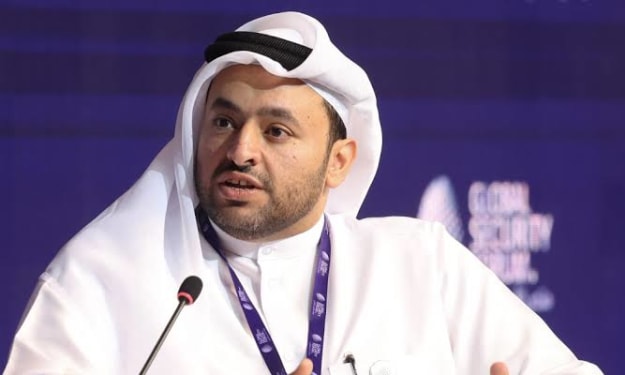
In an increasingly tense Middle East environment dominated by the ongoing conflict between the United States, Israel and Iran, Qatar’s government has issued strong diplomatic signals aimed at de‑escalation. Mohammed bin Abdulaziz al‑Khulaifi, Qatar’s minister of state for foreign affairs, stated that “regional countries are not an enemy of Iran” and urged Tehran and Washington alike to pursue negotiations instead of continued hostilities — a message that reflects Doha’s cautious but proactive diplomatic stance amid spiraling violence. Al‑Khulaifi gave the comments in an exclusive interview with Al Jazeera, underscoring Qatar’s deep concern over attacks that have affected multiple Gulf states since the conflict escalated. The minister emphasized that the current hostilities “benefit no one” and warned that continued military exchanges will only deepen the crisis across the region. He called for an immediate reduction in violence and a return to diplomatic channels, insisting that sustainable peace can only come through dialogue rather than force. Qatar — historically a key proponent of mediation in Middle Eastern conflicts — has long positioned itself as a neutral actor capable of bridging gaps between rival states. Prior to the outbreak of intense fighting, Doha had played a role in facilitating communications between Tehran and Western capitals, including the United States. However, al‑Khulaifi noted that Qatar and neighbouring Oman cannot continue to act as mediators while under direct attack by Iran, pointing out that the Gulf states’ security must be ensured before they can meaningfully serve as intermediaries. “The regional countries are not an enemy of Iran, and the Iranians are not understanding that idea,” al‑Khulaifi said, echoing a broader Gulf concern that the conflict’s expansion will drag neighbouring nations into a wider and more destructive confrontation. He stressed that Iran’s recent strikes against Gulf territories — including missile and drone attacks — undermine diplomatic trust and complicate efforts to reduce tensions. Qatar’s remarks have been coupled with strong condemnations of attacks on its own infrastructure. Doha has denounced recent Iranian strikes as violations of its sovereignty, and foreign ministry officials have reiterated the country’s right to defend itself under international law. These incidents have heightened Doha’s fears that regional hostilities could destabilize both security and economic stability, particularly given the strategic importance of the Gulf’s energy sector. The minister also highlighted concerns about the Strait of Hormuz, the crucial chokepoint for global oil and gas flows. Al‑Khulaifi warned that disruptions in this corridor, as a result of military actions, could have catastrophic economic consequences beyond the Middle East, affecting global supply chains and energy markets. “Freedom of movement through the waterway is very critical,” he noted, emphasizing the far‑reaching implications of the conflict. In explaining Doha’s diplomatic strategy, al‑Khulaifi made clear that while Qatar seeks peaceful resolutions, it also remains in close communication with the United States. He said that Doha has encouraged Washington to pursue peace and to consider a return to negotiations with Tehran. “Our line of communication is always open with our colleagues in the United States,” he said, emphasizing the importance of sustained dialogue between all parties to halt further escalation. Qatar’s appeal for de‑escalation comes amidst a broader regional backdrop of concern. Gulf Cooperation Council (GCC) members, including Saudi Arabia, the United Arab Emirates and Kuwait, have all warned about the risks of the conflict spreading beyond its current theaters. Some leaders have reiterated that military action cannot be the basis for long‑term peace and have called for diplomacy as the only viable path forward. While Doha’s diplomatic messaging has been consistent, analysts note that the situation on the ground remains volatile. Iran’s retaliatory strikes, following U.S. and Israeli operations, have continued to impact civilian infrastructure and key security targets in Gulf states. This has raised questions about whether diplomatic efforts can gain traction while active hostilities persist. In response to these pressures, Qatar has sought to strengthen its diplomatic posture by reaffirming its commitment to peace and underscoring that its stance is not adversarial toward Iran. Rather, Doha’s message is rooted in regional stability: Gulf states do not seek confrontation, and existing tensions must be resolved through dialogue. As the conflict evolves, Qatar’s statements reflect a nuanced attempt to balance national security concerns with broader calls for peace, reinforcing that enduring stability in the Middle East depends on communication, negotiation, and mutual understanding among all stakeholders.
By Fiaz Ahmed 5 days ago in The Swamp
Top tipple tricks
Been thinking a lot about drinking, lately. Not least because of a recent episode of over-indulgence and the inevitable after effects. Some readers may recall the earlier articles I wrote about beating the booze. Here I set out an experiment in techniques for cutting down on my alcohol intake. The experiment was successful, the techniques worked, and I have armed myself with an arsenal of weapons in the war against the demon drink. I have yet to fire the first round however. It's all a question of timing (perhaps procrastination).
By Raymond G. Taylor7 days ago in Psyche



Comments
There are no comments for this story
Be the first to respond and start the conversation.