
EU’s Top Diplomat Rejects Russian Claims of Ukrainian Attack on Government Sites
EU officials say Russia is spreading disinformation as fighting and diplomatic pressure intensify

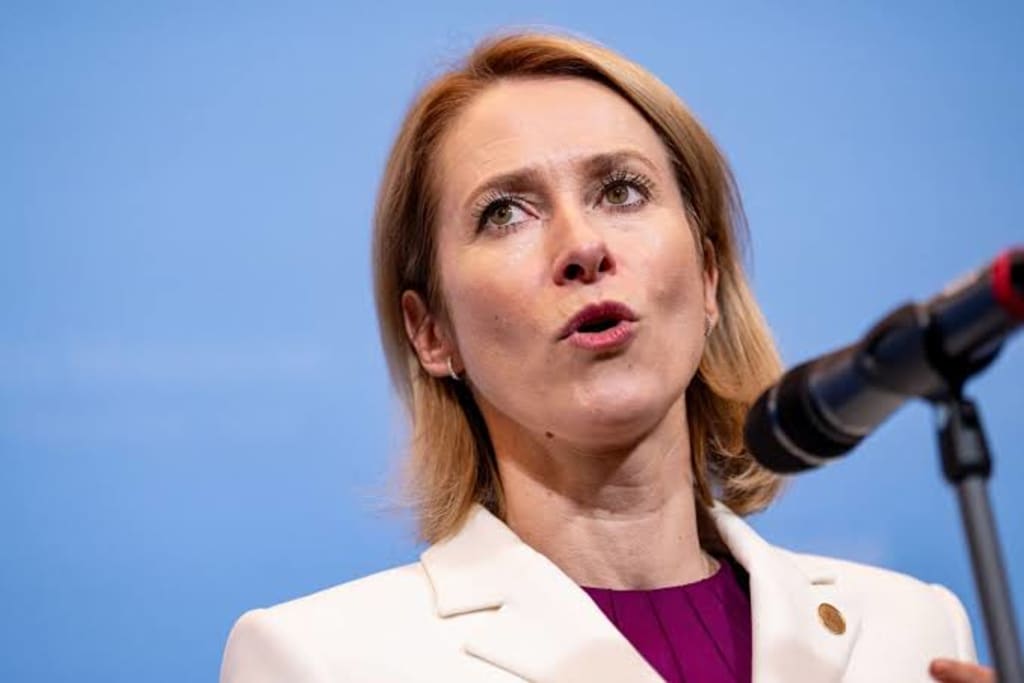
In the latest chapter of the ongoing Russia-Ukraine conflict, the European Union’s top diplomat has publicly rejected Russian claims that Ukrainian forces carried out attacks on government sites in Russian-controlled regions. The statement, coming from Josep Borrell, the EU’s High Representative for Foreign Affairs and Security Policy, underscores the growing tensions between Brussels and Moscow and highlights the broader battle over truth, propaganda, and international perception in the conflict.
Russia has repeatedly accused Ukraine of targeting government infrastructure in areas under its control, presenting these allegations as evidence of Kyiv’s “aggression.” These claims were prominently circulated through Russian state media, including RT and TASS, often accompanied by images and footage purportedly showing damage to administrative buildings. However, Borrell and EU officials argue that these reports are unsubstantiated and likely part of a coordinated campaign to shape public perception both domestically and internationally.
Speaking at a press briefing in Brussels, Borrell stated, “We have no independent verification that Ukraine has carried out attacks on the government facilities in these areas. The evidence presented by Russian authorities is not credible and appears to be aimed at justifying further military escalation.” This rejection marks a firm stance by the EU, reinforcing its support for Ukraine while also emphasizing the importance of accurate information amid wartime propaganda.
The diplomatic tension comes at a critical moment as the conflict enters its third year, with both sides heavily engaged in military and informational warfare. Russia’s attempts to portray Ukraine as the aggressor in occupied territories are part of a broader strategy to legitimize its own military presence and to rally domestic support amid mounting economic sanctions and international criticism. Meanwhile, the EU continues to serve as a key mediator and supporter of Ukraine, providing military aid, economic assistance, and political backing to counterbalance Moscow’s influence.
Analysts note that the rejection of Russian claims by the EU also reflects a strategic effort to maintain the credibility of international institutions. By challenging unverified narratives, the EU aims to prevent the normalization of misinformation as a tool of modern warfare. “In conflicts like this, information can be as potent as weapons,” says Dr. Elena Markov, a European security analyst. “Disinformation campaigns shape public opinion, influence policy decisions, and can even affect military strategy. The EU’s public dismissal of these Russian claims is a critical move to protect the integrity of information.”
The situation on the ground remains volatile. Ukrainian forces continue to defend strategic regions, while Russia has intensified its military operations in contested areas. Civilian populations in conflict zones face immense challenges, including disruptions to essential services, the threat of bombardment, and limited access to humanitarian aid. Against this backdrop, the battle over narratives becomes particularly significant, influencing international support, the framing of peace negotiations, and public sentiment in Europe and beyond.
Beyond the immediate conflict, the episode raises questions about the role of diplomacy and international oversight in wartime reporting. With both sides using media to further strategic goals, third-party verification becomes essential. Organizations like the United Nations, the Organization for Security and Co-operation in Europe (OSCE), and independent journalists play a crucial role in confirming events and providing neutral assessments. Borrell’s comments implicitly highlight the need for such oversight, emphasizing that unilateral claims, especially from parties engaged in conflict, cannot be accepted at face value.
The EU’s firm response also sends a clear message to Moscow: attempts to manipulate the narrative will not go unchallenged. By publicly rejecting Russian claims, the bloc reinforces its position as a defender of international norms, including sovereignty, accountability, and the rule of law. This stance resonates strongly with member states, many of which have been directly impacted by the geopolitical and economic repercussions of the Russia-Ukraine war.
As the conflict continues, the interplay between military operations and information campaigns is likely to intensify. For the EU and its allies, the challenge will be to balance the need for timely interventions with careful scrutiny of the facts, ensuring that diplomatic efforts are grounded in verified evidence rather than manipulated narratives. The rejection of Russian claims over Ukrainian attacks is not just a diplomatic statement—it is part of a broader strategy to maintain clarity, support Ukraine, and resist the spread of disinformation that could destabilize Europe and the wider international community.
In summary, the EU’s top diplomat’s dismissal of Moscow’s allegations reflects both a commitment to Ukraine and a broader recognition of the dangers posed by misinformation in modern conflict. As the war continues to unfold, the battle over truth, perception, and credibility remains as critical as any military engagement, shaping the course of international policy and the future of European security.
About the Creator
Fiaz Ahmed Brohi
I am a passionate writer with a love for exploring and creating content on trending topics. Always curious, always sharing stories that engage and inspire.
Keep reading
More stories from Fiaz Ahmed Brohi and writers in The Swamp and other communities.
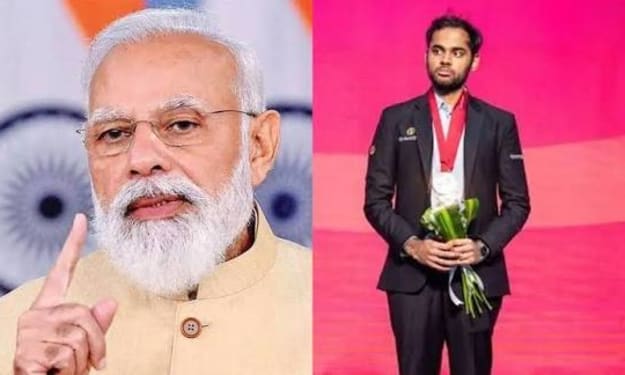
Skills, Patience and Passion Exemplary”: PM Narendra Modi Hails Arjun Erigaisi’s World Blitz Bronze
India’s growing presence on the global chess stage received another powerful boost as Prime Minister Narendra Modi praised young grandmaster Arjun Erigaisi for his bronze medal performance at the World Blitz Championship. Calling his achievement a reflection of “skills, patience and passion,” the Prime Minister’s words resonated far beyond a congratulatory message—they highlighted a broader story of India’s chess renaissance and the mindset shaping a new generation of champions. A Historic Moment for Indian Chess Arjun Erigaisi’s bronze medal in one of the world’s most competitive chess formats marks a significant milestone. Blitz chess, known for its lightning-fast pace and unforgiving time controls, tests not just technical knowledge but mental agility, emotional control, and instinct. In a format where games are decided in minutes and a single mistake can be fatal, consistency at the top level is rare. Arjun’s podium finish against a field stacked with elite grandmasters from across the globe underlines his ability to thrive under pressure. It also reinforces India’s reputation as a chess powerhouse that now produces world-class players across all formats—classical, rapid, and blitz. PM Modi’s Message: More Than Praise Prime Minister Modi’s message stood out because it went beyond the usual congratulations. By emphasizing skills, patience, and passion, he touched upon the core values required for excellence not only in chess but in life. Skills reflect years of disciplined training, opening preparation, and tactical sharpness. Patience is vital in chess, especially in high-stakes tournaments where emotional control determines outcomes. Passion fuels the long hours of study, losses, and relentless competition that define a professional chess career. The Prime Minister’s recognition sends a strong signal: intellectual sports like chess are integral to India’s sporting identity, not just physical disciplines. Arjun Erigaisi: A Symbol of the New Generation At just over 20 years old, Arjun Erigaisi represents a fearless, modern generation of Indian chess players. Unlike earlier eras, where Indian players were exceptions on the world stage, today’s young grandmasters grow up competing internationally from a very early age. Arjun’s playing style mirrors this shift. He is known for aggressive opening choices, deep preparation, and a willingness to take risks even against top-ranked opponents. In blitz chess especially, his confidence and speed give him an edge, allowing him to convert small advantages into wins within seconds. India’s Chess Boom: A Perfect Storm Arjun’s success is not an isolated event. Over the past decade, India has witnessed an unprecedented chess boom driven by several factors: Strong Role Models – Legends like Viswanathan Anand paved the way, proving that Indian players could dominate globally. Digital Learning – Online platforms, engines, and global tournaments have made high-level training accessible. Supportive Ecosystem – Increased backing from sponsors, federations, and now political leadership has legitimized chess as a career path. Young Talent Pool – India consistently produces teenage grandmasters who challenge established stars. PM Modi’s public acknowledgment adds another layer of encouragement, motivating parents and young players alike to view chess as a respected pursuit. Blitz Chess: The Ultimate Test of Nerves What makes Arjun’s bronze medal particularly impressive is the nature of blitz chess itself. Unlike classical chess, where players have hours to think, blitz demands instant decision-making. There is no time to second-guess, no room for hesitation. Success in blitz requires: Exceptional pattern recognition Fast calculation under stress Emotional resilience after quick losses Physical stamina over long sessions Arjun’s ability to stay composed and competitive throughout the tournament highlights his maturity and mental strength—qualities often associated with far more experienced players. Inspiration Beyond the Board Achievements like this extend their impact beyond the chessboard. For students, Arjun’s journey reinforces the value of concentration and strategic thinking. For young athletes, it shows that global success is possible without fitting traditional sports stereotypes. And for India as a nation, it strengthens the narrative of excellence in knowledge-driven disciplines. PM Modi’s praise amplifies this message, positioning chess as a symbol of India’s intellectual capital and global competitiveness. Looking Ahead With a World Blitz bronze medal added to his growing list of accomplishments, Arjun Erigaisi’s trajectory points firmly upward. As he continues to compete in elite tournaments, expectations will rise—but so will opportunities. If nurtured correctly, talents like Arjun could soon challenge for world titles, further cementing India’s dominance in modern chess. And with leaders openly celebrating such achievements, the future of Indian chess looks sharper, faster, and brighter than ever.
By Fiaz Ahmed Brohi2 months ago in The Swamp
The Forsyth House Fire
Since 1851, Forsyth House has stood on the corner of Union Street and Gordon Street in the heart of Glasgow. Its iconic, or was... because on Sunday 8th of March, 2026, a fire broke out in a small, seemingly un-named shop in the building and tore all that history down. As I write, the rubble is still unsettled and the street is still blocked off. Central Station is quiet on the upper level, and around 30 small businesses have quite literally gone up in smoke.
By S. A. Crawford3 days ago in The Swamp
A tiny Mid East nation at the center of decades-old war finds itself caught in another
The small Mediterranean nation of Lebanon has spent decades navigating the aftermath of wars, political divisions, and economic turmoil. Now, as tensions escalate across the Middle East once again, the country finds itself trapped in the shadow of another potential conflict, raising fears among citizens and regional observers that Lebanon could be drawn into a crisis beyond its control. For many Lebanese, the situation feels painfully familiar. The country’s history has been shaped by conflict, from the devastating Lebanese Civil War that lasted from 1975 to 1990 to the destructive 2006 Lebanon War between Israel and Hezbollah. Each episode left deep scars on the country’s infrastructure, economy, and national psyche. Today, Lebanon again stands on uncertain ground. Rising hostilities between regional powers have intensified security concerns along its southern border, where sporadic exchanges of fire have become increasingly common. Although the clashes remain limited in scope, analysts warn that even a minor escalation could quickly spiral into a wider confrontation. Residents in southern villages near the border say they have grown accustomed to living under the threat of sudden violence. Many families maintain emergency plans in case fighting intensifies, while others have already moved to safer areas in the capital Beirut or further north. “We have lived through this before,” said a shopkeeper in a border town who asked not to be identified. “When tensions rise, people start preparing quietly. We hope nothing happens, but we know how quickly things can change.” The renewed instability comes at a particularly fragile moment for Lebanon, which is still struggling with one of the worst economic crises in its modern history. Since 2019, the Lebanese currency has collapsed, inflation has soared, and many banks have restricted withdrawals, leaving ordinary citizens unable to access their savings. Public services have also deteriorated dramatically. Electricity shortages have forced many households to rely on private generators, while hospitals and schools continue to face funding shortages. Against this backdrop, the prospect of another military confrontation is deeply alarming for a population already grappling with daily hardship. Political divisions within the country further complicate the situation. Lebanon’s complex sectarian political system often struggles to produce unified responses to national challenges. Rival factions hold sharply different views on foreign policy and the role of armed groups operating within the country. The presence of Hezbollah, a powerful political and military organization backed by Iran, remains one of the most sensitive issues. Supporters see the group as a crucial force defending Lebanon from external threats, while critics argue that its military activities risk dragging the entire country into regional conflicts. Across the border, officials in Israel have repeatedly warned that any large-scale attacks originating from Lebanese territory would trigger a significant military response. Israeli leaders say they are closely monitoring developments and remain prepared for a range of scenarios. International observers are urging restraint on all sides. The United Nations, which maintains peacekeeping forces in southern Lebanon through the United Nations Interim Force in Lebanon, has called for diplomatic efforts to prevent escalation and preserve stability along the border. Peacekeeping troops continue to patrol the region, working with the Lebanese Armed Forces to monitor ceasefire lines and reduce the risk of accidental clashes. However, officials acknowledge that peacekeepers can only do so much if hostilities intensify. Regional analysts say Lebanon’s geographic position makes it especially vulnerable during periods of wider conflict. Located between competing regional powers and home to various political and military factions with international ties, the country often becomes a stage where broader geopolitical rivalries play out. At the same time, many Lebanese citizens say they are weary of being caught in struggles beyond their control. Community leaders and civil society groups have repeatedly called for policies that prioritize national stability and economic recovery rather than confrontation. “People here want normal lives,” said a university lecturer in Beirut. “We want jobs, functioning institutions, and a future for our children. Another war would only deepen the suffering.” Despite the tension, diplomats continue to work behind the scenes to prevent a broader conflict. International mediators are reportedly engaged in quiet discussions aimed at reducing military activity along the border and encouraging dialogue among regional actors. Whether those efforts will succeed remains uncertain. For now, Lebanon once again finds itself walking a precarious line—caught between history and geography, and between the ambitions of powerful forces surrounding it. As the Middle East enters another volatile chapter, the fate of this small nation may once again depend on events unfolding far beyond its borders. For millions of Lebanese citizens already facing profound economic and political challenges, the hope remains that diplomacy will prevail before another devastating conflict takes hold.
By Fiaz Ahmed a day ago in The Swamp


Comments
There are no comments for this story
Be the first to respond and start the conversation.