
IOC President Gives Clearest Signal So Far That Russia Could Be at 2028 Olympics
IOC hints at possible reintegration of Russian athletes for Los Angeles 2028 Olympic leadership opens door to Russia’s return after years of exclusion Neutral athletes model may shape Russia’s future at the Games Decision could redefine Olympic diplomacy in a divided world Ukraine and allies react to IOC’s changing stance From ban to debate: Russia’s Olympic path begins to re-emerge Global sports community weighs ethics of Russia’s participation

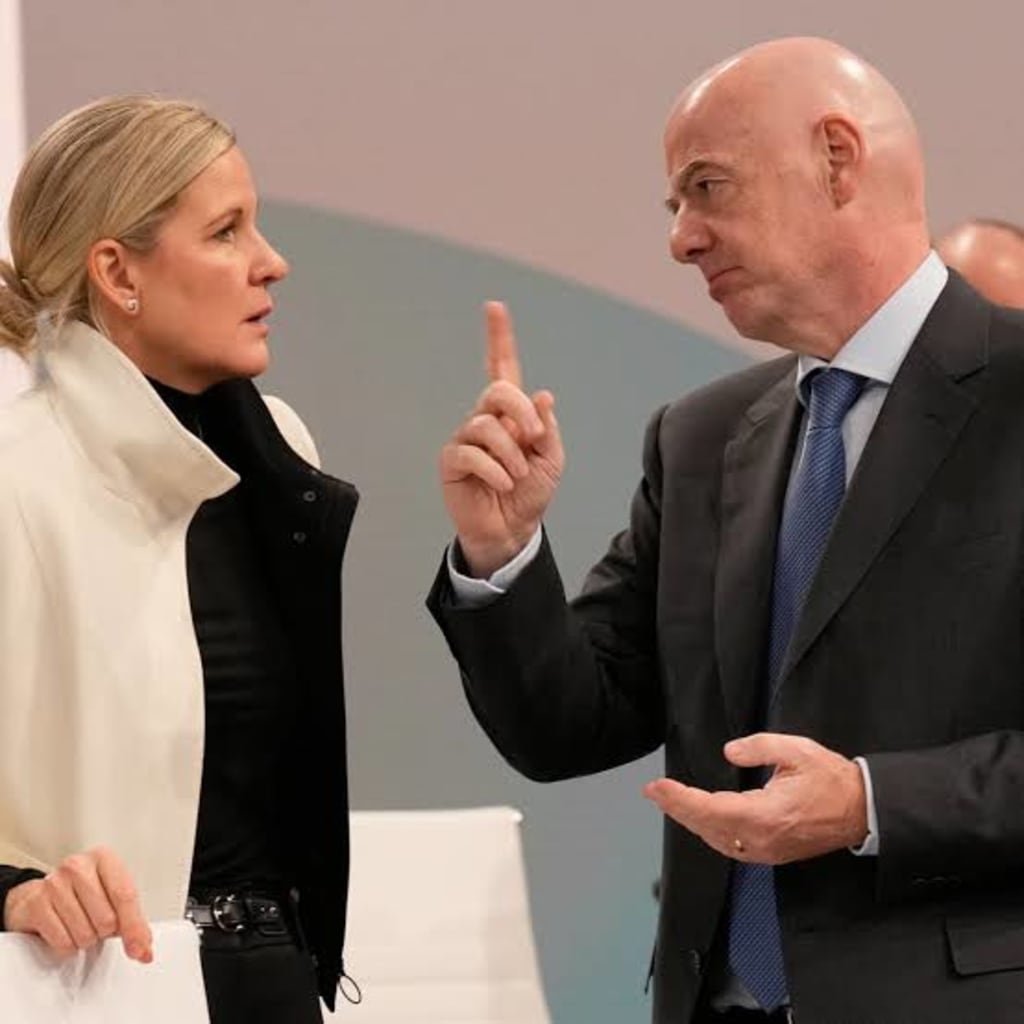
The president of the International Olympic Committee (IOC) has delivered the clearest indication yet that Russia may be allowed to return to the Olympic Games in 2028, marking a potential turning point in one of the most politically sensitive debates in modern sports history. The comments suggest a shift away from the strict exclusion imposed after Russia’s invasion of Ukraine and toward a framework that could see Russian athletes competing once again on the world’s biggest sporting stage.
Since 2022, Russian and Belarusian athletes have largely been banned from international competitions under IOC guidance, with only limited participation allowed under neutral status in some events. The new remarks signal that the IOC is beginning to consider what long-term reintegration might look like, especially as the 2028 Summer Olympics in Los Angeles draw closer.
A Change in Tone from Olympic Leadership
The IOC president emphasized that the Olympic movement should remain politically neutral and focused on athletes rather than governments. While stopping short of confirming Russia’s full participation, the statement acknowledged that “athletes should not be punished for the actions of their states,” a phrase that has become central to arguments for Russia’s return.
This is the strongest indication yet that the IOC is preparing the groundwork for a policy change. Until now, Olympic leaders had avoided making commitments beyond the Paris 2024 Games, where Russian athletes are expected to compete only as neutrals under strict conditions, without national flags, anthems, or official representation.
The latest comments suggest that the IOC may expand this approach or move toward a more formal reintegration process by 2028, depending on geopolitical developments and security conditions.
The Background of Russia’s Exclusion
Russia’s sporting isolation followed the invasion of Ukraine in February 2022, when the IOC recommended that international federations bar Russian and Belarusian athletes from competition. The decision was unprecedented in scale and reflected concerns about safety, fairness, and the politicization of sport.
In 2023 and 2024, some Russian athletes were allowed back into certain competitions as “neutral athletes,” provided they did not publicly support the war or have ties to the military. This compromise was designed to uphold Olympic principles while responding to pressure from Ukraine and its allies.
However, the policy has remained controversial. Ukraine has consistently argued that any Russian participation legitimizes aggression, while Russia has accused the IOC of discrimination and hypocrisy.
Growing Pressure from International Federations
Several international sports federations have quietly begun easing restrictions on Russian athletes, especially in individual sports such as tennis, fencing, and gymnastics. These organizations argue that prolonged exclusion undermines competition and punishes athletes who have no role in political decisions.
The IOC president’s remarks appear to reflect this shifting landscape. By signaling openness to Russia’s return in 2028, the IOC aligns itself with federations seeking stability and long-term planning.
Los Angeles organizers have also indicated they are preparing for multiple scenarios, including the possibility that Russian athletes will participate in some form. Logistically, this would require security planning and coordination with U.S. authorities, given the political sensitivity of the issue.
Political and Ethical Tensions
The prospect of Russia’s return to the Olympics raises deep ethical and political questions. Supporters argue that the Olympic Charter promotes peace and inclusion and that excluding an entire nation contradicts those values. They also warn that sport should not become a permanent tool of political punishment.
Critics counter that allowing Russia back too soon would undermine international solidarity with Ukraine and weaken the symbolic power of sanctions. They point out that previous Olympic bans, such as those during apartheid-era South Africa, were designed to pressure governments through sporting isolation.
Ukraine has already stated it would strongly oppose any move to fully reinstate Russia without significant changes in the war situation. Several European nations are expected to echo this stance, creating the possibility of diplomatic tensions within the Olympic movement.
The Role of Neutral Athletes
One likely outcome is a continuation of the “neutral athlete” model used in Paris 2024. Under this system, Russian athletes compete without national symbols and under strict eligibility criteria. This approach allows individuals to participate while distancing the Games from state representation.
The IOC president’s comments suggest this model could evolve into a longer-term solution rather than a temporary exception. By 2028, the IOC may refine the rules, potentially expanding eligibility while maintaining symbolic neutrality.
This compromise, however, may satisfy neither side completely. Russian officials have criticized the neutral status as humiliating, while Ukrainian leaders argue it still provides visibility to athletes from an aggressor state.
Implications for the 2028 Games
If Russia does participate in the Los Angeles Olympics, it would mark its first appearance since 2021’s Tokyo Games under full national representation. Even a neutral return would be a major development in global sports diplomacy.
The decision will likely depend on several factors: the state of the war in Ukraine, international sanctions, pressure from sports federations, and public opinion in host countries. The IOC has made clear that it will continue to monitor geopolitical conditions before making a final determination.
Conclusion
The IOC president’s latest statement represents the clearest signal yet that Russia could return to the Olympic Games in 2028, ending years of uncertainty over its sporting future. While no final decision has been made, the tone has shifted from exclusion to cautious reintegration.
As the Olympic movement navigates the intersection of sport and politics, the debate over Russia’s participation will remain one of the most contentious issues leading up to Los Angeles 2028. Whether framed as a triumph of neutrality or a compromise too far, the decision will shape the legacy of the next Olympic Games—and test the limits of the Olympic ideal in a divided world.
About the Creator
Fiaz Ahmed
I am Fiaz Ahmed. I am a passionate writer. I love covering trending topics and breaking news. With a sharp eye for what’s happening around the world, and crafts timely and engaging stories that keep readers informed and updated.
Keep reading
More stories from Fiaz Ahmed and writers in The Swamp and other communities.
The US Wants These Critical Minerals, but Militants with American Weapons Stand in the Way
The United States is racing to secure access to critical minerals essential for its clean energy transition and national security. Lithium, cobalt, nickel, and rare earth elements are key components in electric vehicle batteries, renewable energy systems, and advanced military technology. Yet in several regions where these resources are found, American strategic goals are colliding with an unexpected obstacle: militant groups armed with U.S.-supplied weapons. This troubling reality highlights a growing contradiction in Washington’s foreign policy—promoting stability and development while confronting armed actors who have gained power through decades of conflict and weapons proliferation. Minerals at the Heart of U.S. Strategy Critical minerals are the backbone of modern industry. From fighter jets to smartphones, these materials are required for everything from microchips to missile guidance systems. The U.S. government has identified over 50 minerals as vital to economic and national security, many of which are currently dominated by Chinese supply chains. To reduce dependence on China, Washington has turned to resource-rich countries in Africa, Latin America, and parts of Asia. Nations such as the Democratic Republic of Congo, Mali, Niger, and Afghanistan possess enormous reserves of lithium, cobalt, and rare earths. These regions are now central to U.S. diplomatic and investment efforts. However, many of these mineral-rich areas are also plagued by instability, insurgency, and weak governance—conditions that allow militant groups to flourish. Militants and the Legacy of American Arms One of the most difficult challenges facing U.S. mineral strategy is the spread of American-made weapons among militant organizations. In Afghanistan, the Taliban seized large stockpiles of U.S.-supplied military equipment following the withdrawal of American forces in 2021. Similar patterns have occurred in parts of Africa where U.S. or allied weapons have ended up in the hands of insurgents through battlefield capture or black-market sales. These weapons have strengthened armed groups that now control or influence territories rich in mineral deposits. In some regions, militants tax mining operations or directly oversee extraction, turning natural resources into a source of revenue for their campaigns. Security analysts warn that this dynamic creates a dangerous cycle: minerals fund militancy, militancy deters foreign investment, and the lack of investment deepens poverty and instability. Strategic Competition with China The U.S. push for critical minerals is also driven by competition with China, which dominates global processing and refining capacity. Beijing has invested heavily in mining infrastructure across Africa and South America, often offering loans and construction projects in exchange for long-term resource access. Washington sees this as a strategic vulnerability. If China controls both extraction and processing, it could potentially disrupt supply chains during times of crisis. This fear has prompted the U.S. to form new partnerships, including the Minerals Security Partnership with allies such as Japan and the European Union. But unlike China, which often works directly with central governments regardless of security risks, U.S. companies face higher political and legal hurdles when operating in conflict zones. Militants armed with advanced weapons make operations even more dangerous. Human Rights and Environmental Risks Another concern is that militant-controlled mining often involves severe human rights abuses. Child labor, unsafe working conditions, and environmental destruction are common in unregulated mining zones. The U.S. government has pledged that its mineral supply chains will meet ethical and environmental standards, making cooperation with such regions more complicated. American officials argue that stable, transparent mining projects can help bring economic growth and weaken extremist groups by offering legitimate jobs. Yet achieving this requires security guarantees that are often impossible in territories dominated by armed factions. “Critical minerals are not just an economic issue—they’re a governance issue,” said one senior policy adviser. “You cannot build secure supply chains in places where the rule of law doesn’t exist.” Regional Examples In the Sahel region of Africa, countries like Mali and Niger have seen rising militant activity alongside growing interest in lithium and uranium mining. Western companies have withdrawn or delayed projects due to safety concerns, leaving space for armed groups to expand their influence. In Afghanistan, vast lithium reserves have drawn international attention, but the Taliban’s control and the presence of U.S.-origin weapons complicate any potential cooperation. Sanctions and diplomatic isolation further limit Washington’s ability to engage directly. Meanwhile, in parts of Latin America, drug cartels armed with military-grade weapons have moved into illegal mining, particularly gold and rare earth extraction, turning minerals into another pillar of criminal economies. A Policy Dilemma for Washington The United States now faces a difficult choice. It can either increase security involvement in mineral-rich regions or accept continued dependence on rival supply chains. Neither option is politically simple. Direct military involvement risks repeating past interventions that produced unintended consequences. But without security support, U.S. companies may refuse to invest in high-risk areas, leaving minerals in the hands of militants or rival powers. Some policymakers argue for a third path: working through regional governments, strengthening local institutions, and funding infrastructure projects tied to transparency and anti-corruption measures. This approach is slower but potentially more sustainable. Conclusion The race for critical minerals has become a defining feature of 21st-century geopolitics. For the United States, the challenge is not only geological but political and moral. Militants armed with American weapons now stand between Washington and the resources it needs for clean energy, technological leadership, and national defense. This contradiction exposes the long-term consequences of foreign conflicts and arms transfers. As the U.S. seeks to secure its future supply chains, it must confront a reality shaped by its past policies. Whether it can balance security, ethics, and strategic necessity will determine its success in the global competition for the minerals that power the modern world. In the end, the struggle for lithium and cobalt may prove as complex as any battlefield—fought not with tanks and planes, but with diplomacy, development, and difficult choices about responsibility and risk.
By Fiaz Ahmed 4 days ago in The Swamp
Why Black History Matters in America?
The United States of America is celebrating their 250th anniversary in 2026. I'm proud to be an American and as someone who was born here, I wouldn't imagine myself living anywhere else. This is a country where opportunities are possible. Where anyone can be successful in anything they desire to do. Equality, community, and togetherness are the backbones of what America is and should be about. However, we have an administration who wants to erase and disregard those who have made positive, meaningful impacts in our country, specifically Black figures, such as Martin Luther King, Jr., Rosa Parks, and Maya Angelou. President Trump and his administration have been constantly complaining and fighting against what they call the "Woke agenda". They use this excuse as a distraction from other issues they refuse to address, such as the high cost of living, climate change, and inflation. That equality is dividing America, when in reality, it's bringing us together. Being woke is not tied to a specific political party. No matter where you stand on the political spectrum, you can still care about other people and their plights. Compassion and empathy for others isn't tied to a political party, either. We were taught as children to treat others the way we want to be treated and not judge others because they're different from us. Caring about others isn't a personal attack on your beliefs. It doesn't make you any less of a person. People who are easily offended over African American figures, past or present, or anything related to it, are grasping at straws. Current and future generations need to know who people like Harriet Tubman and Shirley Chisholm were, especially in the classroom. Black History is part of American History. It should be recognized, not hidden or forgotten. Besides, you can't shield children from everything, just because your feelings are easily hurt.
By Mark Wesley Pritchard 7 days ago in The Swamp
Fifteen Migrants Dead After Collision With Greek Coast Guard Boat
A deadly collision between a migrant vessel and a Greek Coast Guard boat has left at least fifteen people dead, marking another heartbreaking chapter in the ongoing Mediterranean migration crisis. The incident occurred in the Aegean Sea, a well-known crossing point for migrants attempting to reach Europe from conflict-stricken and economically devastated regions.
By Sajida Sikandar4 days ago in The Swamp



Comments
There are no comments for this story
Be the first to respond and start the conversation.