
Fifteen Migrants Dead After Collision With Greek Coast Guard Boat
A tragic maritime accident in the Aegean Sea has renewed global attention on the dangers faced by migrants and the growing humanitarian crisis along Europe’s borders.

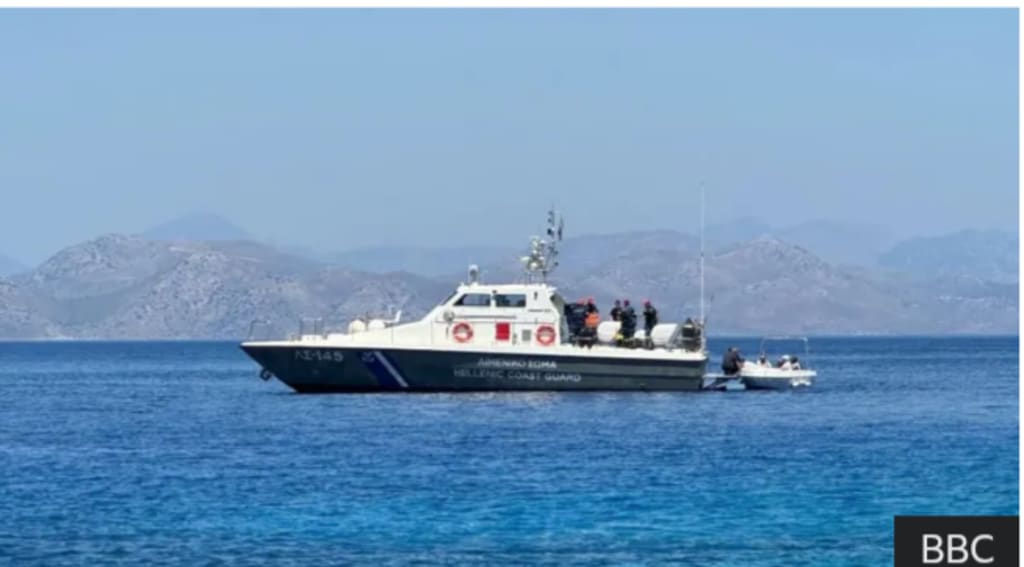
A deadly collision between a migrant vessel and a Greek Coast Guard boat has left at least fifteen people dead, marking another heartbreaking chapter in the ongoing Mediterranean migration crisis. The incident occurred in the Aegean Sea, a well-known crossing point for migrants attempting to reach Europe from conflict-stricken and economically devastated regions.
Rescue teams recovered bodies from the water while survivors were transported to nearby islands for medical treatment. Authorities confirmed that several individuals remain missing, raising fears that the death toll could rise further. The tragedy has sparked international concern and renewed debate over border enforcement, humanitarian responsibilities, and maritime safety.
What Happened at Sea
According to initial reports, the migrant vessel was traveling at night when it encountered a Greek Coast Guard patrol boat. The circumstances surrounding the collision remain under investigation, with officials seeking to determine whether it was caused by poor visibility, mechanical failure, or evasive maneuvers during interception.
Eyewitness accounts from survivors described chaos as the two boats collided, sending passengers into the sea. Many of those onboard were not wearing life jackets, and panic spread quickly as waves and darkness complicated rescue efforts.
Emergency crews arrived within hours, pulling survivors from the water and providing medical aid. Hospitals on nearby islands treated victims for hypothermia, injuries, and shock.
A Dangerous Migration Route
The Aegean Sea has long been one of the most dangerous migration corridors in the world. Thousands of migrants and refugees attempt the crossing each year, often aboard overcrowded and poorly equipped boats operated by smugglers.
For many, the journey represents their last hope of escaping war, poverty, or political persecution. Countries such as Syria, Afghanistan, Somalia, and parts of North Africa remain major sources of migrants seeking safety and opportunity in Europe.
Despite increased patrols and surveillance, tragedies continue to occur with alarming frequency. Over the past decade, thousands of lives have been lost in Mediterranean waters, turning the sea into what humanitarian groups describe as “a mass grave.”
Questions Surrounding Responsibility
The collision has raised sensitive questions about the role of border authorities and the safety protocols used during maritime interceptions. Human rights organizations have called for a transparent investigation into how the accident occurred and whether proper rescue procedures were followed.
Some advocacy groups argue that aggressive interception strategies increase the risk of fatal accidents at sea. They emphasize that migrant boats are often fragile and unstable, making close encounters with larger patrol vessels extremely dangerous.
Greek officials, however, have stated that their coast guard operates under strict guidelines and prioritizes saving lives while enforcing maritime law. They stress that smugglers often put migrants in peril by overloading boats and steering them into hazardous conditions.
The Human Cost of Border Policies
Behind the statistics are families torn apart and dreams cut short. Survivors of the collision spoke of relatives and friends who vanished beneath the waves. Many had spent months or years traveling across multiple countries to reach the coast.
This tragedy highlights the harsh reality faced by migrants who see no legal or safe pathways to reach Europe. With limited asylum options and strict border controls, many feel forced to risk their lives on dangerous sea crossings.
Humanitarian organizations argue that without safe migration routes, such incidents will continue. They call for expanded rescue operations, improved asylum processing, and international cooperation to address the root causes of displacement.
International Reaction
The incident has drawn reactions from European leaders and global humanitarian agencies. Statements of condolence poured in, along with renewed appeals for stronger protections for migrants at sea.
The United Nations refugee agency emphasized the need for all parties to respect international maritime law, which requires vessels to assist those in distress regardless of immigration status. Several NGOs urged governments to focus less on deterrence and more on prevention of loss of life.
The tragedy has also reignited political debates within Europe over migration policy, border security, and the balance between national sovereignty and humanitarian duty.
A Pattern of Recurring Disasters
This collision is not an isolated event. In recent years, multiple deadly shipwrecks and accidents involving migrant boats have occurred in Greek, Italian, and Spanish waters. Each tragedy follows a similar pattern: overcrowded vessels, nighttime travel, and desperate attempts to evade detection.
Despite promises of reform after previous disasters, critics argue that meaningful change has been slow. Search-and-rescue funding has declined in some regions, while stricter border enforcement has pushed migrants toward riskier routes.
Experts warn that as climate change, conflict, and economic instability continue to displace millions, maritime migration will remain a defining challenge of the coming decades.
Looking Ahead
Investigations into the collision will attempt to clarify exactly how and why the tragedy occurred. Families of the victims are seeking answers, and international observers will closely watch the outcome.
But beyond the legal and political consequences, the incident serves as a painful reminder of the human cost of migration crises. Each statistic represents a person with a story, a family, and a future that will never be realized.
Until safer migration pathways are created and global cooperation strengthens, the Mediterranean will remain a symbol of both hope and heartbreak.
Final Thoughts
The deaths of fifteen migrants in a collision with a Greek Coast Guard boat underscore the fragile balance between border security and humanitarian responsibility. It is a tragedy that forces Europe and the world to confront difficult questions about how migrants are treated and protected.
As investigations continue, one truth remains undeniable: no one should have to risk their life simply to seek safety. Without meaningful solutions, the sea will continue to claim lives, and tragedies like this will remain a grim feature of global migration.
About the Creator
Sajida Sikandar
Hi, I’m Sajida Sikandar, a passionate blogger with 3 years of experience in crafting engaging and insightful content. Join me as I share my thoughts, stories, and ideas on a variety of topics that matter to you.
Keep reading
More stories from Sajida Sikandar and writers in The Swamp and other communities.
The World’s Most Import-Dependent Countries, Ranked
In today’s interconnected global economy, few countries can survive without imports. From food and fuel to technology and raw materials, international trade keeps modern societies functioning. However, some nations rely on imports far more than others. These highly import-dependent countries depend on foreign suppliers for essential goods, making them especially vulnerable to global disruptions such as wars, pandemics, supply chain breakdowns, and inflation shocks.
By Sajida Sikandar4 days ago in The Swamp
Why Black History Matters in America?
The United States of America is celebrating their 250th anniversary in 2026. I'm proud to be an American and as someone who was born here, I wouldn't imagine myself living anywhere else. This is a country where opportunities are possible. Where anyone can be successful in anything they desire to do. Equality, community, and togetherness are the backbones of what America is and should be about. However, we have an administration who wants to erase and disregard those who have made positive, meaningful impacts in our country, specifically Black figures, such as Martin Luther King, Jr., Rosa Parks, and Maya Angelou. President Trump and his administration have been constantly complaining and fighting against what they call the "Woke agenda". They use this excuse as a distraction from other issues they refuse to address, such as the high cost of living, climate change, and inflation. That equality is dividing America, when in reality, it's bringing us together. Being woke is not tied to a specific political party. No matter where you stand on the political spectrum, you can still care about other people and their plights. Compassion and empathy for others isn't tied to a political party, either. We were taught as children to treat others the way we want to be treated and not judge others because they're different from us. Caring about others isn't a personal attack on your beliefs. It doesn't make you any less of a person. People who are easily offended over African American figures, past or present, or anything related to it, are grasping at straws. Current and future generations need to know who people like Harriet Tubman and Shirley Chisholm were, especially in the classroom. Black History is part of American History. It should be recognized, not hidden or forgotten. Besides, you can't shield children from everything, just because your feelings are easily hurt.
By Mark Wesley Pritchard 7 days ago in The Swamp
Spartan and Birds of Magyar Eliminate Four Russian Platoons Near Pokrovsk
Ukrainian military units known as “Spartan” and the “Birds of Magyar” have reported a significant battlefield success near the eastern city of Pokrovsk, claiming that four Russian platoons were neutralized during intense fighting in the area. The operation took place amid ongoing clashes along one of the most contested sections of the front line, where Russian forces have been attempting to advance despite heavy resistance. According to Ukrainian military sources, the engagement involved coordinated strikes using drones, artillery, and infantry maneuvers. While independent verification of the exact casualty figures remains difficult, the operation reflects the growing role of specialized Ukrainian units in slowing Russian advances through precision tactics and modern battlefield technology. Strategic Importance of Pokrovsk Pokrovsk has become a critical hub in eastern Ukraine due to its location near major supply routes and rail lines. Control of the area allows for the movement of troops and equipment deeper into the Donetsk region. Russian forces have sought to push toward the city in recent weeks, increasing pressure on Ukrainian defensive lines. Ukrainian commanders say the latest engagement was part of a broader effort to hold key positions and prevent encirclement of nearby towns. “Every meter of ground here matters,” said one Ukrainian officer, speaking on condition of anonymity. “If the enemy breaks through, it threatens multiple defensive sectors.” The Units Involved The Spartan unit is known as part of Ukraine’s National Guard, specializing in rapid-response operations and urban defense. The Birds of Magyar, meanwhile, is a drone-focused battalion that has gained attention for its use of aerial reconnaissance and strike drones to target enemy positions. Military analysts note that the combination of these two units illustrates how Ukraine has adapted its tactics over the course of the war. “Drone warfare has changed everything,” said a defense analyst in Kyiv. “Small teams can now locate and strike enemy concentrations with a level of accuracy that was impossible just a few years ago.” In the reported operation, drones were used to identify Russian troop movements and direct artillery fire, disrupting attempts to regroup and advance. Details of the Engagement Ukrainian officials stated that Russian forces attempted to move several platoons into forward positions under cover of darkness. Reconnaissance drones detected the movement, allowing Ukrainian units to prepare countermeasures. As Russian troops entered open terrain, they were met with concentrated fire from artillery and drone strikes. Ground forces then moved in to secure the area and prevent further infiltration. Video footage released by Ukrainian channels showed explosions and damaged military equipment, though such material could not be independently verified. The footage is part of a broader information effort aimed at demonstrating battlefield successes and maintaining morale. Broader Context of the Fighting The clash near Pokrovsk comes amid renewed Russian offensives in eastern Ukraine, particularly in Donetsk and Luhansk regions. Moscow has continued to deploy manpower and equipment in attempts to gain territory, while Ukraine relies increasingly on defensive fortifications and precision strikes. Both sides have suffered heavy losses in recent months, and fighting has intensified as winter conditions ease and ground becomes more passable. “The front lines are extremely dynamic right now,” said a European military observer. “We are seeing frequent localized battles rather than large sweeping offensives.” Impact on Morale and Public Perception For Ukraine, reports of successful operations play an important role in sustaining public confidence and international support. The claim that four Russian platoons were eliminated underscores Ukraine’s message that its forces remain capable of defending key areas despite limited resources. Residents in nearby towns have expressed cautious relief when Ukrainian forces manage to repel advances. “We hear explosions every day,” said a civilian from a village outside Pokrovsk. “When the army holds the line, it means we can sleep one more night in our homes.” At the same time, Ukrainian officials have warned against overconfidence, noting that the enemy continues to regroup and attempt new attacks. Information Warfare and Verification Challenges As with many battlefield claims in the conflict, details remain difficult to verify independently. Both sides regularly report enemy losses that cannot be fully confirmed by neutral observers. Military experts stress the importance of treating such announcements as indicative rather than definitive. “In war, information is part of the battle,” said a security researcher. “What matters most is whether territory is held and whether strategic objectives are met.” Nevertheless, the reported engagement highlights the tactical effectiveness of Ukraine’s drone units and mobile infantry formations. Human Cost of the Conflict Behind the military reports lies a continuing humanitarian toll. The fighting near Pokrovsk has forced additional evacuations, with families leaving homes damaged by shelling and infrastructure increasingly strained. Aid groups have called for humanitarian corridors and greater access to frontline communities, where electricity and clean water remain unreliable. “The military success of one side does not erase the suffering of civilians,” said a humanitarian worker operating in the region. “Every battle leaves another scar on local communities.” What Comes Next Ukrainian military leaders expect further attempts by Russian forces to probe defenses around Pokrovsk in the coming days. Reinforcements and additional drone units have reportedly been deployed to strengthen the area. Western allies continue to supply Ukraine with equipment and intelligence, though officials acknowledge that resources are stretched. “The coming weeks will be crucial,” said a senior Ukrainian defense official. “We must hold the line and protect our people.” Conclusion The reported elimination of four Russian platoons by the Spartan unit and the Birds of Magyar near Pokrovsk marks another intense chapter in the ongoing conflict in eastern Ukraine. Whether the engagement proves decisive remains uncertain, but it demonstrates Ukraine’s reliance on coordinated tactics and drone warfare to counter enemy advances. As fighting continues across the region, the situation near Pokrovsk reflects the broader struggle: a war of endurance, technology, and determination, with high stakes for both military strategy and civilian survival.
By Fiaz Ahmed 7 days ago in The Swamp



Comments
There are no comments for this story
Be the first to respond and start the conversation.