
Inside Trump’s 2026 Election Strategy
What His Latest Moves Reveal About the Next Political Cycle

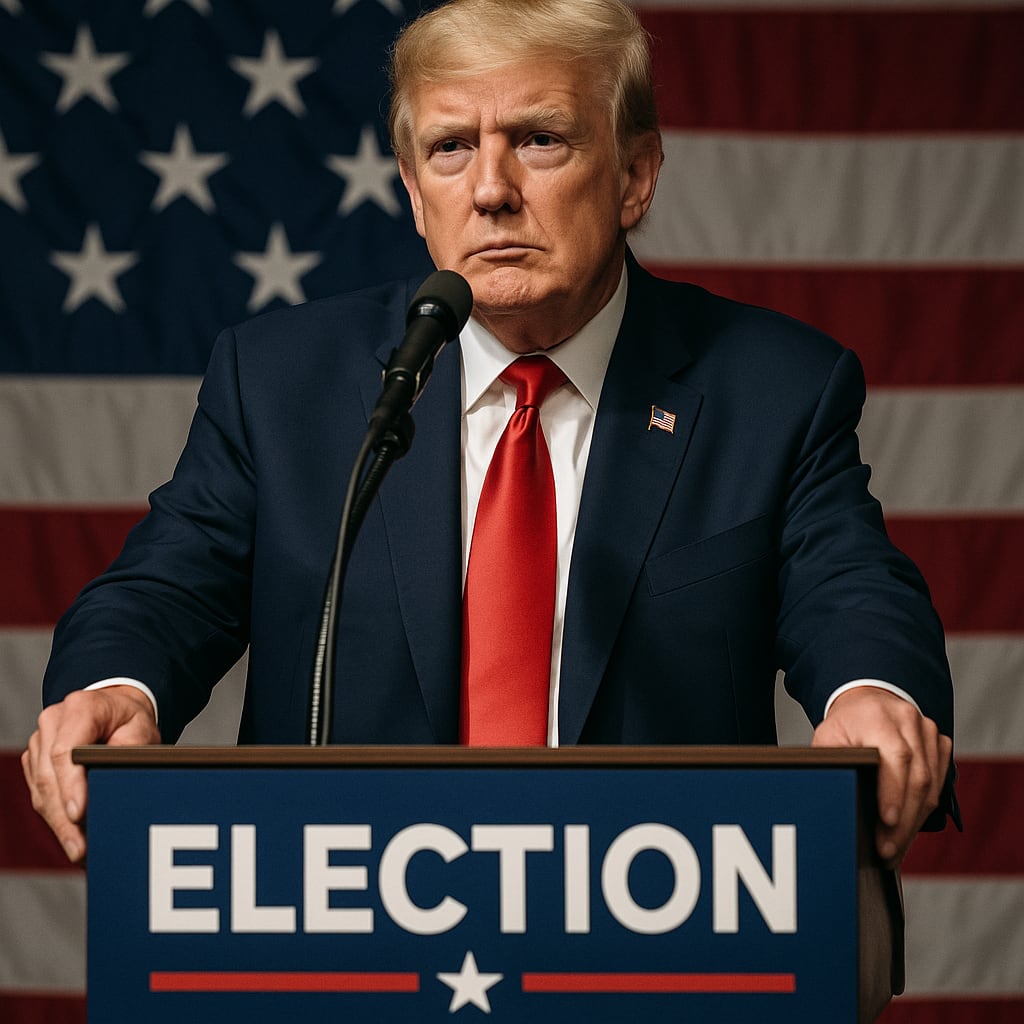
The next campaign has already started, and most of the country hasn’t noticed yet
I remember the exact moment it hit me that the 2026 elections had already begun.
It wasn’t a big speech or a breaking-news chyron.
It was a quiet clip, buried mid-segment on cable news: Trump at a rally, hardly mentioning his own legal troubles and instead hammering away at a very specific list of Senate names, governors, and “disloyal” Republicans who, in his words, needed to be “retired by the people.”
The 2024 dust hadn’t even fully settled, but the language had shifted.
He wasn’t just talking about himself anymore.
He was talking like a party boss preparing the battlefield for the next cycle.
That’s when I realized: while most people are exhausted, unplugged, or cautiously trying to check the news less, Trump is already playing the 2026 game.
And the moves he’s making now say a lot about what the next political cycle is going to feel like—for both parties, and for anyone stuck in the middle.
The quiet pivot: from “I alone” to “we’re coming for them”
If you’ve watched Trump for years, you know his favorite subject has always been himself.
Crowd size, poll numbers, ratings.
Everything loops back to his own story.
Lately, though, there’s been a subtle but noticeable shift.
He’s spending more time talking about who should be in Congress, who should be primaried, who “deserves” Trump’s blessing—and who should be punished for crossing him.
This isn’t just ego anymore.
It’s infrastructure.
He’s essentially building a shadow HR department for the Republican Party, out in the open, at rallies and on social media.
Candidates are being sorted into three categories: loyal, suspect, and enemy.
You can see it in how he talks about:
Senators who didn’t back him early enough
Governors who certified results he didn’t like
Local officials who refused to “find votes” or play along
He’s already drawing up the 2026 map with one central question:
“Will this person bend when I need them to?”
That’s not normal party politics.
That’s a loyalty test for a movement that wants more than just the White House.
It wants the scaffolding around it: the House, the Senate, the statehouses, the election boards.
The revenge tour: primaries as weapons, not contests
Primary elections used to be mostly about ideology.
Tea Party vs. establishment.
Moderate vs. conservative.
Left vs. center-left.
Now, under Trump, primaries are increasingly becoming something else: personal score-settling dressed up as democracy.
If you look closely at the early endorsements and threats he’s been making, a pattern appears.
It’s not “Who can win this seat in November?”
It’s “Who apologized to me?”
“Who repeated the line?”
“Who stayed quiet when I needed backup?”
This is Trump’s 2026 strategy in a nutshell:
Use primaries to terrorize the Republican establishment
Make an example of a few high-profile “traitors”
Scare everyone else into following his script
You can already see the ripple effect.
Lawmakers who once quietly pushed back are going soft.
Statements turn into non-statements.
They “disagree with the tone” but won’t challenge the claim.
Why?
Because they’ve watched what happens to people who defy him in a primary.
They’ve seen the rallies, the angry voicemails, the flood of challengers suddenly flush with cash and attention.
Trump doesn’t have to win every race to succeed.
He just has to make resistance feel too expensive.
The ground game beneath the noise: courts, rules, and referees
While the headlines focus on Trump’s legal cases, something more strategic is quietly unfolding: he’s turning those same legal battles into a blueprint for reshaping who runs our elections in 2026.
Here’s the uncomfortable truth most people don’t want to sit with:
Trump learned from 2020.
Not in the “I accept the result” way.
In the “next time we need different referees” way.
Watch the moves:
He calls out specific state officials by name, turning them into villains at rallies.
He backs down-ballot candidates who promise “election integrity” but define it as “doing whatever Trump wants with the vote count.”
He pushes for laws that sound bland—chain of custody, poll challengers, ballot access—but are really about who gets to say “yes” or “no” when votes are close.
By 2026, a lot of the people who sign off on results, certify counts, and handle recounts will have been elected in this new reality.
They’ll arrive in office knowing exactly who helped put them there—and what’s expected in return.
That’s the long game.
And whether you think Trump is a necessary disruptor or a danger to democracy, you have to admit: it’s smart, calculated, and already underway.
The fundraising machine: outrage as a subscription service
There’s another piece that almost no one treats like strategy, even though it absolutely is: the constant fundraising.
Every indictment, every hearing, every viral clip becomes a chance to send out a fresh round of emails and texts.
They all have the same rhythm:
“They’re not just after me, they’re after you.”
“We must take back the House/Senate/states in 2026.”
“Chip in $5 right now.”
At first, this looked like survival—legal bills aren’t cheap.
But the longer it goes on, the clearer it becomes: this is also about building a permanent, hyper-loyal donor base that can be activated in any midterm, any off-year, any special election.
Trump doesn’t need corporate donors in the same way other politicians do.
He has something more powerful: millions of people who feel personally invested in his fight.
People who will open their wallets not just in presidential years, but every time he tells them the system is coming for him again.
That money doesn’t just vanish into legal defense.
It funds travel, endorsements, targeted ads, and pressure campaigns.
By 2026, that outrage-fueled ATM could be the most effective weapon in down-ballot politics.
The emotional architecture: fear, belonging, and “the last chance”
If you strip away the slogans and the merch, Trump’s strategy rests on something much older and more human: emotion.
Specifically, three of them.
Fear.
He tells his supporters that if they lose in 2026, it won’t just mean losing an election.
It will mean losing their country, their voice, their safety.
Not everyone buys this, but the people who do, really do.
Belonging.
There’s a reason his rallies feel more like concerts or church revivals than town halls.
People don’t just attend to hear policy.
They come to feel part of something big, something loud, something they believe the media and elites will never understand.
Finality.
He constantly frames each cycle as “the last chance”—the last chance to fix the border, stop the deep state, save the economy, whatever the line of the day is.
In that world, 2026 isn’t just a midterm.
It’s a moral test.
That emotional cocktail isn’t an accident.
It keeps people engaged long after exhaustion should have kicked in.
It transforms what should be a routine midterm into a climactic episode in an ongoing saga.
And it forces every other politician—Republican and Democrat—to either try to match that energy or somehow work around it.
Neither option is easy.
The Democratic problem: running against Trump even when he’s not on the ballot
Here’s the strange part about Trump’s 2026 strategy: it doesn't just reshape the Republican Party.
It quietly corners Democrats too.
In race after race, Democrats face the same decision:
Do they run against their actual opponent… or against Trump’s shadow?
On paper, it makes sense to tie every MAGA-aligned candidate back to him.
“Trump Republican” has become its own brand, with all the baggage and loyalty that comes with it.
But there’s a risk buried in that.
When every local race becomes a referendum on Trump, his gravitational pull grows.
School board members, state reps, and clerks get sucked into a national narrative that drowns out local issues.
Trump becomes the sun everyone orbits, whether they want to or not.
That’s already shaping the 2026 battlefield:
Democrats plan to warn that putting Trump loyalists in office will sabotage future elections.
Republicans who cross Trump risk being wiped out before they even reach a general election.
Independents are left trying to figure out which races are about roads and schools, and which are about someone they’ve never met pledging loyalty to a man who lives in Florida.
Trump’s strategy thrives in chaos.
The more nationalized every race becomes, the more every ballot feels like it’s secretly about him.
And that, in a twisted way, is the point.
The cycle of exhaustion: why people check out when the stakes go up
I’ve lost count of how many friends have told me some version of the same thing:
“I care about politics, but I just can’t do this anymore.”
They say it with a mix of guilt and relief.
They’ve turned off alerts, stopped watching cable news, maybe even muted the word “Trump” on social media.
Trump’s 2026 strategy actually depends on that exhaustion.
Because when normal people check out, the ones who stay—who donate, attend rallies, show up in primaries—have outsized power.
Midterms already skew toward the most motivated voters.
Add fear, belonging, and “last chance” rhetoric, and you get a turnout gap that can flip states upside down.
So while you’re trying to reclaim your sanity and read more books, there’s a political machine organizing around your absence.
You don’t see it on your feed.
It shows up later, in who wins county clerk, who controls the legislature, who gets to draw the maps, who decides how hard or easy it is for you to vote in the first place.
That’s the part that scares me—not in a doom-scroll way, but in a quietly practical way.
The next wave is being built while the rest of us are trying to catch our breath from the last one.
What Trump’s 2026 strategy really tells us about the next era of politics
Underneath all the noise, here’s what Trump’s early moves toward 2026 reveal about the next political cycle:
Personal loyalty will matter more than policy.
Primaries will be bloodier than general elections.
Election rules and referees will be just as contested as the candidates themselves.
Outrage will continue to be the main currency.
Exhaustion will be treated not as a bug in the system, but as a feature.
This isn’t just “Trump being Trump.”
It’s a blueprint for politics that doesn’t end when a presidency does.
A model where the campaign never stops, the list of enemies never shrinks, and every election—no matter how small—gets pulled into a permanent war over what’s real, what’s fair, and who gets to decide.
You don’t have to like Trump, hate Trump, or even think about him every day to be shaped by this strategy.
If you live in a state where a school board member, a county clerk, a state rep, or a senator gets elected in 2026, you’re in it.
You’re already on the board, whether you made a move or not.
The uncomfortable takeaway: the most powerful move is the one we don’t make
There’s a moment, usually late at night, when the noise dies down and you remember politics isn’t just a show, it’s paperwork.
It’s zoning decisions, budgets, appointments, precinct captains.
It’s the stuff that doesn’t make the news until it breaks.
Trump understands something about us that most politicians barely acknowledge out loud: we’re tired, we’re overwhelmed, and we prefer drama to drudgery.
So he gives us drama, constantly.
Meanwhile, the drudgery—the unglamorous work of taking over the machinery of elections and party structures—keeps going quietly underneath.
You don’t have to become a full-time activist to answer that.
But it’s worth asking yourself one hard question as 2026 silently approaches:
If the most powerful part of Trump’s strategy is counting on your absence, what does it mean if you give it to him?
Maybe the real fork in the road isn’t blue vs. red, or Trump vs. anti-Trump.
Maybe it’s this:
Are we going to let the next political cycle be something that happens to us while we scroll past it, or something we’re at least awake enough to see coming?
That’s the part that no campaign, no strategist, not even Trump, can fully control.
Because for all the rallies and fundraising emails and loyalty tests, there’s still one small, quiet decision that lives way outside his strategy:
Whether we show up—or leave the future of the country to the people who never, ever sit one out.
About the Creator
abualyaanart
I write thoughtful, experience-driven stories about technology, digital life, and how modern tools quietly shape the way we think, work, and live.
I believe good technology should support life
Abualyaanart
Keep reading
More stories from abualyaanart and writers in The Swamp and other communities.
The Saddest Thing - The Billionaires Who Rule America Aren't Even Enjoying Themselves
This single post says more about our ruling class than a thousand policy papers. The saddest thing about today's system is that the men robbing the rest of us - sabotaging our economic prospects, our pensions, our access to affordable healthcare - are not even happy.
By Scott Christenson🌴21 days ago in The Swamp
When the Shelter Closes
Across the street from my house, a man slept under a tree, his dog by his side. My first, naive thought: he must be traveling through. But he kept coming back, often sleeping there during the day. Then it hit me—that person might not have a home.
By Bride of Sound2 days ago in Humans


Comments
There are no comments for this story
Be the first to respond and start the conversation.