
Inside the Courtroom: How Manhattan Federal Court Would Handle the Trial of a President
Legal precedent, constitutional safeguards, and extraordinary security would shape an unprecedented judicial process

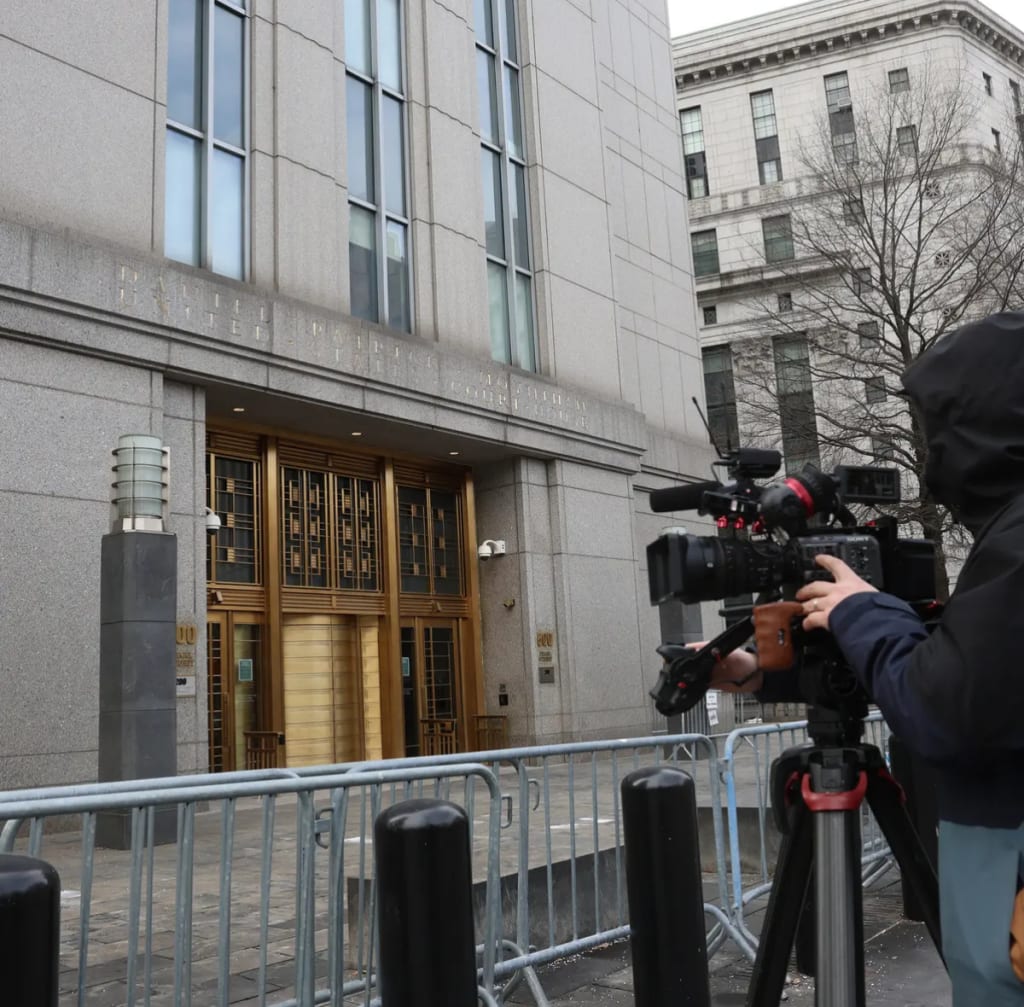
The idea of a sitting or former U.S. president standing trial is one of the most extraordinary scenarios in American law. While the Constitution establishes that no person is above the law, it also builds in unique protections and procedures for the presidency. If a president were to be tried in a Manhattan federal court, the process would follow established legal rules—but with layers of complexity, security, and constitutional scrutiny unlike any other criminal case.
Jurisdiction and Legal Authority
A Manhattan federal court, formally part of the U.S. District Court for the Southern District of New York (SDNY), has jurisdiction over federal crimes committed within its geographic boundaries. This court has long been known for handling high-profile and politically sensitive cases, including terrorism, financial crimes, and corruption. From a legal standpoint, a president would not receive a special courtroom or a separate justice system; the same federal rules of criminal procedure would apply.
However, before any trial could proceed, courts would need to address threshold questions: Can a sitting president be criminally tried? The Constitution is silent on this issue, and while the Department of Justice has historically argued that a sitting president should not face criminal prosecution, this view has never been definitively settled by the Supreme Court. A former president, on the other hand, faces fewer constitutional barriers.
Pretrial Motions and Constitutional Challenges
If such a case were filed in Manhattan federal court, the pretrial phase would likely be lengthy. Defense attorneys would file motions challenging jurisdiction, arguing executive immunity, and questioning whether prosecution interferes with constitutional duties. Judges would be required to weigh the separation of powers carefully, balancing the independence of the judiciary with the authority of the executive branch.
These motions could reach appellate courts quickly, possibly even the Supreme Court, before a jury is ever selected. As a result, the trial timeline would likely stretch far longer than an ordinary federal case.
Security and Courtroom Logistics
Security would be unprecedented. The U.S. Marshals Service, Secret Service, and local law enforcement would coordinate to secure the courthouse, surrounding streets, jurors, witnesses, and court staff. Portions of lower Manhattan might face restricted access during key trial days.
Inside the courtroom, procedures would remain formal and neutral. The judge would ensure decorum, while also accommodating security needs, such as controlled entrances and secure holding areas. Despite the extraordinary circumstances, judges are trained to preserve the appearance and reality of fairness, ensuring the defendant—president or not—is treated according to law.
Jury Selection and Fair Trial Concerns
Selecting an impartial jury in Manhattan would be one of the most challenging aspects of the case. Potential jurors would undergo extensive questioning to assess bias, political views, and media exposure. Given the intense public attention surrounding a presidential trial, many jurors might be excused for cause.
The court could consider measures such as anonymous juries or sequestration to protect jurors from outside influence. While these steps are rare, federal courts have used them before in cases involving organized crime or national security.
The Role of the Judge
The presiding judge would play a crucial role in maintaining legal balance. They would rule on evidentiary issues, manage courtroom conduct, and ensure that neither the prosecution nor defense uses the trial as a political platform. Federal judges are appointed for life precisely to insulate them from political pressure, a safeguard that would be especially important in a case of this magnitude.
The judge might also issue gag orders or limits on public statements to prevent the trial from being litigated in the media rather than the courtroom.
Media Coverage and Public Access
Transparency is a core principle of the American justice system, but federal courts do not allow live television coverage. Reporters would rely on courtroom notes, sketches, and official transcripts. Media presence would be intense, with global attention focused on each procedural development.
The court would have to balance public interest with the defendant’s right to a fair trial, possibly limiting press access or issuing strict rules about recording and reporting from inside the courthouse.
Verdict, Sentencing, and Historical Impact
If the case reached a verdict, the outcome would be historic regardless of guilt or acquittal. A conviction would trigger further legal debates about sentencing, appeals, and the political consequences. An acquittal would raise equally significant questions about accountability and precedent.
Beyond the individual case, such a trial would leave a lasting mark on constitutional law. Courts, scholars, and lawmakers would study it for generations as a defining moment in how American democracy tests its own principles.
Conclusion
A presidential trial in Manhattan federal court would not be a spectacle governed by politics alone. It would be a rigorous legal process shaped by constitutional law, judicial independence, and procedural safeguards. While extraordinary in its implications, the trial would ultimately rest on an ordinary but powerful idea: in the United States, even the highest office is accountable to the rule of law.
About the Creator
Muhammad Hassan
Muhammad Hassan | Content writer with 2 years of experience crafting engaging articles on world news, current affairs, and trending topics. I simplify complex stories to keep readers informed and connected.
Keep reading
More stories from Muhammad Hassan and writers in The Swamp and other communities.
Venezuela Operation Is Latest in Long History of U.S. Intervention in Latin America
The recent U.S. military operation in Venezuela has sent shockwaves across Latin America and beyond. Described by Washington as a necessary action against corruption, narcotics trafficking, and authoritarian rule, the operation resulted in the arrest of Venezuelan President Nicolás Maduro and marked the most direct American military intervention in the region in decades.
By Muhammad Hassan2 months ago in The Swamp
A Gathering of Evil Bosses
“I’m the queen of chin jutting while I smooth my hair, attacking, insulting, and deflecting to protect my appointer.” “Oh, please, Blondi, my hair is curled, highlighted, and longer than yours. I feature television commercials telling immigrants that we will give them a free plane ride home, and if they voluntarily turn themselves in, they will be allowed to legally apply for re-entry. It runs everywhere, and I look good in it! You can’t compete because of your blond hair. Mine is nicer, and my lips are prettier than yours.”
By Andrea Corwin 10 days ago in The Swamp
US Gathers Troops, Jets at UK Bases Despite Refusal on Iran Strikes
The United States has been quietly amassing military personnel and aircraft at several bases in the United Kingdom and nearby regions even as the British government declined to permit the use of its facilities for potential airstrikes on Iran, officials and analysts say. The buildup highlights growing tensions between NATO allies over how to respond to Tehran’s nuclear ambitions and broader regional security challenges. According to open‑source flight tracking data reviewed by analysts, at least 28 U.S. military flights have operated from airfields in Britain and Cyprus in recent days amid a broader surge of personnel, fighter jets, bombers, and support aircraft bound for Europe and the Middle East. A Surge Despite UK Refusal British Prime Minister Keir Starmer has refused formal requests from Donald Trump’s administration to allow American forces to launch offensive operations from UK territory, especially for a potential strike on Iranian targets. Under long‑standing bilateral defence agreements, the U.S. may use UK airbases routinely—such as RAF Lakenheath and RAF Mildenhall—but approval is required for combat operations aimed at third countries. Daily Sun The British government has repeated that no authorization has been granted for strikes from bases including RAF Fairford in England or RAF Akrotiri in Cyprus. Officials have cited concerns about international law and the legal implications of facilitating offensive action from sovereign soil. Despite this refusal, American strategic aircraft—including tankers, AWACS surveillance planes, and advanced fighters—continue to fly into UK and Cypriot facilities, where they can be refuelled, serviced, and repositioned for eventual deployment to the Middle East if needed. World Socialist Web Site Diplomatic Friction and Chagos Controversy The dispute over base access has spilled into broader diplomatic disagreement between London and Washington, particularly over the future status of Diego Garcia, a strategically vital base in the Indian Ocean currently leased to the United States. Reports say President Trump has publicly criticised the UK government’s reluctance, linking it to opposition over sovereignty transfers for the archipelago. Trump had previously suggested that Diego Garcia and RAF Fairford might be needed “to eradicate a potential attack by a highly unstable and dangerous regime,” a reference to Iran’s nuclear programme, but Starmer’s administration has stood firm in withholding permission. Wider Military Build‑Up The U.S. deployment is part of a larger strategic repositioning. Alongside the movements in Britain, American aircraft carriers—including the USS Abraham Lincoln and anticipated arrival of others such as the USS Gerald R. Ford—have been sailing toward the eastern Mediterranean and Arabian Gulf. Defense analysts say this muscle‑flexing aims to give Washington maximum flexibility: deterrence, regional stability, and readiness for rapid escalation if Tehran refuses diplomatic overtures over its nuclear programme. At least six E‑3 AWACS surveillance aircraft were reportedly repositioned toward the region, alongside dozens of combat and support jets. UK’s Support for Diplomacy Despite the military build‑up, the British government has signalled a different approach. Yvette Cooper and other ministers have called publicly for renewed negotiations with Iran, urging that diplomacy and economic pressure remain the primary tools for addressing the standoff. Cooper’s comments reflect wider UK policy that emphasises international law and collective security mechanisms, even as London underscores the shared priority with Washington that Tehran should not develop nuclear weapons. Tensions and Strategic Calculations The situation places the United States in a delicate strategic position. Preparing forces for potential action while not having guaranteed access to key allied facilities complicates operational planning, particularly for long‑range bombers. Yet the buildup of troops and jets suggests Washington is preparing to act unilaterally if it deems necessary. Daily Sun For its part, the UK must balance its legal and diplomatic principles with maintaining a historic defence partnership with the United States—a challenge now intensified by questions over whether military action against Iran is imminent.
By Fiaz Ahmed 5 days ago in The Swamp



Comments
There are no comments for this story
Be the first to respond and start the conversation.