
Indivisible
Coming of Age in the Year of 9/11



By twelve, a lot of kids have been through things they shouldn't in an ideal world, have to go through, have already had those formative moments of innocence-stripping done to them. That wasn't the case for me. At 12, I was still very much a kid. Until I wasn’t.
.
The year was 2001, and I was in the seventh grade. The year had just started, and I was crossing the hall to my third-period math class. Middle school was old hat to me now- I knew, if not how to thrive, all the places to hide, the frequency at which to pitch myself to slide under everyone's radar. I entered the classroom, slipping to the back like always, but something was off. Up front, the TV was turned to the news, and half of the class, the teacher included, was still standing, eyes zooming around between one another, a low murmur of conversation happening. Most people were fixated on the screen, where all I could see was a city skyline, and smoke.
We never had that math class. The next thing I remember, I was waiting for my mom to come pick me up. Her car sped to a stop in front of me, and I got in to see my younger brother had already been scooped from his respective school. I don't remember the talk in the car, only that there was little of it: the words planes, two towers, terrorists.
It was that last word that gripped me most when I sat in bed that night, watching the light from the fish tank between my sisters' and my bed glow ripples on the wall. Terrorist. A hard, sharp-edged word, a word with teeth. Somewhere out there, in the silent night at my back, there were people who wanted me dead. Not me, really, but America, which to them was me, was the whole faceless mass of us. It wasn't personal, and somehow that made it more frightening.
America, to a privileged child living within its borders, is the world. When I thought of places far away, I thought of California where my aunt AB and Uncle Pete lived. I'd never visited and I didn't imagine at the the time I ever would- we weren't close to them, and the rest of my family lived comfortably in New England. The other side of the country might as well be the other side of the world for me, with how inaccessible and far away it seemed. I knew, of course, that other countries existed, but to me they might as well be other worlds. This wasn't helped by terms like 'third-world country' which to a kid evokes a literal different map, like the one of Middle Earth in my Lord of the Rings novels.
Over the next weeks, I would learn that people I knew knew people who’d died- adults who'd gone to work at the World Trade Center and had never come home. I tried to picture living in New York, my father gone at work, and calling his phone over and over with no reply, smoke furling from the horizon out my window. The reality was so far and yet so close. I lived just over in Connecticut. I tried to imagine my parents gone, taken for being in the wrong place at the wrong time, or vice versa. My mind was blank; full of nothing, like when you try to picture your own non-existence. For those children, the towers were a lightning strike that ended their illusion of safety- for me and most other kids around me, it was more the rumblings of thunder, coming close on the bloody heels of puberty, trailing the disaster of Columbine by a couple of years.
America was a lot of things in my mind, but we'd never been the victim. We were too fortunate, too privileged. All my life I'd been told we were lucky. America was the place to live. I'd won the lottery, somehow, just by virtue of my birth. Some of the folk tales I'd grown up with about America's beginning would lead me to believe others wanted to be us, or looked up to us. But wanted to hurt us? Was it because of the privilege we had? I became darkly aware that I only had one side of the story. Did we maybe deserve some of that hate? Whether I wanted to be or not, I was also America, and my lack of knowledge seemed a condemnation all its own, a proof-in-the-pudding stereotype.
The direct results of 9/11 in my life were noticeable, if minimal on a personal level. Everyone wanted to come together to help those who were hurt, everyone wanted to keep something like this from ever happening again. We had moments of silence for the victims in school. For years, the eighth grade take a trip to Washington DC as an annual tradition. That year there was no trip, and the year after that, my year, we went to Boston instead. There was increased security everywhere, but especially in airports. September 11th was probably the first event in my young life to really tear me from the self-centric world children tend to inhabit. I found myself thinking about things I’d never considered before, things I’d taken for granted. My own personal safety was only one of those things.
I as a child had already begun to feel a distaste for religion (I would part ways with my own Catholic upbringing only a few years later) and the idea that any religion considered it okay for its own members to self-destruct, that such killing of innocent civilians was somehow honorable in any world, made me all the more convinced it was all manmade bullshit. How were these zealous suicide pilots any different from the boys who'd donned trenchcoats a couple of years prior and walked into the school, killing fifteen before turning the guns on themselves? It seemed to me that government and religion were a lethal mix, and I felt relieved that in the U.S., church and state were separate. For all people in my country wanted to make a boogeyman of Islam, I saw no reason to believe Christianity would be any less destructive if given that level of agency. In fact, our earliest history only seemed to reinforce this idea. Ideology was dangerous in all its iterations.
One of those ideologies was the extreme nationalist tendencies our government at times fostered. 9/11 made me critical of things I'd never given much thought before, like our involvement in foreign affairs and the true intentions of our politicians. I viewed not only the rest of the world, the 'others' with more suspicion, but began to apply it to our elders and leaders as well. Everyone had an agenda, and it was rarely to never pure. It was around this time that I stopped saying the pledge of allegiance in class, though I never connected it specifically to this day.
I would not have put it this way then, but I think the events of September 11th and- maybe especially- the reaction of the country around me in the aftershock- was my first conscious experience of national identity. The not at all unique mixed feelings of love and pride in my country as well as disillusionment and shame. Like family, nationality was something I didn’t choose, and like family it had shaped me incontestably and would continue to do so.
And it must be said- like my own imperfect human family, I am lucky to say America is something I would choose if I could. For all the increasing criticism I would come to have for it, the freedom to express this criticism is something I would equally grow to appreciate, and this freedom is not nearly as common the world over as it should be.
About the Creator
Keep reading
More stories from Raistlin Allen and writers in The Swamp and other communities.
School Pictures. Honorable Mention in Through the Lens Challenge.
I only went to school here for half a year. There shouldn't be that much to say. Yet when I saw the school blocked off from the roadway by a pelt of grass, grown in over the past decade, despite driving past so many times before, this time I turned and went searching for it, the lost way in.
By Raistlin Allenabout a year ago in Photography
The Saddest Thing - The Billionaires Who Rule America Aren't Even Enjoying Themselves
This single post says more about our ruling class than a thousand policy papers. The saddest thing about today's system is that the men robbing the rest of us - sabotaging our economic prospects, our pensions, our access to affordable healthcare - are not even happy.
By Scott Christenson🌴24 days ago in The Swamp
Sirens Expected Across Central Israel Amid New Iranian Missile Attack
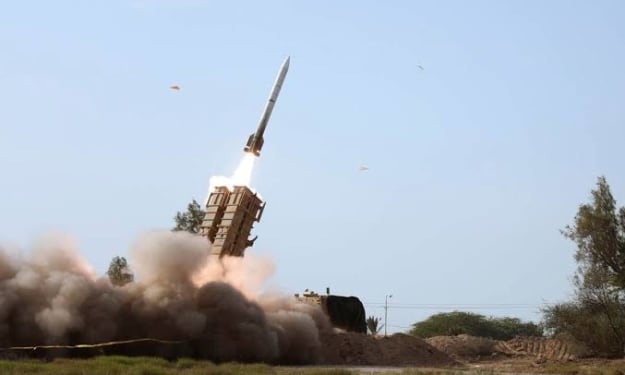
Central Israel braced for potential air-raid sirens and heightened alert after Tehran launched a fresh missile attack targeting Israeli territory, in what Israeli officials called a “significant escalation” in a conflict that has drawn the two adversaries into direct confrontation. The incident underscores the increasing risk of a wider regional war and has prompted intensified military readiness, emergency preparations, and diplomatic alarm from capitals around the world. The reported missile barrage late Tuesday was confirmed by both Israeli and Iranian sources, with the Iranian government claiming the strikes were retaliation for recent attacks on Iranian territory and “acts of aggression” attributed to Israel. According to state media in Iran, multiple ballistic missiles and long-range cruise systems were fired toward targets inside central Israel, including near urban population centres. Israeli defence officials, while remaining cautious about public disclosures, acknowledged that air-defence systems had detected incoming threats and that civil defence sirens could be expected across central districts, including in and around Tel Aviv and Jerusalem. The Israeli military stressed that interception efforts were underway and urged civilians to follow protective instructions from authorities. Details of the Attack Iranian state television released video footage purportedly showing ballistic missiles being launched from bases in central Iran, accompanied by statements from Iranian military officials claiming the operation was precise and intended to strike military infrastructure. Tehran asserted that its forces had successfully launched multiple projectiles that crossed neighbouring airspace and entered Israeli defensive zones. Israeli air-defence batteries, including the Iron Dome and longer-range anti-missile systems, were reported to have engaged the incoming missiles to protect population centres and critical infrastructure. Early reports suggested that several intercepts had occurred, though assessments of resulting damage were still being compiled as of early Wednesday. Casualty and Damage Assessments At the time of the report, Israeli authorities had not confirmed civilian casualties but described some structural impacts in outlying areas near military installations. Hospitals in central districts were placed on emergency standby, and authorities mobilised additional medical and civil-defence personnel to prepare for potential civilian injuries. Local news outlets broadcast footage of residents taking shelter in protected areas, while official civil-defence channels advised families to remain indoors, stay near reinforced areas, and avoid unnecessary travel until the alert was lifted. Escalatory Context The missile exchange comes amid months of intensifying hostilities between Iran and Israel. The two countries, which have long engaged indirectly through proxies and covert operations, have escalated to overt strikes in recent weeks. Israel has targeted Iranian missile and nuclear facilities, claiming that Tehran’s efforts to expand its nuclear programme and long-range strike capabilities pose an existential threat. Iran, in turn, has justified its actions as defensive, framing them as retaliation for apparent aggression by Israeli forces. The attacks mark a significant shift from earlier phases of tension, which were primarily conducted through proxy forces in Syria, Lebanon (via **Hezbollah), and Palestinian territories. Analysts say direct missile exchanges between Tehran and Jerusalem increase the risk of miscalculation and could draw in other regional actors. Military and Civil Responses In Israel, the military — known as the Israel Defense Forces — placed key units on heightened alert and prepared fighter squadrons, air defence batteries, and reserve forces. Defence Minister Yoav Gallant emphasised that Israel would defend its citizens and sovereignty “with full force and resolve,” vowing that any attacks on Israeli civilians or territory would be met with decisive response. Prime Minister Benjamin Netanyahu addressed the nation, urging calm and unity. “Our enemies seek to sow fear, but we will protect our people and our land,” he said in a televised statement. “We call on all residents to remain vigilant and heed instructions from civil-defence authorities.” Global Diplomatic Reactions International reaction to the escalation was swift. Western capitals, including the United States Department of State, called for restraint, urging both sides to step back from further military confrontation. The United Nations Security Council convened an emergency session to address the crisis, with diplomats warning that unchecked escalation could destabilise the Middle East and disrupt global economic and security interests. European leaders expressed concern about the safety of civilians and called for an immediate de-escalation. Several countries emphasised support for Israel’s right to self-defence while also criticising the use of long-range missile strikes against population centres. Economic and Regional Impacts Markets reacted to the news of the missile strikes, with energy prices rising amid fears of wider disruption in the region, which contains some of the world’s most critical oil-export infrastructure. Shipping corridors, including access to the Strait of Hormuz, were closely monitored amid concerns about disruptions. Regional neighbours, including Jordan, Egypt, and Gulf Cooperation Council members, heightened their own security postures and appealed for de-escalation. Looking Ahead With sirens and alerts expected across central Israel, the immediate focus remains on civilian protection and intercepting any further missile threats. The broader geopolitical implications — from defence postures to diplomatic negotiations — continue to evolve rapidly. As both Tehran and Jerusalem stand firm, analysts warn that without diplomatic intervention, the exchange of strikes risks drawing the region into a broader conflict that could have far-reaching consequences for security and economic stability across the Middle East and beyond.
By Fiaz Ahmed a day ago in The Swamp
Cassie and Johnny
I’m the kind of dame you notice. I’m no femme fatale, but you can’t ignore me, at least not until I warn you about what’s coming, then everybody ignores me. Hell, they usually blame me afterwards and give Johnny all the credit for saving the day, but my Johnny couldn’t save a seat at the movies without my help. Sure, he’s brawny, but brainy? Not so much. Like that time I asked him to spot me five bucks, and he said he didn’t see it anywhere on me, and believe you me, he looked but good.
By Harper Lewis4 days ago in Critique



Comments (1)
Wooohooooo congratulations on your honourable mention! 🎉💖🎊🎉💖🎊