
Indian Scrapyards Welcome Growing Number of Dark Fleet Tankers
Formal / News Style Sanctions pressure sends aging shadow vessels to recycling yards Shipbreakers face scrutiny over dismantling opaque oil tankers India becomes key destination for retired shadow fleet ships 🔹 Neutral & Informative Why secretive oil tankers are ending their journeys in India The final stop for vessels once used to evade sanctions 🔹 Impactful & Catchy From secret seas to scrapyards Dark fleet meets its end on India’s shores

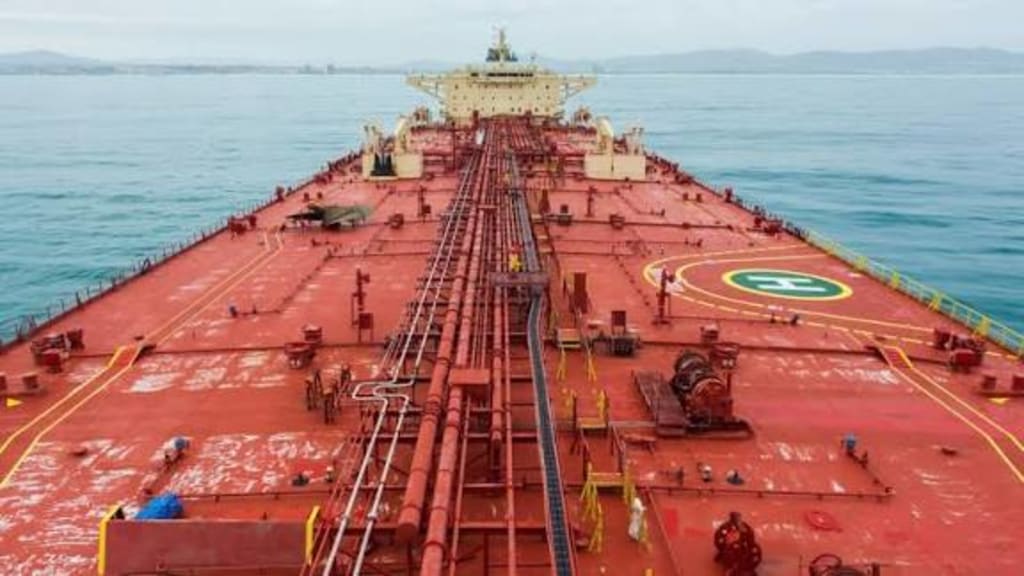
Indian shipbreaking yards are witnessing a sharp rise in the arrival of so-called “dark fleet” oil tankers — aging vessels that operate outside mainstream regulatory systems and are often linked to sanctioned or opaque energy trade routes. Industry sources say the trend reflects both tightening international enforcement and the deteriorating condition of ships that have spent years transporting oil under secrecy.
The vessels, many of which previously served Russian, Iranian, or Venezuelan oil shipments, are now reaching the end of their operational life. India’s massive ship recycling sector has emerged as a primary destination for their dismantling.
What Is the “Dark Fleet”?
The term “dark fleet” refers to tankers that frequently switch flags, disable tracking systems, and use complex ownership structures to avoid scrutiny. These ships expanded rapidly after Western sanctions were imposed on Russia’s oil exports following the Ukraine war, and similar tactics had already been used by fleets linked to Iran and Venezuela.
Analysts estimate that hundreds of tankers now operate in this shadow network, moving crude oil and petroleum products through indirect routes and offshore transfers.
“These ships were never meant to last forever,” said a maritime risk consultant. “Many are now too old and unsafe to continue sailing, so scrapyards are the final stop.”
India Becomes a Key Destination
India is home to one of the world’s largest ship recycling industries, centered around the coastal hub of Alang in Gujarat. Known for dismantling everything from cargo ships to aircraft carriers, Alang has increasingly received tankers suspected of being part of the dark fleet.
Shipbreakers say the vessels often arrive with minimal documentation and under flags of convenience such as Gabon, Cameroon, or Mongolia. Once cleared by Indian authorities, the ships are beached and dismantled piece by piece for scrap steel.
Steel recovered from these ships feeds India’s booming construction and manufacturing sectors, making the business highly profitable despite growing scrutiny.
Regulatory Concerns
Environmental and safety groups have raised alarms over the risks posed by these tankers. Many dark fleet ships are more than 20 years old and lack proper maintenance records. They can contain hazardous materials such as asbestos, oily sludge, and toxic paint residues.
The International Maritime Organization has repeatedly warned about unsafe practices linked to aging tankers and illegal oil transfers at sea.
“These vessels pose a threat not just to crews but also to coastal ecosystems,” said a spokesperson for an environmental watchdog group. “If they are not dismantled under strict safety rules, the pollution cost will be enormous.”
India has introduced tougher ship recycling standards in recent years, including compliance with the Hong Kong Convention for safe and environmentally sound ship recycling. Officials say every vessel entering Indian scrapyards must provide documentation proving it is free of radioactive or prohibited materials.
A Result of Sanctions Pressure
Experts say the influx of dark fleet tankers into scrapyards is a direct consequence of tighter sanctions enforcement by Western governments. Insurance companies and major shipping registries have cut off support to vessels suspected of violating oil price caps or sanctions.
Without insurance and port access, many of these ships can no longer trade safely.
“Once a tanker loses insurance, it becomes commercially useless,” said a shipping analyst in Mumbai. “Scrapping is the only option left.”
Some tankers arriving in India are believed to have transported Russian crude to Asia at discounted prices before being retired. Others previously moved oil between the Middle East and China under opaque arrangements.
Economic Benefits vs Ethical Questions
For India’s shipbreaking industry, the arrival of more tankers means steady business and employment for thousands of workers. Local steel mills benefit from a consistent supply of scrap metal, keeping prices stable.
However, critics argue that dismantling dark fleet vessels indirectly supports a system that helped evade international sanctions.
“There is a moral dilemma here,” said a geopolitical expert. “India is not violating sanctions by scrapping ships, but it is benefiting from a trade that exists because of them.”
Indian authorities maintain that ship recycling is a lawful industrial activity and that vessels are processed according to domestic and international regulations.
Environmental and Worker Safety Risks
Shipbreaking has long been controversial because of hazardous working conditions. Laborers often work with cutting torches near fuel residues and toxic materials. Although safety standards have improved, accidents still occur.
Local NGOs in Gujarat say dark fleet tankers may be more dangerous than average because their maintenance history is unknown.
“These ships were pushed to their limits,” said one activist. “They are floating environmental hazards when they arrive.”
What Comes Next
With sanctions on Russia and Iran likely to remain in place for years, analysts expect more dark fleet tankers to reach scrapyards across South Asia, including India, Bangladesh, and Pakistan.
India’s government is under pressure to ensure that shipbreaking does not become a backdoor service for illegal shipping networks. Regulators are now reviewing stricter background checks on vessel ownership and previous trading routes.
At the same time, global shipping companies are watching closely. The dismantling of older tankers may reduce supply in the shadow fleet, potentially tightening enforcement of oil sanctions worldwide.
A Quiet End for Shadow Ships
For vessels that once moved millions of barrels of oil across hidden routes, their final destination is silent and industrial: a beach lined with cranes and cutting torches.
What began as a strategy to bypass sanctions is ending in scrapyards, where steel is melted down and reused for buildings, bridges, and factories.
The growing presence of dark fleet tankers in Indian yards highlights a little-seen consequence of global geopolitics — where international conflict, energy markets, and environmental responsibility intersect on the country’s shores.
About the Creator
Fiaz Ahmed
I am Fiaz Ahmed. I am a passionate writer. I love covering trending topics and breaking news. With a sharp eye for what’s happening around the world, and crafts timely and engaging stories that keep readers informed and updated.
Keep reading
More stories from Fiaz Ahmed and writers in The Swamp and other communities.
Rubio Warns Europe of New Era in Geopolitics Ahead of Major Munich Speech
U.S. Senator Marco Rubio has warned European leaders that the world is entering a new and more dangerous era of geopolitics, marked by shifting alliances, intensifying great-power competition, and growing instability. His remarks come ahead of a highly anticipated speech at the Munich Security Conference, one of the world’s most influential gatherings of political and security leaders. In comments released before his address, Rubio said that Europe and the United States must prepare for a future defined less by cooperation and more by rivalry among major powers, particularly involving China, Russia, and regional actors seeking to challenge the Western-led international order. “We are no longer living in the post–Cold War moment,” Rubio said. “We are entering a period where power politics is returning, and democracies must be prepared to defend not only their interests but their values.” A Changing Global Landscape Rubio’s warning reflects growing concern in Washington that global politics is undergoing a fundamental transformation. Conflicts in Ukraine and the Middle East, rising tensions in the Indo-Pacific, and the spread of advanced military technologies have reshaped strategic thinking across NATO and the European Union. According to Rubio, Europe can no longer assume that peace and stability will be guaranteed through diplomacy alone. He argued that defense spending, military readiness, and technological innovation must become central priorities for Western nations. “The idea that economic interdependence alone would prevent conflict has proven wrong,” he said. “Authoritarian states are using trade, energy, and technology as tools of coercion.” His message is expected to resonate strongly in Munich, where leaders from more than 40 countries will discuss security threats ranging from cyber warfare and artificial intelligence to energy security and climate-related risks. Focus on Russia and China A central theme of Rubio’s upcoming speech is expected to be the twin challenges posed by Russia and China. He has consistently described Russia’s war in Ukraine as a defining conflict for Europe’s future and warned that failure to deter Moscow could embolden other powers. Rubio is also expected to urge European governments to reduce their economic dependence on China, particularly in strategic sectors such as telecommunications, rare earth minerals, and advanced manufacturing. “Europe must decide whether it wants strategic autonomy or strategic vulnerability,” Rubio said. “You cannot rely on authoritarian regimes for the foundations of your economy and security.” His comments come as several European countries reassess their trade and investment policies with Beijing, amid fears of supply chain disruption and political pressure. Pressure on NATO Unity Rubio’s remarks also highlight concerns over unity within NATO. While the alliance has expanded and strengthened its eastern defenses since the Ukraine war, divisions remain over burden-sharing and long-term strategy. He warned that internal disagreements could weaken Europe’s ability to respond to future crises. “Adversaries are watching for cracks in our unity,” Rubio said. “They believe democracies are too divided and too slow to act. We must prove them wrong.” The senator is expected to call for closer U.S.–European cooperation on defense production, intelligence sharing, and joint military exercises, arguing that fragmented responses would only benefit rival powers. Europe’s Role in a New Era European officials attending the Munich conference are likely to view Rubio’s speech as both a challenge and a reassurance. On one hand, his message underscores the seriousness of the threats facing Europe. On the other, it signals continued American engagement in European security at a time when questions persist about the future direction of U.S. foreign policy. Several European diplomats have privately acknowledged that the geopolitical environment has changed more rapidly than anticipated. One senior EU official said that Rubio’s warning reflects “a broader recognition that the old assumptions about stability no longer apply.” The conference is expected to include discussions on strengthening Europe’s defense industry, protecting critical infrastructure, and coordinating responses to hybrid threats such as disinformation campaigns and cyberattacks. A Broader Political Signal Rubio’s appearance in Munich also carries political significance at home. As a prominent voice on foreign policy in the U.S. Senate, he has positioned himself as a leading advocate for a tougher stance on authoritarian powers and for renewed leadership among democratic allies. His speech is likely to be seen as part of a broader effort to shape Western strategy for the coming decade, emphasizing deterrence, resilience, and unity. Analysts say his warning should not be interpreted as pessimism but as a call to action. “This is about preparing Europe and the United States for a world where competition is the norm,” said one transatlantic security expert. “Rubio is urging leaders to face reality and adapt.” Looking Ahead As Rubio takes the stage in Munich, his message will test how ready European governments are to confront a harsher geopolitical climate. Whether his call leads to concrete policy shifts remains to be seen, but his warning underscores a growing consensus that the global order is entering a period of profound change. For Europe, the challenge will be to translate rhetoric into long-term strategy — ensuring that security, economic independence, and democratic values remain at the center of its response to a rapidly evolving world.
By Fiaz Ahmed 2 days ago in The Swamp
The Saddest Thing - The Billionaires Who Rule America Aren't Even Enjoying Themselves
This single post says more about our ruling class than a thousand policy papers. The saddest thing about today's system is that the men robbing the rest of us - sabotaging our economic prospects, our pensions, our access to affordable healthcare - are not even happy.
By Scott Christenson🌴9 days ago in The Swamp
Island Gold Mine Set to Boost Production Beyond 500,000 Ounces by 2028
The Island Gold Mine is entering a transformative phase as plans to boost annual gold production to more than 500,000 ounces by 2028 take shape. This ambitious target reflects a broader trend in the global gold industry, where established assets are being expanded and modernized to meet rising demand, offset declining grades elsewhere, and capitalize on favorable long-term gold price dynamics. For Island Gold, the production leap represents not just a numerical milestone, but a strategic evolution that could redefine its standing among the world’s premier underground gold operations.
By Sadaqat Ali5 days ago in The Swamp
from death into life
Young Aldin of Wiloh had never contemplated death. It was almost strange — so many around him had the tendency to obsess over it, to clamor and claw almost desperately at their own perceptions of the end to know death as much as they could: when it would come, why it would come, where it would take them when it did.
By angela hepworth6 days ago in Fiction



Comments
There are no comments for this story
Be the first to respond and start the conversation.