
India Strikes Deep Inside Pakistan; Islamabad Claims to Down 5 Indian Jets in Major Escalation
Cross-border airstrikes and claims of downed jets push nuclear-armed neighbors India and Pakistan to the brink, sparking global calls for restraint.

India Strikes Deep Inside Pakistan; Islamabad Claims to Down 5 Indian Jets in Major Escalation
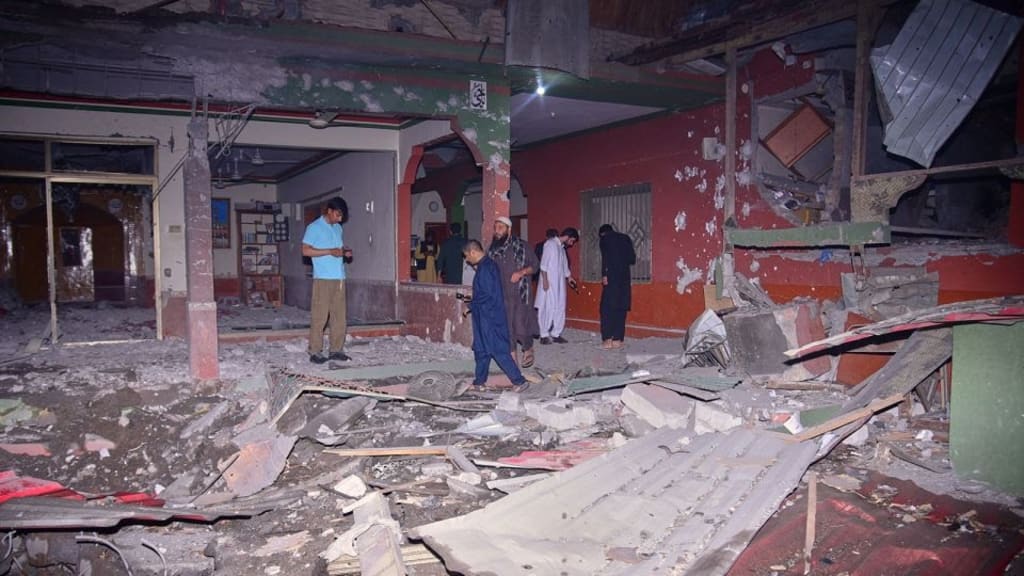
In a dramatic escalation of hostilities between two nuclear-armed neighbors, India launched what it described as a “preemptive strike” deep inside Pakistani territory early Tuesday morning. The Indian Air Force (IAF) targeted what officials said were terrorist training camps in the Khyber Pakhtunkhwa province of Pakistan. In response, Pakistan claimed to have shot down five Indian fighter jets, raising concerns of a full-scale military conflict between the two rivals.
The Air Strikes
According to Indian officials, the air strikes were launched around 3:30 AM, involving a fleet of Mirage 2000 and Sukhoi Su-30MKI jets. The operation, reportedly coordinated with satellite and drone surveillance, targeted training facilities run by the terror group Jaish-e-Mohammed (JeM), which India blames for numerous attacks on its soil, including the recent deadly assault on Indian Army personnel in Jammu and Kashmir.
Indian Defense Minister Rajnath Singh stated that the strikes were “non-military and preemptive” and “intended to eliminate imminent threats of terror attacks.” Singh added that the operation was a success, claiming that “a large number of terrorists, trainers, and senior commanders” were eliminated.
Independent verification of the claims remains difficult, as the strike areas are in remote and restricted regions of Pakistan.
Pakistan's Retaliation
Shortly after news of the Indian strikes broke, the Pakistan military held a press briefing, confirming that Indian aircraft had violated its airspace. In retaliation, Pakistan scrambled its own jets under "Operation Swift Retort."
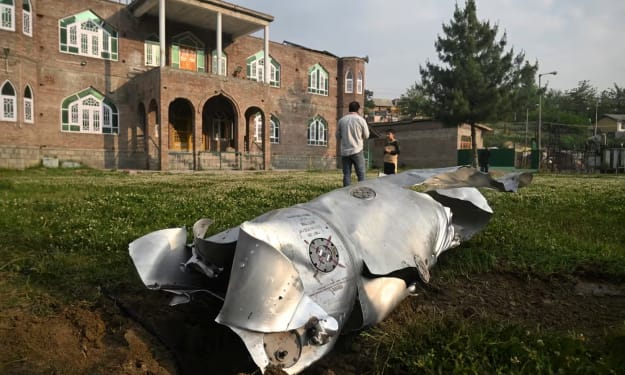
Major General Ahmed Sharif Chaudhry, spokesperson for the Pakistani military, claimed that the Pakistan Air Force (PAF) successfully engaged the intruding Indian jets, shooting down five of them and capturing one Indian pilot. He displayed wreckage allegedly from the downed aircraft and presented what he said was video footage of the pilot in custody.
“This is a clear message to India that we will respond to aggression with full force,” said General Chaudhry. “We do not seek war, but we will not hesitate to defend our sovereignty.”
India has denied that any of its jets were shot down, stating that all aircraft returned safely. However, local media reports have suggested otherwise, citing eyewitness accounts in Indian border villages of a downed plane and military cordons.
Rising Tensions and International Concerns
This latest exchange marks one of the most serious escalations between India and Pakistan since the 2019 Balakot air strikes, which followed the Pulwama terror attack. The potential for further military escalation has alarmed the international community.
United Nations Secretary-General António Guterres issued a statement urging both nations to exercise "maximum restraint" and to "engage in immediate dialogue to avoid further escalation."
The United States, United Kingdom, China, and Russia also called for calm, expressing concern over the risk of the crisis spiraling out of control, especially considering that both countries possess nuclear weapons.
Domestic Reaction in India and Pakistan
In India, the strikes have been met with a wave of patriotic fervor. Prime Minister Narendra Modi addressed the nation in a televised speech, praising the armed forces for their “bravery and surgical precision,” while also calling for unity and peace.
“India has always stood for peace, but we will not tolerate terrorism. Our armed forces have acted in defense of our people,” Modi said.
In Pakistan, Prime Minister Shehbaz Sharif condemned the Indian strikes as a “blatant violation of international law and Pakistani sovereignty.” He vowed to take the matter to the United Nations and said Pakistan reserved the right to retaliate “at the time and place of our choosing.”
Mass rallies were held in several Pakistani cities, with protesters burning Indian flags and chanting anti-India slogans. The Pakistani media also played footage of what it claimed were Indian aircraft debris and statements from the captured pilot.
The Road Ahead
As both nations exchange fiery rhetoric and military blows, the possibility of further conflict looms. Diplomatic efforts behind the scenes are reportedly underway, with backchannel communications initiated by several global powers.
However, the situation remains fluid and dangerous. With both sides entrenched in their positions and no immediate sign of de-escalation, the coming days may prove pivotal in determining whether this crisis leads to war or diplomacy.
The world watches with bated breath as two of Asia’s largest powers stand at the brink of another possible conflict—one that neither region nor the world can afford.
About the Creator
Adnan Rasheed
Author & Creator | Writing News , Science Fiction, and Worldwide Update| Digital Product Designer | Sharing life-changing strategies for success.
Keep reading
More stories from Adnan Rasheed and writers in The Swamp and other communities.
Three Indian Fighter Jets Crash in Jammu and Kashmir Amid Heightened Tensions
Three Indian Fighter Jets Crash in Jammu and Kashmir Amid Heightened Tensions Jammu and Kashmir, May 7, 2025 — In a dramatic escalation of military tensions between India and Pakistan, three Indian Air Force (IAF) fighter jets crashed in the region of Jammu and Kashmir on Tuesday, according to local government sources. The crashes occurred amidst a volatile backdrop of cross-border hostilities following recent airstrikes and retaliatory fire between the two nuclear-armed nations.
By Adnan Rasheed9 months ago in The Swamp
Xi Stresses the Need to Win the Fight Against Corruption in China
Corruption has long been one of the most dangerous internal threats facing modern China. From bribery and abuse of power to deep-rooted patronage networks within the Communist Party, corruption has undermined public trust and threatened political stability. That is why Chinese President Xi Jinping’s repeated insistence on “winning the fight against corruption” is not just rhetoric—it is a cornerstone of his leadership and governance strategy. As China navigates economic slowdown, geopolitical pressure, and domestic uncertainty, Xi’s message is clear: the battle against corruption is far from over, and failure is not an option. Why Corruption Is a Critical Issue for China Corruption in China is not merely a legal or moral problem; it is a political one. For a one-party system that derives legitimacy from performance and discipline, corruption directly challenges the authority of the Communist Party. Before Xi came to power in 2012, public anger over corrupt officials had reached worrying levels. Lavish lifestyles, misuse of public funds, and unchecked local power created a growing gap between party elites and ordinary citizens. This environment posed a long-term risk to social stability—something the Chinese leadership views as an existential concern. Xi’s solution was decisive: a sweeping anti-corruption campaign that would target both high-ranking leaders and low-level officials alike. “Tigers and Flies”: Xi’s Signature Campaign One of the most famous phrases associated with Xi’s leadership is his pledge to go after both “tigers and flies”—a metaphor for powerful senior officials and minor bureaucrats. Over the past decade, the campaign has led to: The investigation and punishment of hundreds of thousands of officials The downfall of senior party figures once considered untouchable A culture of fear and discipline within government institutions By stressing the need to “win” this fight, Xi signals that corruption is not a temporary challenge but a permanent threat that must be continuously controlled. Power, Discipline, and Party Survival Critics outside China often argue that the anti-corruption drive doubles as a political purge, eliminating rivals and consolidating Xi’s power. While this interpretation is widely debated, it misses a crucial point: discipline is central to the Communist Party’s survival strategy. For Xi, corruption weakens loyalty, undermines governance, and erodes ideological unity. In a system without electoral competition, internal discipline replaces democratic accountability. The anti-corruption campaign serves as a mechanism to enforce obedience and ensure that officials align with central leadership. In this sense, Xi’s emphasis on corruption is not only about clean governance—it is about control. Public Support and Popular Appeal Despite concerns from international observers, the campaign has enjoyed significant domestic support. Many ordinary Chinese citizens view it as long overdue, especially after decades of rapid growth that enriched elites while leaving inequalities unresolved. Highly publicized investigations send a powerful message: no official is above the law. This narrative strengthens Xi’s image as a leader willing to confront entrenched interests for the sake of national integrity. Public trust, in turn, becomes a political asset—one that Xi carefully cultivates through strong language and visible enforcement. Economic Consequences of Anti-Corruption The anti-corruption drive has also had economic side effects. In some sectors, officials have become overly cautious, delaying decisions out of fear of investigation. This phenomenon—often described as “policy paralysis”—has slowed local governance and investment approvals. Yet Xi appears willing to accept these short-term costs. From his perspective, unchecked corruption poses a far greater long-term risk to economic sustainability and investor confidence. By institutionalizing anti-corruption mechanisms, Beijing aims to create a more predictable and disciplined administrative environment—even if it takes time to adjust. A Message to the Party—and the World Xi’s renewed emphasis on fighting corruption also sends a message beyond China’s borders. At a time when Western democracies grapple with political scandals and institutional mistrust, Beijing presents its model as one of order, discipline, and centralized accountability. Whether or not this model appeals globally, it reinforces China’s narrative of governance efficiency and internal strength. Corruption, in Xi’s framing, is not a flaw of the system but a challenge the system is capable of correcting. Why Xi Says the Fight Must Be “Won” Language matters in Chinese political culture. By framing corruption as a “fight” that must be “won,” Xi elevates the issue to the level of national survival. This framing justifies extraordinary measures, continuous oversight, and permanent vigilance. It also ensures that the campaign does not end with a single victory. Winning, in this context, means maintaining pressure indefinitely—turning anti-corruption into a defining feature of governance rather than a temporary policy. What Comes Next for China As Xi continues to consolidate authority, the anti-corruption campaign is likely to become more institutionalized rather than less intense. New regulations, internal party inspections, and digital oversight tools suggest the fight will evolve, not fade. For Chinese officials, the message is unmistakable: loyalty, discipline, and obedience are non-negotiable. For citizens, the campaign offers reassurance that abuses of power will not go unchecked—at least in principle. Final Thoughts Xi Jinping’s insistence on winning the fight against corruption reflects more than a desire for clean governance. It reveals how power, legitimacy, and discipline intersect in modern China. In a system built on centralized authority, corruption is not just misconduct—it is a threat to the political order itself. Whether viewed as reform, control, or both, the anti-corruption campaign remains one of the most defining elements of Xi’s leadership—and a key lens through which to understand China’s future.
By Muhammad Hassan6 days ago in The Swamp



Comments
There are no comments for this story
Be the first to respond and start the conversation.