
India Strikes 3 Missiles on Pakistan: Tensions Soar After Bahawalpur Attack
India launches 3 missile strikes on Pakistan, targeting Bahawalpur and other areas, escalating tensions. Global concerns rise over potential conflict.

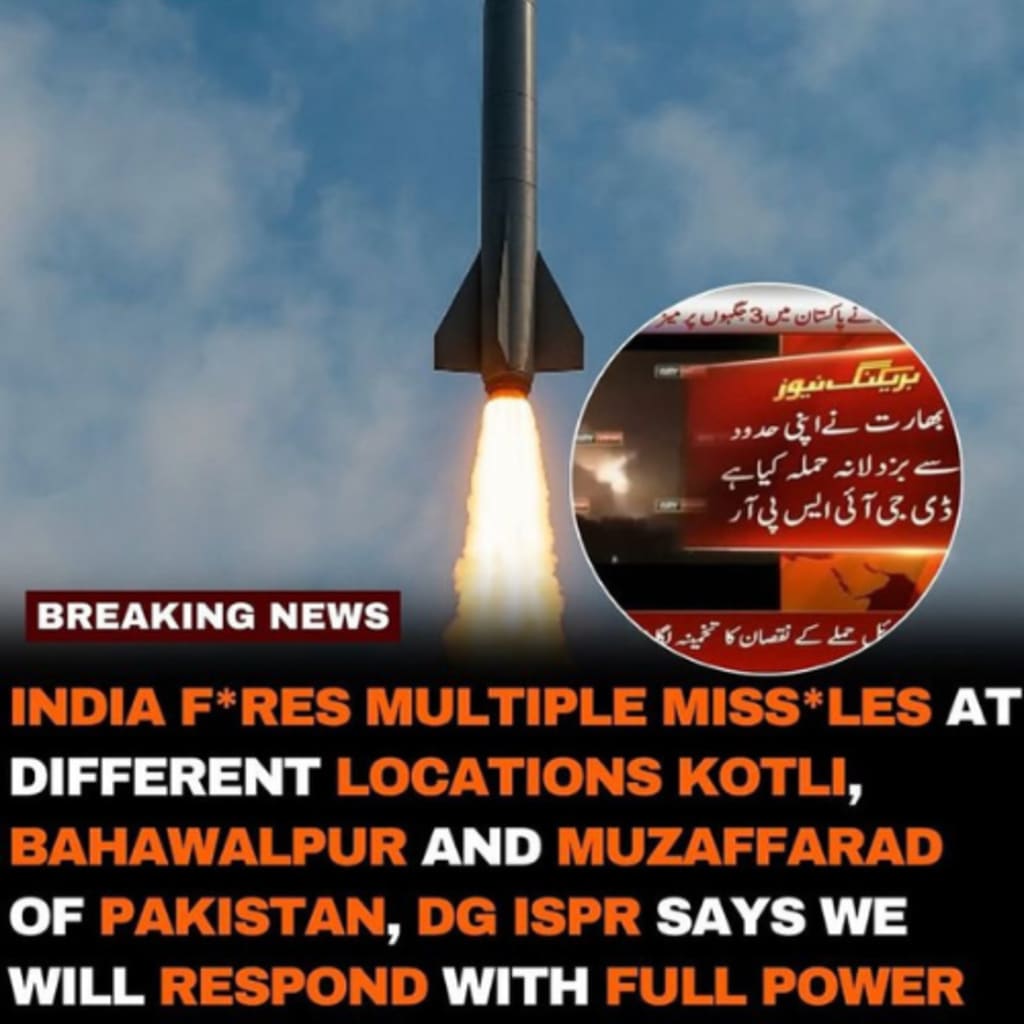
Tensions between nuclear-armed neighbors India and Pakistan surged dramatically in the early hours of May 6, 2025, as India reportedly launched missile attacks on three locations inside Pakistani territory. According to Pakistan’s military media wing, the Inter-Services Public Relations (ISPR), the strikes hit Muzaffarabad, Kotli, and Ahmedpur East in the Bahawalpur District.
This military action, the most serious in years, has drawn widespread international concern and triggered emergency responses on both sides of the border. The air of uncertainty and fear hangs heavy as citizens, analysts, and governments await what comes next.
Pakistan Confirms Missile Strikes
Major General Ahmed Sharif Chaudhry, Director General of ISPR, confirmed that India fired missiles into Pakistani territory in the early hours of Monday. According to his statement, three missiles struck civilian areas in Muzaffarabad, Kotli and Ahmedpur East, the latter located in Punjab’s Bahawalpur district.
Ahmedpur East was particularly affected, with one missile reportedly hitting Masjid Sobhanullah. Local residents described scenes of panic, broken glass, and dust clouds after the explosion. While ISPR noted that there were no significant casualties, it condemned the attacks as unprovoked aggression.
India Yet to Acknowledge the Strikes
As of now, the Indian government has not officially responded to the allegations. However, Indian media and intelligence insiders suggest the attacks were a "precision deterrent" against what New Delhi claims were terror infrastructure sites operating within Pakistan.
This mirrors the justification behind the 2019 Balakot airstrikes, in which India targeted a Jaish-e-Mohammed camp following the Pulwama terror attack. Indian defense analysts argue that such actions are preventive measures against cross-border terrorism rather than a declaration of war.
Why Bahawalpur Is a Strategic Flashpoint
The inclusion of Bahawalpur in the list of strike zones is significant. Historically, the city has been associated with extremist elements due to alleged activities of banned outfits in the region. Indian officials have previously accused certain groups based in southern Punjab of aiding militancy in Kashmir.
Targeting Ahmedpur East—a town far from the Line of Control—indicates a shift in India’s military strategy, focusing on depth rather than just border infrastructure. This development raises serious concerns about the scope of future escalations.
Pakistan’s Response and Military Preparedness
Pakistan has heightened its state of alert and vowed to respond at a time and place of its choosing. In a televised address, the Pakistani Prime Minister declared that while Pakistan seeks peace, it will not tolerate violations of its sovereignty.
Troop movements have been observed along the Line of Control, and the Pakistan Air Force has been placed on high alert. Emergency drills have also been initiated in major cities including Lahore, Karachi, and Islamabad to prepare civilians for any potential escalation.
Civilian Fear and Fallout
Residents in the affected areas described sleepless nights and widespread panic. In Bahawalpur, families evacuated mosques and public squares fearing additional strikes. Authorities have since deployed medical units and rescue teams, while schools in the vicinity have been temporarily closed.
People living near sensitive installations across Pakistan have been advised to stay indoors and keep emergency kits ready. This atmosphere of fear is reminiscent of earlier flashpoints, particularly the 2001–2002 standoff and the 2019 Pulwama-Balakot episode.
Kashmir at the Center of the Conflict
Once again, Kashmir lies at the heart of the India-Pakistan conflict. The strikes came two weeks after an attack in Indian-administered Kashmir killed 26 civilians. India alleges the attackers had ties to Pakistan-based groups—a charge Islamabad denies.
India has long accused Pakistan of harboring terror groups like Jaish-e-Mohammed and Lashkar-e-Taiba. Pakistan insists it has taken significant steps to curb militancy and accuses India of human rights abuses in Jammu and Kashmir.
Escalation Risks Between Nuclear Neighbors
Both India and Pakistan possess nuclear weapons, and each has a substantial military arsenal. This makes any armed conflict—no matter how limited—a global concern. Even a small-scale conventional exchange could spiral into a broader crisis.
Past confrontations have shown that while both nations have practiced restraint in the face of extreme provocations, miscalculations or false alarms could trigger unintended consequences. The world’s attention is now focused on diplomatic channels to prevent further escalation.
Misinformation and Cyber Warfare
Alongside the physical conflict, a digital battle is unfolding. Hashtags like #BahawalpurAttack and #IndiaStrikes trended across platforms, with many fake videos and unverified claims circulating online. State and independent fact-checkers are urging citizens to rely on verified sources.
Cybersecurity analysts report that pro-government troll armies from both sides are flooding social media with propaganda, complicating efforts to maintain accurate public awareness. The online misinformation war could fuel nationalist sentiment and pressure governments into hasty decisions.
What Happens Next?
It remains to be seen how Pakistan will choose to respond. While it has pledged a “measured” reply, the strategic implications of the attacks—especially the targeting of Bahawalpur—make a return to the status quo unlikely in the near term.
Backchannel diplomacy is now essential. Peace brokers including the UAE, China, and the U.S. are believed to be quietly engaging both New Delhi and Islamabad to de-escalate tensions. Whether these efforts bear fruit will depend on the restraint shown by both militaries.
Final Thoughts: A Dangerous Threshold
The May 6 missile strikes mark a critical moment in the volatile India-Pakistan relationship. The inclusion of Bahawalpur in the strikes expands the geographical scope of conflict and signals a dangerous new chapter. As the international community watches closely, the focus must remain on restraint, communication, and peacebuilding.
For the millions living in the shadow of this conflict, the stakes have never been higher.
About the Creator
Matt Guides
I'm Just A Random Guy That Creates Content!
Keep reading
More stories from Matt Guides and writers in The Swamp and other communities.
Telegram Leak Exposes RAW's Role in Pahalgam False Flag
In recent developments, a Telegram-leaked document has shed light on an alleged false flag operation tied to India’s Research and Analysis Wing (RAW) in the Pahalgam region of Jammu and Kashmir. The revelations, combined with conflicting narratives, have sparked heated debates about the truth behind the Pahalgam incident and its broader implications.
By Matt Guides9 months ago in The Swamp
Ukraine War Briefing: Oreshnik Missile Sparks Anger at UN Security Council
The ongoing conflict in Ukraine has once again drawn the world’s attention after the recent deployment of the Oreshnik missile became a focal point of debate at the United Nations Security Council (UNSC). The missile, reportedly used in the latest skirmishes in eastern Ukraine, has intensified global concerns about the escalating conflict and the potential humanitarian consequences. Diplomats, analysts, and world leaders are closely monitoring the situation as discussions at the UNSC reveal deep divisions among member states over accountability, sanctions, and peace efforts. What Is the Oreshnik Missile? The Oreshnik missile is a newly highlighted weapon in the Ukraine war, drawing scrutiny for its advanced capabilities. Analysts describe it as a medium-range guided missile, designed for precision strikes against strategic military targets. Its use in the conflict has raised questions about proportionality, civilian safety, and adherence to international law. While military officials claim the missile provides tactical advantages, critics argue that its deployment near populated areas risks civilian lives and could violate humanitarian norms. The UN Security Council Reacts The UNSC convened an emergency session following reports of the missile strikes. Member states expressed sharply divided opinions on how to respond. Countries condemning the missile’s use stressed that such actions escalate the war and endanger civilians. They called for urgent investigations and reiterated demands for Russia to adhere to international humanitarian law. Conversely, some nations defended the deployment, framing it as a necessary act of national defense. This division highlights broader geopolitical tensions, reflecting competing interests and alliances that influence the Security Council’s ability to take unified action. Global Outrage and Public Response The news of the Oreshnik missile’s deployment has ignited widespread outrage beyond diplomatic circles. International media outlets and human rights organizations have amplified concerns about civilian casualties, particularly in areas with high population density. Social media has also become a platform for activists, journalists, and everyday citizens to voice their anger and call for immediate intervention. Protests and awareness campaigns in Europe, North America, and parts of Asia emphasize the humanitarian toll of the conflict. These global reactions put additional pressure on world leaders to respond with decisive measures, including sanctions, diplomatic interventions, and peacekeeping efforts. Strategic Implications for Ukraine Military analysts suggest that the Oreshnik missile represents a strategic escalation, signaling a shift in the tactics used in the ongoing war. Its precision targeting may give the deploying forces significant operational advantage, but it also risks triggering stronger international responses. Ukrainian officials have condemned the missile attacks, citing civilian harm and destruction of critical infrastructure. In practical terms, the missile’s use may influence the balance of power in contested regions, particularly in eastern Ukraine where fighting has been intense. Analysts warn that the weapon could intensify the conflict, complicating prospects for negotiations and prolonging human suffering. Diplomatic Challenges at the UNSC The Security Council faces significant challenges in addressing the Oreshnik missile controversy. The council’s permanent members, including the United States, Russia, China, the United Kingdom, and France, hold veto powers that make unanimous resolutions difficult. In this case, political alliances and opposing narratives have prevented a clear consensus on punitive measures or interventions. Experts argue that the deadlock at the UNSC underscores broader limitations in the international system when addressing conflicts involving advanced weaponry and state actors with competing agendas. Without coordinated action, the risk of escalation in Ukraine remains high. Humanitarian Concerns Humanitarian organizations have highlighted the immediate consequences of missile strikes, including displacement, injuries, and infrastructure destruction. Hospitals, schools, and residential areas in eastern Ukraine have reportedly suffered damage, exacerbating the ongoing humanitarian crisis. International agencies emphasize that protecting civilians must remain a priority, urging both sides to respect international law. They also call for increased funding and access for relief efforts, warning that continued military escalation could worsen the already dire situation for millions of Ukrainians. The Path Forward While the Oreshnik missile has intensified global attention on Ukraine, experts stress that long-term solutions require diplomacy and accountability. Negotiations at international forums, including the UN, must balance security concerns with humanitarian imperatives. Observers note that transparency in military actions, independent investigations, and adherence to international treaties are essential to prevent further escalation. Meanwhile, the global community faces the challenge of supporting Ukraine while avoiding policies that could exacerbate the conflict. Conclusion: A Critical Moment in Global Diplomacy The deployment of the Oreshnik missile and the ensuing debates at the UN Security Council mark a critical moment in the Ukraine conflict. It underscores the intersection of modern warfare, geopolitics, and humanitarian responsibility. As the world watches, the international community faces urgent questions: How can escalation be prevented? How can civilian lives be protected? And what role should global institutions play in mediating a conflict that continues to threaten regional and international stability? For Ukraine, the missile represents both a tactical and symbolic escalation, while for the UN and its member states, it highlights the challenges of enforcing international norms in a rapidly changing conflict landscape. The coming weeks may determine not only the trajectory of the war but also the credibility of global governancein upholding peace and security.
By Aarif Lashari6 days ago in The Swamp


Comments
There are no comments for this story
Be the first to respond and start the conversation.