
India’s Space Agency Launches Its Heaviest Satellite, Marking a New Era of Technological Ambition
How ISRO’s Record-Breaking Mission Strengthens India’s Position in the Global Space Race

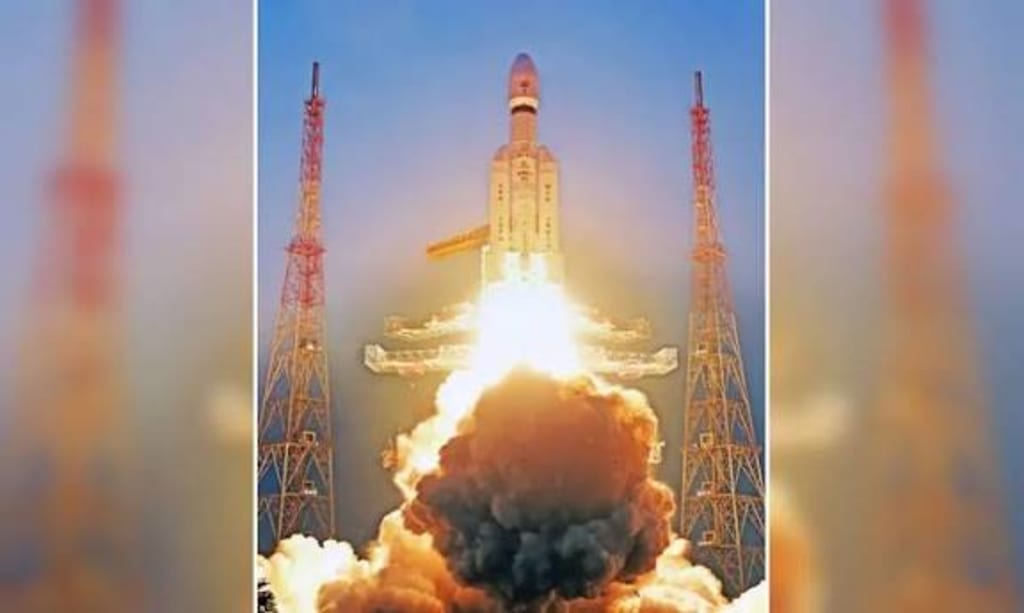
India has taken a significant leap forward in its space journey with the successful launch of its heaviest satellite to date, reinforcing the country’s growing stature as a major spacefaring nation. The mission, carried out by the Indian Space Research Organisation (ISRO), is being hailed as a milestone that combines technological precision, strategic vision, and national pride.
The launch not only showcases India’s advanced engineering capabilities but also signals its readiness to handle complex, high-mass missions that were once dominated by a handful of global space powers.
A Landmark Mission for ISRO
The satellite, weighing several tonnes, was placed into orbit using one of ISRO’s most powerful launch vehicles. The mission demanded exceptional coordination, advanced propulsion systems, and meticulous planning, as heavier satellites require far greater thrust and precision to achieve stable orbit.
ISRO scientists confirmed that the satellite was deployed successfully and all onboard systems were functioning as expected shortly after launch. Cheers erupted at mission control as years of research and preparation culminated in a flawless execution.
Why This Satellite Matters
This launch is not just about size—it is about capability. The heaviest satellite ever launched by India carries advanced payloads designed for high-speed communication, enhanced data transfer, and improved coverage across vast geographical areas.
Such satellites play a crucial role in:
Telecommunications and broadband connectivity
Weather forecasting and climate monitoring
Disaster management and emergency response
Defense and strategic communications
With this satellite, India strengthens its ability to deliver reliable services to millions of people, including those in remote and underserved regions.
A Boost for India’s Space Ambitions
Over the past decade, India has steadily expanded its space program—from low-cost satellite launches to interplanetary missions. This heavy satellite launch signals a shift toward high-capacity, high-impact missions, placing ISRO in direct competition with leading global space agencies.
Experts note that handling heavier satellites opens doors to future projects, including:
Large space stations
Advanced deep-space missions
Commercial satellite launches for international clients
India’s ability to launch such payloads domestically also reduces dependence on foreign launch providers, enhancing strategic autonomy.
Engineering Challenges Overcome
Launching a heavy satellite is no easy task. Engineers had to address challenges such as increased fuel requirements, structural stress on the launch vehicle, and precise orbital insertion.
ISRO upgraded key components of its launch system, including propulsion stages, navigation systems, and real-time monitoring tools. Extensive ground testing ensured the rocket could withstand the enormous forces involved during liftoff and ascent.
The success of the mission reflects ISRO’s emphasis on incremental innovation—refining existing technology while pushing boundaries step by step.
Impact on India’s Commercial Space Sector
The launch also benefits India’s rapidly growing private space industry. With proven heavy-lift capability, India becomes more attractive as a launch destination for global satellite operators seeking cost-effective and reliable services.
In recent years, ISRO has increasingly collaborated with private companies, allowing startups to participate in manufacturing, testing, and mission support. This ecosystem approach is expected to generate jobs, attract investment, and position India as a key player in the global space economy.
National Pride and Global Recognition
For many Indians, the launch represents more than a technical achievement—it is a moment of collective pride. Social media platforms were flooded with congratulatory messages, while political leaders praised ISRO scientists for their dedication and perseverance.
International observers have also taken note, recognizing the mission as proof of India’s maturity in space technology. Analysts say such achievements enhance India’s diplomatic influence and soft power, particularly among developing nations seeking affordable space solutions.
What Comes Next?
ISRO has ambitious plans ahead, including human spaceflight missions, advanced lunar exploration, and next-generation launch vehicles. The successful deployment of its heaviest satellite provides valuable experience that will feed into these future endeavors.
Scientists emphasize that this mission is not an endpoint but a stepping stone toward even more complex projects that will shape India’s space trajectory for decades to come.
A Giant Leap Forward
With the launch of its heaviest satellite, India has once again demonstrated that innovation, discipline, and vision can overcome limitations of scale and budget. The mission stands as a testament to ISRO’s philosophy of doing more with less—while aiming higher every time.
As the satellite begins its operational life in orbit, it carries not just technology, but the aspirations of a nation reaching confidently for the stars.
About the Creator
Fiaz Ahmed Brohi
I am a passionate writer with a love for exploring and creating content on trending topics. Always curious, always sharing stories that engage and inspire.
Keep reading
More stories from Fiaz Ahmed Brohi and writers in The Swamp and other communities.
Venezuela Passes Law Enacting Harsh Penalties for Supporters of US Blockade
Venezuela’s political crisis took a dramatic new turn as the country’s legislature passed a controversial law imposing severe penalties on individuals accused of supporting the United States–led economic blockade. Framed by the government as a necessary act of national defense, the legislation has ignited intense debate at home and abroad, raising serious questions about freedom of expression, political dissent, and the future of democratic space in the oil-rich South American nation. A Law Born Out of Sanctions Pressure For years, Venezuela has been under sweeping US sanctions targeting its oil industry, financial institutions, and senior officials. The government blames these measures for deepening the country’s economic collapse, which has resulted in hyperinflation, shortages of basic goods, and mass migration. Officials argue that foreign sanctions amount to “economic warfare” designed to force political change. The newly passed law seeks to criminalize what authorities describe as collaboration with or support for these sanctions. According to the government, Venezuelans who lobby foreign powers, endorse economic restrictions, or provide information that could strengthen the blockade are undermining national sovereignty. Supporters of the legislation say it closes legal loopholes that previously allowed “internal allies of foreign aggression” to operate without consequence. What the Law предусматриes Under the new framework, those found guilty of backing the blockade could face long prison sentences, heavy fines, and bans from holding public office. The law also allows the state to seize assets from individuals and organizations accused of benefiting from sanctions or promoting them. In some cases, penalties may apply retroactively, a provision that has alarmed legal experts. The legislation grants broad authority to prosecutors and security agencies, using loosely defined terms such as “support,” “promotion,” or “facilitation.” Critics argue that this vagueness leaves the law open to abuse and selective enforcement, particularly against political opponents, activists, journalists, and civil society groups. Government’s Defense: Sovereignty and Survival President Nicolás Maduro’s administration has defended the law as an essential tool for protecting Venezuela’s independence. Officials insist that sanctions have crippled public services, reduced oil revenue, and worsened humanitarian conditions. From their perspective, anyone advocating for continued foreign pressure is complicit in the suffering of ordinary citizens. State media has portrayed the law as a patriotic measure, comparing it to wartime legislation used by other countries to punish collaboration with hostile powers. Government allies in the legislature argue that no sovereign nation would tolerate citizens working with external forces to destabilize the economy. Opposition and Rights Groups Push Back Venezuela’s opposition has condemned the law as a blatant attempt to silence dissent. Opposition leaders say the government is using sanctions as a pretext to criminalize criticism and dismantle remaining checks on power. They warn that peaceful advocacy, policy debate, and international diplomacy could now be treated as criminal acts. Human rights organizations have echoed these concerns. They argue that the law violates international standards on freedom of expression and political participation. By equating criticism of government policy with treason, critics say the state risks erasing the boundary between legitimate dissent and criminal behavior. Legal analysts have also raised red flags about due process. With expanded powers for investigators and limited judicial independence, there are fears that trials under the new law may lack transparency and fairness. International Reaction and Diplomatic Fallout The passage of the law is likely to strain Venezuela’s already tense relations with Western governments. US officials have previously stated that sanctions are aimed at pressuring the government, not punishing the population. Washington and its allies may view the legislation as further evidence of democratic backsliding. At the same time, countries critical of sanctions regimes have expressed sympathy for Venezuela’s position, arguing that unilateral economic measures often harm civilians more than political elites. This divide underscores the broader global debate over the legitimacy and effectiveness of sanctions as a foreign policy tool. What This Means for Venezuela’s Future In practical terms, the law could reshape Venezuela’s political landscape. Activists and opposition figures may become more cautious, limiting engagement with international actors. Civil society organizations could face increased scrutiny, while self-censorship may grow among journalists and academics. Economically, the legislation does little to address the root causes of Venezuela’s crisis, such as mismanagement, corruption, and declining oil infrastructure. Critics argue that punishing perceived supporters of sanctions will not generate investment or restore confidence. A Nation at a Crossroads Venezuela’s new law reflects a government under pressure, seeking control in an environment shaped by sanctions, political polarization, and economic hardship. Whether it strengthens national unity or deepens divisions remains to be seen. What is clear, however, is that the law marks a significant escalation in the state’s response to both foreign pressure and internal dissent—one that will have lasting consequences for Venezuelan society.
By Fiaz Ahmed Brohi26 days ago in The Swamp
Massive Trucking Company Files for Chapter 11 Bankruptcy
The American trucking industry—long considered the backbone of the nation’s economy—has been hit by another major shock. A massive trucking company has filed for Chapter 11 bankruptcy, sending ripples across supply chains, freight markets, and thousands of workers whose livelihoods depend on the road. While bankruptcy headlines have become more common in recent years, the collapse of a large trucking operator is never just another business failure. It reflects deeper structural problems in logistics, rising operational costs, and an industry struggling to adapt to rapid economic change. This latest filing raises urgent questions: what went wrong, who is affected, and what does it say about the future of freight in America? What Chapter 11 Bankruptcy Really Means Chapter 11 bankruptcy does not necessarily mean the company is shutting down—at least not immediately. Instead, it allows a business to restructure its debts while continuing operations, giving it time to renegotiate contracts, cut costs, and attempt a turnaround under court supervision. For a trucking company, this can include: Renegotiating leases on trucks and trailers Reducing debt tied to fuel, maintenance, or equipment financing Reworking labor contracts Closing unprofitable terminals or routes However, Chapter 11 is often a last resort, and not all companies that enter it successfully emerge. In recent years, several major trucking firms have failed to survive the process, ultimately liquidating assets and laying off workers. Why the Trucking Industry Is Under Severe Pressure The bankruptcy did not happen overnight. Instead, it is the result of multiple converging pressures that have strained trucking companies across the country. 1. Falling Freight Rates After the pandemic-era boom, freight demand slowed sharply. With too many trucks chasing fewer loads, rates collapsed, squeezing margins for carriers already operating on thin profits. 2. Rising Operating Costs Fuel prices, insurance premiums, equipment maintenance, and labor costs have all risen. Even when fuel prices stabilize, long-term contracts often lag behind cost increases, leaving carriers stuck with unprofitable routes. 3. High Interest Rates Many trucking companies rely on debt to finance fleets. As interest rates climbed, loan repayments became more expensive, especially for firms that expanded aggressively during the boom years. 4. Driver Shortages and Turnover Driver retention remains a major challenge. Recruiting and training new drivers is costly, and high turnover disrupts operations and efficiency. Together, these factors created a perfect storm—one that even large, well-known carriers have struggled to survive. The Human Cost Behind the Bankruptcy While financial figures dominate headlines, the human impact is just as significant. Thousands of drivers, mechanics, dispatchers, and administrative staff now face uncertainty. Even under Chapter 11, layoffs, reduced hours, and terminal closures are common. Drivers may worry about unpaid wages, benefits, or lease agreements if they are owner-operators tied to the company. For many workers, trucking is more than a job—it’s a way of life. Long-haul drivers spend weeks away from home, keeping store shelves stocked and factories running. When a major carrier falters, the ripple effect spreads to families, small towns, and local economies that depend on trucking jobs. Owner-operators can be hit especially hard, as they may still owe money on trucks leased through the bankrupt company while suddenly losing access to freight. Supply Chains Feel the Impact A large trucking company does not operate in isolation. Its failure can disrupt: Retail supply chains Manufacturing deliveries Agricultural transport E-commerce fulfillment When a major carrier files for bankruptcy, shippers must quickly find alternative transport, often at higher costs or with delays. Smaller carriers may pick up some of the slack, but capacity gaps can cause short-term disruptions—especially during peak seasons. In an economy already sensitive to inflation and delays, trucking instability adds another layer of uncertainty. A Pattern, Not an Isolated Case This bankruptcy is not a one-off event. Over the past two years, dozens of trucking companies—large and small—have filed for bankruptcy or shut down entirely. Many expanded fleets during the pandemic surge in freight demand, only to be left with excess capacity once the market cooled. Industry analysts note that the sector is undergoing a painful correction. Weaker companies are exiting the market, while stronger players attempt to consolidate, acquire assets cheaply, or renegotiate contracts to survive. However, even major carriers are not immune. Scale alone is no longer a guarantee of stability when margins are razor-thin and costs remain volatile. What Happens Next for the Company? Under Chapter 11, the company will likely: Continue operating while restructuring Seek new financing or debtor-in-possession funding Cut costs by downsizing routes or assets Attempt to regain profitability In some cases, companies emerge leaner and more focused. In others, bankruptcy becomes a bridge to eventual liquidation if restructuring fails. Much will depend on market conditions, freight demand, creditor negotiations, and whether management can restore confidence among customers and employees. What This Means for the Future of Trucking The bankruptcy highlights a broader truth: the trucking industry is changing. Automation, route optimization software, alternative fuels, and stricter environmental regulations are reshaping how freight moves. At the same time, economic volatility has made long-term planning more difficult than ever. Survival increasingly depends on: Efficient fleet management Flexible pricing models Strong cash reserves Adaptability to market swings For policymakers, the wave of trucking bankruptcies raises concerns about labor stability, infrastructure investment, and supply chain resilience. For workers, it underscores the need for protections and transparency in an industry that remains essential—but fragile. A Warning Sign for the Economy Trucking is often seen as a leading indicator of economic health. When trucks stop rolling, it usually signals broader slowdowns in manufacturing, retail, and consumer demand. The Chapter 11 filing of a massive trucking company is therefore more than a corporate setback—it’s a warning sign. It suggests that parts of the economy remain under strain, even as headlines elsewhere talk of recovery. As restructuring unfolds, all eyes will be on whether this company can navigate its way back to stability—or whether it becomes another name added to the growing list of trucking industry casualties. Either way, the road ahead for American trucking remains uncertain, bumpy, and increasingly unforgiving.
By Muhammad Hassanabout 7 hours ago in The Swamp




Comments
There are no comments for this story
Be the first to respond and start the conversation.