
Venezuela Passes Law Enacting Harsh Penalties for Supporters of US Blockade
New legislation sparks fears of political repression as Caracas tightens its grip amid ongoing US sanctions

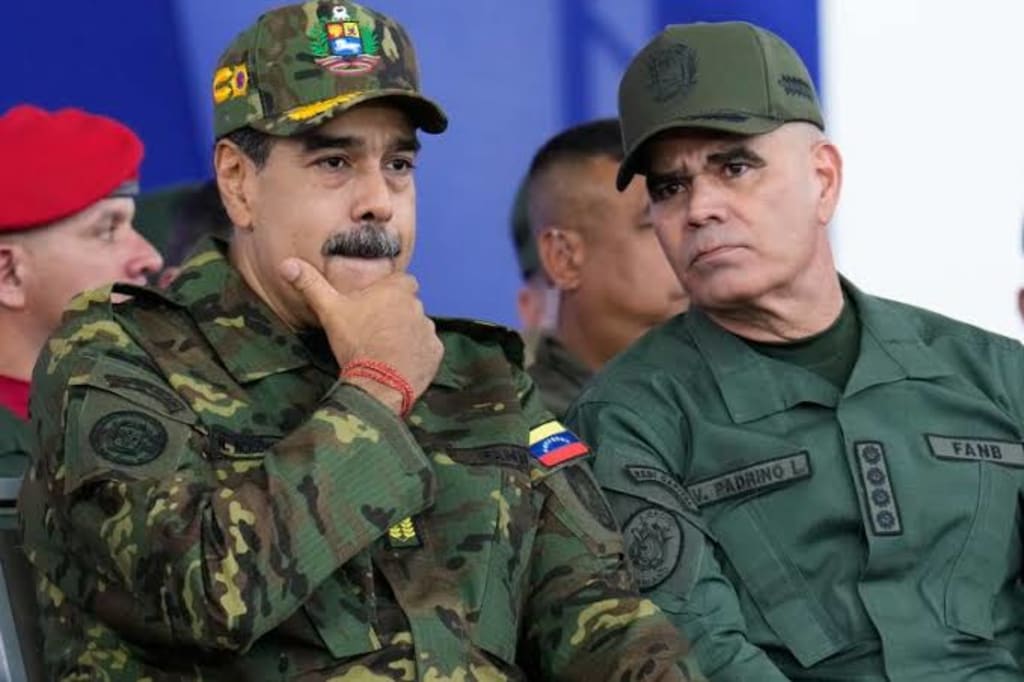
Venezuela’s political crisis took a dramatic new turn as the country’s legislature passed a controversial law imposing severe penalties on individuals accused of supporting the United States–led economic blockade. Framed by the government as a necessary act of national defense, the legislation has ignited intense debate at home and abroad, raising serious questions about freedom of expression, political dissent, and the future of democratic space in the oil-rich South American nation.
A Law Born Out of Sanctions Pressure
For years, Venezuela has been under sweeping US sanctions targeting its oil industry, financial institutions, and senior officials. The government blames these measures for deepening the country’s economic collapse, which has resulted in hyperinflation, shortages of basic goods, and mass migration. Officials argue that foreign sanctions amount to “economic warfare” designed to force political change.
The newly passed law seeks to criminalize what authorities describe as collaboration with or support for these sanctions. According to the government, Venezuelans who lobby foreign powers, endorse economic restrictions, or provide information that could strengthen the blockade are undermining national sovereignty. Supporters of the legislation say it closes legal loopholes that previously allowed “internal allies of foreign aggression” to operate without consequence.
What the Law предусматриes
Under the new framework, those found guilty of backing the blockade could face long prison sentences, heavy fines, and bans from holding public office. The law also allows the state to seize assets from individuals and organizations accused of benefiting from sanctions or promoting them. In some cases, penalties may apply retroactively, a provision that has alarmed legal experts.
The legislation grants broad authority to prosecutors and security agencies, using loosely defined terms such as “support,” “promotion,” or “facilitation.” Critics argue that this vagueness leaves the law open to abuse and selective enforcement, particularly against political opponents, activists, journalists, and civil society groups.
Government’s Defense: Sovereignty and Survival
President Nicolás Maduro’s administration has defended the law as an essential tool for protecting Venezuela’s independence. Officials insist that sanctions have crippled public services, reduced oil revenue, and worsened humanitarian conditions. From their perspective, anyone advocating for continued foreign pressure is complicit in the suffering of ordinary citizens.
State media has portrayed the law as a patriotic measure, comparing it to wartime legislation used by other countries to punish collaboration with hostile powers. Government allies in the legislature argue that no sovereign nation would tolerate citizens working with external forces to destabilize the economy.
Opposition and Rights Groups Push Back
Venezuela’s opposition has condemned the law as a blatant attempt to silence dissent. Opposition leaders say the government is using sanctions as a pretext to criminalize criticism and dismantle remaining checks on power. They warn that peaceful advocacy, policy debate, and international diplomacy could now be treated as criminal acts.
Human rights organizations have echoed these concerns. They argue that the law violates international standards on freedom of expression and political participation. By equating criticism of government policy with treason, critics say the state risks erasing the boundary between legitimate dissent and criminal behavior.
Legal analysts have also raised red flags about due process. With expanded powers for investigators and limited judicial independence, there are fears that trials under the new law may lack transparency and fairness.
International Reaction and Diplomatic Fallout
The passage of the law is likely to strain Venezuela’s already tense relations with Western governments. US officials have previously stated that sanctions are aimed at pressuring the government, not punishing the population. Washington and its allies may view the legislation as further evidence of democratic backsliding.
At the same time, countries critical of sanctions regimes have expressed sympathy for Venezuela’s position, arguing that unilateral economic measures often harm civilians more than political elites. This divide underscores the broader global debate over the legitimacy and effectiveness of sanctions as a foreign policy tool.
What This Means for Venezuela’s Future
In practical terms, the law could reshape Venezuela’s political landscape. Activists and opposition figures may become more cautious, limiting engagement with international actors. Civil society organizations could face increased scrutiny, while self-censorship may grow among journalists and academics.
Economically, the legislation does little to address the root causes of Venezuela’s crisis, such as mismanagement, corruption, and declining oil infrastructure. Critics argue that punishing perceived supporters of sanctions will not generate investment or restore confidence.
A Nation at a Crossroads
Venezuela’s new law reflects a government under pressure, seeking control in an environment shaped by sanctions, political polarization, and economic hardship. Whether it strengthens national unity or deepens divisions remains to be seen. What is clear, however, is that the law marks a significant escalation in the state’s response to both foreign pressure and internal dissent—one that will have lasting consequences for Venezuelan society.
About the Creator
Fiaz Ahmed Brohi
I am a passionate writer with a love for exploring and creating content on trending topics. Always curious, always sharing stories that engage and inspire.
Keep reading
More stories from Fiaz Ahmed Brohi and writers in The Swamp and other communities.
Libya’s top military chief killed in plane crash in Turkiye
A devastating aviation accident has rocked Libya and its military leadership. Libya’s top military chief, Lieutenant General Mohammed Ali Ahmed al-Haddad, was killed in a plane crash in Turkey on Tuesday, alongside several senior military officials and crew members. The tragic incident occurred as the delegation was returning from an official visit to Ankara, where they had held high-level defense talks with Turkish counterparts. � The National +1 A Tragic Loss for Libya Libyan Prime Minister Abdul-Hamid Dbeibah expressed deep sorrow over the incident, calling the loss “a great tragedy for the nation.” The prime minister announced that official mourning would be observed for three days across the country to honor the fallen leaders. � The National Al-Haddad was widely regarded as one of Libya’s most respected military figures. He served as the Chief of Staff of the Libyan Army and played a crucial role in efforts to unify the country’s armed forces, an ongoing challenge ever since Libya’s institutions were fractured by years of civil conflict. � Al Jazeera What Happened? The plane carrying Gen. al-Haddad and his delegation was a Dassault Falcon 50 business jet that departed from Ankara’s Esenboga Airport en route to Tripoli, Libya. According to Turkish authorities, radio contact was lost roughly 40–42 minutes after takeoff. The aircraft issued an emergency landing request, reportedly due to a technical malfunction, before disappearing from radar. � Türkiye Today Turkish rescue teams later located the wreckage near the village of Kesikkavak in the Haymana district southwest of Ankara. Officials confirmed that all individuals on board perished in the crash, including the chief of staff, several senior Libyan military officers, and three crew members. � euronews Who Was on Board? Apart from General al-Haddad, the crash claimed the lives of several key military personnel: General Al-Fitouri Ghraibil, head of Libya’s ground forces Brigadier General Mahmoud Al-Qatawi, director of the Military Manufacturing Authority Mohammed Al-Asawi Diab, adviser to the chief of staff Mohammed Omar Ahmed Mahjoub, a military photographer Plus three Turkish flight crew members � The National The Visit and Its Purpose The Libyan delegation had been in Turkey for defense consultations meant to strengthen military cooperation between Ankara and Libya’s internationally recognised Government of National Unity (GNU). Reports indicate that al-Haddad met with senior Turkish defense officials, including Defense Minister Yasar Guler and other commanders, in discussions aimed at deepening military ties. � Türkiye Today Turkey has been a major partner of Libya’s western government, providing military support and training since 2019. This partnership was pivotal in stabilising the GNU’s control over parts of Libya and facilitating efforts to unify the divided nation. The talks were also seen as a continuation of Ankara’s role in Libya’s security architecture. � Turkish Minute The Broader Impact on Libya General al-Haddad’s death represents a significant setback for Libya’s efforts to create a cohesive national military structure. Since the fall of long-time leader Muammar Gaddafi in 2011, Libya has been marked by fragmentation, with competing administrations and military factions controlling different parts of the country. � The National Al-Haddad had been a central figure in bridging divides within Libya’s armed forces. His leadership was seen as a stabilising influence in negotiations and coordination between rival groups. In the wake of the crash, both western and eastern factions have expressed condolences, showing the unexpectedly wide respect he commanded across divisions. � The National International Reactions International response to the tragedy has been supportive and somber. Turkey has opened a formal investigation into the cause of the crash, with prosecutors and authorities examining flight data recorders and assessing whether the malfunction was purely technical. � Türkiye Today In Libya, leaders from various political and military factions, including eastern commander Khalifa Haftar, extended condolences and emphasised unity in honouring the fallen officials. The tragedy has prompted renewed calls for national solidarity and a recommitment to stabilisation efforts. � The National What Comes Next? The investigation into the crash is ongoing, and it may take weeks or months to determine the exact cause. Meanwhile, Libya faces a period of mourning and transition within its military leadership. A temporary replacement for al-Haddad will lead the armed forces while the government evaluates long-term leadership options. The loss also adds a layer of complexity to Libya’s political landscape. As the country continues its journey toward peace, reconciliation, and institutional unity, the death of such a unifying figure could influence future negotiations and power balances. Conclusion The sudden death of Libya’s top military chief in a plane crash near Ankara, Turkey, is a national tragedy with far-reaching implications. It has not only left a leadership vacuum in Libya’s military but also underscored the fragility of a nation still striving for unity after years of conflict. As investigations unfold and Libya mourns, the legacy of General Mohammed Ali Ahmed al-Haddad — a leader respected across divides — will be remembered as central to the ongoing story of Libya’s effort to rebuild and unify. � en.wikipedia.org
By Fiaz Ahmed Brohi26 days ago in The Swamp
Japan Household Refrigerators and Freezers Market Size & Forecast 2025–2033
Japan Household Refrigerators and Freezers Market Overview Japan’s household refrigerators and freezers market is on a steady growth path as evolving lifestyles, technological sophistication, and sustainability priorities reshape consumer preferences. According to Renub Research, the Japan Household Refrigerators and Freezers Market is expected to grow from US$ 5.06 billion in 2024 to US$ 6.66 billion by 2033, registering a CAGR of 3.09% during the forecast period 2025–2033.
By Renub Research3 days ago in The Swamp


Comments
There are no comments for this story
Be the first to respond and start the conversation.