
India-Pakistan Tensions and the Truth Behind 'Operation Sindoor': Facts, Rumors, and Global Reactions
What We Know, What We Don't, and Why Responsible Media Matters in Times of Geopolitical Strain

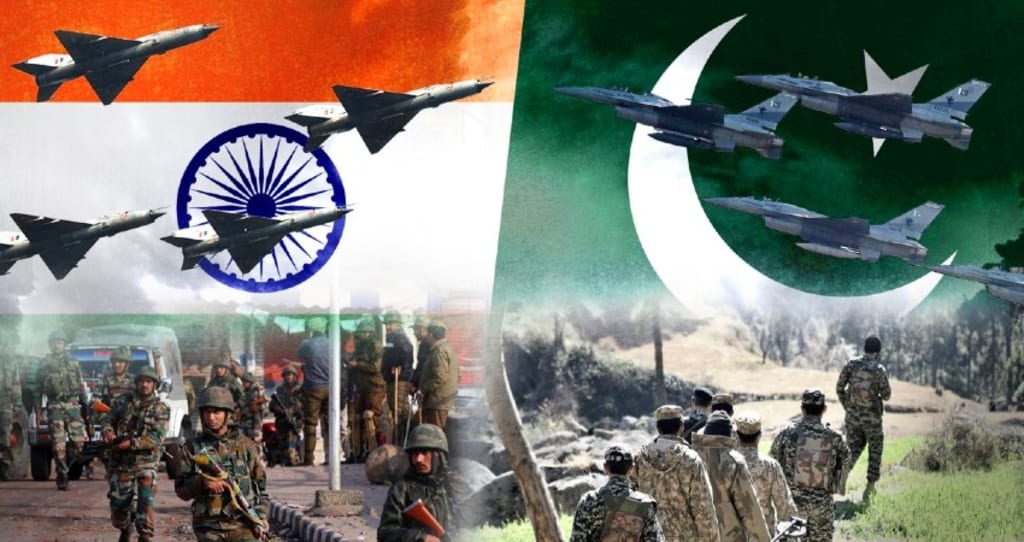
Introduction: A History of Tensions Rekindled
The relationship between India and Pakistan has always been delicate, shaped by decades of political conflict, military standoffs, and regional rivalries. In recent weeks, tensions have quietly escalated again, driven not only by real-world military movements but also by viral narratives online — most notably around a term that has suddenly surged across social media: “Operation Sindoor.”
While neither government has issued official confirmation of any such operation, the phrase has taken on a life of its own, triggering speculation, anxiety, and even celebration depending on which side of the border you stand on. But in a time when misinformation can travel faster than facts, what’s really happening — and what should we be careful about believing?
What Is ‘Operation Sindoor’? Fact vs Fiction
The term “Operation Sindoor” first surfaced in viral posts claiming that the Indian military had launched a covert or large-scale offensive action across the Line of Control (LoC) in response to alleged threats or incidents from Pakistan. The details in these posts are vague, conflicting, and largely unverified.
Some claim it's a retaliatory strike.
Others say it’s a planned military maneuver.
A few even describe it as a fictional narrative created for social media impact.
As of now, no official Indian defense source has confirmed an operation by this name. In fact, several defense journalists and analysts have stated that “Operation Sindoor” does not exist in any official capacity and appears to be a viral name fueled by patriotic sentiment and online speculation.
This highlights a key problem in the current digital era: viral rumors often overshadow verified facts, especially in high-stakes geopolitical contexts.
Border Situation: What’s Actually Happening?
Though there is no evidence of an operation named “Sindoor,” there have been legitimate concerns regarding increased military activity along the LoC and reports of cross-border ceasefire violations.
Indian security forces have reportedly increased surveillance and patrolling in certain sensitive zones.
Pakistani media, on the other hand, has accused India of “aggressive posturing,” though no large-scale mobilization has been confirmed.
Recent intelligence-based operations in India’s Jammu & Kashmir region have also added to the atmosphere of tension, though these are largely counter-terror operations within Indian territory, not cross-border strikes.
Thus, while there’s certainly heightened activity, there is no confirmed large-scale military engagement between the two nations — at least for now.
Public and Media Reaction in India and Pakistan
In India, the term "Operation Sindoor" has been widely shared by social media users, some celebrating it as a symbol of strength or retribution. Patriotism-driven influencers and some news outlets have helped amplify the buzz, with hashtags like #OperationSindoor and #Revenge trending intermittently.
In contrast, Pakistani social media has responded with a mix of defiance, denial, and mockery, with some labeling the operation a “Bollywood-style fantasy.” However, concern is growing among the public about whether this online chatter may provoke real-world consequences.
Mainstream media in both countries have remained relatively cautious, with most established news outlets avoiding coverage of “Operation Sindoor” as a legitimate story, instead focusing on actual ground developments like diplomatic statements and border updates.
Social Media vs Ground Reality: A Dangerous Gap
The rise of “Operation Sindoor” is a prime example of how social media can blur the lines between imagination and information. Once a phrase trends with enough frequency and emotional power, it begins to take root in public perception — regardless of whether it's true.
This is particularly risky in a region where:
Historical tensions run deep
National pride is emotionally charged
Media trust is uneven
When posts glorifying an unconfirmed operation go viral, they fuel expectations, pressure governments, and increase the risk of real escalation. Fake news can unintentionally force real responses — and that’s a dangerous game.
This is why experts continuously emphasize the need for responsible content sharing, especially during high-tension periods.
International Reaction and Diplomatic Watchfulness
So far, global powers like the United States, United Nations, and China have not issued any formal statements regarding current India-Pakistan tensions — a sign that no formal conflict has yet broken out.
However, quiet diplomatic watchfulness is likely ongoing. The UN Military Observer Group in India and Pakistan (UNMOGIP) continues to monitor the Line of Control, and foreign embassies in both countries are likely maintaining high alert.
Should any military operation become official or escalate into wider conflict, the international community would be expected to intervene diplomatically to prevent a deeper crisis.
A Call for Caution and Peace
Perhaps the biggest takeaway from the “Operation Sindoor” narrative is the urgent need for media literacy, especially in South Asia. With rising tensions, it’s easy for emotions to overpower judgment — and for false narratives to shape public discourse.
India and Pakistan, as two nuclear-capable neighbors with a complex history, cannot afford informational escalations. Leaders, journalists, influencers, and everyday citizens all have a role to play in maintaining peace — or at least preventing the spread of rumors that could spark unnecessary conflict.
For now, the best path forward is transparency, diplomacy, and public awareness. Peace may not always make headlines, but it's the quieter, harder, and ultimately more valuable choice.
Conclusion: Stay Informed, Not Inflamed
While the term “Operation Sindoor” has captured imagination and ignited debate, its roots appear more in emotion and speculation than in verified fact. There is no confirmed military operation by that name as of this writing — but the conditions that allow such stories to thrive are very real: distrust, historical wounds, and viral media.
As responsible readers and global citizens, it’s important to verify before you share, question what you read, and remember that national strength doesn’t only come from firepower — it also comes from wisdom, restraint, and truth.
India Pakistan Relations
Operation Sindoor
South Asia News
Military Tensions 2025
Social Media Misinformation
India Pakistan Conflict
Border News
Global Politics
Peace and Diplomacy
Breaking News India
Disclaimer:
This article is intended for informational purposes only. It is based on publicly available news reports, verified data, and observed online trends as of the time of writing. The mention of “Operation Sindoor” refers to a widely circulated but unverified term that has not been officially acknowledged by any government or military authority. Readers are advised to approach all social media claims with caution and prioritize credible sources.
Content Warning:
This piece discusses topics such as military tension, geopolitical conflict, and cross-border narratives that may be sensitive to some readers. The intent is not to provoke or offend but to promote factual awareness and peaceful discourse. Reader discretion is advised.
Thanks for reading!
About the Creator
Tanushree Das
Content writing creates engaging and informative text for article, blogs, websites, and more. It blends creativity and SEO to connect with audiences, build trust, boost visibility, and drive business success.
Keep reading
More stories from Tanushree Das and writers in The Swamp and other communities.
Trump's $5 million "Gold Card" Visa: A United States Immigration game-changer?
The Introduction President Donald Trump's contentious "Gold Card" visa proposal would allow rich foreign investors to pay a set fee of "$5 million" to receive "green card privileges and a path to U.S. citizenship." The intention behind this proposal is to "replace the EB-5 visa program," which has been utilized for years by investors to acquire permanent residence in the United States by contributing to the economy. Trump's proposal has set off heated controversy. Supporters contend that this initiative could stimulate the economy by bringing in high-net-worth individuals, while critics see it as favoring money over merit and potentially enabling foreign billionaires, including Russian oligarchs, to purchase their way into the U.S.
By Tanushree Dasabout a year ago in The Swamp
The Forsyth House Fire
Since 1851, Forsyth House has stood on the corner of Union Street and Gordon Street in the heart of Glasgow. Its iconic, or was... because on Sunday 8th of March, 2026, a fire broke out in a small, seemingly un-named shop in the building and tore all that history down. As I write, the rubble is still unsettled and the street is still blocked off. Central Station is quiet on the upper level, and around 30 small businesses have quite literally gone up in smoke.
By S. A. Crawford3 days ago in The Swamp
Sons Were Suspects in Nearly One in Five Cases of Women Killed by Men in UK in Past Year
New data from the UK’s Femicide Census shows that in the past year nearly one in five women killed by men in the United Kingdom were allegedly murdered by their sons, highlighting a disturbing trend in what researchers call a largely under‑recognised form of matricide. The findings were released on International Women’s Day and have prompted renewed calls from campaigners and lawmakers for a stronger focus on family‑based violence prevention and mental health support. The Femicide Census is the most comprehensive ongoing database in the UK tracking women killed by men; it records every case where a man has been charged with the homicide of a woman. In the most recent year covered, the group identified 108 women killed by male suspects, and among those cases, 19 involved sons as the principal suspects. This figure—nearly 18 per cent—represents the highest recorded level of matricide in the 16‑year history of the project. Campaigners and researchers say the figures underline how domestic violence can take many forms. While much public attention rightly focuses on intimate partner violence, the Femicide Census data suggests that mother–child homicide—though rarer—must also be part of the conversation about violence against women and girls in the UK. “These are women who have given life to their children, and to see them killed by their own sons is deeply tragic and often preventable,” said Clarrie O’Callaghan, co‑founder of the Census. Understanding the Scale and Context Across the UK, official homicide statistics show that women are disproportionately likely to be killed by male relatives or partners. According to government data, in recent years over two‑thirds of female homicide victims were killed in domestic settings, and most of these killings were committed by men known to the victim. Common relationships for suspects include partners, ex‑partners, and other family members such as sons, fathers, or brothers. Domestic homicide statistics from the Office for National Statistics (ONS) show that among female victims, significant proportions were killed by family members, which include parents and children, reflecting the broader domestic violence issue in households. � ons.gov.uk Although matricide represents a small fraction of all homicides of women, its rise within the Femicide Census data has prompted questions about underlying causes. Researchers point to a range of complex factors that can contribute to these tragic outcomes, including poor mental health support, substance misuse, economic instability, and the absence of adequate crisis intervention resources for families in distress. Drivers Behind the Trend Experts on family violence and crime say that cases of matricide—particularly where sons kill their mothers—often involve a mix of social and personal stressors. A 2021 analysis of similar cases found that mental illness was implicated in more than half of documented matricides, including conditions such as depression, psychosis, and untreated psychiatric disorders. Campaigners argue that many individuals who go on to commit violence against their mothers or other relatives are living with untreated or poorly supported mental health issues. “The intersection of domestic stress, untreated mental health needs, and isolation can create explosive circumstances,” says a psychologist working with survivors of family violence. Without early intervention and sufficient community resources, warning signs can be missed. Other contributing factors cited by researchers include housing instability, economic pressure, and substance dependency—all of which can exacerbate tensions in family relationships and increase the risk of violent confrontations. These socio‑economic stressors are often overlapping and cyclical, making it difficult for families to break free without support. Government Response and Campaigner Demands In response to growing concern about violence against women and girls, the UK government unveiled a new strategy last year that includes £1bn in funding for prevention and victim support programs. However, women’s organisations and advocacy groups say the strategy, while a step forward, does not go far enough to address the full scale of femicide and domestic murder, including cases perpetrated by sons. MP Jess Phillips, a long‑standing campaigner on domestic violence issues, used International Women’s Day to read aloud the names of all 108 women killed by men in the past year—a symbolic gesture designed to highlight the human cost of these crimes. Phillips has called for more targeted funding for mental health services, community support schemes, and early intervention programs aimed at families at risk of extreme conflict. Women’s rights groups also argue that the existing data on domestic violence, homicide, and family violence is too limited and must be expanded to better capture nuanced patterns such as matricide. “We cannot meaningfully address violence against women if our understanding of it only focuses on partners and ex‑partners,” says a spokesperson for a leading advocacy organisation. A Broader Debate on Prevention The debate over how best to prevent femicide and family violence extends beyond criminal justice responses. Researchers and social workers emphasise the importance of early social support, accessible mental health care, and community programmes that strengthen family resilience and provide safe spaces for those in conflict. Without such systems in place, the risk of tragic outcomes remain unacceptably high. As discussions unfold in parliament and among advocacy groups, the focus on cases where sons are suspects in murders of women has highlighted not only the tragic loss of life but also the complex web of social factors that can lead to family violence. For policymakers, community leaders, and families alike, the challenge remains how to translate data into effective action that prevents future deaths and supports those at risk.
By Fiaz Ahmed 4 days ago in The Swamp




Comments
There are no comments for this story
Be the first to respond and start the conversation.