
In Gaza, Trump’s Board of Peace Met With Deep Scepticism, Little Hope
War-weary residents question whether distant diplomacy can change realities on the ground
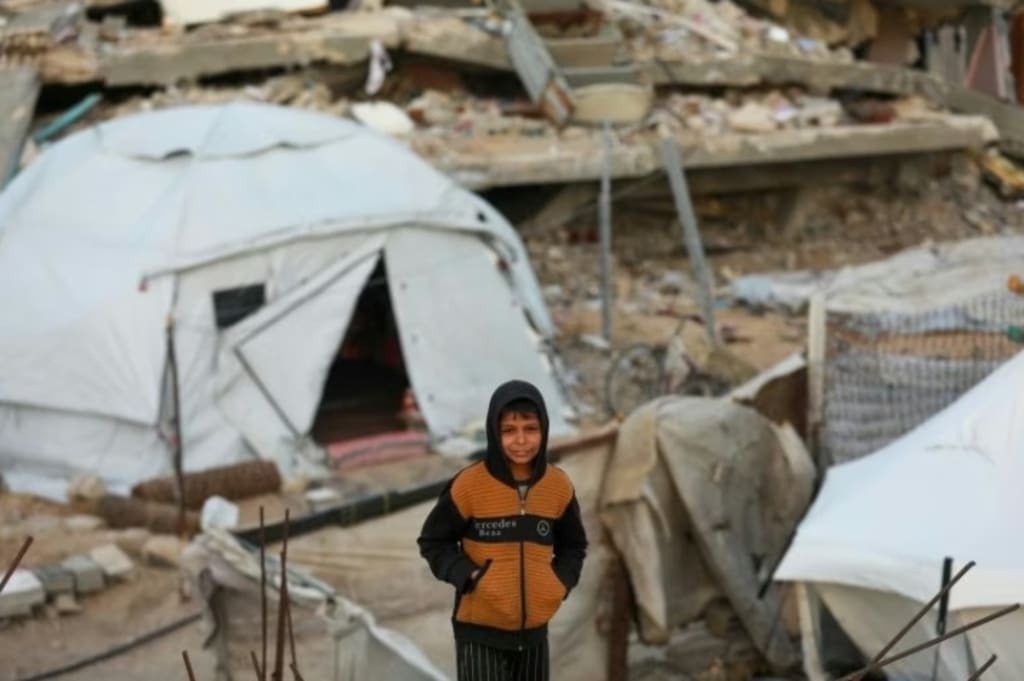
When news broke that a proposed “Board of Peace” associated with Donald Trump would focus on Gaza’s future, the reaction inside the besieged territory was far from celebratory. In crowded neighborhoods, among displaced families and exhausted aid workers, the announcement was met not with optimism but with deep scepticism — and, for many, very little hope.
Gaza, governed by Hamas and blockaded by Israel and Egypt, has endured years of conflict, economic collapse and humanitarian strain. Diplomatic initiatives have come and gone. Ceasefires have been declared and shattered. For residents living through repeated cycles of violence, new proposals from foreign capitals often feel distant and abstract.
A War-Weary Territory
Gaza’s humanitarian crisis predates any new diplomatic board. Decades of tension between Israel and Palestinian factions have left infrastructure fragile and economic opportunity scarce. Electricity shortages, water contamination and limited medical supplies are daily realities.
For many residents, survival takes precedence over political analysis. Families displaced by fighting live in temporary shelters. Parents worry about food and schooling. In such an environment, announcements from Washington can feel disconnected from immediate needs.
“We have heard many plans,” said one shopkeeper in Gaza City, echoing a sentiment repeated by others. “But our lives have not changed.”
What Is the “Board of Peace”?
Details surrounding the proposed initiative remain limited, but it has been framed as an advisory body aimed at shaping a new path for stability in Gaza. Supporters describe it as an effort to bypass entrenched political gridlock and introduce fresh thinking into a stalled peace process.
Critics, however, see it as symbolic rather than substantive. During his presidency, Trump championed a Middle East peace framework that was welcomed by Israel but rejected by Palestinian leadership. Many in Gaza remember that period as one in which Palestinian political aspirations were sidelined.
The skepticism today is rooted partly in that history. Residents question whether any initiative associated with Trump can serve as an impartial platform for addressing their grievances.
A History of Distrust
Trust is perhaps the scarcest resource in Gaza.
The broader Israeli-Palestinian conflict has been shaped by failed negotiations, broken agreements and competing narratives. International mediators have repeatedly attempted to bridge divides, yet durable peace remains elusive.
Within Gaza, many residents feel excluded from high-level diplomacy. Decisions about their future are often made without direct consultation. As a result, announcements of new boards, committees or frameworks can feel imposed rather than collaborative.
Political analysts note that legitimacy is crucial for any peace initiative. Without buy-in from local communities and leadership, proposals risk being dismissed before they begin.
Diverging Perspectives
Reactions to the Board of Peace are not uniform. Some Palestinians, particularly those exhausted by conflict, express cautious curiosity. Any initiative that promises reconstruction funding or a reduction in violence attracts attention.
Others remain deeply cynical. They argue that structural realities — including the blockade, internal Palestinian political divisions and regional power struggles — cannot be resolved by advisory panels.
In Gaza City, university students debated whether international involvement could pressure both Hamas and Israel toward compromise. “We want peace,” one student reportedly said, “but we want dignity too.”
That balance — security and dignity — has long defined the heart of the conflict.
Regional and International Dynamics
The broader geopolitical environment further complicates perceptions. Neighboring Egypt plays a central mediating role in ceasefire negotiations. Gulf states have normalized relations with Israel in recent years. The United States remains a key ally of Israel while also providing humanitarian assistance to Palestinians.
In this intricate web, a Trump-associated initiative carries political weight beyond its formal structure. For Israel’s government, such a board may signal continuity with previous diplomatic alignments. For Palestinian factions, it may symbolize imbalance.
Meanwhile, international organizations such as the United Nations continue to call for humanitarian access and long-term political solutions rooted in international law.
Daily Realities Overshadow Diplomacy
For Gaza’s residents, however, abstract geopolitics often pales beside immediate hardship.
Markets struggle to stock goods consistently. Reconstruction projects stall amid funding and material shortages. Youth unemployment remains among the highest in the world.
In such conditions, peace proposals are judged not by rhetoric but by tangible outcomes. Will electricity supply improve? Will crossings open more regularly? Will families feel safe enough to rebuild?
Absent concrete improvements, skepticism hardens.
Political Fragmentation
Another obstacle lies within Palestinian politics itself. The divide between Hamas in Gaza and the Palestinian Authority in the West Bank complicates representation. Any external initiative must navigate these internal dynamics carefully.
Without unified Palestinian leadership, critics argue, negotiations risk fragmentation. A Board of Peace that lacks coordination with key stakeholders may struggle to translate ideas into action.
Similarly, Israeli domestic politics influence responses. Security concerns dominate public discourse in Israel, especially after periods of heightened violence. Proposals perceived as insufficiently addressing security may face resistance.
The Weight of Experience
Perhaps the most significant factor shaping Gaza’s reaction is lived experience. Residents have endured multiple wars, ceasefires and diplomatic announcements. Hope, once abundant, has been tempered by repetition.
Psychologists working in the region describe “conflict fatigue” — a form of emotional exhaustion that diminishes optimism about political solutions. For many Gazans, survival strategies focus on the present, not on distant diplomatic forums.
This does not mean people reject peace. On the contrary, surveys often show strong desire for stability and normalcy. But belief in external saviors has eroded.
Can Skepticism Be Overcome?
For any initiative — whether led by Trump or another international actor — credibility will depend on inclusion and results.
Meaningful consultation with local communities, transparent goals and coordination with regional mediators could help rebuild trust. Concrete steps toward reconstruction, easing humanitarian restrictions and protecting civilians would speak louder than declarations.
Diplomacy in Gaza requires more than announcements. It requires sustained engagement, compromise and accountability from all sides.
Conclusion
In Gaza, the announcement of Trump’s Board of Peace has been met with a weary shrug rather than applause. Years of conflict have conditioned residents to measure initiatives by outcomes, not promises.
Scepticism does not necessarily signal rejection of peace. It reflects a community shaped by repeated disappointment and constrained by harsh realities. For many Gazans, hope is not absent — it is cautious, guarded and contingent on change they can see.
Whether this new diplomatic effort can transform skepticism into confidence remains uncertain. In a land where politics and survival intertwine daily, trust must be earned slowly — and peace, if it comes, will need to reach far beyond boardrooms and headlines
About the Creator
A Gathering of Evil Bosses
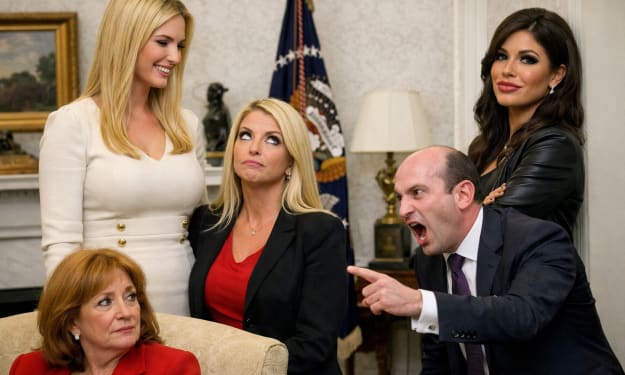
“I’m the queen of chin jutting while I smooth my hair, attacking, insulting, and deflecting to protect my appointer.” “Oh, please, Blondi, my hair is curled, highlighted, and longer than yours. I feature television commercials telling immigrants that we will give them a free plane ride home, and if they voluntarily turn themselves in, they will be allowed to legally apply for re-entry. It runs everywhere, and I look good in it! You can’t compete because of your blond hair. Mine is nicer, and my lips are prettier than yours.”
By Andrea Corwin 3 days ago in The Swamp
Rubio Says Cuba’s Only Path Forward Is to Open Its Economy
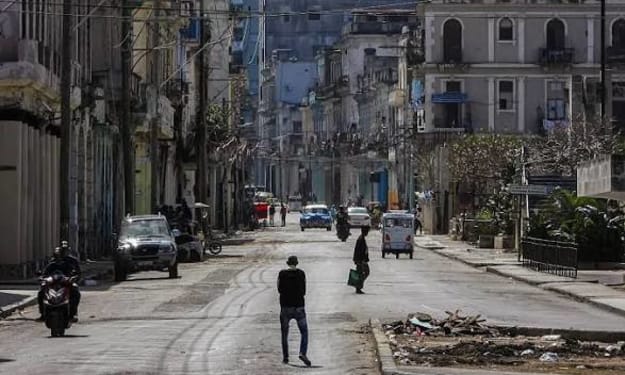
In a stark critique of the Cuban system, U.S. Secretary of State Marco Rubio said Cuba’s “only path forward” out of its deepening economic crisis is a fundamental opening of its tightly controlled economy — a shift he tied to greater freedom for the Cuban people and a possible easing of U.S. pressure. Rubio’s remarks, delivered in an interview on the sidelines of the Munich Security Conference, underscore a hardening Washington stance toward Havana even as the island faces severe shortages and political isolation. Rubio, a Cuban‑American whose family fled Cuba’s revolutionary government decades ago, described the island’s economic model as a historic failure. “The fundamental problem in Cuba is that it has no economy,” he told Bloomberg News, arguing that without substantial reforms, the regime’s insistence on controlling all major sectors guarantees stagnation. He blamed the leadership’s reluctance to cede control even of economic decision‑making, asserting that this unwillingness is at the heart of Cuba’s collapse. “For decades, Havana has maintained a rigid system that suppresses economic freedom, forbids genuine private enterprise, and keeps its citizens dependent on a state apparatus that doesn’t know how to improve everyday life,” Rubio said. “You can’t have a viable country without a functioning economy, and that means giving people freedom — not just political freedom but economic freedom.” Cuba’s Dire Economic Situation Rubio’s comments come amid one of the worst economic crises Cuba has faced in decades. A U.S. decision earlier this year to capture Venezuelan President Nicolás Maduro and disrupt oil shipments from Cuba’s most reliable ally has cut off Havana’s main source of fuel and revenue, leaving the island grappling with prolonged blackouts, fuel shortages and collapses in basic services. As international airlines have suspended flights due to jet fuel scarcity, ordinary Cubans have faced daily hardships. While U.S. sanctions themselves date back to the early 1960s and have long shaped Cuban‑American relations, Rubio’s framing shifts the debate from sanctions alone to questions of structural reform. He argued that even without the embargo, Cuba’s economy would struggle because of the state’s complete dominance of production, investment and trade. “They want to control everything,” Rubio said of the current regime’s leadership. “They don’t want the people of Cuba to control anything.” Economic Opening as the "Only Path Forward" Rubio avoided strict specifics on how the United States might incentivize or enforce such an economic opening, but he hinted that Washington might consider easing some forms of pressure if meaningful reforms are enacted. “Their willingness to begin to make openings in this regard is one potential way forward,” he said, suggesting that if Cuba allowed private initiative or foreign investment, Washington could look at what he described as “constructive engagement.” This proposal aligns with a broader U.S. policy goal of pressing authoritarian regimes through combined economic leverage and conditional incentives. However, Rubio indicated that such a path would have to be carefully calibrated and gradual. “These matters require space and time to be done correctly,” he said when pressed about concrete policy changes. CiberCuba Political Realities and Havana’s Reluctance The Cuban government in Havana has been cautious in its response to U.S. pressure. While Cuban officials have publicly expressed openness to dialogue, they have also reiterated that their political and constitutional systems are not negotiable. A recent foreign ministry statement conveyed a desire for “respectful and reciprocal dialogue” but made no concessions on internal governance. TRT World Iran Rubio’s critics argue that Washington’s approach risks deepening suffering among ordinary Cubans without offering a viable alternative blueprint. Some outside analysts say that lifting sanctions incrementally or allowing humanitarian engagement could alleviate hardship, but Rubio has thus far emphasized structural economic reform as the core requirement before any major relief. Despite the administration’s strong rhetoric, there is no indication that Cuba is ready to undertake the sweeping economic liberalization Rubio describes. Cuban leaders have historically feared that opening the economy risks undermining political control — a fear Rubio says explains their resistance. “They would much rather be in charge of the country than allow it to prosper,” he told reporters, a comment that drew both agreement from anti‑communist policymakers and criticism from those who view it as oversimplified. Mirage News Broader Implications Rubio’s statements reflect a broader debate within U.S. foreign policy over how best to address authoritarian states with entrenched economic models. While sanctions have long been a tool of Washington policy toward Cuba, Rubio’s framing emphasizes internal transformation over external coercion alone. Whether such a strategy can succeed where others have failed remains uncertain, particularly as ordinary Cubans face ongoing hardship. For now, Rubio’s message is clear: without economic liberalization and expanded freedoms for the Cuban people, Havana’s current trajectory will likely continue to produce instability and stagnation. And in his view, opening the economy is the only path forward that offers hope for a more prosperous and free Cuba.
By Fiaz Ahmed 6 days ago in The Swamp


Comments
There are no comments for this story
Be the first to respond and start the conversation.