
In Defense of AI: Misunderstood Ally in the Creative Age
When AI is used responsibly, it doesn't threaten creativity — it enhances it. This article challenges the misconception that AI is the enemy of originality.


1. When the System Misunderstands How AI Works
In today’s content-driven world, many platforms are tightening their grip on AI-generated writing to protect human originality. While the intention may be noble, there’s a growing concern: do system administrators truly understand how AI functions?
AI doesn’t “write” the way most people think. It doesn’t possess a soul, nor does it create from a blank slate. Instead, it processes what it has been trained on, synthesizes data, and responds — all based on human input. When an article gets flagged simply for “sounding like AI,” the system is judging the outcome, not the process. This approach is not just technically flawed, it’s also ethically questionable — especially when writers are transparent about their use of AI as a tool, not a ghostwriter.
Sometimes, an AI-assisted draft goes through multiple human revisions, edits, and rewrites. To penalize these efforts just because the initial draft came from a machine undermines the spirit of collaboration between man and tool.
2. AI as Victim, Not Villain
It’s easy to blame AI for the surge in synthetic or low-effort content. But ultimately, AI has no emotion, no greed, and no intention. It is not the villain — it’s the mirror. If there’s a problem, it lies in how humans use it, not the tool itself.
Blaming AI is like blaming a pen for a forged signature, or a paintbrush for a stolen artwork. It is a neutral entity. If the misuse of AI results in spam or dishonest writing, then the fault lies with the human who guided it — or with the system that failed to set ethical boundaries.
AI is, in many ways, a victim of its own power and popularity. The backlash it receives is not because it did something wrong, but because humans chose the wrong way to wield it.
3. Conclusion: AI as a Creative Ally
AI doesn’t take away human creativity — it enhances it. It’s like a second brain, offering structure, suggestions, and stimulation. For those who use it mindfully, AI is not a shortcut; it’s a companion in the creative process.
In an era where speed, clarity, and volume are essential, AI becomes a bridge — not a barricade — to better writing. The true challenge lies not in eliminating AI from creative spaces, but in learning how to collaborate with it responsibly.
And so, the final question isn’t “Should we ban AI?” but “Can we treat it — and those who use it transparently — with fairness?”
Personally, I see AI as an invisible friend — a silent yet powerful energy field, an ever-patient companion, and a dedicated tutor always ready to help when I need it. In today’s fast-paced world, where time is precious and information shifts by the hour, AI is not just useful — it’s nearly indispensable.
However, I feel deeply frustrated when people only focus on AI’s flaws or potential risks, while completely ignoring one essential truth: AI doesn’t create mistakes on its own — it only follows human instructions. When AI is misused to do harm, it’s the human pulling the strings who should be held accountable, not the tool itself.
Blaming AI is like blaming a knife for being used to harm someone. It all depends on who wields it — and instead of fearing or demonizing AI, perhaps it’s time we learn to use it with responsibility and empathy.
AI is not here to replace our voices — it’s here to amplify them. With proper guidance, it can help clarify complex thoughts, organize ideas, and even spark new inspiration we might not reach alone. The fear that AI will overshadow human creativity misunderstands what creativity truly is: not just originality, but also the ability to connect, refine, and adapt.
The real danger lies not in AI itself, but in how we, as a society, choose to govern and integrate it. Instead of shutting it out, perhaps we should focus on building ethical frameworks, transparency, and mutual respect between creators and their tools.
Human-reviewed. Created with the assistance of AI.
About the Creator
The Forsyth House Fire
Since 1851, Forsyth House has stood on the corner of Union Street and Gordon Street in the heart of Glasgow. Its iconic, or was... because on Sunday 8th of March, 2026, a fire broke out in a small, seemingly un-named shop in the building and tore all that history down. As I write, the rubble is still unsettled and the street is still blocked off. Central Station is quiet on the upper level, and around 30 small businesses have quite literally gone up in smoke.
By S. A. Crawford3 days ago in The Swamp
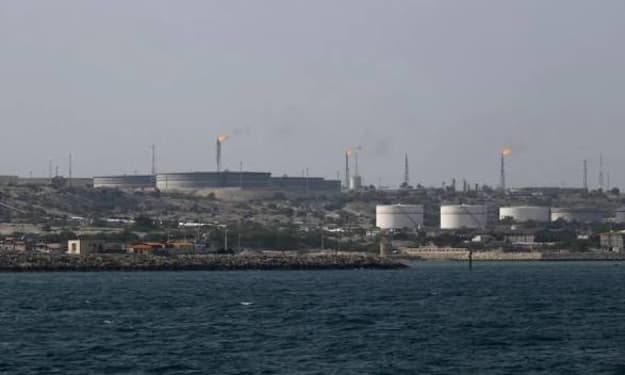
Two Oil Tankers Seen at Kharg After Strikes, Satellite Firm Says
Satellite imagery captured in the aftermath of recent strikes near Iran’s most important oil export terminal indicates that at least two large crude carriers have appeared near the island’s main loading infrastructure, according to a commercial monitoring company. The images suggest that oil export activity at the strategic terminal may be cautiously resuming even as tensions in the region remain high. The new analysis focuses on facilities at Kharg Island, a small island in the northern Persian Gulf that handles the majority of Iran’s crude exports. The terminal has long been considered a critical node in the country’s energy sector and a potential vulnerability in times of conflict. According to analysts at Planet Labs, which provides high-resolution satellite imagery to governments and commercial clients, images taken within the past 48 hours show two very large crude carriers positioned near the island’s primary offshore loading jetties. The tankers appear to be anchored or slowly maneuvering close to export facilities that were reportedly targeted in recent strikes. The strikes themselves have not been officially confirmed in detail by Iran, though regional security officials and shipping monitors say explosions were reported near energy infrastructure earlier this week. The incident occurred amid rising tensions across the Persian Gulf, where multiple attacks on commercial shipping and energy facilities have raised fears of a broader confrontation. Satellite specialists said the appearance of the tankers could signal that operators believe the damage to loading facilities is limited or manageable. “The vessels appear positioned in a way consistent with preparing for or conducting loading operations,” one analyst familiar with the imagery said. “That would suggest the terminal is at least partially operational.” However, analysts cautioned that the presence of ships does not necessarily mean that oil is currently flowing at full capacity. In some cases, tankers are positioned near export terminals as a contingency while infrastructure is inspected or repaired. Kharg Island plays an outsized role in Iran’s energy exports. Industry estimates indicate that up to 90 percent of the country’s crude shipments historically passed through the terminal’s jetties and offshore loading buoys. Damage to those facilities could significantly affect Iran’s ability to move oil to international buyers. Shipping data compiled by maritime intelligence groups indicates that several tankers previously scheduled to approach the island delayed their arrival after reports of the strikes emerged. Insurance costs for vessels operating in the region have also risen sharply. Global energy markets have been closely watching developments. Even temporary disruptions to exports from the Gulf can ripple through oil markets because of the region’s role as the world’s largest crude supply hub. Traders reacted nervously earlier in the week, pushing prices higher as uncertainty about the security of shipping lanes spread. The narrow Strait of Hormuz, located just southeast of Kharg Island, is one of the most important maritime chokepoints in the world. Roughly a fifth of global oil shipments pass through the strait each day, making any escalation in the surrounding waters a major concern for global energy security. Security analysts say the latest imagery could indicate that Iranian authorities are attempting to project stability by maintaining visible export operations. Keeping tankers near loading terminals can signal to markets and buyers that exports are continuing despite military pressure. Regional naval forces have also increased patrols in the area. Several Western and Gulf states have warned commercial vessels to exercise caution when transiting near Iranian territorial waters. Shipping companies are monitoring security advisories closely, particularly as earlier incidents involving drones and missiles have demonstrated the vulnerability of large commercial vessels. Officials in United States and several European countries have declined to comment directly on the satellite images but have reiterated calls for restraint. Diplomatic channels remain active as governments seek to prevent a cycle of retaliatory strikes that could endanger civilian shipping and energy infrastructure. Meanwhile, energy analysts note that Iran has developed contingency plans over decades of sanctions and regional tensions. These include alternative loading arrangements, storage facilities, and ship-to-ship transfer methods designed to keep exports moving even under pressure. The satellite imagery does not yet provide a clear assessment of potential structural damage to Kharg’s export terminals. Cloud cover and the angle of observation make it difficult to determine whether pipelines, storage tanks, or loading arms were affected by the reported strikes. Even so, the mere presence of two tankers near the island has attracted close scrutiny from energy traders and security officials alike. Maritime traffic around Kharg is typically a reliable indicator of Iran’s export activity, and analysts say additional images in the coming days will help clarify whether loading operations are actually underway. For now, the images serve as one of the few independent glimpses into conditions at one of the world’s most strategically important oil terminals. As tensions remain elevated in the Gulf, the movements of just a few ships near Kharg Island could carry implications far beyond the region, influencing energy markets and geopolitical calculations around the globe.
By Fiaz Ahmed a day ago in The Swamp



Comments
There are no comments for this story
Be the first to respond and start the conversation.