
Imran Khan’s Sister Speaks Out: A Family’s Fight for Basic Rights
Family Accuses Authorities of Violating Basic Rights as Tensions Around Imran Khan’s Detention Intensify”

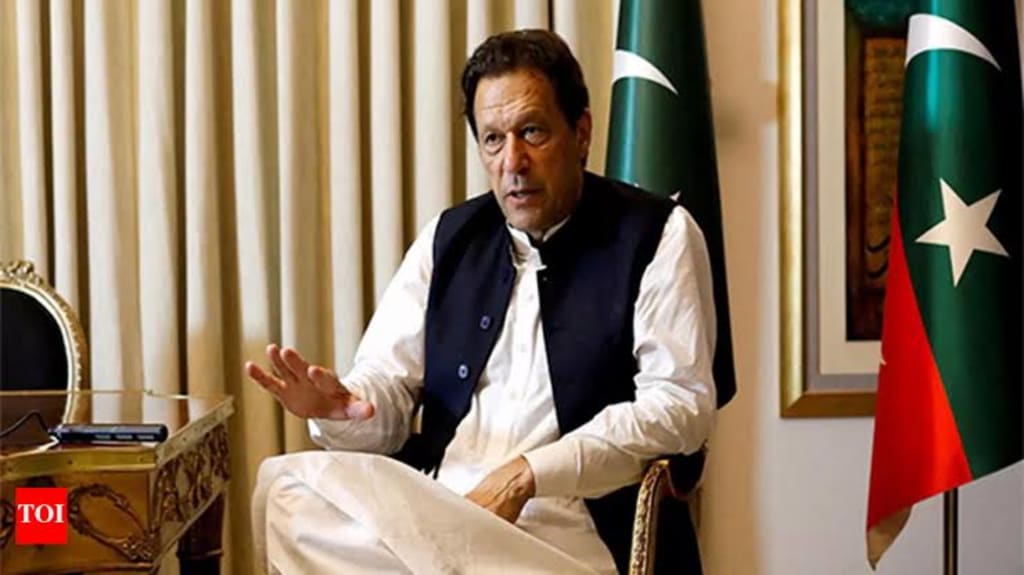
When political tensions rise, institutions often feel the strain—but families at the center of these storms experience an even deeper impact. This is exactly the situation surrounding former Pakistani Prime Minister Imran Khan, whose imprisonment continues to create waves not just within the nation’s political arena but also within his own family. Recently, Khan’s sister spoke to Deutsche Welle (DW), revealing that jail officials have repeatedly denied her requests to meet him—a development now fueling public concern, frustration, and questions about due process.
Her emotional remarks have triggered a fresh national conversation about human rights, transparency, and the role of state institutions during periods of political upheaval.
Below is a detailed look at what this latest controversy means for Pakistan, for the Khan family, and for the unfolding political landscape.
---
A Sister’s Plea: “We Are Being Kept in the Dark”
In her interview with DW, Imran Khan’s sister described an ongoing pattern of being refused access to her brother at Adiala Jail. According to her, even after completing all required procedures, security checks, and formal applications, officials simply announced that visits were “not allowed today.”
What concerned her most was the lack of explanation—no justification, no timeline, no indication of when visits might resume. She expressed fear that this level of secrecy could indicate deteriorating health, mistreatment, or punitive isolation.
Her statement, “We are being kept in the dark,” reflects a sentiment shared by thousands of Khan supporters who feel that transparency around his imprisonment is severely lacking.
---
The Political Pressure Around Imprisonment
Imran Khan—chairman of Pakistan Tehreek-e-Insaf (PTI)—has faced a series of legal battles since being removed from office. His imprisonment has become a deeply polarizing national issue, with supporters calling it politically motivated and opponents labeling it the result of due legal process.
The refusal to allow family visits adds another layer of complexity:
Is the government trying to limit communication?
Is the jail administration acting independently or under pressure?
Is Khan being kept in isolation for security reasons?
These questions have no official answers. The absence of clarity has only heightened speculation and concern.
---
Human Rights and Jail Protocols
Under Pakistani law, prisoners—especially high-profile political detainees—are entitled to regulated family visitation. Visits can be denied, but only under:
credible security threats
exceptional circumstances
documented administrative concerns
Khan’s sister argues that none of these reasons were provided, and no written explanation was offered. This lack of documentation raises concerns about whether proper jail protocols are being followed.
Human rights organizations within Pakistan have also begun asking whether limiting access to a political prisoner—without explanation—constitutes an unnecessary restriction.
---
Public Reaction: Anxiety and Anger Online
Social media in Pakistan lit up as soon as DW reported the statement. Hashtags related to Imran Khan, Adiala Jail, and “right to visit” trended nationwide.
Supporters expressed their outrage:
Some argued that even convicted criminals receive family visits;
Others speculated that Khan’s physical condition might be worsening;
Many demanded government accountability and independent jail inspections.
The emotional response reflects how intertwined Khan’s personal fate has become with the country’s political identity.
---
What This Means for PTI
The timing of these denied visits is particularly significant because PTI has been preparing major legal appeals and political strategies. If Khan is unable to meet family members—who often act as intermediaries for legal teams—his ability to participate meaningfully in PTI decisions becomes limited.
The party has already accused authorities of restricting communication to weaken internal coordination.
With national politics deeply fragmented, even seemingly small administrative decisions can shift momentum.
---
Government and Jail Officials: Silence Continues
As of now, neither the Pakistani government nor the jail administration has issued a detailed response to the allegations. The silence has only fueled uncertainty.
Observers believe that an official clarification is urgently needed to prevent misinformation, political exploitation, and further deterioration of public trust.
---
A Larger Reflection of Pakistan’s Crisis
Imran Khan's sister’s testimony is not just a family matter—it is a reflection of Pakistan’s ongoing struggle with:
political polarization
mistrust in state institutions
transparency in legal processes
the balance between security and human rights
When a former prime minister’s family is denied access without explanation, it raises broader concerns about the protection of civil liberties for ordinary citizens as well.
---
Conclusion: A Story Still Unfolding
The situation remains fluid and highly sensitive. Imran Khan’s sister has given voice to what many in Pakistan fear—that the political crisis has crossed into personal territory, affecting families, communication, and basic human rights.
As the story continues to evolve, the need for transparency, legal clarity, and humane treatment remains more critical than ever.
---
About the Creator
Fiaz Ahmed Brohi
I am a passionate writer with a love for exploring and creating content on trending topics. Always curious, always sharing stories that engage and inspire.
Keep reading
More stories from Fiaz Ahmed Brohi and writers in The Swamp and other communities.
Russia Claims to Capture Pokrovsk: Ukraine Dismisses ‘Loud Statements’ Ahead of Witkoff Talks
As the Russia-Ukraine war enters yet another tense phase, the battle for information has become just as fierce as the battle on the ground. This week, Moscow announced that its forces had successfully captured the key eastern city of Pokrovsk, a major logistics hub in the Donetsk region. But within hours of Russia’s claim, Ukraine firmly rejected the statement, calling it “another loud propaganda message” timed to influence global negotiations, including the upcoming talks involving U.S. businessman Steven Witkoff and other international mediators.
By Fiaz Ahmed Brohi3 months ago in The Swamp
The Forsyth House Fire
Since 1851, Forsyth House has stood on the corner of Union Street and Gordon Street in the heart of Glasgow. Its iconic, or was... because on Sunday 8th of March, 2026, a fire broke out in a small, seemingly un-named shop in the building and tore all that history down. As I write, the rubble is still unsettled and the street is still blocked off. Central Station is quiet on the upper level, and around 30 small businesses have quite literally gone up in smoke.
By S. A. Crawford2 days ago in The Swamp
Stranded travellers charter private jets to return to Europe
In the wake of widespread flight cancellations and airspace closures triggered by the 2026 war involving Iran, a growing number of travellers stranded across the Middle East and Asia have resorted to chartering private jets in a desperate bid to return to Europe. As conventional commercial services remain disrupted, wealthy tourists and expatriates are spending tens of thousands of dollars on private evacuation flights to reach home. The conflict that erupted in late February after coordinated U.S. and Israeli strikes on Iranian facilities has reverberated through global aviation, closing airspace over key hubs such as the United Arab Emirates, Qatar and other Gulf states. With missiles and drones continuing to fly across the region, commercial airlines have suspended or delayed most flights, leaving travellers stuck far from home for days — in some cases more than two weeks. Against this backdrop of flight chaos, some travellers with the financial means to do so have turned to private jets as the only viable option to escape. Reports indicate that private flights out of the Gulf region have commanded prices of up to $200,000 or more, depending on the distance and aircraft involved. From Muscat and Dubai to Istanbul and other regional airports, charter operators have been booked solid as foreign nationals seek alternatives to congested and largely non‑operational commercial terminals. In some cases, travellers flying privately have described complex routing and urgent departures, often with short notice, as they scramble to secure seats on available jets. This trend reflects both the severity of the current travel disruption and the limited options available to many. Major carriers such as Emirates, Qatar Airways and Etihad have largely pulled back services amid safety concerns and government restrictions, while repatriation and rescue flights organized by national authorities are either limited or prioritized for citizens by existing bookings. For those without access to private jets, the situation remains frustrating and uncertain. Tens of thousands of travellers, including families, students and holidaymakers, are still waiting for available commercial flights or governmental evacuation options. Some countries have reported hundreds of thousands of nationals stranded across the region, prompting diplomatic efforts and government‑organized repatriations to assist. The rush towards private jets highlights stark inequalities in how travellers are able to cope with the disruption. While affluent individuals can effectively “buy” their way out of the crisis, others remain stuck in congested airports or facing long delays on the ground. Social media posts from stranded passengers have detailed long queues, lack of available seats on repatriation flights, and mounting hotel bills as they wait for a way home. Muscat International Airport in Oman has seen particularly high demand for private flights, with charter operations accounting for a significant share of departures in recent days. To manage congestion, Muscat authorities have reportedly restricted private jet operations to prioritize scheduled commercial and government repatriation flights, a sign of how intense the demand has become. Private jet companies and brokers have been inundated with requests since the onset of the travel disruption. Operators reported that many clients expressed urgency and uncertainty about securing passage, sometimes booking multiple charter options simultaneously in hopes of finding a viable route home. For some passengers, these flights involve additional technical stops or routing to secondary hubs before eventually reaching Europe. Beyond individual travellers, the rise in private charters has also placed logistical pressure on smaller regional airports that are acting as alternative departure points. Flight planning becomes increasingly complex when coordinating clearances in contested or partially closed airspace, and pilots have had to navigate amid shifting safety advisories and military activity alerts. Governments and airline authorities have continued to work on reopening certain air corridors and resuming more commercial services where safe, but progress has been uneven. Limited repatriation routes, such as flights from Muscat to London operated by British Airways for ticket holders, offer a lifeline for some, but demand far outstrips supply. Morningstar, Inc. For now, the private jet phenomenon underscores the depth of disruption affecting global travel. With geopolitical tensions showing no immediate signs of abating, those with wealth are choosing to invest heavily in their return journeys, highlighting how global crises can quickly reshape travel norms — but also how access to rapid alternatives remains sharply divided by economic means.
By Fiaz Ahmed 3 days ago in The Swamp


Comments
There are no comments for this story
Be the first to respond and start the conversation.