
I Will Not Yield to Trump’s Pressure on Greenland, Starmer Says at PMQs
“Starmer Rejects External Pressure, Affirms UK Commitment to Allied Sovereignty”
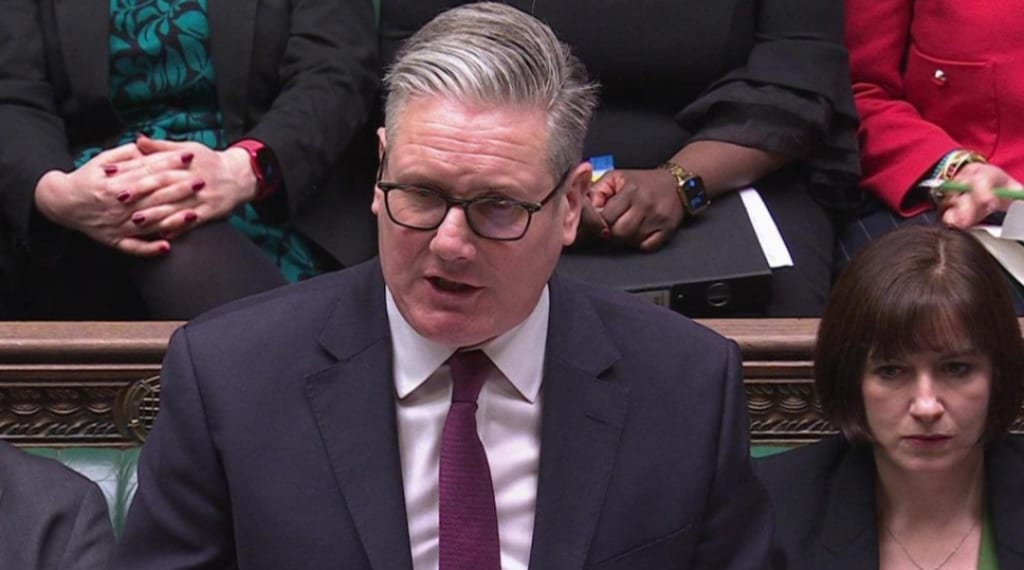
UK Labour Party leader Keir Starmer firmly rejected pressure from former US President Donald Trump regarding Greenland during a tense session at Prime Minister’s Questions (PMQs) in Parliament. Starmer emphasized that Britain will maintain an independent stance on foreign affairs and will not bow to external influence in matters of strategic importance.
Starmer’s Statement at PMQs
During the session, Starmer addressed concerns about US comments on Greenland, stating:
“The United Kingdom must stand firm in its foreign policy. We will not yield to pressure from any country, including the United States, when it comes to matters of sovereignty and strategic interests.”
The statement comes amid ongoing discussions about Greenland’s geopolitical significance, particularly in relation to Arctic security, resource management, and NATO collaboration.
The Background: Greenland in International Focus
Greenland, an autonomous territory of Denmark, has increasingly become a focus of global strategic interest. Its vast natural resources, Arctic positioning, and security implications have attracted attention from multiple world powers, including the United States and the UK.
Former President Trump had previously expressed interest in Greenland for strategic and resource-based purposes, even reportedly suggesting a potential US purchase. While the UK is not directly negotiating a sale, Starmer’s remarks reflect solidarity with allies and a commitment to uphold international norms.
Sovereignty and National Interests
Starmer stressed that sovereignty is non-negotiable, highlighting the importance of respecting international law and allied agreements. His stance reinforces the UK’s diplomatic credibility and signals to both domestic and international audiences that foreign pressure will not dictate policy decisions.
Political analysts suggest that Starmer’s position is designed to:
Demonstrate strong leadership in foreign affairs.
Reassure allies like Denmark and NATO that the UK respects territorial autonomy.
Strengthen public perception of Starmer as a principled leader who prioritizes national interest.
NATO and Arctic Security
Greenland’s location is critical for NATO operations and Arctic security. The territory hosts strategic military bases, surveillance stations, and serves as a gateway for monitoring Arctic maritime routes.
Starmer’s remarks underline the UK’s commitment to:
Protect allied interests in the Arctic.
Support Denmark’s sovereignty over Greenland.
Maintain NATO cohesion in a region of growing geopolitical importance.
Experts note that as climate change opens new Arctic routes, global powers are increasingly interested in asserting influence. Starmer’s statement sends a clear message of UK autonomy and alliance loyalty.
Political Implications in the UK
Domestically, Starmer’s strong response serves multiple political purposes:
Strengthening Labour’s Foreign Policy Profile: Historically, Labour has emphasized diplomatic integrity and multilateral cooperation.
Countering Perceived Weakness: By rejecting pressure from a high-profile figure like Trump, Starmer projects confidence and assertiveness.
Appealing to Public Sentiment: The British public values sovereignty and principled foreign policy, and Starmer’s stance aligns with these expectations.
During PMQs, opposition members questioned Starmer about potential economic and defense implications, but Starmer reaffirmed that the UK would act in the best interests of its citizens and allies, not yield to external political pressure.
Trump’s Influence and Global Diplomacy
Although Trump is no longer in office, his comments on Greenland continue to attract attention. Starmer’s response demonstrates the UK’s independence in global diplomacy, indicating that the government will:
Evaluate strategic territories based on UK interests.
Uphold international law and multilateral agreements.
Avoid political concessions to external figures without merit.
Analysts argue that Starmer’s approach signals continuity and reliability in UK foreign policy, reassuring both domestic and international stakeholders.
Media and Public Reaction
Starmer’s remarks were widely covered in national and international media, generating significant discussion:
Supportive Commentary: Many commentators praised the Labour leader for standing firm on sovereignty and principles.
Criticism: Some critics argue that emphasizing Greenland may distract from domestic priorities, though supporters counter that foreign policy is integral to national security.
Social media reactions highlighted public admiration for a firm stance against foreign pressure, with hashtags praising Starmer for defending allied sovereignty trending throughout the day.
The Bigger Picture: Arctic Geopolitics
Greenland exemplifies a broader trend of strategic Arctic geopolitics. Nations are increasingly aware of:
Natural resources, including minerals and rare earths.
Emerging shipping routes due to melting ice.
Military strategic positioning and surveillance advantages.
Starmer’s stance not only supports Denmark but also aligns the UK with allies in protecting Arctic stability, a region likely to see rising geopolitical competition in the coming years.
Conclusion
Keir Starmer’s declaration at PMQs that he will not yield to Trump’s pressure on Greenland reinforces the UK’s commitment to sovereignty, international law, and allied cooperation. By taking a firm stance, Starmer positions himself as a principled leader capable of defending national and allied interests, while signaling to the global community that the UK values independence in foreign policy decisions.
As the Arctic becomes increasingly central to geopolitical strategy, resource management, and climate change adaptation, the UK’s approach under Starmer emphasizes diplomacy, alliance solidarity, and strategic foresight—key components of a resilient foreign policy in the 21st century.
About the Creator
Keep reading
More stories from Aarif Lashari and writers in The Swamp and other communities.
Musk Cannot Buy Ryanair Because He Is Not an EU Citizen, Says O’Leary
Ryanair CEO Michael O’Leary has confirmed that Elon Musk cannot acquire Ryanair, citing European Union regulations that restrict non-EU citizens from owning controlling stakes in certain airlines. The statement has fueled speculation about potential takeover attempts and the limits of foreign investment in European aviation.
By Aarif Lashariabout 2 hours ago in The Swamp
US Says Canada Will Regret Decision to Allow Chinese EVs Into Their Market
The global electric vehicle (EV) race is heating up, and Canada has just made a move that has caught the attention — and criticism — of its closest ally. The United States has warned that Canada may “regret” its decision to allow Chinese-made electric vehicles into its domestic market, a statement that underscores rising trade tensions, geopolitical rivalry, and fears over the future of North America’s auto industry.
By Aqib Hussain4 days ago in The Swamp


Comments
There are no comments for this story
Be the first to respond and start the conversation.