
“I Was Hit in the Face by Pellets”
Iranians on the Border Describe Violence, Fear, and a New Wave of Protests
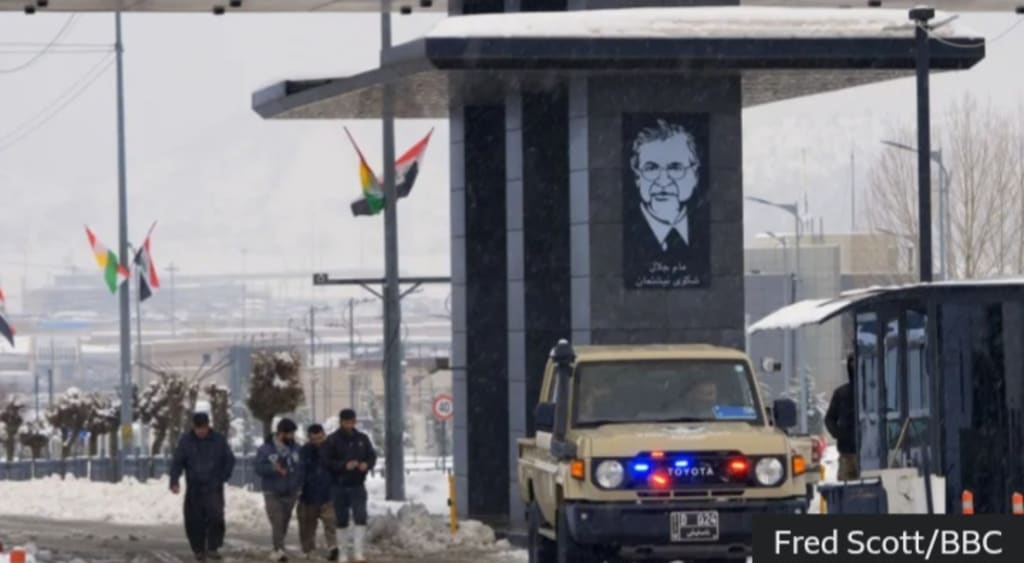
The echoes of gunfire and tear gas still linger in the border regions of Iran, where residents say security forces responded to growing protests with excessive violence. For many living in these remote areas, the line between daily survival and political resistance has blurred, as demonstrations against economic hardship and political repression continue to spread.
“I was hit in the face by pellets,” said a young protester from a border town near Iran’s western frontier, his voice trembling as he recalled the night security forces moved in. “We were unarmed. We were just chanting. Suddenly, they started firing.”
Across Iran’s border regions — particularly those populated by ethnic minorities — accounts like his are becoming increasingly common. Protesters describe a pattern of forceful crackdowns, including the use of pellet guns, tear gas, and mass arrests, aimed at silencing dissent.
Border Regions Under Pressure
Iran’s border provinces have long faced economic neglect, high unemployment, and limited access to basic services. Many residents rely on cross-border trade or informal labor to survive. Rising inflation, fuel shortages, and currency devaluation have further intensified frustrations.
“These areas are already marginalized,” said a social activist familiar with the region. “When protests erupt here, the response is often harsher because the state views border populations as a security threat.”
Residents say checkpoints have multiplied, mobile networks are frequently disrupted, and movement is closely monitored. In recent weeks, families reported that security forces entered neighborhoods at night, detaining young men suspected of participating in demonstrations.
Voices from the Streets
Eyewitnesses describe chaotic scenes during protests. Demonstrators chanting slogans were met with volleys of pellets aimed at their upper bodies, causing serious injuries.
“My cousin lost vision in one eye,” said a woman whose family lives near the border. “He wasn’t throwing stones. He was recording the protest on his phone.”
Medical workers, speaking anonymously, said hospitals treated dozens of pellet injuries, bruises, and breathing complications from tear gas. Many injured protesters avoided hospitals altogether, fearing arrest.
“There is fear everywhere,” one resident said. “Even helping the wounded feels dangerous.”
A Cycle of Protest and Repression
Protests in Iran have flared repeatedly over the years, often triggered by economic grievances but fueled by deeper demands for dignity, accountability, and political freedom. Border regions, already struggling with systemic inequality, have become flashpoints.
Analysts say the government’s reliance on force reflects a broader strategy of deterrence. By cracking down hard in peripheral areas, authorities aim to prevent protests from spreading to major cities.
However, residents argue that repression has had the opposite effect.
“When they shoot at us, they think we will go home,” said a student protester. “But it only makes people angrier. People have nothing left to lose.”
Women and Youth at the Front
Women and young people are playing a visible role in these demonstrations. Videos circulating on social media — despite internet restrictions — show women chanting, confronting security forces, and helping injured protesters escape.
“Young people are leading this movement,” said a teacher from the region. “They grew up with sanctions, unemployment, and no future. Silence is no longer an option for them.”
Parents, meanwhile, live with constant anxiety. Many say their children leave home each day not knowing if they will return safely.
“I beg my son not to go out,” one mother said. “But he tells me, ‘If we stay quiet, nothing will change.’”
International Silence and Local Resilience
Despite mounting reports of violence, residents feel largely abandoned by the international community. While human rights organizations have raised concerns, people on the ground say global attention fades quickly.
“The world hears about us for a few days, then moves on,” said a local journalist. “But we continue to live with the consequences.”
Yet amid fear and repression, solidarity persists. Neighbors shelter protesters, share medical supplies, and document abuses whenever possible. In whispered conversations and coded messages, people continue to organize.
An Uncertain Road Ahead
As protests continue, the future remains uncertain. The government shows little sign of easing its security response, while protesters insist they will not retreat.
“We are not asking for miracles,” said the young man injured by pellets. “We want respect. We want to live without fear.”
For Iran’s border communities, the struggle is not just political — it is deeply personal. Each protest carries the risk of injury, arrest, or worse. Yet, as voices from the region make clear, silence now feels more dangerous than resistance.
About the Creator
Keep reading
More stories from Ayesha Lashari and writers in The Swamp and other communities.
Historic Meeting in Caracas: CIA Director and Venezuela’s New Leader Discuss Future Cooperation
In a rare and highly significant diplomatic engagement, CIA Director John Ratcliffe traveled to Caracas, Venezuela, for a two-hour meeting with the country’s interim president, Delcy Rodríguez. The encounter — held on Thursday and confirmed by multiple international media outlets — marks the highest-level dialogue between the United States and Venezuelan leadership since the recent political upheaval in the country. �
By Ayesha Lashari2 months ago in The Swamp
Parallel Protests
I haven't written for quite some time, but I have A LOT of thoughts about yesterday's protest rally against our government's involvement and complicity in America's war on Iran, on the harbourside of my home city Bristol, and I need to put them somewhere. My gorgeous girlfriend is always a loving and listening ear and sharing it all with her will always be a healthy and happy way of processing the mental and emotional weight, but getting it straight in my brain to share means writing it all down in straight lines, so, here we are and thanks for being here.
By Steph Cole11 days ago in The Swamp
How Iran’s women footballers took asylum in Australia and what happens next
In a dramatic development during the 2026 AFC Women’s Asian Cup in Australia, members of the Iran women's national football team sought asylum after fearing persecution if forced to return to Iran. The events unfolded against a backdrop of political tension and mounting safety concerns for women athletes from Iran. The Trigger: Protest and Backlash The situation first drew global attention after several Iranian players refused to sing the national anthem before one of their matches. State media in Iran condemned the act, labeling the athletes “traitors” and warning they could face reprisals at home. Fears intensified as the squad remained in contact with authorities and media back in Iran criticized them for their stance. While the team continued its tournament on Australian soil, safety concerns grew. Iranian authorities reportedly sent security personnel with the delegation, raising alarm among diaspora communities and advocacy groups. Escape from the Team Hotel In the early days of March, as the tournament concluded, at least five players slipped away from their hotel on the Gold Coast with assistance from the Australian Federal Police and Queensland Police. They were initially escorted to a secure location. Home Affairs Minister Tony Burke personally met with the group, explaining Australia’s offer of Temporary Humanitarian Visas and the protections they provide. By the early hours, five players had formalised their asylum applications. Australian officials emphasized that the process was confidential and designed to ensure the players could make informed, voluntary decisions without pressure from any side. The government stated the visas would give the women a legal pathway to remain in Australia and eventually seek permanent residency. Growing Numbers and a Changed Decision Reports soon emerged that at least seven members of the Iranian squad had sought asylum, as others either refused to board return flights or made choices to remain in Australia. However, the situation evolved rapidly when one team member, initially granted asylum, changed her mind and requested to return to Iran. She contacted the Iranian embassy, inadvertently revealing the location of the safehouse where other asylum seekers were being protected. Australian authorities responded swiftly by relocating the remaining women to a new secure facility. Iran’s Reaction and Diplomatic Tensions The Iranian government strongly criticized Australia’s actions, accusing Canberra of “holding the players hostage” and interfering in Iran’s internal affairs. Iranian officials framed the asylum offers as provocative, drawing sharp responses from both countries’ diplomatic channels. Meanwhile, Australian authorities maintained that every team member was offered the chance to choose whether to stay, stressing that asylum decisions were voluntary. They also clarified that visas were only granted to those assessed as genuinely in need of protection; individuals linked to certain Iranian security entities were not offered asylum. What Happens Next — For the Players For the women who elected to stay in Australia, the immediate future involves navigating the legal and logistical process of asylum applications. Temporary Humanitarian Visas generally include protection from forced return and may lead to a pathway for longer-term residency, with access to support services and, in some cases, work and study rights. Media coverage suggests the Australian government is continuing to offer asylum opportunities to other team members willing to make the request before they depart the country. Officials highlight that protections are available under Australia’s humanitarian framework for people at risk of persecution. Broader Implications The case has sparked international debate about the intersection of sports, politics, and human rights. Advocacy groups say the asylum requests spotlight the dangers faced by women in Iran, particularly those who defy social or political norms. Critics warn that without stronger international protections, athletes traveling for competitions can find themselves vulnerable to punitive actions by their home governments. Observers also note that asylum during international events, while rare, is not unprecedented. But the highly public nature of this case and the global media attention have underscored how geopolitical tensions can spill onto the playing field and force life‑altering decisions for athletes far from home. As the situation continues to unfold, the stories of these footballers will remain a poignant example of how sports and human rights can intersect under extraordinary circumstances.
By Fiaz Ahmed 2 days ago in The Swamp



Comments
There are no comments for this story
Be the first to respond and start the conversation.