
Human Nature in the Age of Technology
Where Does the True Essence of Humanity Stand Amid Modern Progress?

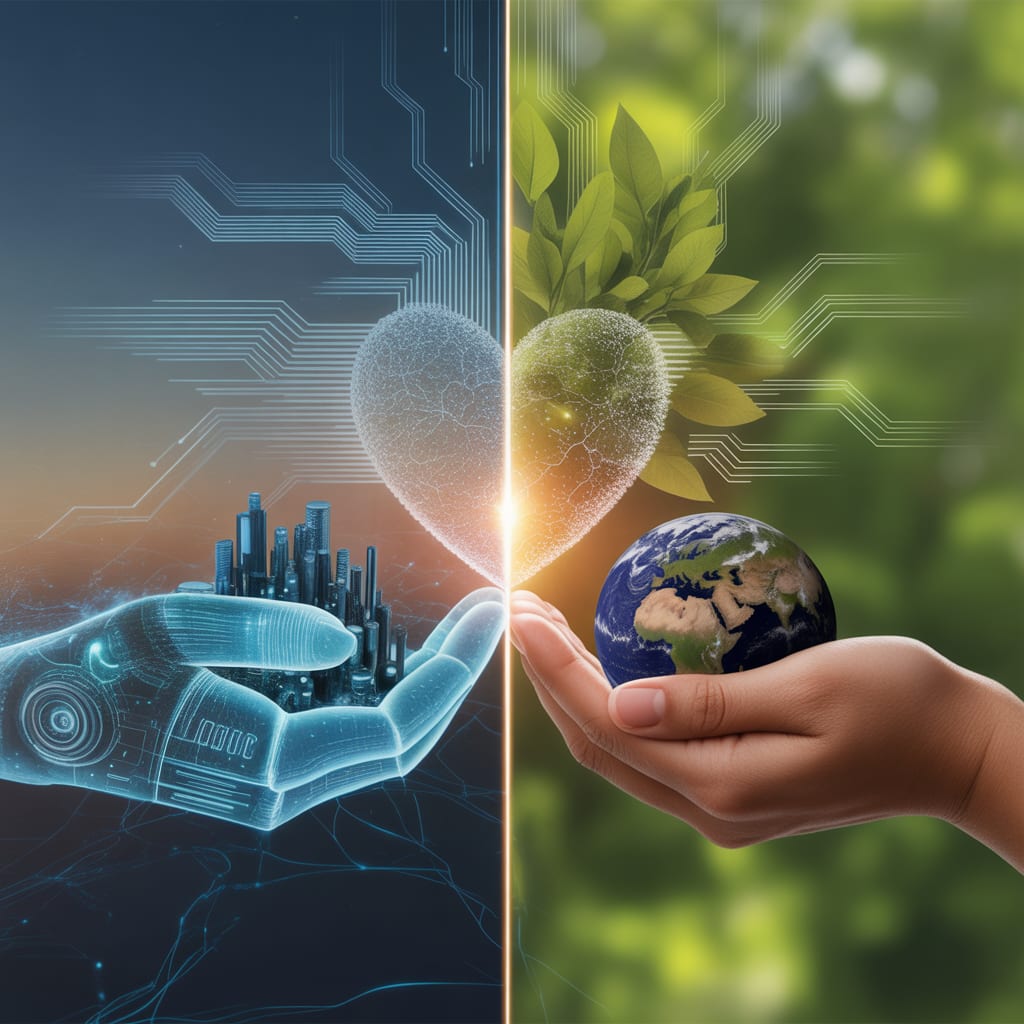
In the 21st century, technology has become an inseparable part of human life. From smartphones to artificial intelligence, from social media to virtual reality, our world has changed dramatically. Technology has made our lives faster, easier, and more connected than ever before. Yet, amid all these advancements, an important question arises: Where does the true essence of humanity stand?
Human nature is defined by emotions, relationships, empathy, and moral values. It is our ability to love, feel compassion, and make ethical decisions. For centuries, human beings have relied on face-to-face interactions, personal experiences, and deep emotional connections to understand themselves and others. However, modern technology is gradually changing the way we think, act, and interact.
Social media, for example, allows us to connect with millions of people instantly. But at the same time, it has created a world where relationships often become shallow and superficial. Many people measure their self-worth by likes and comments, rather than by genuine human connections. This shift has a direct impact on human nature because it emphasizes external validation over internal growth.
Similarly, artificial intelligence and automation are replacing many traditional jobs. While this is a sign of progress, it also challenges human creativity and critical thinking. Humans are being trained to rely on machines for decisions, reducing the space for emotional intelligence and moral judgment. The more we depend on technology, the more we risk losing the fundamental qualities that make us human.
Despite these challenges, human nature is resilient. People still experience love, compassion, and empathy. Even in a world dominated by technology, acts of kindness, generosity, and understanding continue to define our lives. The difference is that these emotions now often find expression through digital platforms. For example, crowdfunding campaigns, online volunteer networks, and social media awareness movements show that human nature can adapt and thrive even in a technological environment.
Moreover, technology can also enhance human potential. Medical advancements, educational apps, and communication tools allow us to reach places and people that were once impossible to access. Technology helps humans to be more informed, more capable, and sometimes more compassionate. It does not destroy human nature; rather, it changes the way we express it. The essence of humanity lies in our ability to adapt and maintain our core values despite external changes.
However, there is a fine line between using technology to enhance life and allowing it to dominate our human essence. When people spend more time online than with real-life connections, when empathy is replaced by emojis, or when moral decisions are outsourced to algorithms, the danger of losing our human nature becomes real. This is why it is important to consciously preserve our emotions, relationships, and ethical values. Technology should serve humanity, not replace it.
Parents, educators, and society play a crucial role in balancing this relationship. Teaching children to respect emotions, value personal interactions, and make moral choices is as important as teaching them coding or digital literacy. Similarly, adults must remember that behind every screen is a human being with feelings, not just data or a profile picture. Maintaining this awareness keeps the core of human nature alive.
In conclusion, technology has reshaped our world and will continue to do so. Yet, the true essence of humanity — our ability to love, empathize, and act morally — remains within us. It is up to us to ensure that these qualities are nurtured rather than neglected. Technology can either complement our human nature or threaten it. By consciously balancing progress with emotional and moral awareness, we can ensure that in this age of rapid development, human nature does not lose its essence but flourishes in new and meaningful ways.
About the Creator
Keep reading
More stories from Muhammad yar and writers in The Swamp and other communities.
The Human Body and Soul
Human beings are the most beautiful, complete, and intelligent creation in this universe. Among all creatures, humans hold a special place because they possess two aspects — one physical, called the body, and the other spiritual, called the soul (rooh). These two elements together make a human a complete being. The body is what we can see with our eyes, while the soul gives us life, awareness, and feeling. Without the soul, the body is just clay — lifeless and meaningless.
By Muhammad yar5 months ago in Humans
Parallel Protests
I haven't written for quite some time, but I have A LOT of thoughts about yesterday's protest rally against our government's involvement and complicity in America's war on Iran, on the harbourside of my home city Bristol, and I need to put them somewhere. My gorgeous girlfriend is always a loving and listening ear and sharing it all with her will always be a healthy and happy way of processing the mental and emotional weight, but getting it straight in my brain to share means writing it all down in straight lines, so, here we are and thanks for being here.
By Steph Cole9 days ago in The Swamp
New England Patriots’ Plane Brought Americans Back From the Middle East
An aircraft belonging to the New England Patriots was used in an unexpected humanitarian mission after helping transport American citizens out of the Middle East during a period of escalating regional tensions. The unusual operation highlighted how private organizations and sports franchises sometimes step in to assist during international crises when traditional travel routes are disrupted.
By Fiaz Ahmed 5 days ago in The Swamp



Comments
There are no comments for this story
Be the first to respond and start the conversation.