
How Much Gold Is in an Olympic Gold Medal, and How Much Is It Worth?
The surprising composition, real market value, and symbolic power behind the world’s most famous medal
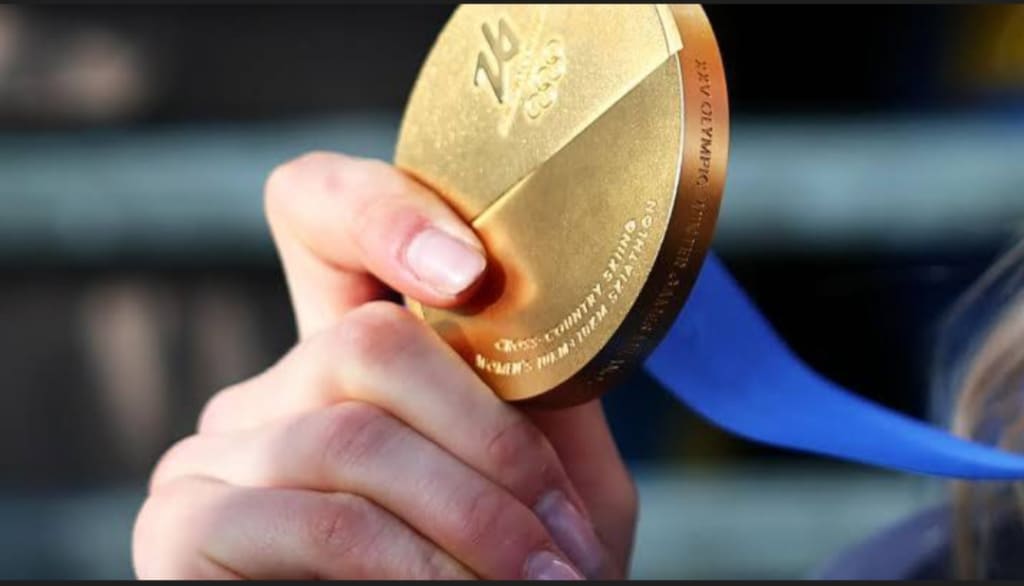
Winning an Olympic gold medal is the ultimate dream for athletes, symbolizing years—often decades—of discipline, sacrifice, and excellence. To spectators, the medal appears to be made of solid gold, shining brightly as it’s raised on the podium. But the reality is far more surprising. Olympic gold medals are not solid gold, and their true monetary value is far less than their emotional and historical significance.
So how much gold is actually in an Olympic gold medal, and what is it really worth? The answer blends metallurgy, international rules, market prices, and symbolism.
---
Are Olympic Gold Medals Made of Pure Gold?
Contrary to popular belief, modern Olympic gold medals are not made entirely of gold. In fact, the International Olympic Committee (IOC) requires that gold medals be made primarily of silver, with a thin outer layer of gold plating.
Under IOC regulations:
Gold medals must contain at least 92.5% silver
They must be plated with a minimum of 6 grams of pure gold
This standard has been in place for decades. The last time Olympic gold medals were made almost entirely of solid gold was at the 1912 Stockholm Olympics, over a century ago.
The reason is simple: cost, practicality, and tradition. With thousands of medals awarded across Olympic events, producing solid gold medals would be prohibitively expensive and logistically impractical.
---
How Much Does an Olympic Gold Medal Weigh?
While the exact specifications vary by host country and Olympic edition, modern gold medals typically weigh between 500 and 600 grams in total.
For example:
The Tokyo 2020 gold medal weighed about 556 grams
The Beijing 2022 Winter Olympics gold medal weighed approximately 529 grams
Despite their substantial weight, only a very small portion of that mass is actual gold.
---
How Much Gold Is in a Gold Medal?
Under IOC rules, the gold content is usually around 6 grams of pure gold. The remainder—more than 90% of the medal—is sterling silver.
To put that into perspective:
6 grams is roughly the weight of a small coin
The silver content typically exceeds 500 grams
So while the medal shines like gold, its precious metal composition is overwhelmingly silver.
---
How Much Is the Gold Medal Worth in Raw Materials?
The raw material value of an Olympic gold medal depends on current market prices for gold and silver. While prices fluctuate daily, we can estimate the value based on typical global averages.
Approximate breakdown:
Gold content: ~6 grams
Silver content: ~500+ grams
Using conservative market estimates:
Gold at ~$65–$70 per gram
Silver at ~$0.75–$1 per gram
This places the raw material value of a gold medal at roughly:
Gold value: $390–$420
Silver value: $375–$500
👉 Total intrinsic metal value: approximately $800 to $1,000
This means the medal’s worth as a commodity is far lower than many people expect—certainly not the millions some assume.
---
What About Manufacturing and Design Costs?
Beyond raw metals, Olympic medals involve:
Custom artistic design
Advanced minting techniques
Quality control and certification
Environmental and ethical sourcing (in recent Games)
Host nations often invest heavily in craftsmanship and sustainability. For instance, some recent Olympics used recycled electronics to source metals, adding ethical value even if it doesn’t raise resale price.
These factors increase the production cost, but they do not significantly change the medal’s resale value based on materials alone.
---
Can Olympic Gold Medals Be Sold—and for How Much?
Athletes are allowed to sell their medals, and some have done so for personal, financial, or charitable reasons. When sold, the price depends far more on history and identity than on metal content.
Factors that dramatically increase value include:
The athlete’s fame
The sport and event
Whether the medal represents a historic moment
Provenance and documentation
Examples from past auctions:
Medals from legendary athletes have sold for tens or even hundreds of thousands of dollars
Medals tied to iconic moments can exceed $1 million
In these cases, the medal is valued as a cultural artifact, not a precious metal object.
---
Why Not Make Them Solid Gold?
Given the symbolism of gold, many wonder why the IOC doesn’t return to solid gold medals.
The reasons include:
Cost: Solid gold medals would cost tens of thousands of dollars each
Scale: Thousands of medals are awarded per Olympics
Equity: Emphasis on achievement, not material value
Tradition: The current standard has become part of Olympic identity
The Olympic movement prioritizes symbolic excellence over material wealth—a principle that aligns with its global mission.
---
The Real Value of a Gold Medal
In the end, the true value of an Olympic gold medal cannot be measured in grams or dollars.
For athletes, it represents:
Years of training and sacrifice
National pride
Personal legacy
A permanent place in sporting history
Many Olympians say the medal itself is priceless—not because of what it’s made of, but because of what it represents.
---
Final Thoughts
An Olympic gold medal contains only about 6 grams of real gold and is worth roughly $800–$1,000 in raw materials. Yet its emotional, historical, and cultural value is immeasurable.
It is a reminder that the world’s most coveted prize is not about wealth—but about excellence, perseverance, and the pursuit of greatness on the world’s biggest stage.
About the Creator
Keep reading
More stories from Sadaqat Ali and writers in The Swamp and other communities.
Major Assets Outlook: Here’s Your Tailored Asset Allocation Strategy
Subtitle In an era defined by geopolitical uncertainty, shifting monetary policy, and rapid technological change, building a resilient investment portfolio requires more than intuition. A thoughtful, diversified asset allocation—tailored to risk tolerance, time horizon, and market conditions—remains the cornerstone of long-term wealth creation. This outlook examines the major asset classes shaping today’s investment landscape and outlines a practical framework to help investors position their portfolios for both protection and growth.
By Sadaqat Ali5 days ago in The Swamp
Why Black History Matters in America?
The United States of America is celebrating their 250th anniversary in 2026. I'm proud to be an American and as someone who was born here, I wouldn't imagine myself living anywhere else. This is a country where opportunities are possible. Where anyone can be successful in anything they desire to do. Equality, community, and togetherness are the backbones of what America is and should be about. However, we have an administration who wants to erase and disregard those who have made positive, meaningful impacts in our country, specifically Black figures, such as Martin Luther King, Jr., Rosa Parks, and Maya Angelou. President Trump and his administration have been constantly complaining and fighting against what they call the "Woke agenda". They use this excuse as a distraction from other issues they refuse to address, such as the high cost of living, climate change, and inflation. That equality is dividing America, when in reality, it's bringing us together. Being woke is not tied to a specific political party. No matter where you stand on the political spectrum, you can still care about other people and their plights. Compassion and empathy for others isn't tied to a political party, either. We were taught as children to treat others the way we want to be treated and not judge others because they're different from us. Caring about others isn't a personal attack on your beliefs. It doesn't make you any less of a person. People who are easily offended over African American figures, past or present, or anything related to it, are grasping at straws. Current and future generations need to know who people like Harriet Tubman and Shirley Chisholm were, especially in the classroom. Black History is part of American History. It should be recognized, not hidden or forgotten. Besides, you can't shield children from everything, just because your feelings are easily hurt.
By Mark Wesley Pritchard 13 days ago in The Swamp
Nancy Guthrie: Is a miracle still possible after close to two weeks?
Close to two weeks since Nancy Guthrie's abduction As of February 12, 2026, Nancy Guthrie remains classified as missing for 12 days, but there is no official confirmation that she is deceased. Blood matching Guthrie’s DNA was found on her front porch, indicating she likely suffered an injury during the abduction.
By Cheryl E Preston3 days ago in Geeks



Comments
There are no comments for this story
Be the first to respond and start the conversation.