
How Light Pollution Impacts The World
We are not going to be able to witness nature’s true display of itself unless we work together to compete with light pollution’s dangerous influence on the world that we live in.

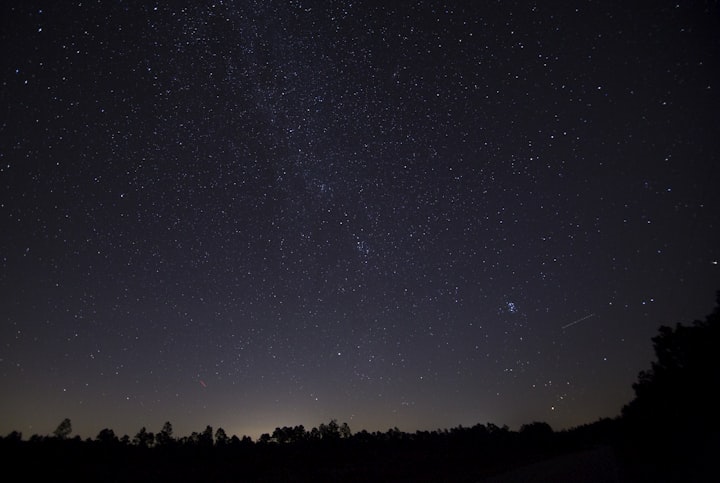
Has anyone wondered how our lights affect the night sky? Just as children and young adults have seen billions of stars beaming across the sky, people are seldom aware of the repercussions that we generate. As shocking as it may sound, the lights we turn on in our houses, in our parks and in our cities consequently affect the annual migrations of birds and the functionality of ecosystems. With help from our friends and neighbors, we should be instead contributing to the end of light pollution.
Every year, birds such as sparrows, warblers, thrushes, grosbeaks, and tanagers fly south during the fall migration season. As they fly, they rely on stars, rivers, and coastlines to find their way. “As they look down at the world below, they also see bright lights,” said Nell Greenfieldboyce, a journalist for NPR. “Horton says there’s evidence that birds can sometimes be drawn to them,” he said. Kyle Horton is a worker at the Cornell Lab of Ornithology who explains that “things like a low ceiling or fog paired with light really disorients migrants.” This shows how severe light pollution’s effects on bird migrations are. After the lights thwart the birds’ migrations, the animals find themselves in trouble; as a result, their long migrations would be delayed.
Jeffrey Buler, a researcher at the University of Delaware, used a radar to study the movements of bird migrations. From his studies, he recorded that when lights are either on or off, the number of birds that surround them varied drastically.
The light we generate and produce in our cities and towns affects entire migrations of birds, but the problem lies within us. We are oblivious to the fact that the light from high-rise buildings and expansive suburbs are the main cause of light pollution. “Light pollution is an unintended consequence of our use of artificial light at night,” said John Barentine, an astronomer at the International Dark-Sky Association. He adds on by saying that “it occurs when light is wasted either because no one is using it or because it’s superfluous.” According to “The New York Times,” solutions that would prevent further contributions to light pollution include turning off unnecessary lights and putting shields on streetlights to direct beams downward.
Furthermore, light pollution creates an annoyance for amateur astronomers while also creating a health hazard for humans and wildlife. Ecosystems, in particular, have experienced light pollution’s wrath. Due to coral reefs’ dependence on the moon phases, the reefs produce little to no offspring. Additionally, baby turtles find themselves attracted to bright urban lights, which often lead them to “predators, dehydration, and exhaustion.”
Light pollution also hinders the lifestyle of plankton in lakes. Zooplankton called Daphnia “normally dwell deep below the water in the day and ascend to the surface at night to feast on algae.” As a result of light pollution’s harsh influence, the zooplankton are prevented from going up to feed on the algae, causing algae blooms that make the environment toxic to its inhabitants.
The night sky’s natural darkness is essential for humans and the ecosystems that our environments support. Natural darkness allows us to see millions upon millions of stars and the famous Milky Way. However, as light pollution worsens, astronomical studies are being deeply affected. We are not going to be able to witness nature’s true display of itself unless we work together to compete with light pollution’s dangerous influence on the world that we live in.
Light pollution is just one of the many problems that our environment faces. When attempting to solve environmental problems, we must look at our options through an intersectional lens. Through that lens, we will see just how interconnected the state of the environment is with our politics, economies, social structures, and health. Seven billion people live on the same planet and look up at the same sky. For humanity to survive, it is imperative for us to construct new societies that value equity over physical ability and race.
About the Creator
Thomas Jang
Sharing thoughts on films and TV, cities, and architecture.
Keep reading
More stories from Thomas Jang and writers in The Swamp and other communities.
Opinion: The Electoral College Must Be Abolished
Every four years since 1789, the Electoral College has been used in electing a new president and vice president. For those of you who may not know what exactly the Electoral College is, it is not a literal college, but a group of electors. Every ten years, the United States government conducts a census, where it tracks the country’s people and economy. The number of electoral votes a state has reflects its population. When the country changes in population, the number of electoral votes in each state is changed. As you watched the 2016 presidential election live, you may have heard newscasters announce each state and its number of electoral votes. That number represents the number of electors in that state. For example, California has 55 electoral votes while New York has 29. On the other hand, large states such as Montana or Nebraska have fewer than five electoral votes. This indicates that the sizes of certain states do not clearly reflect their number of electoral votes. That overall crystallizes the biased approach of the Electoral College in electing a new leader, which makes it necessary for it to be abolished.
By Thomas Jang6 years ago in The Swamp
Diesel Generator Market Size and Forecast 2025–2033
Introduction The global energy ecosystem is undergoing rapid transformation, driven by rising electricity demand, expanding industrial activity, and the urgent need for power reliability. In this context, diesel generators—often regarded as traditional power solutions—continue to play a vital and irreplaceable role across industries and geographies. Despite the accelerating transition toward renewable energy, diesel generators remain a cornerstone of backup and off-grid power systems due to their reliability, scalability, and operational efficiency.
By Marthan Sir2 days ago in The Swamp



Comments
There are no comments for this story
Be the first to respond and start the conversation.