
House to Vote on Release of Epstein Files
A long-awaited decision could finally expose hidden networks, unanswered questions, and powerful connections linked to the Epstein case.

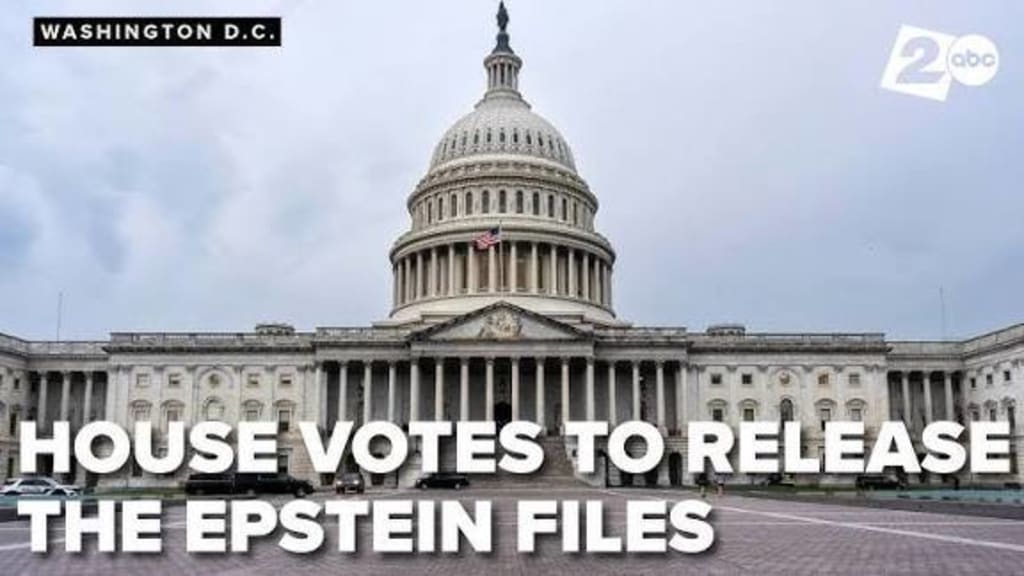
House to Vote on Release of Epstein Files
For years, the name Jeffrey Epstein has hovered like a dark cloud over powerful institutions, wealthy elites, and global political circles. Despite Epstein’s death in 2019, public interest in the case has only grown, largely because many details remain sealed, redacted, or protected by legal agreements. Now, a major development in Washington is pushing the case back into the spotlight: the U.S. House of Representatives is preparing to vote on whether to release the long-restricted Epstein files.
This vote has triggered intense public debate, renewed media attention, and a wave of questions about what the documents may reveal. For many Americans, this isn’t just another political process—it’s a chance for long-delayed truth and accountability.
---
Why the Vote Matters Now
The Epstein case has always been surrounded by mystery. Although some information has been released through court filings and investigative journalism, thousands of pages of documents remain sealed, including:
Names of high-profile individuals who interacted with Epstein
Flight logs from his private planes
Visitor lists from his residences
Financial transactions
Communications with political and corporate leaders
Lawmakers argue that the public has the right to know how deeply Epstein’s network extended and whether authorities failed to act earlier due to political or financial pressure.
Supporters of the vote say it represents a historic opportunity for transparency. Critics argue that releasing the files could harm innocent people who only had brief, non-criminal contact with Epstein.
Still, the demand for answers outweighs those concerns for many Americans.
---
What Could Be Inside the Files?
While no one knows precisely what the sealed documents contain, several major areas of interest have been repeatedly mentioned:
1. Names of Associates
One of the most anticipated aspects of the release involves potential names of Epstein’s connections. These could include:
Business leaders
Politicians
Celebrities
Academics
Royal family members
High-ranking government officials
Names alone do not confirm wrongdoing, but they can show the scope of Epstein’s influence.
2. Communications and Emails
The files may contain emails, letters, and other communications that reveal:
Who helped Epstein maintain his operations
Who knew about the abuse
Who may have covered up warnings or complaints
These documents could reshape public understanding of the case.
3. Financial Records
Epstein moved money through a maze of shell companies and offshore accounts. If released, financial files could answer important questions about:
Who funded him
Who benefited from his wealth
Who helped transfer money for travel or property purchases
For investigators, following the money is often the key to revealing hidden criminal networks.
---
Why Transparency Is Important
Many citizens feel that powerful individuals involved with Epstein have been protected for too long. Releasing the files could:
Restore public trust
Reveal possible misconduct
Hold influential people accountable
Inspire reform in the justice system
Unlike many criminal cases, Epstein’s story stretches across international borders, governments, and industries. Because of its scale, people believe transparency is the only way forward.
---
Concerns About Privacy and Misinterpretation
Not everyone agrees with releasing the files. Some lawmakers warn that unproven allegations could damage reputations. Others say the information may include unrelated personal details or conversations taken out of context.
To address these issues, the House is considering redacting only sensitive personal data—such as home addresses or medical information—while keeping the core evidence visible.
That compromise could make the release both responsible and informative.
---
What Happens After the Vote?
If the House approves the motion, the following steps will occur:
1. The Justice Department will be required to gather and prepare the documents.
2. Sensitive data will be redacted.
3. Files will be released to the public, likely in stages.
4. Journalists, legal experts, and investigators will analyze the material.
This process could take weeks or months, but it would mark one of the most significant releases of criminal-related documents in recent years.
---
A Moment of National Accountability
The possible release of the Epstein files symbolizes something bigger than one case—it reflects a growing demand for honesty, justice, and transparency. Many people hope the documents will finally expose the full extent of Epstein’s network and provide answers to families, survivors, and the public.
Whether the files will reveal shocking new information or simply confirm what many already suspect, one thing is clear: the world is watching closely.
About the Creator
Fiaz Ahmed
I am Fiaz Ahmed. I am a passionate writer. I love covering trending topics and breaking news. With a sharp eye for what’s happening around the world, and crafts timely and engaging stories that keep readers informed and updated.
Keep reading
More stories from Fiaz Ahmed and writers in The Swamp and other communities.
Children Among 25 Killed in One of Russia’s Deadliest Strikes on Western Ukraine
In a tragic escalation of the war, a devastating Russian strike on the Ukrainian city of Ternopil claimed the lives of at least 25 people, including three children, local officials confirmed. The attack hit residential buildings in the heart of western Ukraine—far from the front lines—and has reignited global outrage over civilian targeting in a war that continues to upend countless lives.
By Fiaz Ahmed 4 months ago in The Swamp
The Forsyth House Fire
Since 1851, Forsyth House has stood on the corner of Union Street and Gordon Street in the heart of Glasgow. Its iconic, or was... because on Sunday 8th of March, 2026, a fire broke out in a small, seemingly un-named shop in the building and tore all that history down. As I write, the rubble is still unsettled and the street is still blocked off. Central Station is quiet on the upper level, and around 30 small businesses have quite literally gone up in smoke.
By S. A. Crawforda day ago in The Swamp
Trump Calls on UK to Send Warships to Keep Strait of Hormuz Open Subtitle: Rising tensions in the Persian Gulf reignite debate over international responsibility to protect one of the world's most critical shipping routes.
The Strait of Hormuz has always been a focal point of global geopolitical tension. As one of the most vital maritime chokepoints in the world, it carries a massive portion of the planet’s oil supply every single day. Recently, former United States President Donald Trump reignited international discussion by urging the United Kingdom to send warships to help keep the Strait of Hormuz open amid increasing security concerns in the region.
By Jameel Jamaliabout 9 hours ago in The Swamp
A System That Isn’t Working Challenge Winners
Systems promise order. They organize behavior, distribute opportunity, and suggest that if everyone follows the rules, things will work. The entries in A System That Isn’t Working look closely at what happens when that promise begins to slip.
By Vocal Curation Team3 days ago in Resources




Comments
There are no comments for this story
Be the first to respond and start the conversation.