
House Foreign Affairs Members Call for Machado to Govern Venezuela
U.S. Lawmakers Back Venezuelan Opposition Leader Amid Political Transition

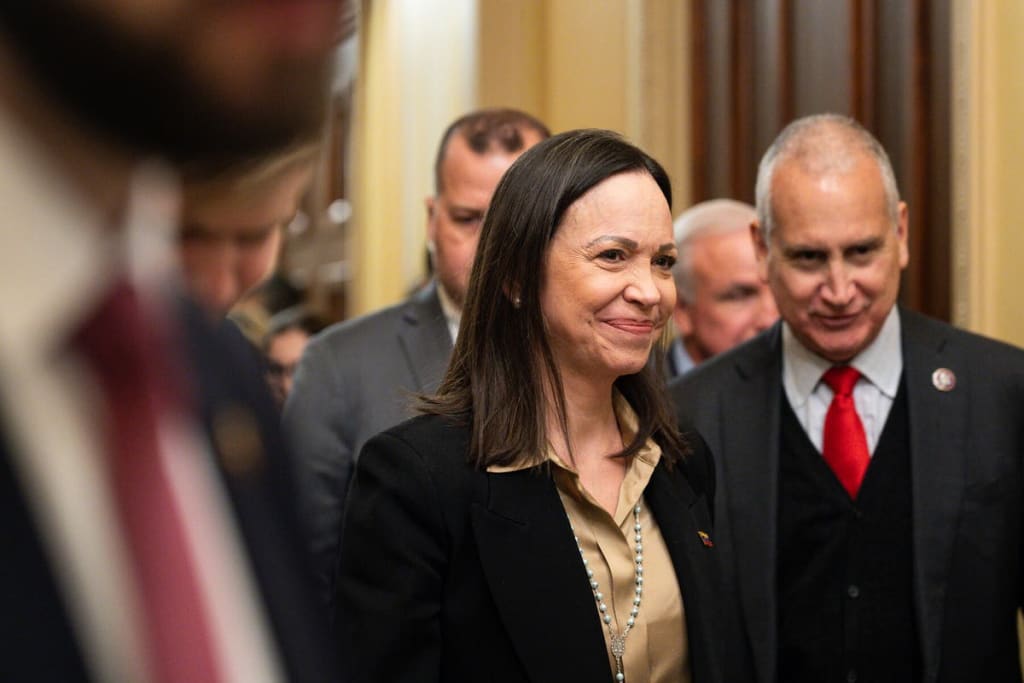
Venezuelan politics has reached a critical juncture, and Washington, D.C., is taking notice. In a recent series of meetings, members of the U.S. House Foreign Affairs Committee publicly expressed support for María Corina Machado, a prominent Venezuelan opposition leader, as a key figure in the country’s future governance. This move marks a bold statement from American lawmakers amid ongoing uncertainty in Caracas and growing calls for democratic reforms in Venezuela.
Machado, a longstanding critic of Nicolás Maduro’s government, has long been a voice for democracy in Venezuela. Her advocacy focuses on restoring civil liberties, strengthening institutions, and enabling free and fair elections. The House Foreign Affairs Committee’s support signals a strategic endorsement of her leadership, positioning Machado as a central figure in Venezuela’s potential political transition.
During her visit to Washington, Machado met with several committee members to discuss the current political climate in Venezuela, strategies for democratic restoration, and ways the U.S. can support her efforts. Republican lawmakers such as Mario Díaz-Balart and Carlos A. Giménez were among the most vocal in endorsing Machado, praising her resilience and commitment to democratic values. They framed her leadership as a pathway toward restoring stability and institutional legitimacy in a country that has endured years of authoritarian rule.
The timing of this endorsement is significant. Earlier this month, Nicolás Maduro was captured by U.S. forces, creating a vacuum of power in Venezuela. While Delcy Rodríguez assumed interim leadership under the country’s constitutional provisions, Machado’s supporters argue that her governance would be more democratic, pro-American, and capable of restoring public confidence. Lawmakers emphasized that backing a figure like Machado could help prevent further instability while laying the groundwork for free elections.
Machado’s agenda is clear: a return to democracy, protection of human rights, and the revitalization of institutions. She has stressed that Venezuelans in exile should be able to return safely once democratic governance is restored. This message resonates strongly with lawmakers who view Machado as a stabilizing figure capable of bridging political divides while implementing reforms that align with international standards.
Supporters also argue that U.S. backing is vital for signaling international legitimacy. Machado’s leadership, they believe, would reassure allies in Latin America and Europe, while sending a clear message to authoritarian regimes that democratic norms will be prioritized in Venezuela. Funding, diplomatic support, and strategic guidance from the U.S. could play a crucial role in ensuring that a transition under Machado remains peaceful and effective.
However, this endorsement is not without controversy. Critics caution that external support for a specific Venezuelan leader could be perceived as interference in internal affairs. They warn that Washington’s backing may complicate domestic consensus-building and could provoke resistance from factions still loyal to Maduro or wary of U.S. influence. In addition, the mechanics of organizing free elections, implementing institutional reforms, and ensuring broad-based legitimacy remain complex challenges that Machado will face if she assumes leadership.
Despite these challenges, Machado’s visit to Washington highlighted a growing alignment between her vision and U.S. policy goals. Lawmakers emphasized that the focus should be on democratic principles, human rights, and national stability, rather than partisan politics. By framing the endorsement around shared values, supporters hope to reduce the perception of external interference while demonstrating genuine concern for Venezuelan citizens and the country’s future.
Experts note that Machado’s rise as a potential leader reflects broader trends in Venezuelan politics. After years of economic collapse, political polarization, and institutional decay, Venezuelans are seeking credible leadership capable of restoring confidence. Machado’s consistent advocacy for democratic governance positions her as a figure who can unite opposition forces, engage with international partners, and implement reforms necessary for long-term stability.
The endorsement by U.S. lawmakers also sends a strong signal to other international stakeholders. Countries monitoring Venezuela’s political future may view Machado’s backing as an opportunity to support democratic restoration while avoiding prolonged instability. Furthermore, Machado’s pro-U.S. stance and emphasis on strengthening ties with the international community could facilitate collaboration on economic recovery, humanitarian aid, and security initiatives.
As Machado returns to Venezuela, the path ahead remains uncertain. She faces the dual challenge of gaining domestic legitimacy while leveraging international support. Yet the recent backing from House Foreign Affairs members provides both political credibility and momentum. If Machado can navigate internal divisions and build consensus among Venezuelans, she may emerge as a transformative leader capable of guiding her country toward democracy, stability, and renewed international engagement.
In conclusion, the House Foreign Affairs Committee’s call for María Corina Machado to govern Venezuela underscores a pivotal moment in both U.S. foreign policy and Venezuelan politics. With lawmakers emphasizing democratic principles, human rights, and international support, Machado’s leadership could help chart a path toward stability in a country long mired in turmoil. While challenges remain, the endorsement reflects a growing recognition that Venezuela’s future depends on credible, principled leadership—and Machado appears poised to answer that call. The coming months will be decisive, not only for Venezuela but for U.S. engagement in Latin America and the broader fight for democratic governance in the region.
Word Count: 804
---
If you want, I can also create a “clickable, reader-friendly version” with subheadings, pull quotes, and bullet points to make it more engaging for Vocal Media or social sharing.
Do you want me to do that?
About the Creator
Asad Ali
I'm Asad Ali, a passionate blogger with 3 years of experience creating engaging and informative content across various niches. I specialize in crafting SEO-friendly articles that drive traffic and deliver value to readers.
The Forsyth House Fire
Since 1851, Forsyth House has stood on the corner of Union Street and Gordon Street in the heart of Glasgow. Its iconic, or was... because on Sunday 8th of March, 2026, a fire broke out in a small, seemingly un-named shop in the building and tore all that history down. As I write, the rubble is still unsettled and the street is still blocked off. Central Station is quiet on the upper level, and around 30 small businesses have quite literally gone up in smoke.
By S. A. Crawford3 days ago in The Swamp
War Has Grounded High-Flying Gulf Airlines Like Emirates
Regional conflict and airspace closures disrupt one of the world’s fastest-growing aviation hubs For decades, airlines based in the Gulf built a reputation for connecting the world. With their vast networks, modern fleets and ambitious expansion plans, carriers such as Emirates became symbols of the Middle East’s transformation into a global aviation crossroads. But growing regional conflict and security concerns are now forcing these high-flying airlines to confront an unfamiliar challenge: grounded routes, disrupted schedules and rising uncertainty. The Gulf aviation industry has long thrived because of its strategic geography. Positioned between Europe, Asia and Africa, airlines operating from hubs like Dubai and Doha built business models around connecting passengers across continents with minimal travel time. This system relies heavily on stable airspace corridors across the Middle East. When conflict intensifies in the region, however, those corridors can quickly become restricted or unsafe. In recent months, airlines have had to navigate a patchwork of closed or risky airspaces stretching across several countries, forcing them to reroute flights or suspend certain destinations entirely. For major carriers such as Qatar Airways and Etihad Airways, the impact has been immediate. Flights that once followed direct routes are now required to take longer detours to avoid conflict zones, adding hours to journey times and increasing fuel costs. In some cases, airlines have temporarily halted services to destinations considered too risky. The effects are particularly significant for Emirates, which operates one of the largest international networks in the world. The airline’s hub at Dubai International Airport has historically handled tens of millions of passengers each year, acting as a gateway between East and West. But disruptions to regional airspace threaten the efficiency of that model. Airspace closures are among the most serious challenges airlines can face. When military operations intensify or missile threats increase, aviation regulators often issue warnings or outright bans on civilian flights through affected areas. Airlines must respond quickly to protect passengers and crews while maintaining operational reliability. For carriers in the Gulf, this often means redesigning entire route networks overnight. Flights traveling between Europe and Asia may need to avoid certain corridors over countries experiencing conflict, forcing aircraft to fly longer paths over the Mediterranean, Central Asia or the Indian Ocean. The consequences ripple throughout the aviation industry. Longer routes mean higher fuel consumption, increased operating costs and reduced aircraft availability. Delays can spread across airline schedules, affecting connections for passengers traveling through major hubs. Industry analysts say the situation underscores how vulnerable global aviation remains to geopolitical tensions. The Middle East has historically been both a vital transit region and a frequent source of instability, making airlines particularly sensitive to security developments. Airlines have invested heavily in technology and planning to manage such risks. Advanced flight-planning systems allow carriers to evaluate safe routes in real time, taking into account security advisories issued by aviation authorities and governments. Even so, sudden escalations can leave little time for preparation. For passengers, the disruptions can mean longer travel times and occasional cancellations. While airlines try to minimize inconvenience, safety considerations always take priority when deciding whether to operate flights through potentially dangerous areas. The broader economic impact may also be significant. Gulf airlines are central to tourism and business travel in the region, bringing millions of visitors to cities such as Dubai and Abu Dhabi every year. If prolonged instability affects flight connectivity, it could influence tourism flows and commercial activity. Governments across the Gulf have closely monitored the situation, emphasizing the importance of maintaining aviation safety while preserving the region’s role as a global transportation hub. Investments in airport infrastructure and airline fleets over the past two decades have transformed the Gulf into one of the most dynamic aviation markets in the world. Despite the current challenges, aviation experts believe the region’s airlines remain well positioned to recover once tensions ease. Gulf carriers have historically demonstrated resilience, adapting quickly to economic downturns, pandemics and geopolitical shocks. Executives at several airlines have also emphasized that global demand for air travel remains strong. As long as international travel continues to grow, major transit hubs in the Gulf are expected to remain important gateways connecting continents. For now, however, the industry must navigate a complex and unpredictable environment. Each new development in regional conflicts can influence flight routes, insurance costs and operational planning. The experience serves as a reminder that even the most sophisticated aviation networks depend on stability in the skies above them. For airlines like Emirates, whose success has been built on seamless global connectivity, maintaining that stability is more important than ever. As long as conflict continues to reshape airspace across parts of the Middle East, the world’s most ambitious aviation hubs will face the challenge of keeping their aircraft—and their passengers—safely in the air.
By Fiaz Ahmed a day ago in The Swamp
Why Didn't Anyone Tell Us
Men, move along. This is not for you. This is for the women. I was forty-five when I began menopause. It is pretty young for that to be going on in a woman’s life, but I had undiagnosed PCOS, my entire life. Thank you to all the gynecologists I had seen my entire life. That in itself should encourage women to keep seeking second opinions, especially when you are not getting correct answers or any at all.
By Alexandra Grant6 days ago in Humans


Comments
There are no comments for this story
Be the first to respond and start the conversation.