
High Risk of Travel Disruption Amid Amber Rain Warning
Severe Weather Alerts Raise Concerns for Commuters, Infrastructure, and Public Safety
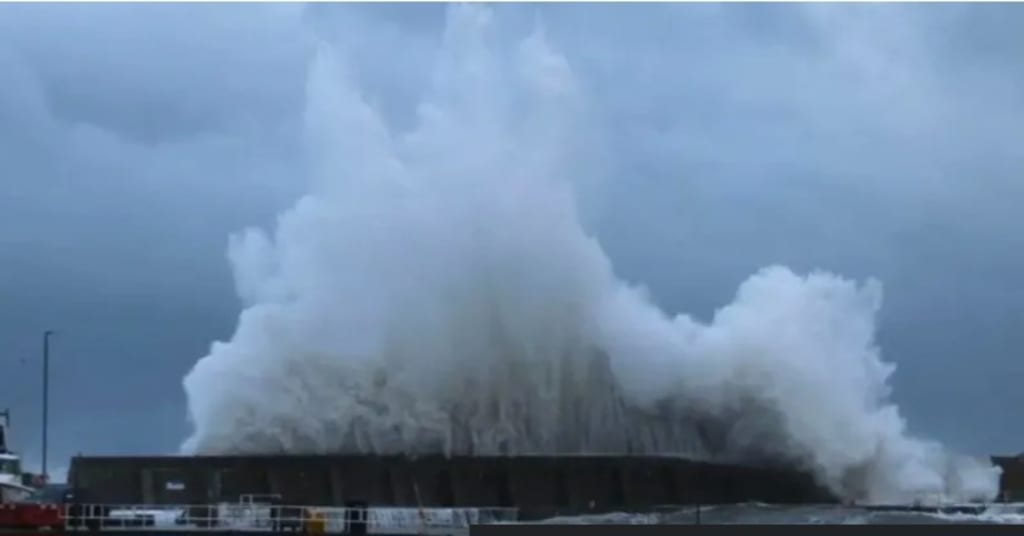
An amber rain warning has once again placed large parts of the country on high alert, as meteorologists warn of a significant risk of travel disruption, flooding, and safety hazards. Amber alerts are issued only when weather conditions have the potential to cause serious impacts on daily life, and this latest warning is no exception. With heavy rainfall forecast over a short period, authorities are urging people to exercise caution, reconsider non-essential travel, and stay informed as conditions evolve.
The warning highlights the increasing unpredictability of weather patterns, a trend that has become more pronounced in recent years. Intense downpours are expected to overwhelm drainage systems, flood roads, and disrupt rail and air travel. In urban areas, surface water flooding poses a particular threat, while rural regions may face river overflows and landslides. Together, these factors create a challenging environment for commuters, transport operators, and emergency services.
Impact on Road Travel
Road users are among the most vulnerable during periods of heavy rainfall. Flooded streets, reduced visibility, and aquaplaning significantly increase the risk of accidents. Even shallow floodwater can be dangerous, as it may conceal damaged road surfaces, open manholes, or debris washed onto carriageways. Authorities repeatedly stress that drivers should never attempt to drive through floodwater, yet incidents continue to occur during severe weather events.
Motorways and major routes are particularly susceptible to congestion during amber warnings. Accidents, stalled vehicles, and precautionary speed restrictions can quickly lead to long delays. Local roads may also be closed as a preventative measure, further complicating journeys. For delivery services and public transport providers, these disruptions can have a ripple effect, impacting supply chains and daily schedules.
Rail and Air Travel Disruptions
Rail networks often struggle under extreme weather conditions. Heavy rain can flood tracks, damage signalling equipment, and trigger landslips along embankments. As a result, train operators may be forced to cancel services, impose speed limits, or close entire sections of the network. Passengers are advised to check travel updates frequently and allow extra time for journeys.
Air travel is not immune either. Persistent rain and strong winds can disrupt flight schedules, leading to delays or cancellations, particularly at busy airports. Ground operations such as baggage handling and aircraft refuelling may also be slowed due to safety concerns. For travelers, this uncertainty can be stressful, especially when combined with onward travel arrangements.
Pressure on Emergency Services
Amber rain warnings place additional strain on emergency services, who must respond to an increased number of incidents in a short timeframe. Fire and rescue teams are often called to assist motorists stranded in floodwater, while ambulance services may face delays reaching patients due to blocked or unsafe roads. Local authorities also play a crucial role, deploying resources to manage flood defenses, clear drains, and communicate risks to the public.
Communities in flood-prone areas are advised to prepare in advance by securing property, moving valuables to higher ground, and having emergency supplies readily available. While not everyone will be directly affected, preparedness can significantly reduce the impact of severe weather.
Economic and Social Consequences
Beyond immediate safety concerns, travel disruption caused by heavy rain has wider economic and social implications. Missed workdays, delayed deliveries, and disrupted services can cost businesses millions. Schools may be forced to close, healthcare appointments postponed, and major events canceled, affecting both local economies and community morale.
For vulnerable populations, such as the elderly or those with mobility issues, travel disruption can be particularly challenging. Access to essential services may be limited, highlighting the importance of coordinated planning and clear communication from authorities.
Climate Change and the Growing Frequency of Extreme Rainfall
Experts increasingly link the rise in intense rainfall events to climate change. Warmer air holds more moisture, leading to heavier downpours when rain does occur. This means that amber rain warnings may become more frequent in the future, making long-term investment in resilient infrastructure essential.
Improving drainage systems, reinforcing flood defenses, and adapting transport networks to withstand extreme weather are critical steps. Public awareness and responsible behavior also play a key role in reducing risk and preventing avoidable incidents.
Staying Safe and Informed
During an amber rain warning, staying informed is crucial. Travelers should monitor weather updates, follow advice from transport operators, and avoid unnecessary journeys where possible. Employers are encouraged to offer flexible working arrangements, and individuals should prioritize safety over convenience.
While heavy rain can be disruptive and dangerous, proactive measures and collective responsibility can help minimize its impact. As extreme weather becomes an increasingly common feature of modern life, adapting to these challenges is no longer optional—it is essential.
About the Creator
Keep reading
More stories from Ayesha Lashari and writers in The Swamp and other communities.
When Noise Turns Deadly
In a world already strained by anger, impatience, and division, it is deeply unsettling when something as simple as asking someone to “quieten down” becomes a death sentence. The recent incident in which a man was killed after requesting a rapper to lower his volume is not just a tragic crime—it is a disturbing reflection of how fragile civility has become, especially when fame, ego, and aggression collide.
By Ayesha Lashari2 months ago in The Swamp
The Forsyth House Fire
Since 1851, Forsyth House has stood on the corner of Union Street and Gordon Street in the heart of Glasgow. Its iconic, or was... because on Sunday 8th of March, 2026, a fire broke out in a small, seemingly un-named shop in the building and tore all that history down. As I write, the rubble is still unsettled and the street is still blocked off. Central Station is quiet on the upper level, and around 30 small businesses have quite literally gone up in smoke.
By S. A. Crawford3 days ago in The Swamp
Russia Is Supplying Iran With Shahed Drones, Zelenskiy Says
Ukrainian president alleges Moscow is equipping Tehran with drones now used against U.S. and Israeli targets In a recent interview with CNN, Ukrainian President Volodymyr Zelenskiy made a striking allegation: he claims that Russia has supplied Iran with Iranian‑designed Shahed drones, which Tehran has since used in attacks on United States and Israeli targets in the Middle East. Zelenskiy described this transfer as a “100 percent fact”, asserting that the drones being used against U.S. bases are Russian‑made variants of Iranian Shaheds — a development that has broad implications for global security and regional conflict dynamics. What Zelenskiy Said and the Context During the broadcast interview, Zelenskiy emphasized that the drones Iran is employing in recent strikes on U.S. and allied positions have origins tied back to Moscow. He urged Western audiences to recognize this as a clear example of the deepening military cooperation between Russia and Iran, arguing that Moscow’s support for Tehran extends beyond diplomatic rhetoric into material transfers of military systems. Although detailed evidence has not been publicly presented, Zelenskiy stated confidently that the presence of Russian‑made Shahed drones in the Iranian arsenal is a verified fact, not speculation. His comments come amid escalating tensions in the Middle East — including a widening conflict involving Israel, Iran, and Western forces, in which drone strikes have played a prominent role. What Are Shahed Drones? Shahed drones are a family of Iranian unmanned aerial vehicles (UAVs) and loitering munitions developed by Shahed Aviation Industries, an Iranian aerospace company associated with the Islamic Revolutionary Guard Corps. These drones — particularly the Shahed‑136 model — are designed to fly long distances and detonate on contact, making them effective low‑cost “kamikaze” weapons. Originally deployed by Iran in regional conflicts, the Shahed series gained significant global attention during the 2022 Russian invasion of Ukraine, when Russian forces used them to target Ukrainian cities and infrastructure. Russia also developed its own local production lines for variants — often designated as Geran drones — based on Iranian designs. The Allegations and Why They Matter Zelenskiy’s accusations suggest a reversal of roles in the military supply chain: instead of merely receiving Iranian drones, Russia now allegedly provides them — or at least their production — back to Iran for its own military use. That is particularly significant given that the drones have been deployed in attacks beyond the Ukraine battlefield, including in the Middle East against U.S. and Israeli targets. If confirmed, this would mark a new phase of military collaboration between Russia and Iran, reinforcing concerns among U.S. and NATO officials about coordinated efforts to challenge Western military assets and influence in multiple theatres simultaneously. It could also complicate diplomatic efforts to stabilize conflict zones where both Tehran and Moscow have strategic interests. Regional Impacts and Broader Security Concerns The alleged transfer comes at a time of heightened conflict in the Middle East. Recent strikes on Iranian infrastructure by Israeli forces and subsequent Iranian retaliatory drone and missile attacks have drawn in the United States and raised fears of a wider regional war. In this environment, weapons technology transfers between major state actors could intensify existing tensions and trigger further escalation. U.S. and allied officials have previously expressed concern about the proliferation of Shahed drones and their derivatives. Although these drones are relatively inexpensive — often costing tens of thousands of dollars apiece compared with millions for advanced missiles — their effectiveness and ease of deployment make them attractive tools for asymmetrical warfare. In Ukraine, similar drones have been a persistent threat for years. Ukrainian forces have endured waves of Shahed and Russian variants, prompting Kyiv to develop advanced counter‑drone systems, including electronic warfare and interceptor drones, to defend cities and military targets. The widespread use of such drones in Ukraine has also made Kyiv a source of expertise for countries now facing Shahed strikes in the Middle East. Diplomatic Ripples and Political Fallout Zelenskiy’s claims arrive as Ukraine seeks broader international cooperation against Iranian drone attacks, offering its experience and technology in return for financial and military support. Kyiv has dispatched expert teams to the Middle East to assist in assessing defenses and bolstering anti‑drone capabilities — a move that underscores the interconnected nature of modern conflicts. At the same time, Iran has warned that Ukraine could become a target in retaliation for its support of U.S. and Israeli defenses. Iranian officials have used strong language to criticize Ukraine’s growing cooperation with its adversaries, suggesting geopolitical tensions could expand beyond the current theatres of war. Uncertainties and What Comes Next While Ukraine’s president insists on the validity of the claims regarding Russian supplies to Iran, independent verification remains limited in the public domain. The geopolitical stakes — involving Russia, Iran, the United States and Israel — are high, and each actor has incentives to shape the narrative in ways that support its strategic goals. What is clear is that drones like the Shahed continue to reshape modern warfare, offering both tactical flexibility and strategic headaches for nations contending with asymmetric threats and multifront conflicts.
By Fiaz Ahmed about 21 hours ago in The Swamp
My First Time Skiing and I Got Lost, Alone, in the French Alps
Looking back, I can trace some of my life’s biggest adventures to a simple action from my sister. She’d introduced me to Tommy (a very long time ago), a colleague of hers, who had overshared his penchant for Italian-looking women, and I ticked that box.
By Chantal Christie Weiss3 days ago in Humans



Comments
There are no comments for this story
Be the first to respond and start the conversation.