
Help with US border
Trump Suggests Invoking Article 5 to Get NATO to Help With U.S. Border

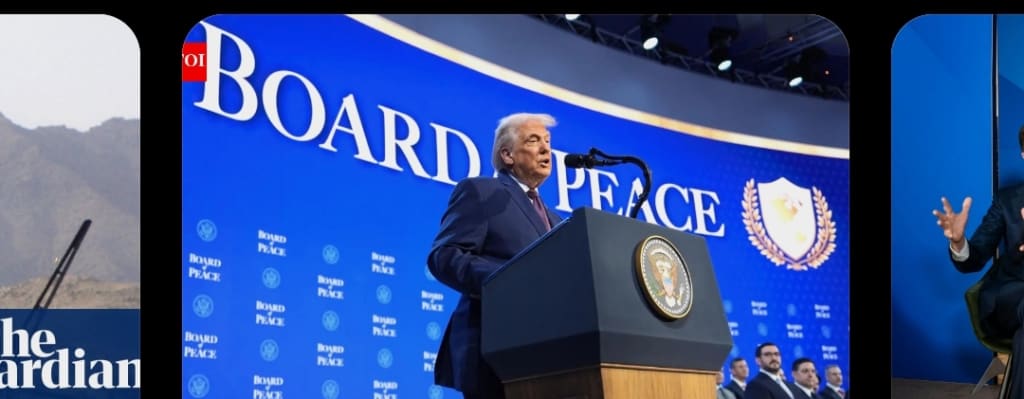
Overview of the Proposal
President Donald Trump recently suggested — in a social media post on Truth Social — that the United States “should have” invoked Article 5 of the North Atlantic Treaty Organization (NATO) in order to bring NATO forces to the U.S. southern border to help stem illegal immigration. According to Trump, calling on NATO allies to secure the border would “free up large numbers of Border Patrol Agents for other tasks.”
Article 5 is NATO’s collective defense clause, stating that an armed attack on one member is considered an attack on all. It’s the cornerstone of the alliance’s mutual defense guarantee — and in nearly 80 years, it has been invoked only once, when NATO allies responded to the September 11, 2001 terrorist attacks on the United States.
Trump’s remarks represent a sharp departure from how Article 5 has historically been understood and applied. Illegal immigration — no matter the scale — is not typically viewed as an armed attack by another state, which is the standard under the treaty to trigger collective defense.
Context of Trump’s Comments
The suggestion comes amid broader tensions between the Trump administration and U.S. allies in Europe over NATO’s role, burden-sharing, and collective defense. At the World Economic Forum in Davos, Trump publicly questioned NATO’s willingness to defend the U.S. if the alliance were ever truly tested, saying, “we’ll be there for them 100 percent, but I’m not sure they’ll be there for us.”
Trump’s critique of NATO stretches beyond this most recent idea. Over the years and during both his first and second presidential terms, he has repeatedly pressured European allies to increase defense spending, and has at times suggested that the U.S. might withhold defense commitments from countries that do not meet certain spending targets.
Legal and Policy Concerns
Legal experts and NATO officials were quick to stress that Article 5 is not designed for domestic law enforcement or immigration control. The treaty’s language targets armed attacks by external parties, not border crossings or internal policy issues, and requires a collective decision by NATO members on whether the conditions for invocation have been met.
In formal remarks, NATO Secretary General Mark Rutte reiterated the alliance’s commitment to collective defense, and reminded critics that NATO had indeed helped the U.S. under Article 5 after 9/11 — with allied troops participating in air and ground operations related to the global war on terror. Rutte also highlighted the sacrifices of NATO forces, including countries like Denmark, whose contributions were significant despite being smaller in scale than the U.S. contingent.
Allied Backlash and Public Response
Trump’s comments were met with rapid criticism from European leaders and commentators alike. Officials in the United Kingdom, including Prime Minister Keir Starmer, condemned remarks suggesting NATO troops “stayed a little off the frontlines” in past conflicts, calling such statements “insulting and frankly appalling.” The criticism emphasized respect for the contributions and sacrifices of allied soldiers, many of whom served alongside American troops in Afghanistan.
Celebrities and public figures with military ties also spoke out. Prince Harry, who served two tours in Afghanistan and lost friends in combat, publicly rebuked Trump’s NATO criticism and reminded audiences of the deep personal costs borne by allied forces.
Domestic Reactions
Within the U.S., reactions are sharply divided along political lines. Supporters of Trump have framed the idea as a bold attempt to rethink NATO’s role and to secure border enforcement resources more effectively. However, many legal analysts, immigration experts, and national security observers have called the suggestion misguided and unrealistic — pointing out that Article 5 cannot be legally applied to immigration matters and that such an attempt could undermine the treaty’s credibility.
Some critics have also warned that misusing or attempting to stretch Article 5 could set a dangerous precedent that weakens the alliance’s mutual defense commitment if member states push back on what qualifies as an “attack.” This could, in turn, alter how allies perceive the reliability of collective defense in genuine crises.
Broader Implications for NATO and U.S. Foreign Policy
Trump’s remarks come at a time when NATO is facing other strategic questions, including how to support Ukraine amid ongoing tensions with Russia and how to balance burden-sharing among members. His administration’s engagement on security guarantees for Ukraine — potentially based on Article 5-style commitments — reflects broader debates about the future scope of collective defense.
There are also ongoing concerns about U.S. participation in NATO structures. For example, recent Pentagon plans to reduce U.S. involvement in some NATO advisory groups have fueled debate over the U.S. commitment to the alliance’s long-term mission and integration.
About the Creator
USA daily update
News, Politics, Technology Updates
Keep reading
More stories from USA daily update and writers in The Swamp and other communities.
Global Allies in a US (Trump) Vs Iran Crisis Who Stands With Whom?”
As tensions between the United States and Iran escalate in early 2026, global leaders and analysts are weighing the potential fallout of an outright war. Around January 23, 2026, Iran’s clerics publicly warned that any U.S. military action would prompt retaliation targeting U.S. investments across the region. At the same time, the United States deployed a naval “armada” — including an aircraft carrier strike group — toward Iranian waters while publicly hoping to avoid direct conflict.
By USA daily update 2 months ago in The Swamp
The Forsyth House Fire
Since 1851, Forsyth House has stood on the corner of Union Street and Gordon Street in the heart of Glasgow. Its iconic, or was... because on Sunday 8th of March, 2026, a fire broke out in a small, seemingly un-named shop in the building and tore all that history down. As I write, the rubble is still unsettled and the street is still blocked off. Central Station is quiet on the upper level, and around 30 small businesses have quite literally gone up in smoke.
By S. A. Crawforda day ago in The Swamp



Comments
There are no comments for this story
Be the first to respond and start the conversation.