
Healing Through Cultural Disconnection and Reconnection
Finding Wholeness in the Spaces Between What Was Lost and What Is Remembered

For many of us, culture is a quiet ache we carry.
Not because we rejected it—
but because we were pulled away from it.
Sometimes by migration.
Sometimes by assimilation.
Sometimes by survival.
We grow up feeling split—between worlds, languages, customs, and expectations.
Between who we are, who we were told to be, and who we’re still becoming.
Cultural disconnection isn’t just about geography.
It’s about identity, memory, and longing.
But in that disconnection, there’s also a path to healing.
To remembering.
To re-rooting.
💔 What Cultural Disconnection Can Feel Like
You might recognize it in your own story:
Forgetting how to speak the language of your grandparents
Feeling out of place in your “home” country and the one you live in now
Being told you’re “too much” of one thing—or “not enough” of another
Wanting to belong, but not knowing where that truly exists
This kind of disconnection is subtle, but it runs deep.
You might feel:
Shame for not knowing your traditions
Grief for what was never passed down
Guilt for fitting in “too well” where you live now
Longing for a version of home you’ve never fully experienced
And yet—there’s no one to blame.
Because often, this disconnection was inherited.
A survival strategy passed down through generations just trying to keep you safe.
🌱 Reconnection Isn’t About Perfection
If you’ve ever tried to “reclaim” your culture, you know how overwhelming it can be.
Maybe you started learning your ancestral language again.
Maybe you joined community spaces.
Maybe you started cooking the food your mother used to make.
And maybe you also felt awkward.
Self-conscious.
Like an outsider in a culture that’s supposed to be yours.
That’s okay.
Reconnection isn’t a performance.
It’s not about fluency, or perfection, or proving your heritage to anyone.
It’s about returning—gently, slowly, honestly—to what makes you feel rooted.
🧠 The Psychological Impact of Cultural Loss
Studies show that cultural disconnection can contribute to:
Identity confusion
Internalized shame
Disconnection from family history
A loss of self-esteem and belonging
But here’s the good news:
Cultural reconnection is also deeply healing.
When we engage with our roots—on our own terms—we often experience:
A greater sense of self
Pride in where we come from
Emotional regulation through ritual and tradition
A deeper connection to family, even across generations
🔁 My Own Journey Through Disconnection and Back
I was raised in a place where fitting in meant blending in.
I learned quickly to soften my accent, simplify my story, and choose “safe” versions of myself.
I didn’t talk about my culture unless someone asked.
I laughed off stereotypes.
I let pieces of myself fade—quietly, without protest.
But the older I got, the louder the ache became.
The desire to know. To remember. To belong.
So I started asking questions.
I listened to elders.
I relearned words.
I let myself feel pride again.
And I realized:
Healing doesn’t mean becoming “fully” anything.
It means honoring every part of who you are.
✨ Ways to Reconnect with Cultural Roots
There’s no one way to come home to yourself. But here are a few gentle places to start:
1. Learn the Language of Your Ancestors
Even a few words spoken with love can open a door to memory and pride.
2. Cook Cultural Dishes
Food is a living archive of love, survival, and tradition. Let it guide you back.
3. Listen to Stories and Music from Your Culture
Songs, poems, myths—these carry echoes of identity that live beyond time.
4. Ask Questions (Even If the Answers Are Hard)
Talk to parents, grandparents, or anyone who remembers. Let their truth help shape yours.
5. Release the Shame of Not Knowing
You’re not late. You’re not broken. You’re not “less than.”
You’re returning. That’s sacred.
🌼 Final Words: Wholeness Doesn’t Require Certainty
You don’t need to “fully reclaim” your culture to heal.
You don’t need to prove your roots.
You don’t need to fit perfectly into any tradition to belong to it.
You’re allowed to live in the in-between.
You’re allowed to be a mosaic, not a monolith.
Maybe your culture was disrupted—but it wasn’t erased.
It lives in your voice.
In your memories.
In your desire to reconnect.
And every step you take toward it—
even the awkward, uncertain ones—
is an act of healing.
You don’t need to know exactly where you belong.
You only need to know that you do.
And you always have.
About the Creator
Irfan Ali
Dreamer, learner, and believer in growth. Sharing real stories, struggles, and inspirations to spark hope and strength. Let’s grow stronger, one word at a time.
Every story matters. Every voice matters.
Kianna Underwood
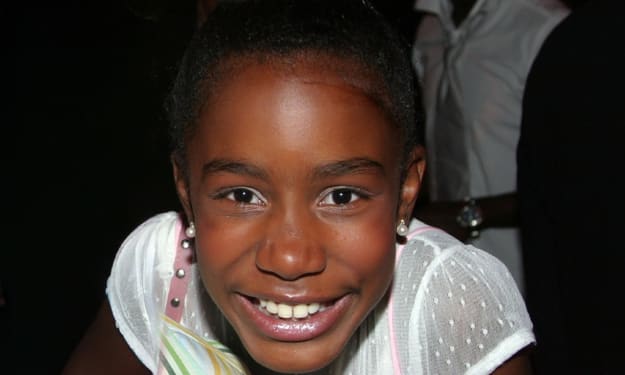
In an entertainment industry that often defines young talent by a single platform or breakout moment, Kianna Underwood represents a refreshing shift. Rather than being boxed into one label, she is steadily shaping a multifaceted identity built on creativity, adaptability, and authenticity. While many audiences first associate Kianna Underwood with Nickelodeon, her journey reflects far more than a network credit—it highlights the evolving path of modern entertainers who balance visibility with personal growth. From early exposure to mainstream media to her expanding presence beyond traditional television, Kianna Underwood’s story mirrors the changing landscape of youth entertainment. Early Ambitions and Creative Foundations Like many performers drawn to acting and media at a young age, Kianna Underwood’s passion didn’t emerge overnight. Her early interest in storytelling, performance, and self-expression laid the groundwork for future opportunities. Rather than chasing fame, she focused on learning how to communicate emotion, connect with audiences, and adapt to different creative environments. These formative years helped her develop discipline—an often overlooked quality in young performers. Whether through acting, creative collaboration, or on-camera experience, Kianna learned that consistency and preparation matter just as much as natural talent. Kianna Underwood and Nickelodeon: A Defining Chapter For many viewers, Kianna Underwood Nickelodeon is the phrase that first brings recognition. Nickelodeon has long served as a launchpad for young performers, offering not only visibility but also structured environments where emerging talent can learn the mechanics of television production. Being associated with Nickelodeon places Kianna Underwood within a legacy network known for shaping cultural moments for younger audiences. The experience exposed her to fast-paced production schedules, collaborative storytelling, and the responsibility of creating content that resonates with families and children alike. However, what sets Kianna apart is her understanding that Nickelodeon is a chapter—not the entire book. Rather than relying solely on network recognition, she has used the experience as a stepping stone toward broader creative goals. Navigating Life After the Spotlight One of the biggest challenges young actors face is transitioning beyond early exposure. The entertainment industry moves quickly, and staying relevant requires adaptability. Kianna Underwood’s approach reflects maturity beyond her years—she recognizes the importance of growth, reinvention, and long-term vision. Instead of chasing immediate validation, she has shown interest in expanding her skills. This includes exploring creative avenues that allow more personal expression, whether through digital platforms, collaborative projects, or behind-the-scenes learning. In today’s media ecosystem, versatility is power, and Kianna seems aware of that reality. Her journey highlights an important truth: success is not always loud. Sometimes it unfolds quietly through deliberate choices and steady progress. Representation and Relatability Audiences today connect most strongly with individuals who feel genuine. Kianna Underwood’s appeal lies in her relatability—she doesn’t present herself as untouchable or overly curated. This authenticity is especially important for younger viewers who look to public figures as examples rather than idols. By staying grounded, Kianna contributes to a healthier representation of young talent in media. She demonstrates that it’s possible to participate in major platforms like Nickelodeon while still maintaining individuality and balance. This grounded presence helps her stand out in an industry that often prioritizes image over substance. The Influence of Nickelodeon on Career Development Working with Nickelodeon provides more than screen time—it offers mentorship, structure, and exposure to industry standards. For Kianna Underwood, this experience likely played a key role in shaping her professionalism and creative confidence. Nickelodeon alumni often speak about the importance of teamwork and discipline learned during their time with the network. These lessons tend to carry forward, influencing how performers approach future opportunities. Kianna Underwood’s association with Nickelodeon places her within that tradition of growth-focused development rather than short-term stardom. Looking Toward the Future As Kianna Underwood continues to evolve, her career path remains open-ended—and that’s a strength. In a world where entertainers are no longer limited to television alone, she has the opportunity to explore acting, digital media, advocacy, or creative entrepreneurship. What matters most is intention. Rather than being defined solely by “Kianna Underwood Nickelodeon,” she has the chance to redefine what success looks like on her own terms. Whether she chooses to remain in front of the camera or expand into other creative roles, her foundation positions her well for sustainable growth. A New Model for Young Talent Kianna Underwood represents a new generation of entertainers—one that values balance, authenticity, and purpose. Her journey reminds audiences that early recognition doesn’t have to dictate an entire career. With thoughtful choices and continued self-discovery, she exemplifies how young creatives can navigate fame without losing themselves in it. As the entertainment industry continues to change, stories like Kianna Underwood’s offer a hopeful perspective. They show that talent, when paired with self-awareness and patience, can lead to meaningful and lasting impact. In the end, Kianna Underwood is more than a name associated with Nickelodeon. She is a developing creative voice—one that reflects where youth entertainment is headed, and why authenticity matters more than ever
By Saboor Brohi a day ago in The Swamp


Comments
There are no comments for this story
Be the first to respond and start the conversation.