
he Global Sumud Flotilla: A Journey of Hope and Resistance
“The story of solidarity, resistance, and steadfastness across the sea.”

Introduction
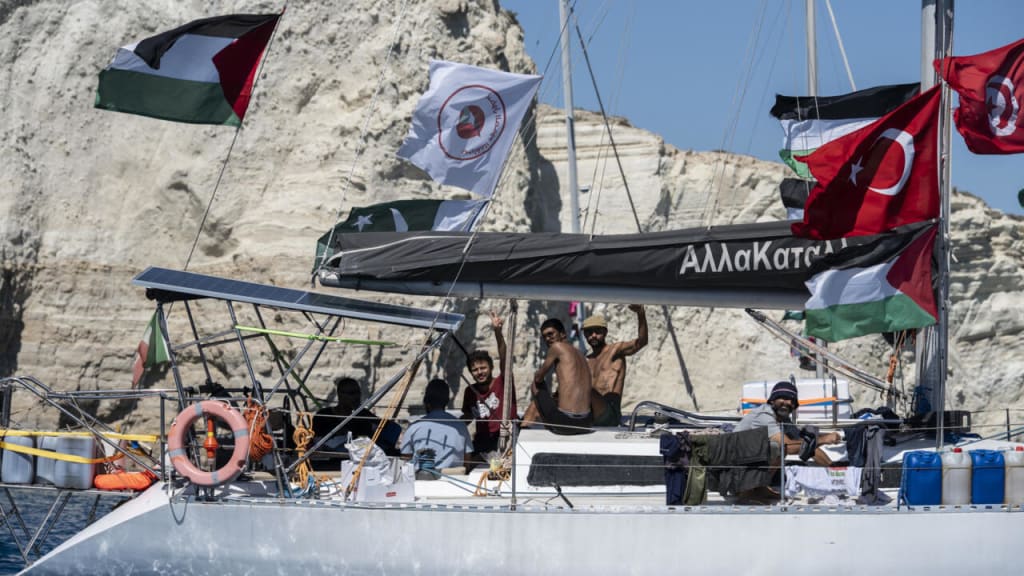
In 2025, a group of ordinary people from around the world set out on a daring journey across the sea. Their goal was simple but powerful: to break the blockade of Gaza and bring humanitarian aid to Palestinians who have been living under siege for many years. This mission is called the Global Sumud Flotilla.
The word Sumud is Arabic for “steadfastness” or “perseverance.” It is more than just a word; it is a spirit of resistance and hope. The flotilla is not led by governments or armies, but by activists, doctors, lawyers, artists, and seafarers who believe that ordinary citizens can challenge injustice.
This is the story of their voyage, why it matters, and what it means for the people of Gaza and the world.
What Is the Sumud Flotilla?
The Global Sumud Flotilla is a group of over 50 ships carrying volunteers and aid. People from more than 40 countries have joined this mission. Their aim is to reach Gaza by sea, bringing food, medicine, and supplies that the people there urgently need.
For nearly two decades, Israel has controlled the sea around Gaza, stopping ships from entering or leaving. Israel says this blockade is necessary for security, but many human rights groups and international lawyers argue that it is illegal collective punishment. This has left the people of Gaza cut off from the world, struggling with shortages of medicine, clean water, and electricity.
The flotilla is more than just an aid delivery. It is also a statement to the world: the blockade must end.
A Diverse Group With a Shared Goal
What makes the Sumud Flotilla unique is the wide mix of people on board. There are doctors who want to deliver medical aid, lawyers who hope to raise awareness about international law, religious leaders who speak of justice, and activists who want to show solidarity with Palestinians.
They come from many different cultures, faiths, and countries, but they share a common belief that peace and justice require action. Their message is not one of hate or violence, but of compassion and human dignity.
The Journey Across the Mediterranean
The flotilla began its journey from ports in Spain and other parts of the Mediterranean. Along the way, the ships were welcomed by supporters in different countries, who cheered them on and offered supplies.
But the journey has not been easy. One of the ships, known as the “Family Boat,” was attacked by a drone while docked in Tunisia. Thankfully, no one was hurt, but the attack showed the risks these volunteers are willing to face.
Now, as the flotilla moves closer to Gaza, the risk of confrontation grows. Israel has already warned that it will not allow the ships to break the blockade. Naval boats have been seen shadowing the flotilla, and many fear that an interception is near.
Why Gaza Needs This Mission
Gaza is one of the most densely populated areas in the world, with over two million people living in a very small strip of land. Because of the blockade, the economy is broken, unemployment is high, and children often go without basic necessities. Hospitals struggle to find medicine, and many families live in damaged homes.
International aid has been blocked or delayed many times before, and large aid convoys rarely make it through. The Sumud Flotilla is trying to change that by directly reaching Gaza by sea. Even if they do not succeed in delivering all of the aid, the mission brings global attention to Gaza’s suffering.
Support and Opposition
The flotilla has drawn both support and criticism. Supporters see it as a brave and peaceful act of solidarity. They argue that the blockade is a violation of international law, and that the people of Gaza have the right to receive aid and live freely.
On the other hand, Israel and its allies claim that the flotilla could pose a security threat. Israel insists that ships should go through its ports first, where cargo can be inspected. But flotilla organizers argue that this defeats the purpose, since the blockade itself is what they are challenging.
Some European governments, such as Italy, at first sent ships to protect the flotilla, but later pulled back as tensions rose. This has left the activists more vulnerable as they approach Gaza.
Voices From the Flotilla
Many participants have spoken about why they joined. A doctor from Spain said he could not stand by while children in Gaza died from treatable illnesses. A lawyer from South Africa compared the struggle in Gaza to the fight against apartheid. A priest from the United States said his faith called him to “stand with the oppressed.”
These personal stories remind us that the flotilla is not only about politics or laws, but about real human connections. It shows that people from across the globe care deeply about what happens in Gaza.
The Larger Meaning of Sumud
The word Sumud captures the heart of this mission. It means refusing to give up even when faced with impossible odds. For Palestinians, it means surviving despite war, siege, and occupation. For the volunteers on these ships, it means risking their own safety to show solidarity.
The Global Sumud Flotilla may or may not succeed in reaching Gaza, but its message has already reached the world: people will continue to resist injustice through peaceful action.
Conclusion
The Global Sumud Flotilla is more than just a fleet of ships. It is a symbol of courage, unity, and hope. It shows that ordinary citizens, when united, can challenge powerful systems of oppression.
Whether or not the flotilla breaks the blockade, it has already succeeded in reminding the world of Gaza’s struggle and humanity’s shared responsibility.
In the end, the story of the flotilla is not only about ships at sea—it is about people who believe that justice is worth fighting for, even when the journey is dangerous. It is about Sumud—steadfastness, perseverance, and the refusal to give up hope.
About the Creator
sehzeen fatima
Sehzeeen Fatima is a writer with a Master’s in Science who shares inspiring stories about sports, life, and people. She writes in simple, clear language to connect with readers and spark meaningful thought.
Keep reading
More stories from sehzeen fatima and writers in The Swamp and other communities.
Masoud Pezeshkian: The Heart Doctor Who Became Iran’s President
In July 2024, the people of Iran chose a new president. His name is Masoud Pezeshkian. He is not just a politician—he is also a heart surgeon and a man who has seen much pain and change in his life. In this article, we’ll explore who Masoud Pezeshkian is, what he stands for, and what his election could mean for Iran and the world.
By sehzeen fatima6 months ago in The Swamp




Comments
There are no comments for this story
Be the first to respond and start the conversation.